




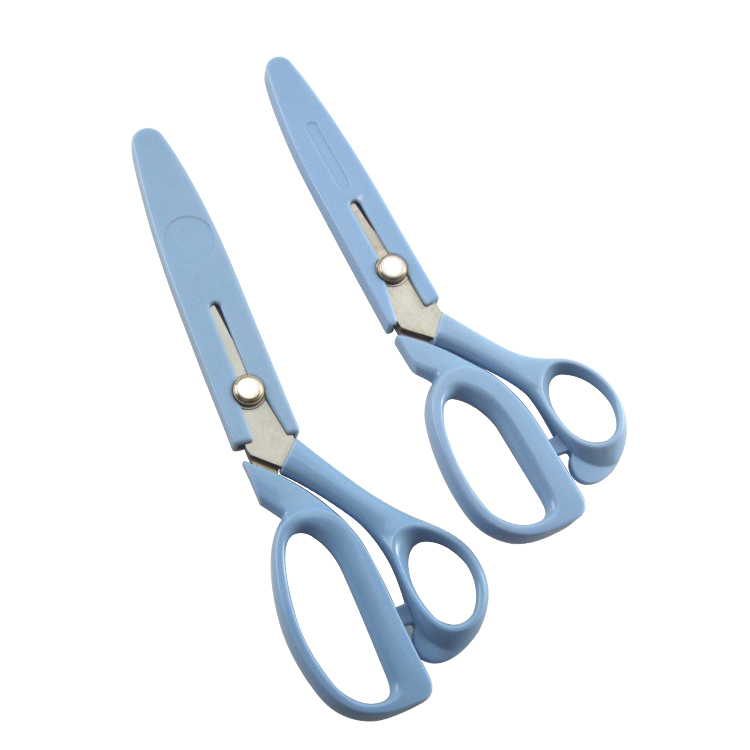
Discover High-Quality Tailor Scissors from China
Tailor scissors are everyday tools for garment workshops, alteration stores, craft retailers, sewing kits, and textile businesses. For buyers sourcing from China, the goal is not only to find an attractive price, but to confirm that the scissors match the intended fabric use, safety expectations, packaging needs, and after-sales requirements. The original product focus highlights tailor scissors from China, options with blade covers, and colored tailor scissors. This guide expands that into a practical B2B sourcing checklist so importers, wholesalers, and private-label buyers can evaluate offers with less guesswork.
China is a major sourcing market for houseware and hand tools, including scissors for sewing and craft applications. However, product quality can vary by supplier, material choice, finishing process, handle design, and quality control practice. Before placing a purchase order, buyers should ask direct questions, request samples, and document requirements in writing. This helps avoid mismatched expectations on sharpness, handle comfort, color consistency, packing, and shipment readiness.
Key Takeaways
- Match tailor scissors to the fabric types and user group before comparing supplier quotations.
- Blade covers can improve storage safety and reduce accidental blade exposure during handling.
- Colored tailor scissors help identify tools in shared workspaces and retail assortments.
- Do not rely on product photos alone; request samples and clarify blade, handle, packaging, and inspection details.
- For wholesale or OEM orders, ask the supplier about MOQ, lead time, logo options, packaging files, and quality checks instead of assuming standard terms.
What Buyers Should Confirm First
Before shortlisting a supplier, define the target channel. A sewing school, garment repair chain, craft retailer, promotional gift buyer, and e-commerce brand may all need tailor scissors, but their priorities differ. Some will care most about cutting performance and durability; others may need retail packaging, bright handle colors, or a blade cover for safer storage. Clear sourcing requirements make quotations easier to compare.
Important details to confirm include overall size, intended fabric use, right-hand or left-hand suitability if relevant, handle color choices, whether a blade cover is included, packaging format, carton information, sample availability, and labeling requirements. If any specification is not shown in the supplier's product page or quotation, treat it as unconfirmed and ask for written clarification.
Tailor Scissors from China: Practical Selection Criteria
High-quality tailor scissors should cut cleanly, feel stable in the hand, and remain suitable for repeated use. The original article notes precision and durability as key reasons buyers consider tailor scissors from China. To verify those claims in a sourcing process, buyers should test sample pieces on fabrics similar to the final customer use. Check whether the scissors cut from heel to tip, whether the blades catch or drag, and whether the handle feels comfortable during repeated cutting.
Because the source does not state a specific blade material, hardness, coating, or manufacturing process, buyers should not assume those details. Instead, ask the supplier what material is used, how sharpness is checked, whether the pivot tension can be adjusted, and what inspection steps are performed before shipment. If the scissors will be sold under a private label, request production samples that match the final packaging and color plan.
Blade Covers: Safety and Storage Value
Tailor scissors with blade covers are useful for workshops, classrooms, mobile sewing kits, retail shelves, and households where tools may be stored near other items. A cover helps reduce accidental blade exposure and can also protect the cutting edge from rubbing against other tools during storage or transport. The original article correctly highlights blade covers as a practical safety feature.
When sourcing covered scissors, inspect the cover fit. It should stay in place during normal handling but not require excessive force to remove. Buyers should also check whether the cover material feels secure, whether it scratches easily, and whether it affects retail presentation. For bulk shipments, ask how the scissors and covers are packed to prevent scuffing, separation, or deformation inside cartons.
Colored Tailor Scissors for Retail and Workspaces
Colored tailor scissors can support both practical organization and merchandising. In shared sewing rooms, different colors help users identify tools quickly and reduce mix-ups. In retail, color variety can make assortments easier to display and segment. The original article notes that colored scissors can reduce misplacement and help differentiate scissors in a shared workspace.
For B2B orders, color needs more control than a simple photo approval. Ask whether colors are standard or customizable, whether the supplier can provide physical color samples, and how color consistency is managed across production batches. If exact brand colors matter, provide a recognized color reference and request approval samples before mass production. Buyers should also confirm whether different colors affect MOQ, lead time, or packaging setup.
Comparison Checklist for Supplier Evaluation
| Evaluation Point | What to Check | Questions to Ask the Supplier |
|---|---|---|
| Cutting performance | Clean cutting on intended fabrics | Can you provide samples for fabric cutting tests? |
| Blade cover | Secure fit and easy removal | Is the cover included as standard or optional? |
| Color options | Consistent handle or product colors | Are colors standard, customized, or subject to MOQ? |
| Packaging | Retail, bulk, or OEM presentation | Can you support barcode, label, or private packaging requirements? |
| Quality control | Inspection before shipment | What checks are performed for sharpness, appearance, and packing? |
| Commercial terms | MOQ, lead time, payment, and shipment | What are the confirmed terms for this exact model and order quantity? |
Sample Testing Before Bulk Orders
Samples are essential when buying tailor scissors for wholesale or OEM use. Product photos can show shape and color, but they cannot prove cutting feel, grip comfort, edge alignment, or cover fit. Test samples with lightweight fabric, folded fabric, and any common material your customers are likely to cut. Use the same testing method for each supplier so results are comparable.
During sample review, record both performance and appearance. Look for burrs, rough edges, loose pivots, inconsistent color, weak packaging, or covers that fall off too easily. If the sample is acceptable, confirm that mass production will match it. Keep an approved sample for reference, especially when ordering multiple colors or customized packaging.
OEM and Wholesale Questions to Ask
For importers and brand owners, the buying process should include commercial and documentation questions as well as product checks. Because the source article does not provide Bonet-specific MOQ, production capacity, certifications, prices, testing results, or lead times, these should be treated as open supplier questions rather than assumptions.
- What is the MOQ for the selected tailor scissors model, and does it change by color?
- Are blade covers included in the quoted price, or are they optional?
- What packaging formats are available for wholesale, retail, or private label orders?
- Can the supplier provide pre-production samples before mass production?
- What inspection standard is used before shipment?
- Which export documents, product information, and labeling details can be provided for the destination market?
FAQ
Are tailor scissors from China suitable for professional use?
They can be, but suitability depends on the exact model and supplier quality control. Buyers should test samples on intended fabrics and confirm specifications before placing a bulk order.
Why choose tailor scissors with blade covers?
Blade covers help protect users from accidental blade exposure and make storage safer in sewing kits, classrooms, retail displays, and shared work areas.
Do colored tailor scissors perform differently?
Color mainly supports identification, organization, and retail presentation. Cutting performance should still be verified through sample testing rather than assumed from appearance.
What should wholesalers ask before ordering?
Wholesalers should confirm MOQ, lead time, packaging, color availability, blade cover inclusion, sample policy, inspection process, and shipment terms for the exact product they plan to buy.
Can buyers request OEM packaging?
Many suppliers may offer packaging options, but buyers should ask directly about artwork requirements, logo handling, barcode labels, minimum quantities, approval samples, and any added cost or lead time.
Final Sourcing Advice
Tailor scissors from China can be a strong option for wholesalers, retailers, sewing brands, and craft suppliers when the sourcing process is structured. Focus on practical proof: sample cutting tests, clear specification sheets, confirmed packaging, and written answers to commercial questions. Blade covers and color options add useful value, but they should be reviewed with the same attention as cutting performance. A careful supplier comparison reduces risk and helps buyers select scissors that fit their market, not just their target price.
