




Discover Innovation and Style at Our New Scissors Showroom
Bonet Houseware's new scissors showroom gives buyers a clearer way to review different scissor categories in one place. The original showroom update introduced a refreshed display area after careful decoration, with tailor scissors, student scissors, stationery scissors, household scissors and kitchen scissors available for visitors to view. This rewritten guide explains how B2B buyers can use that showroom visit more effectively: what to compare, what questions to ask and how to assess whether a scissor range fits a retail, wholesale, promotional or distribution program.
A showroom is not only a place to see products on shelves. For sourcing teams, it is a practical working environment where handling, category planning, packaging discussions and supplier communication can happen more efficiently. The goal is to move beyond first impressions and create a structured checklist before placing any inquiry or trial order.
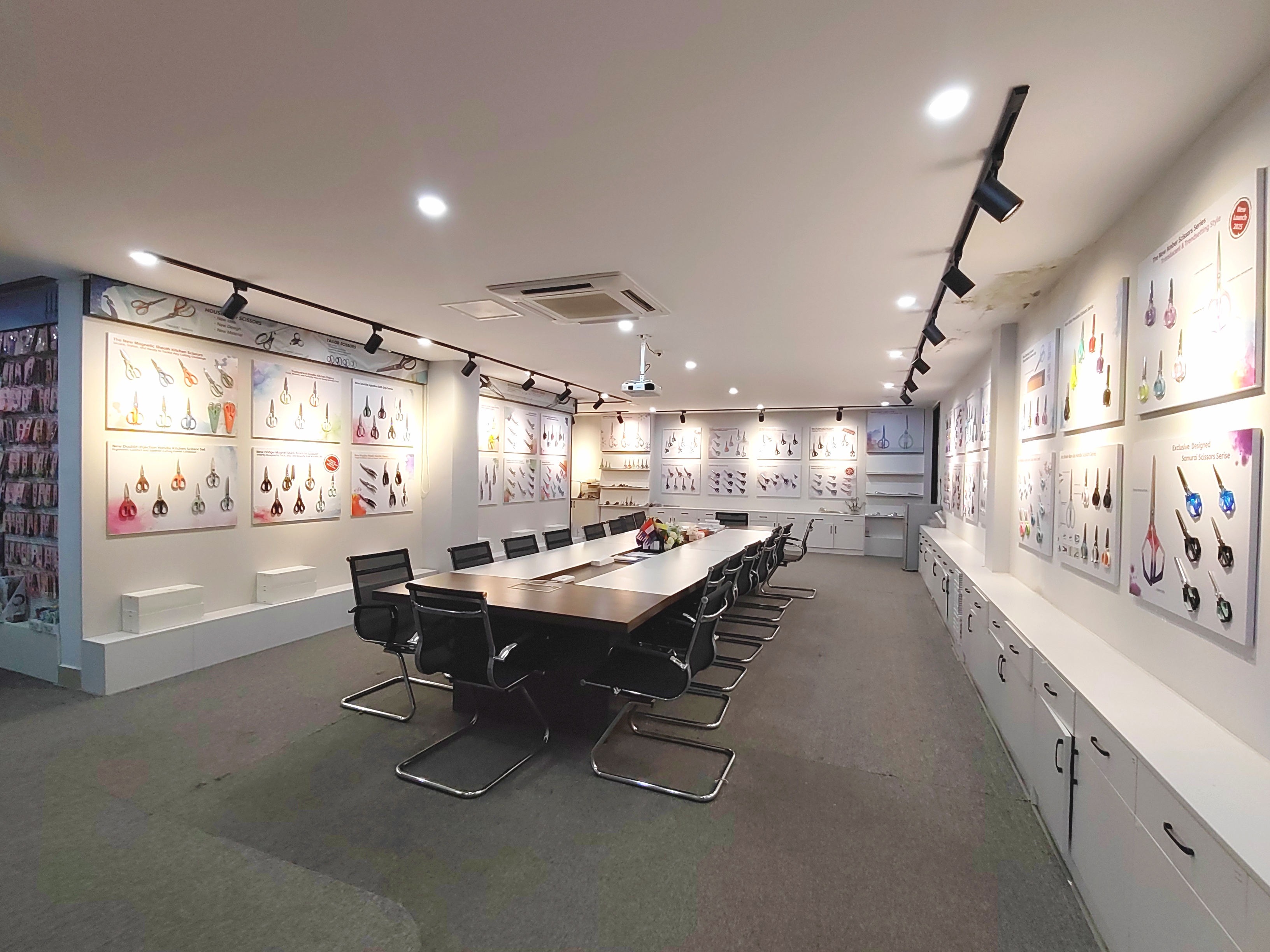
What Buyers Can Expect in the Scissors Showroom
The showroom presents several common scissor categories together, making it easier to compare intended use and merchandising direction. Instead of reviewing single samples in isolation, visitors can look across groups such as tailor scissors, student scissors, stationery scissors, household scissors and kitchen scissors. That helps buyers decide whether they need a focused product line or a broader assortment.
For importers, chain stores and brand owners, this type of display can support early-stage range planning. A buyer can check whether the visual style, handle shape, size range and intended user group match the target market. For example, a back-to-school program may require a different selection logic than a kitchenware aisle or a sewing accessories range.
Key Takeaways
- The showroom includes multiple scissor categories, including kitchen, student, tailor, stationery and household scissors.
- Buyers should assess scissors by use case, comfort, cutting purpose, packaging options and after-sales expectations.
- Commercial details such as MOQ, lead time, customization scope and testing documents should be confirmed directly with the supplier.
- A structured showroom visit helps reduce sourcing mistakes before sample approval or bulk purchasing.
How to Compare Scissor Categories
Different scissors serve different users, so the right choice depends on the buying channel and customer expectation. A school supply distributor may prioritize safe handling and classroom suitability. A sewing retailer may focus on cutting performance for fabric. A kitchenware buyer may look for practical household use and easy cleaning expectations. Because the original article does not specify material grade, blade hardness, test results or certifications, buyers should treat those points as questions to verify rather than assumptions.
| Category | Typical Buying Scenario | Questions to Ask During Sourcing |
|---|---|---|
| Kitchen scissors | Kitchenware, home goods and general household channels | What food-contact, cleaning, packaging and use-care information can be provided? |
| Student scissors | School supply, stationery and promotional programs | What sizes, handle designs and age-appropriate usage guidance are available? |
| Tailor scissors | Sewing, craft, fabric and haberdashery retail | What cutting applications are recommended, and can samples be tested on fabric? |
| Stationery scissors | Office, school, craft and everyday desk use | What packaging formats and assortment options can support retail display? |
| Household scissors | General home use and multipurpose retail ranges | What functions are intended, and what care instructions should appear on packaging? |
Kitchen Scissors: Practical Points to Review
Kitchen scissors often attract buyers from houseware, supermarket and general merchandise channels. In the showroom, visitors can view the kitchen scissors display and discuss whether the items match their intended retail positioning. Since the source content only identifies the product category and does not provide technical specifications, buyers should ask for exact product details before making claims in their own catalog or online listing.
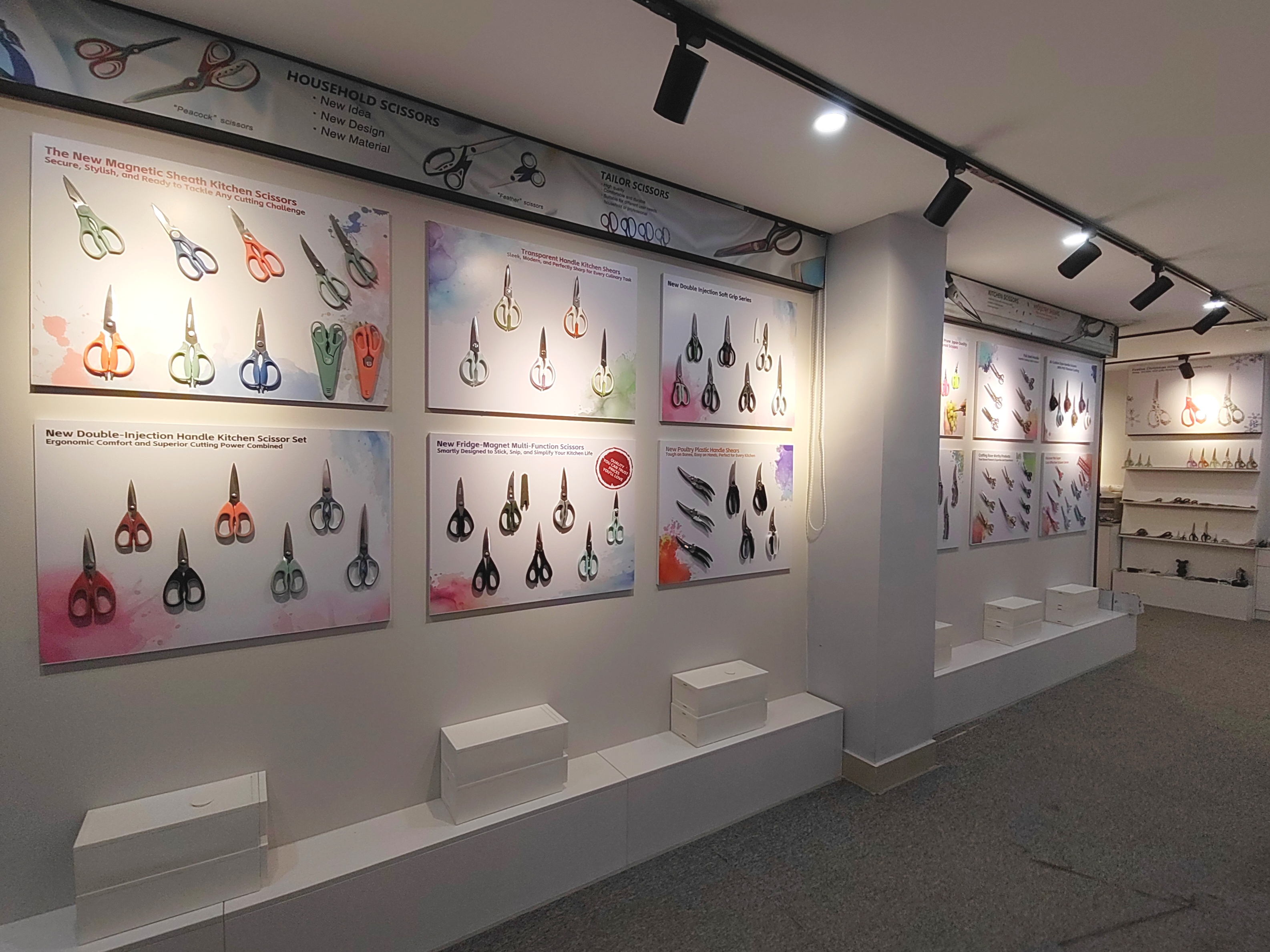
Useful questions include: What is the intended kitchen use? Are there care instructions? Is the product dishwasher-safe or hand-wash only? Are packaging artworks customizable? Are there documents related to destination-market requirements? These questions help prevent confusion between what a sample appears to do and what the supplier officially supports.
Student and Stationery Scissors for School and Office Programs
Student scissors and stationery scissors are often selected for high-volume seasonal programs, office supply shelves and promotional kits. The showroom allows buyers to compare designs visually and physically. For school-related products, buyers should be especially careful with market requirements, labeling, age guidance and packaging warnings. The original showroom note mentions student scissors but does not state any safety standard, so compliance questions should be handled directly with the supplier.
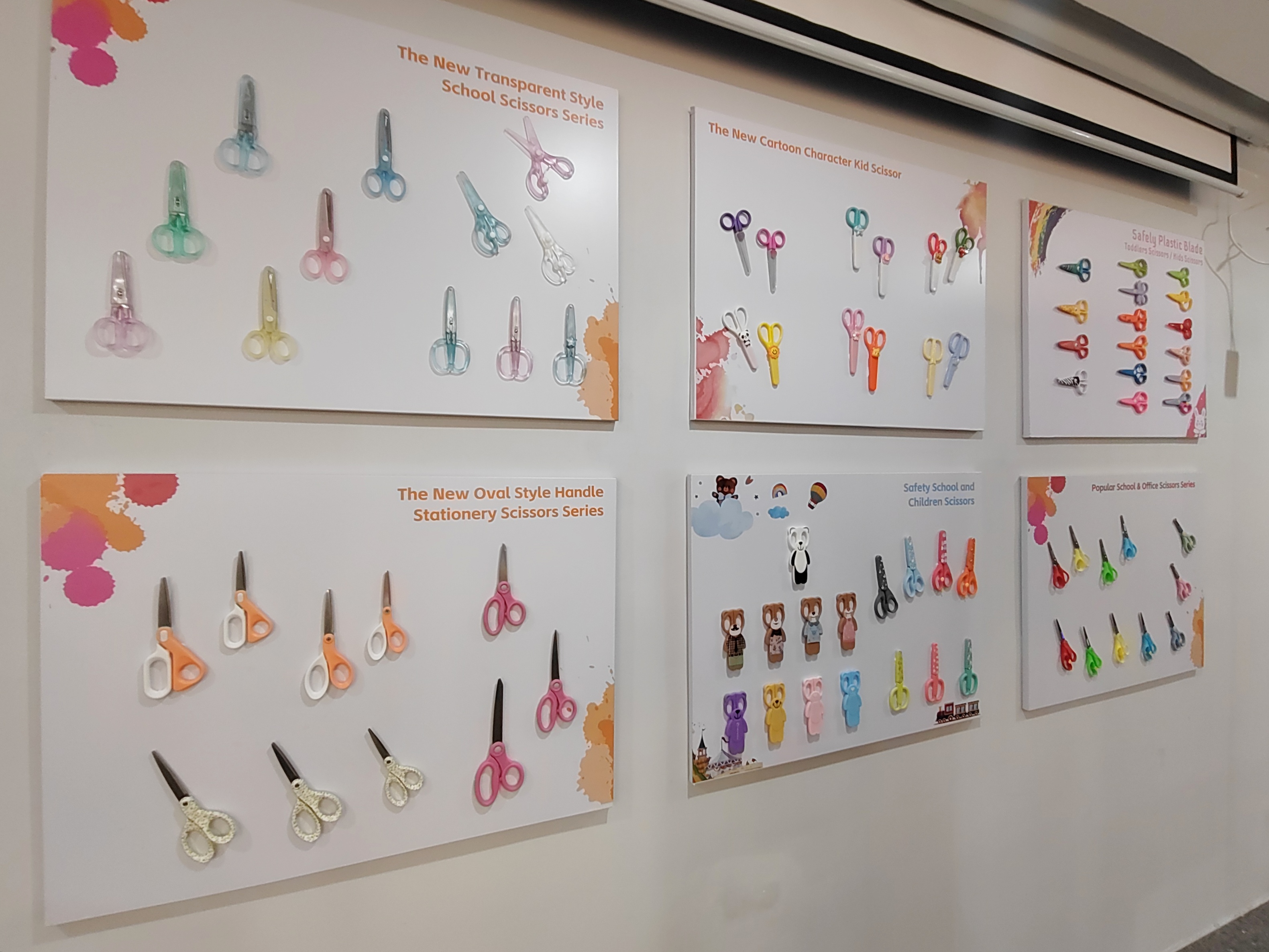
When reviewing student and stationery scissors, consider the end user first. Will the product be used by children, office workers, craft hobbyists or general consumers? That decision affects size selection, handle comfort, retail price positioning and packaging style. Buyers should also ask whether mixed assortments, color options or private label packaging can be discussed, without assuming availability until confirmed.
Tailor Scissors for Fabric and Craft Buyers
Tailor scissors serve a more specialized audience than general stationery scissors. Sewing stores, fabric retailers, craft distributors and e-commerce sellers may need products that feel credible for textile cutting. In the showroom, buyers can handle tailor scissors and consider how they might fit into a sewing accessories range. However, actual performance should be verified through sample testing on the materials relevant to the buyer's market.
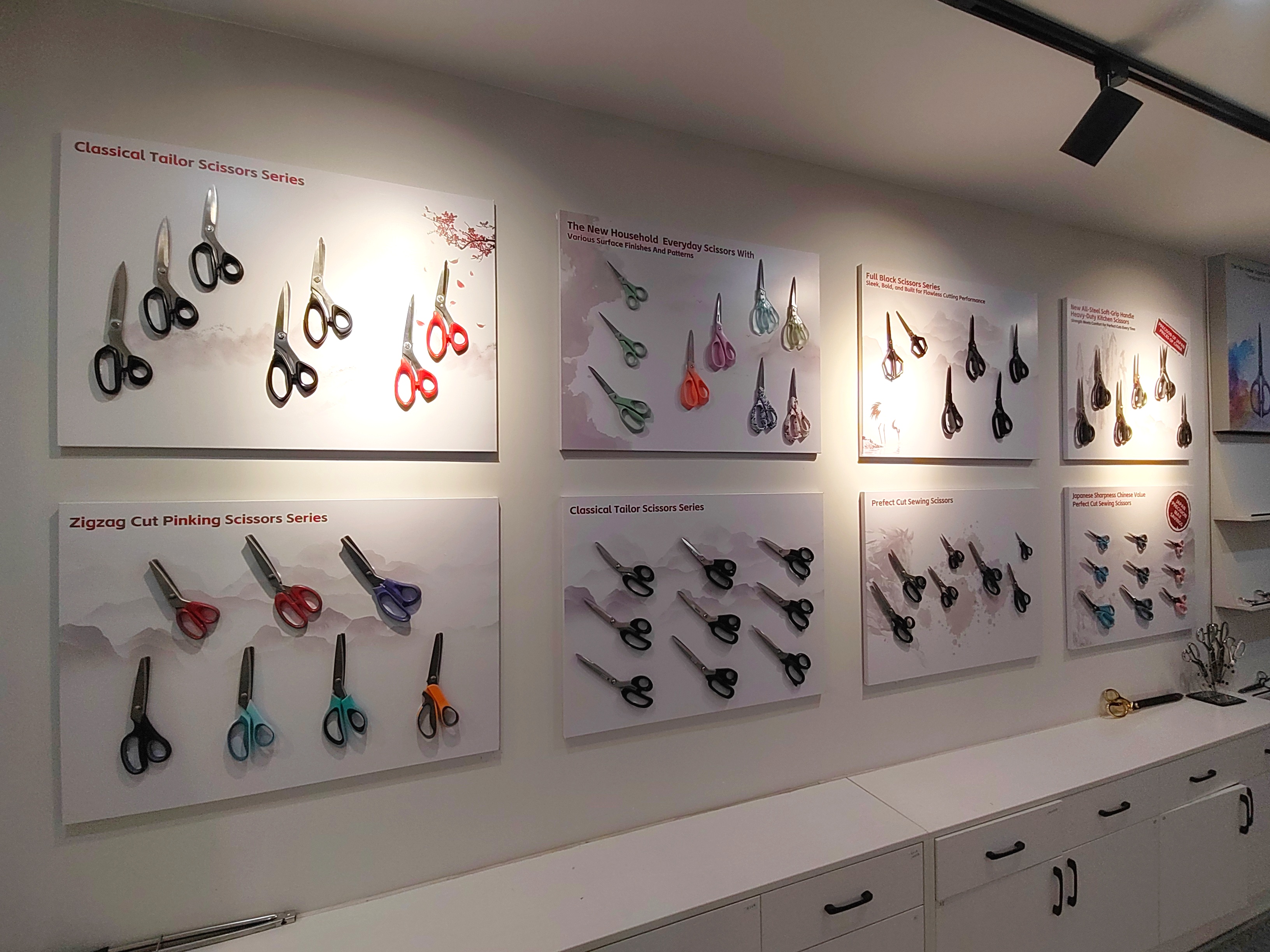
Before confirming a tailor scissors order, ask which fabric types the product is intended for, whether replacement or care information is available and what packaging best communicates the use case. If the item will be sold online, request accurate dimensions, weight, product photos and approved copy so listings do not overstate the product's features.
Household Scissors and Assortment Planning
Household scissors can cover a broad range of everyday cutting tasks, so sourcing teams should define the role of each item in the product line. A basic household scissor may be positioned differently from a kitchen scissor, craft scissor or stationery scissor. In a showroom visit, the value comes from comparing these categories side by side and avoiding overlap that may confuse retail buyers or consumers.
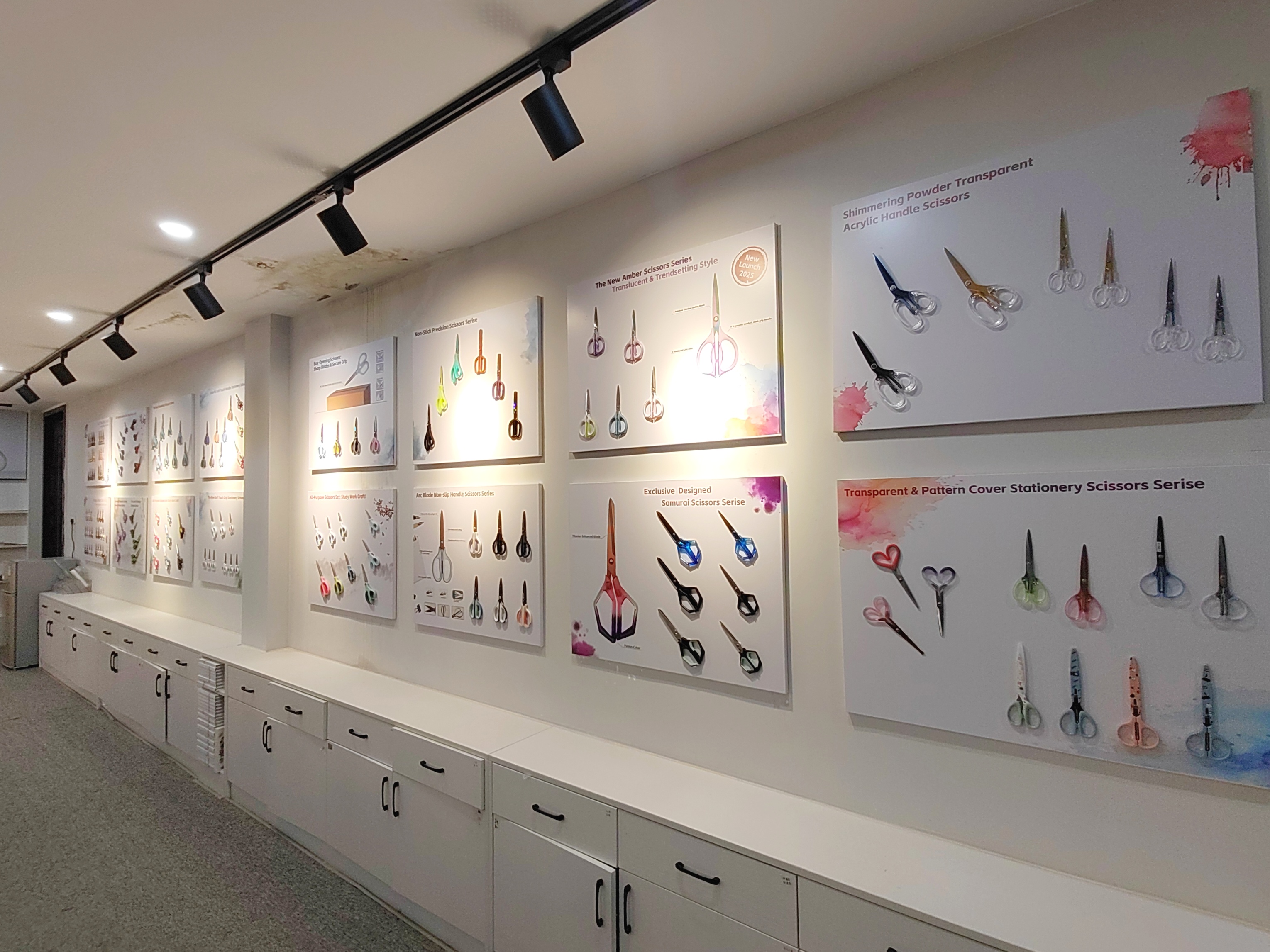
For wholesale assortment planning, consider building a simple good-better-best structure, a school-and-office range, or a kitchen-and-home range. The exact structure should depend on confirmed product specifications, target price points and destination market requirements. Ask the supplier which options are currently available for sampling and which details must be confirmed before quotation.
Showroom Visit Checklist for B2B Buyers
- Define the target channel before the visit: supermarket, school supply, kitchenware, sewing, e-commerce or promotional use.
- List the scissor categories needed and separate essential items from optional range extensions.
- Handle samples and check comfort, size, opening motion and intended use, but do not rely on appearance alone.
- Request confirmed specifications, packaging options, lead time, MOQ, customization process and carton information.
- Ask what documents or declarations may be available for your destination market, if required.
- Take notes and photos only as permitted, then compare samples after the visit with your internal buying team.
FAQ
What types of scissors are shown in the showroom?
The source article explicitly mentions tailor scissors, student scissors, stationery scissors, household scissors and kitchen scissors.
Can buyers place OEM or wholesale inquiries after visiting?
Buyers can use the showroom visit to start sourcing discussions, but details such as OEM scope, MOQ, pricing, lead time and packaging customization should be confirmed directly with the supplier.
Are material grades or certifications stated for these scissors?
No. The original article does not provide material grades, certifications, testing results or compliance claims. Buyers should request official product specifications and documents when needed.
How should a buyer choose between student, stationery and household scissors?
Start with the end user and sales channel. Student scissors suit school-related programs, stationery scissors fit office and desk use, and household scissors support general home cutting tasks.
Why visit a showroom instead of reviewing only photos?
A showroom visit lets buyers compare categories, handle samples, review packaging direction and ask sourcing questions in a more structured way before requesting quotations or samples.
Final Thoughts
Bonet Houseware's new scissors showroom is useful because it gathers several scissor categories in one place and gives buyers a clearer view of possible assortment directions. The most productive visit is not a quick walk-through, but a structured sourcing review. Compare products by use case, ask for confirmed details and keep commercial claims tied to verified information. That approach helps buyers select scissors more responsibly for retail, wholesale and OEM-related programs.
