








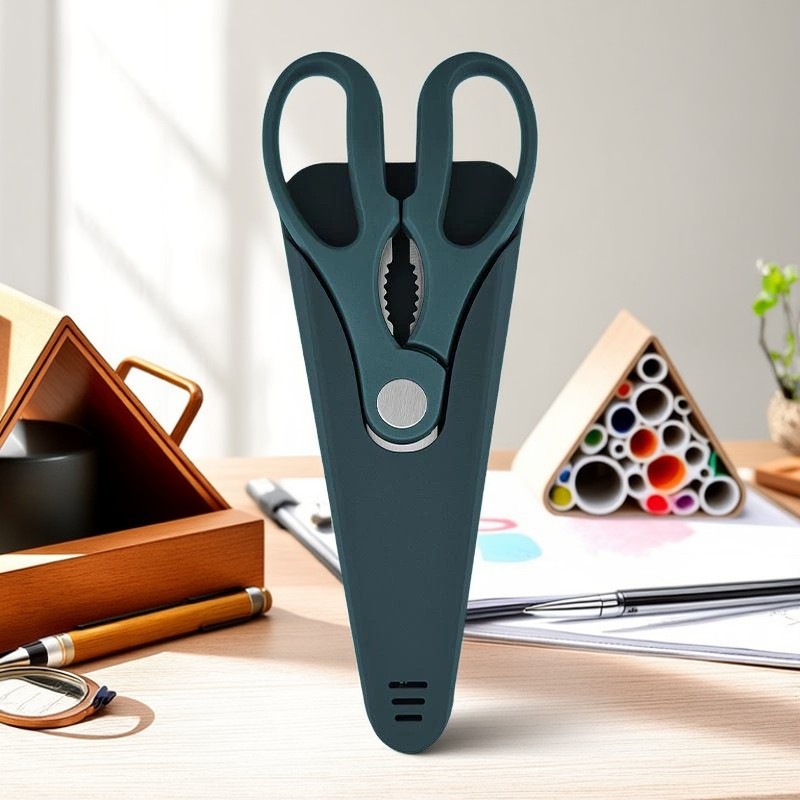
Magnetic Kitchen Scissors: Practical Selection and Use Guide
Magnetic kitchen scissors are designed for cooks who want one accessible cutting tool for everyday preparation tasks. The original product description highlights a multipurpose kitchen scissor with high-strength stainless steel precision blades, an integrated nutcracker, a bottle opener, a fish scale scraper, ergonomic handles suitable for left- and right-handed users, a modern matte finish, and a sheath. Those details make the product relevant for home kitchens, food preparation areas, and retail buyers looking for a versatile kitchen accessory.
This guide explains how to evaluate magnetic kitchen scissors for real use rather than focusing only on appearance. It covers common tasks, feature trade-offs, care routines, and the questions buyers should ask before purchasing for household use, retail shelves, promotional programs, or wholesale sourcing.
Key Takeaways
- Magnetic kitchen scissors are useful when they combine cutting performance with safe, visible storage.
- Stainless steel blades are important, but buyers should still ask about the specific grade, hardness, and corrosion resistance.
- Integrated tools such as a nutcracker, bottle opener, and fish scale scraper can save drawer space if they are comfortable and easy to clean.
- Ergonomic handles matter for both left- and right-handed users, especially during repetitive food preparation.
- For wholesale or OEM sourcing, confirm packaging, labeling, testing, sample availability, and production details directly with the supplier.
What Magnetic Kitchen Scissors Are Used For
Kitchen scissors are often faster than a knife for small cutting jobs. They can trim herbs, cut poultry skin, portion thin meat, open food packaging, snip noodles, and remove fins from fish. The magnetic element is especially practical when the scissors need to be stored on a refrigerator side, magnetic strip, or other compatible metal surface, reducing the chance that they disappear into a crowded drawer.
The source article describes the scissors as suitable for cutting vegetables, meat, fish, packaging, cracking walnuts, scaling fish, and opening bottles. These are broad kitchen tasks, so users should match the tool to the job. Scissors can help with light to moderate preparation, but hard bones, frozen foods, or non-food materials may damage blades or loosen pivots if the tool is not designed for that load.
Features to Check Before Buying
The most important feature is the blade. The source states that the blades are made from high-strength stainless steel and designed for precision cutting. Stainless steel is widely used in kitchen tools because it resists rust better than many carbon steels, but not all stainless steels perform the same. Buyers should ask the supplier which stainless steel grade is used, whether the blades are hardened, and how the edge is finished.
Handle design is also important. The original article notes ergonomic grip handles suitable for left- and right-handed users. In practice, users should check whether the handle openings fit different hand sizes, whether the inner edges feel smooth, and whether the tool remains comfortable when cutting slippery ingredients.
Integrated functions can be helpful, but only when they do not interfere with cleaning or cutting. A nutcracker between the handles, a bottle opener, and a fish scale scraper are useful additions for compact kitchens. However, buyers should inspect whether these areas trap food residue, whether the opener edges are smooth, and whether the pivot remains stable after repeated use.
Comparison Checklist for Selection
| Selection Point | Why It Matters | Questions to Ask |
|---|---|---|
| Blade material | Affects sharpness, corrosion resistance, and durability | What stainless steel grade is used? Is hardness tested? |
| Magnetic storage | Keeps scissors visible and easy to reach | What surface is the magnet intended for? How strong is the hold? |
| Handle comfort | Reduces strain during repeated cutting | Is the design tested with left- and right-handed users? |
| Integrated tools | May replace separate openers or nutcrackers | Are the opener, nutcracker, and scraper easy to clean? |
| Sheath or cover | Improves blade protection and storage safety | Is the sheath included in retail packaging? |
| Cleaning method | Influences hygiene and long-term condition | Are the scissors separable? Are dishwasher claims supported? |
Use and Care Tips
Good care extends the life of kitchen scissors. After cutting meat, fish, or seafood, wash the blades promptly with warm water and mild detergent. Dry the pivot and handle area before storage because moisture can collect in joints and around integrated tools. If the scissors include a sheath, make sure both the sheath and blades are dry before putting them away.
- Use the scissors only for food and kitchen packaging unless the supplier states otherwise.
- Avoid twisting the blades when cutting hard items, as this can affect alignment.
- Clean around the nutcracker, opener, and scraper after each use.
- Store the scissors on a suitable magnetic surface or inside the sheath to protect the edge.
- Check the pivot regularly; loose or uneven blade movement can reduce cutting control.
For seafood preparation, the fish scale scraper mentioned in the original description can be convenient. Work over a sink or washable surface, rinse away scales quickly, and sanitize the tool afterward. For nuts, use moderate pressure and avoid oversized shells unless the product instructions confirm the tool can handle them.
Guidance for Retail, Wholesale, and OEM Buyers
When the buying intent is commercial, evaluation should go beyond the product photo. Retailers and distributors should request samples and test them in common preparation scenarios: cutting herbs, trimming chicken skin, opening packaging, using the bottle opener, cracking nuts, and cleaning after fish preparation. The goal is to confirm whether the tool feels balanced and whether the extra functions are practical rather than decorative.
For OEM or wholesale sourcing, do not assume specifications that are not stated. Ask the supplier for blade material grade, handle material, magnet type or holding method, sheath material, packaging options, carton details, labeling requirements, and available customization. If compliance is relevant to your market, ask what food-contact documentation, safety testing, or third-party reports can be provided. Also confirm sample lead time, production lead time, inspection process, after-sales policy, and whether any claims on packaging require additional proof.
Buyers should also compare how the product is positioned. A matte finish and modern look may support retail appeal, but performance, cleanability, and safe storage are the factors that most affect repeat satisfaction. If the scissors will be sold online, clear photos should show the blades, handle shape, magnetic storage method, sheath, and each integrated function.
Common Mistakes to Avoid
One common mistake is choosing kitchen scissors only because they include many functions. More functions are not automatically better if the tool becomes heavy, awkward, or hard to wash. Another mistake is overlooking storage. A magnetic design is useful only when the magnet works with the buyer's intended surface and holds the tool securely under normal kitchen conditions.
It is also important not to overstate material or safety claims. If the supplier only states stainless steel, avoid advertising a specific grade. If the product is not supported by dishwasher testing, do not promise dishwasher-safe performance. Accurate descriptions reduce returns and help buyers build trust with customers.
FAQ
Are magnetic kitchen scissors different from regular kitchen scissors?
They perform similar cutting tasks, but the magnetic feature supports convenient storage on compatible metal surfaces. This can make the scissors easier to find and keep away from crowded drawers.
Can these scissors cut meat and fish?
The original description states that the stainless steel precision blades are intended to cut challenging textures such as meat and fish. Users should still avoid bones or frozen foods unless the supplier confirms the scissors are designed for those tasks.
What integrated tools are mentioned for this product?
The source article mentions a nutcracker, bottle opener, and fish scale scraper, along with ergonomic handles and a sheath.
How should kitchen scissors be cleaned?
Wash them after use with mild detergent, remove food residue from the pivot and integrated tools, and dry thoroughly before storage. Follow the supplier's cleaning instructions if provided.
What should wholesale buyers ask before ordering?
Ask about material grade, magnet strength, handle material, packaging, labeling, samples, inspection standards, lead time, and any food-contact or safety documentation required for the destination market.
