




Multi-Blade Peelers for Easier Kitchen Prep
A good peeler is a small tool, but it affects the speed, safety and consistency of daily kitchen work. For home cooks, caterers and food-service buyers, the right choice depends on the produce being prepared and the type of cut required. The original Bonet Houseware article introduced three useful formats: a Sleekgrip Y-peeler, a tri-peeler set and a compact 3-in-1 rotary peeler. Each approach solves a slightly different kitchen problem.
This guide explains how to compare these multi-blade peelers, what each blade style is typically used for and what practical questions to ask before buying for personal use, wholesale supply or OEM sourcing.
Key Takeaways
- A Y-peeler is often preferred for quick, straight peeling on common fruit and vegetables.
- A tri-peeler set separates straight, serrated and julienne blades, which can reduce confusion during prep.
- A 3-in-1 rotary peeler saves drawer space by combining multiple blade functions in one handle.
- For B2B sourcing, ask suppliers to confirm blade material, handle material, packaging, replacement policy and any applicable compliance documents instead of assuming specifications.
What Makes a Multi-Blade Peeler Useful?
Traditional peelers usually do one job: remove a thin layer of skin. Multi-blade peelers expand that job by adding blade profiles for different produce textures and presentation styles. A straight blade is useful for potatoes, carrots, apples and similar produce. A serrated blade can grip softer skins, such as tomatoes or ripe fruit, where a smooth blade may slide. A julienne blade cuts narrow strips for salads, garnishes, vegetable noodles and stir-fry preparation.
The main benefit is control. Instead of forcing one blade to perform every task, cooks can choose the blade that fits the ingredient. That can reduce waste, improve the appearance of prepared food and make repetitive prep more comfortable.
Sleekgrip Y-Peeler: Best for Everyday Peeling
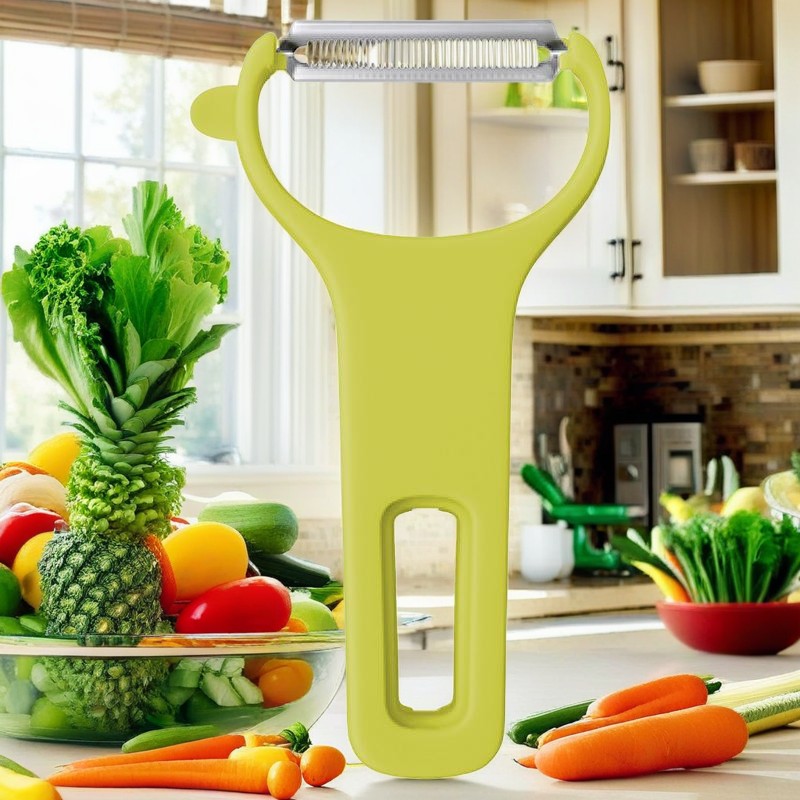
The Sleekgrip Y-peeler described in the source article is shown in a vibrant lime color and is presented as a fruit and vegetable peeler with an ergonomic non-slip handle. A Y-shaped peeler is popular because the pulling motion feels natural for many users, especially when peeling round or long produce.
The original description also notes a rust-resistant stainless blade with a micro-serrated edge and a side blemish remover. These are useful details for everyday prep. A micro-serrated edge can help start cuts on tougher or more delicate skins, while a side remover is practical for potato eyes or small surface blemishes. Buyers should still confirm the exact blade material, finish and care instructions with the supplier before purchasing in bulk.
Tri-Peeler Set: Best When Tasks Are Separated
A three-piece peeler set can be useful in busy kitchens because each tool has a clear purpose. According to the source, the set includes a straight green blade for classic fruit and vegetable peeling, a serrated lime blade for soft produce such as tomatoes and a yellow julienne blade for decorative strips or zoodles.
This format works well when more than one person is preparing food at the same time. A cook can pick up the yellow julienne peeler without adjusting a mechanism, while another person uses the straight peeler for potatoes. The original article also mentions bright colors, stackable design and ergonomic grips. Color coding may help staff identify the right tool quickly, while stackability is helpful where drawer space is limited.
3-in-1 Rotary Peeler: Best for Compact Storage
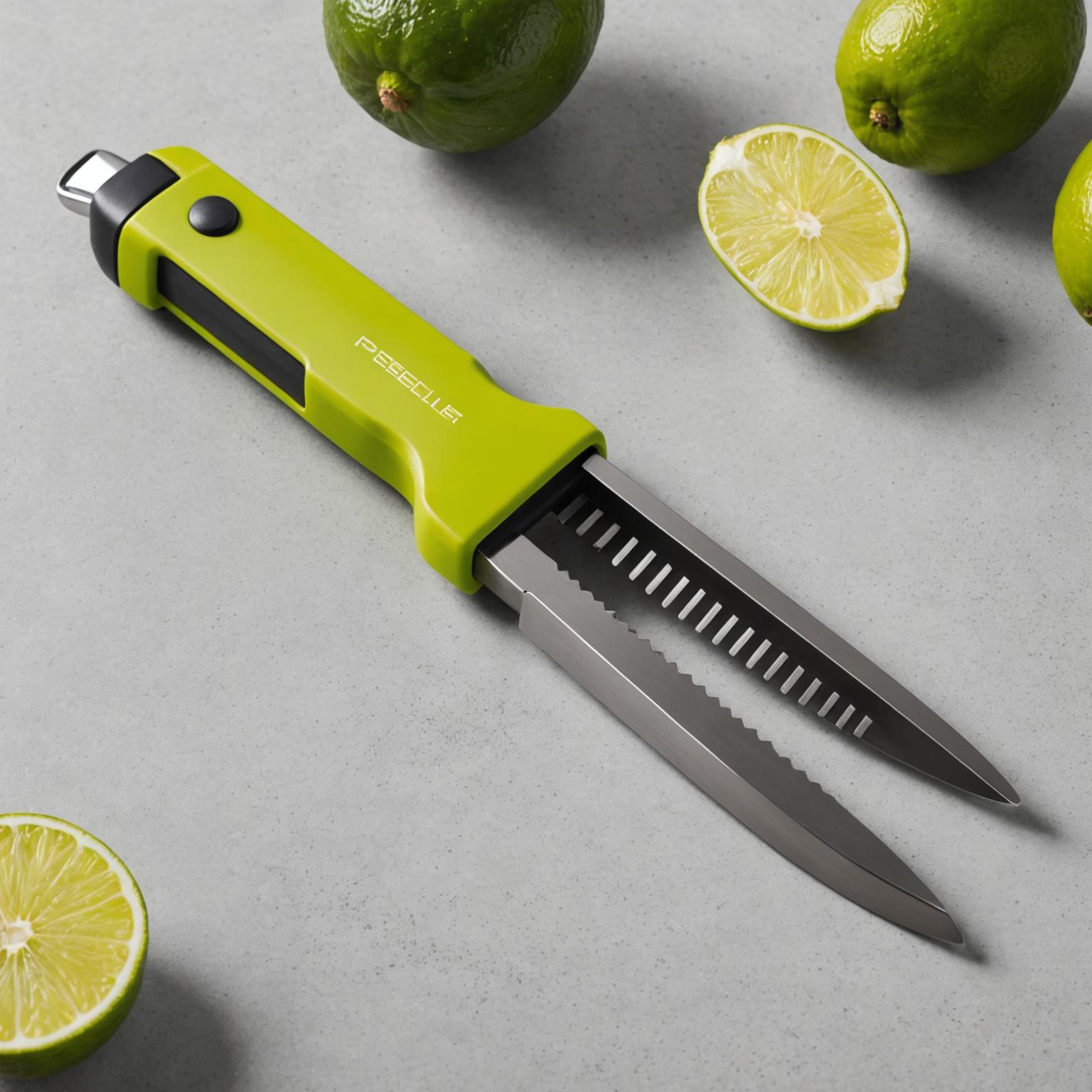
The 3-in-1 rotary peeler is designed for kitchens where space matters. The source describes a compact green and yellow tool that changes between three blade types with a twist: a straight blade for daily peeling, a julienne blade for decorative strips and a serrated blade for softer fruit such as kiwi.
The advantage is convenience. Instead of storing three separate peelers, the user keeps one tool in the drawer. The trade-off is that the rotating mechanism should be easy to operate and clean. Before buying, check whether the blade selector locks securely, whether food can become trapped near the rotating section and whether the tool is comfortable for both right- and left-handed users.
Comparison Checklist for Selecting a Peeler
| Peeler type | Best use | Advantages | Questions to ask |
|---|---|---|---|
| Y-peeler | Daily peeling of fruit and vegetables | Simple motion, good control, side blemish remover may be included | What is the blade material? Is the handle non-slip when wet? |
| Tri-peeler set | Kitchens needing straight, serrated and julienne functions at once | Clear task separation, color coding, stackable storage as described | Are all blade types included? How is the set packaged for retail or wholesale? |
| 3-in-1 rotary peeler | Small kitchens or travel kits needing multiple blade styles | Compact, multi-function, fewer loose tools | Does the rotary selector lock firmly? Is it easy to rinse clean? |
How to Choose for Home, Retail or Food-Service Use
For consumer-facing selection, begin with the foods prepared most often. If the kitchen mainly handles potatoes, carrots and apples, a comfortable Y-peeler may be enough. If salads, garnishes and vegetable noodles are common, include a julienne option. If drawer space is limited, a rotary model may be the most efficient choice.
For retailers, wholesalers or OEM buyers, selection should go beyond appearance. Ask the supplier for clear answers before placing a larger order:
- What are the confirmed blade and handle materials?
- Are care instructions, warnings and country-specific labeling available?
- Can packaging be customized, and what artwork requirements apply?
- What quality checks are performed before shipment?
- Are samples available for grip, blade sharpness and cleaning evaluation?
- What are the lead time, carton details, MOQ and replacement terms?
These questions help prevent assumptions. Do not rely on general terms such as “durable” or “professional” without supporting product details from the supplier.
Use and Care Tips for Better Results
Even a sharp peeler performs poorly if used incorrectly. Wash produce first so dirt does not dull the blade. Use light, even pressure instead of digging into the surface. For soft fruit, try the serrated blade before switching to a knife. For julienne cuts, keep the produce stable on a board and pull in consistent strokes.
After use, rinse the blade area promptly, especially around teeth and rotating parts. Dry the peeler before storage to reduce water spots and protect the edge. Store peelers where blades do not rub against heavy utensils. If the blade becomes bent, loose or difficult to clean, replace the tool rather than forcing it through produce.
Practical FAQ
Which peeler is best for potatoes?
A straight blade Y-peeler is usually the simplest choice for potatoes because it offers steady control and quick strokes. A side blemish remover is useful for removing eyes.
When should I use a serrated peeler?
Use a serrated peeler for softer or slippery skins, such as tomatoes, kiwi or ripe fruit. The teeth help grip the surface before the blade cuts.
Is a julienne peeler the same as a spiralizer?
No. A julienne peeler creates narrow strips with hand strokes. A spiralizer usually makes longer continuous ribbons or noodles from larger vegetables.
What should B2B buyers confirm before ordering?
Confirm blade material, handle material, packaging, labeling, sample availability, quality control process, MOQ, lead time and any required compliance documents for the target market.
Are multi-blade peelers hard to clean?
They can be easy to clean if rinsed soon after use. Rotary designs and julienne teeth need extra attention because food fibers may lodge around small gaps.
