




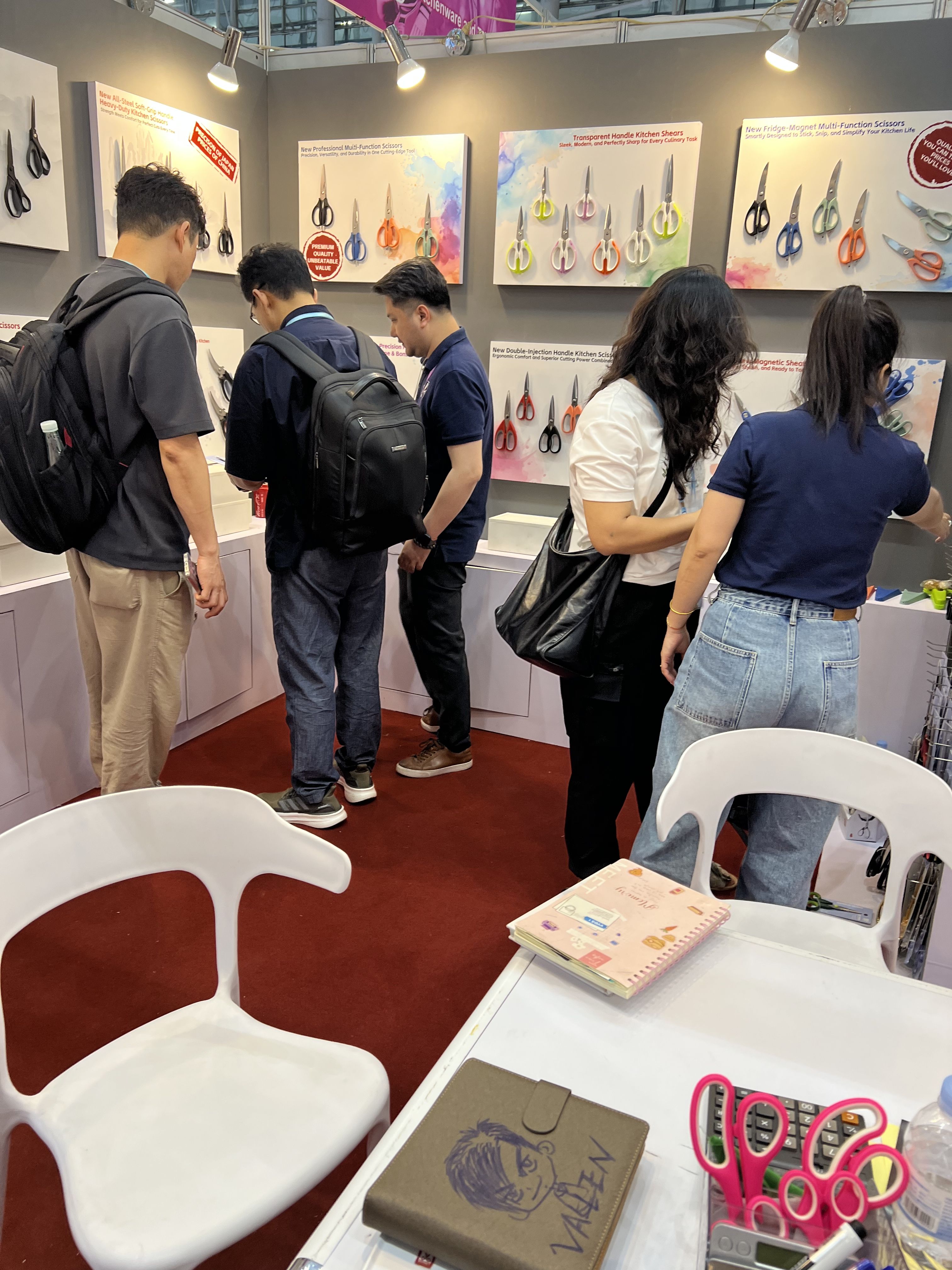
Canton Fair Kitchenware Scissors: Practical Sourcing Guide
The Canton Fair is widely known as a trade platform where buyers can compare household products, kitchenware, and daily-use tools in one place. For buyers interested in scissors and kitchen shears, the value of visiting a fair is not only seeing new designs. It is the chance to hold samples, compare cutting feel, ask supplier questions, and understand whether a product is suitable for retail, wholesale, private label, or promotional programs.
The original product focus includes three types of cutting tools: transparent-handle kitchen shears, new fulcrum magnet multifunction scissors, and universal blade handle scissors. Each can serve a different customer need. The best sourcing decision depends on intended use, packaging plan, target price level, after-sales expectations, and the supplier's ability to explain materials, quality checks, and customization options clearly.
Key Takeaways
- Kitchen shears should be evaluated by comfort, cutting control, cleaning convenience, and intended food-preparation use.
- Multifunction scissors may appeal to home, office, craft, and general daily-use buyers, but every function should be tested before ordering.
- Transparent handles can create a modern retail look, yet buyers should still ask about handle durability, finish, and grip performance.
- Do not rely on booth appearance alone; request product details, sample testing, packaging options, and quality-control information.
- For OEM or wholesale programs, confirm all commercial terms directly with the supplier rather than assuming MOQ, certifications, or lead times.
Why Scissors and Kitchen Shears Matter in Kitchenware Sourcing
Scissors are simple products, but they are used frequently and judged quickly by end users. A pair that feels loose, uncomfortable, or poorly finished can damage customer trust. In kitchenware, shears may be used for trimming food, opening packaging, cutting herbs, or handling other routine tasks. For household assortments, a dependable cutting tool can sit alongside knives, peelers, graters, and other everyday accessories.
At the Canton Fair, the main advantage is comparison. A buyer can review handle shapes, blade movement, weight balance, color options, packaging presentation, and sample consistency across multiple suppliers. This is especially useful when products look similar in photos but feel different in hand. A well-run sourcing visit should combine visual review with practical testing and a written checklist.
Product Types to Evaluate
The transparent-handle kitchen shears described in the original article are presented as a combination of modern appearance and ergonomic comfort. For buyers, the transparent handle is a visual feature that may suit contemporary kitchenware displays. The key question is whether the handle remains comfortable during repeated use and whether the material and finish resist cracking, rough edges, and discoloration under normal conditions.
The new fulcrum magnet multifunction scissors are positioned for multiple cutting needs, including craft, office, home, and general projects. Because multifunction claims can vary widely, buyers should ask the supplier to demonstrate exactly what the product is designed to do. If a magnetic fulcrum or related mechanism is part of the design, review how it affects opening, closing, alignment, cleaning, and long-term reliability.
Universal blade handle scissors are described as simple, efficient, and durable for activities around the home or workspace. This category can be suitable for value-focused assortments, but buyers should still inspect blade alignment, screw or pivot stability, handle comfort, tip finish, and packaging protection.
Comparison Checklist for Buyers
| Product Type | Best-Fit Use Case | What to Check at the Booth | Questions to Ask the Supplier |
|---|---|---|---|
| Transparent-handle kitchen shears | Kitchenware retail sets, modern household ranges, food-preparation accessories | Grip comfort, handle finish, cutting control, ease of cleaning, packaging look | What handle material is used? Can the color or packaging be customized? What quality checks are performed? |
| New fulcrum magnet multifunction scissors | Home, office, craft, and multipurpose daily-use assortments | Function demonstration, pivot smoothness, magnetic mechanism behavior, blade alignment | Which functions are included? How is the mechanism tested? Are replacement samples available for evaluation? |
| Universal blade handle scissors | General household, workspace, and promotional programs | Blade sharpness, pivot stability, handle strength, tip safety, carton protection | What blade and handle materials are offered? What packaging formats are available? What is the inspection process? |
How to Test Samples Before Placing an Order
Sample testing should be practical and repeatable. Do not only cut one piece of paper at the booth. For kitchen shears, test common kitchen tasks that match your market positioning, such as cutting herbs, trimming thin packaging, or handling soft food-preparation materials if appropriate and permitted. For general-purpose scissors, test paper, light cardboard, string, fabric-like material, and plastic packaging. Record results instead of relying on first impressions.
- Open and close the scissors at least twenty times to check smoothness and hand fatigue.
- Inspect the blade tips, inner edges, pivot area, and handle seams for burrs or rough finishing.
- Compare multiple samples from the same supplier to see whether quality is consistent.
- Check whether the product sits securely in its retail packaging and whether the packaging protects the tips.
- Ask for written product information instead of relying only on verbal explanations.
B2B Sourcing Questions for OEM, Wholesale, and Retail Programs
When sourcing from a fair, commercial details should be confirmed directly and documented. It is not safe to assume minimum order quantity, production lead time, available colors, packaging choices, testing reports, or export documentation. A reliable supplier should be able to explain what is standard, what is customizable, and what requires additional confirmation.
For OEM or private-label projects, ask whether logo placement is available on the handle, blade, packaging, or instruction insert. Confirm whether design files are needed, what artwork format is accepted, and whether a pre-production sample can be approved before mass production. If your market requires specific labeling, safety warnings, or compliance documentation, ask the supplier what they can provide and verify it through your own compliance process.
Also discuss quality control. Useful questions include: How are incoming materials checked? How is blade alignment inspected? Is there a final random inspection? How are defective items handled? Can the supplier support third-party inspection if the buyer arranges it? These questions help separate a product display from a workable sourcing partnership.
Retail Presentation and End-User Fit
Scissors and kitchen shears often compete on a retail wall or online product page where shoppers make fast comparisons. Color, handle shape, visible blade finish, and packaging clarity all influence selection. Transparent handles may attract attention, while multifunction scissors may need packaging that clearly explains each intended use. Universal scissors may benefit from simple, direct messaging about everyday tasks.
However, retail presentation should not replace product truth. Avoid exaggerated claims that cannot be supported. If a product is for kitchen use, make sure the packaging, care instructions, and warnings match the intended market. If it is a general-purpose tool, avoid implying food-contact use unless the supplier can provide the necessary product information and your compliance review supports it.
Use and Care Guidance to Include for Customers
Clear use-and-care guidance can reduce complaints and improve customer satisfaction. For kitchen shears, customers should be reminded to clean the blades after contact with food and dry the tool before storage. For multifunction scissors, instructions should explain intended materials and warn against cutting hard objects if the product is not designed for that purpose. For all scissors, safe storage matters, especially in households with children.
- Clean and dry scissors after use, particularly after kitchen tasks.
- Use the correct scissors for the task; do not force blades through materials beyond their intended purpose.
- Store with blades closed and away from children.
- Check the pivot area periodically and stop using the product if it becomes loose, damaged, or unsafe.
Practical FAQ
Are kitchen shears and regular scissors the same product?
No. Kitchen shears are generally selected for food-preparation and kitchen tasks, while regular scissors may be intended for paper, packaging, office, craft, or general household use. Buyers should confirm the intended use with the supplier.
What should buyers check first at the Canton Fair?
Start with hand feel, blade alignment, cutting performance, handle finish, and packaging protection. Then ask for written details about materials, customization, inspection, and commercial terms.
Can multifunction scissors be used for every cutting task?
Not necessarily. Multifunction means the product is designed for more than one use, but the exact functions should be demonstrated and documented. Buyers should test the tool against their intended market needs.
Should I ask for certifications before ordering?
Yes, if your target market, retailer, or product category requires specific documentation. Do not assume certificates are available. Ask the supplier what they can provide and verify requirements independently.
How can I reduce quality risks before bulk production?
Request samples, approve packaging artwork, define inspection criteria, confirm defect handling, and consider pre-shipment inspection. For OEM orders, approve a pre-production sample before mass production.
Final Buying Advice
The Canton Fair can be a productive place to compare kitchenware scissors, but the best results come from structured sourcing. Treat each product as both a tool and a retail item. Test how it cuts, inspect how it is finished, consider how customers will understand it, and ask suppliers direct questions about production and quality control. Whether you are evaluating transparent-handle kitchen shears, a new fulcrum magnet multifunction design, or universal blade handle scissors, careful sample review is the safest path to a better purchasing decision.
