





Discover Premium Kitchen Scissors from a Renowned Scissors Factory
Kitchen scissors are a small tool with a large role in daily food preparation. For retailers, distributors, promotional buyers, and private-label brands, the challenge is not only finding a sharp pair of scissors, but selecting a dependable scissors factory that can support consistent product quality, clear communication, and practical packaging or OEM needs. A good sourcing decision starts with understanding what kitchen users actually value: clean cutting, safe handling, easy cleaning, and features that make sense in real kitchens.

Key Takeaways
- Kitchen scissors should be evaluated by cutting performance, handle comfort, cleaning requirements, and safe use.
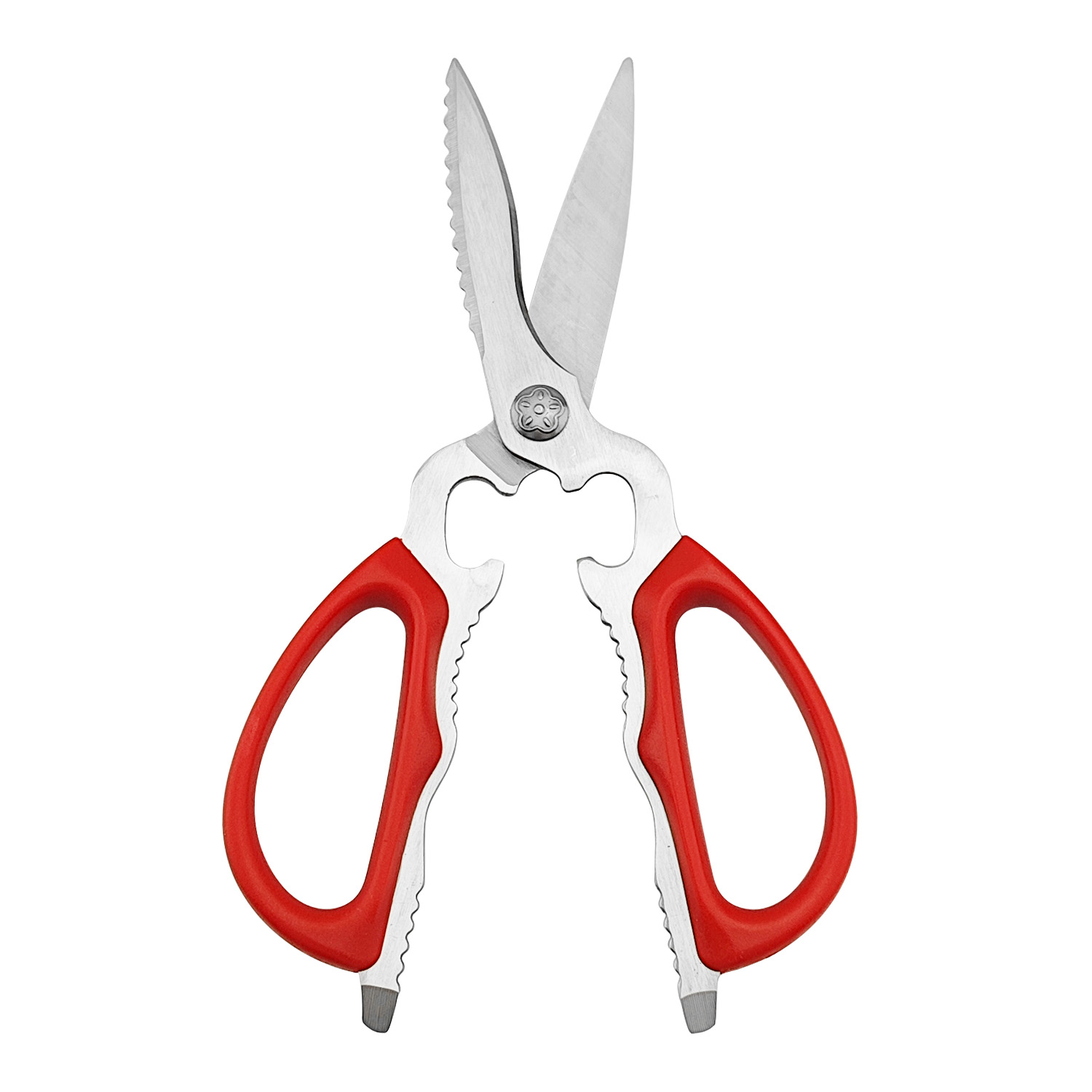
- The original product description highlights stainless steel blades, a curved serrated blade, ergonomic handles, a visible color, a nutcracker, and a bottle opener.
- B2B buyers should ask a supplier for material details, samples, packaging options, lead times, quality inspection steps, and OEM feasibility.
- A reliable sourcing process compares real samples rather than relying only on catalog claims.
Why Kitchen Scissors Matter in a Product Line
Kitchen scissors appeal to a wide customer base because they solve many simple tasks: trimming herbs, cutting poultry, opening food packaging, portioning vegetables, or handling small preparation jobs where a knife and board may feel excessive. For a homeware assortment, they can work as a standalone item, part of a kitchen tool set, or an add-on product for seasonal promotions.
From a sourcing perspective, kitchen scissors are also a product where small differences are easy for customers to notice. A loose pivot, uncomfortable handle, weak cutting edge, or difficult cleaning process can quickly affect repeat sales and reviews. That is why buyers should treat scissors as a functional tool rather than a low-attention accessory.
Blade Material and Cutting Design
The source article states that the scissors are crafted from durable stainless steel. Buyers should still ask a factory to identify the exact steel type used, the blade thickness, the hardness target if available, and whether the material is suitable for the intended market positioning. Do not assume a specific grade unless the supplier provides it in writing.
Blade geometry is just as important as material. The original article mentions a curved, serrated blade designed to grip food and reduce slipping. This design can be useful for poultry skin, herbs, and packaging because the serrations help hold the item as the blades close. When checking samples, buyers should test both soft and firm materials to see whether the scissors cut cleanly or crush, tear, or twist during use.
Handle Comfort, Visibility, and Everyday Safety
Ergonomic handles were highlighted in the original description, and they deserve attention in any buyer evaluation. A handle should feel stable in both small and large hands, avoid sharp pressure points, and allow enough control when cutting thicker foods. If the product is intended for broad retail distribution, ask whether left-handed usability has been considered or whether the design is primarily right-handed.
The original article also notes a vibrant, easy-to-find color. This is practical in busy kitchens, where tools may be placed among towels, cutting boards, and packaging. For wholesale or OEM orders, buyers can ask whether color matching, private-label handle colors, or branded packaging are available, but they should confirm minimum order requirements and approval processes directly with the supplier.
Multifunction Features: Useful or Unnecessary?
Modern kitchen scissors often include extra functions. The source article specifically mentions a built-in nutcracker integrated into the handles and a bottle opener located on the blade. These features can add value when they are comfortable to use and do not interfere with the main cutting function. However, every extra function should be tested, not accepted as a selling point by default.
For B2B buyers, multifunction features can help differentiate a product on a shelf or marketplace listing. At the same time, they may add production complexity, require clearer instructions, or affect cleaning. Ask the scissors factory how these features are formed, whether they are part of the same metal body or an added component, and how they are inspected during production.
Comparison Checklist for Sourcing Kitchen Scissors
| Evaluation Area | What to Check | Questions to Ask the Supplier |
|---|---|---|
| Blade material | Stainless steel is stated, but exact grade is not specified | What steel type is used, and can it be documented? |
| Cutting performance | Clean cuts on herbs, poultry, and packaging | Can samples be tested before order confirmation? |
| Serrated curved blade | Grip, control, and reduced slipping during cutting | Is this blade design standard or customizable? |
| Handle design | Comfort, hand fit, pressure points, and control | Are handle colors or branding options available? |
| Extra functions | Nutcracker and bottle opener usability | How are multifunction parts inspected? |
| OEM and packaging | Logo, color, packaging, instruction needs | What are the MOQ, lead time, artwork rules, and sample costs? |
OEM and Wholesale Buying Considerations
If you are sourcing for retail, e-commerce, hospitality, or promotional channels, clarify commercial details early. Ask the kitchen scissors supplier about sample availability, production lead time, packaging formats, carton packing, barcode support, and whether product instructions can be customized. If you need OEM kitchen scissors, confirm what can realistically be changed: handle color, logo placement, packaging artwork, blade finish, or accessory set configuration.
Buyers should also ask about the factory's quality control process without assuming specific certifications or test results. Useful questions include: What inspections are performed before shipment? How is blade sharpness checked? How is pivot tightness controlled? What happens if a batch fails internal inspection? Can pre-shipment inspection by a third party be arranged if needed?
Sample Testing Before Committing to an Order
A catalog description is not enough for a product that customers will use by hand. Request samples and test them in realistic conditions. Cut herbs, thin plastic packaging, cardboard, and poultry or comparable materials if appropriate for your market. Wash and dry the scissors several times to see whether the pivot traps residue or becomes difficult to move.
- Check the first impression: weight, finish, handle comfort, and edge alignment.
- Test repeated cuts to see whether the scissors stay smooth and controlled.
- Use the nutcracker and bottle opener if included, noting whether they feel practical.
- Review packaging for clarity, safety warnings, and retail shelf suitability.
- Record questions and request written answers before confirming bulk production.
Use and Care Points to Communicate to Customers
Even strong kitchen scissors need proper care. Product listings or packaging should give clear guidance on intended use, cleaning, drying, and storage. If the scissors are not specified as dishwasher safe, avoid making that claim. Instead, suggest that users follow the supplier's care instructions and dry the tool after washing to help maintain performance.
For consumer-facing content, explain that kitchen scissors are not a replacement for every knife task. They are best for controlled cutting jobs where their shape gives an advantage. Clear use guidance reduces complaints and helps customers understand the product's real value.
Practical FAQ
What should buyers ask a scissors factory first?
Start with material details, sample availability, customization options, MOQ, lead time, packaging choices, and quality inspection steps.
Are serrated kitchen scissors better than smooth blades?
Serrated blades can help grip slippery foods and packaging, but performance depends on blade geometry, sharpness, and pivot quality. Testing samples is the safest approach.
Can kitchen scissors be customized for private label?
Often they can, but the available options vary by supplier. Ask about logo placement, handle color, packaging artwork, sample approval, and any tooling requirements.
What multifunction features are mentioned in the original product article?
The original article mentions a built-in nutcracker in the handles and a bottle opener on the blade.
How can buyers reduce sourcing risk?
Compare samples, document specifications, approve packaging artwork before production, ask for inspection procedures, and avoid relying on unverified claims.
Final Sourcing Advice
Premium kitchen scissors are defined by practical performance, not vague marketing language. For buyers, the best approach is to combine product testing with careful supplier questions. Confirm the stainless steel details, evaluate the curved serrated blade, check handle comfort, and decide whether multifunction features genuinely support your target customers. A capable scissors factory should be able to answer technical and commercial questions clearly, provide samples for review, and support a specification that matches your market needs.
