





How to Source Kitchen Scissors from a Scissors Factory
Kitchen scissors are simple to use, but they are not simple products to source well. For retailers, importers, kitchenware brands and promotional product buyers, the challenge is to find a scissors factory that can deliver consistent cutting performance, comfortable handling and packaging suitable for your market. A good pair of kitchen shears may be used for herbs, food packaging, poultry preparation and small everyday kitchen tasks, so buyers should look beyond appearance and ask practical questions about materials, construction and quality control.
Key Takeaways
- Choose a scissors factory by evaluating samples, production consistency, communication and quality-control procedures, not by product photos alone.
- Useful kitchen scissors should balance cutting strength, grip comfort, cleaning convenience and safe handling.
- For OEM scissors projects, confirm branding, packaging, sample approval, inspection standards and lead-time expectations before ordering.
- Do not assume specifications such as certifications, MOQ, capacity or test results; ask the supplier to provide current written details.
What Buyers Should Expect from Kitchen Scissors
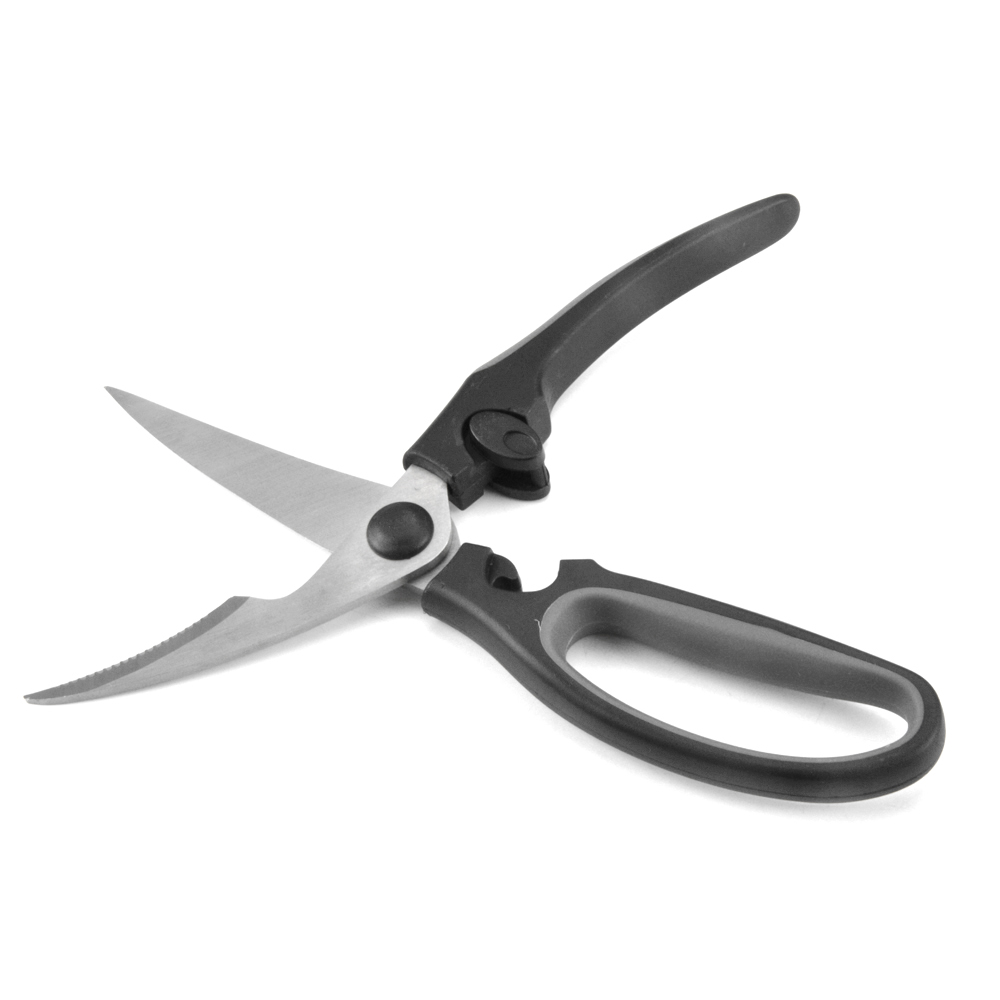
Kitchen scissors are expected to perform across several common cooking and food-preparation tasks. The original product description highlights high-carbon stainless steel blades, micro-serrated edges, ergonomic soft non-slip handles, poultry-use capability and an integrated bottle opener. These are useful details because they describe functions that buyers can verify during sample testing.
Micro-serrated edges can help grip slippery foods, while ergonomic handles can make repetitive cutting more comfortable. If the scissors are marketed for poultry, buyers should test them on realistic food-preparation tasks rather than relying only on a showroom demonstration. If a bottle opener is included, check whether it is positioned conveniently and whether the overall structure still feels stable in the hand.
How to Evaluate a Scissors Factory
A scissors factory should be assessed as a production partner, not just a vendor. Start by requesting clear product information, available customization options and sample procedures. Ask how the factory controls blade sharpness, handle assembly, surface finish and packaging accuracy. If you are buying for retail, also ask how products are protected during transit so the final presentation remains suitable for shelves or online fulfillment.
Buyers should avoid vague promises. Instead of accepting phrases such as premium quality or strict standards without evidence, ask what checks are performed and at which stages. Useful questions include: Are samples made from the same materials as bulk production? How are blade edges inspected? How is handle fit checked? What packaging files are needed for OEM orders? What happens if an inspection identifies defects before shipment?
Product Features to Compare Before Ordering
Small differences in construction can have a major effect on user satisfaction. Before selecting a kitchen scissors model for wholesale or OEM use, compare the product against the intended market. A professional food-service buyer may care more about durability and cleaning, while a consumer retail buyer may also consider comfort, packaging and multi-function appeal.
| Feature | Why It Matters | Questions to Ask the Supplier |
|---|---|---|
| Blade material | Affects sharpness, corrosion resistance and long-term performance. | What material is used, and can it be confirmed in the product specification? |
| Micro-serrated edge | Helps grip food during cutting and may reduce slipping. | Is the serration applied consistently across bulk production? |
| Handle design | Influences comfort, control and safety during repetitive use. | Can you provide samples for ergonomic review before confirming the order? |
| Poultry use | Requires stronger cutting ability than light-duty kitchen tasks. | What usage guidance and limitations should be communicated to end users? |
| Integrated opener | Adds utility but should not weaken the overall design. | How is this function tested during production inspection? |
| OEM packaging | Protects the product and communicates brand value. | What artwork format, approval process and packaging options are available? |
OEM Scissors Sourcing: What to Confirm
For private-label or OEM scissors, documentation matters. Buyers should confirm which parts of the product can be customized, such as logo placement, handle color, packaging artwork or instruction inserts. Do not assume that every component can be changed without affecting cost, tooling or lead time. Ask the factory to identify which customization options are standard and which require separate development.
It is also important to define the approval process. A practical OEM workflow usually includes product selection, quotation, sample confirmation, artwork review, pre-production approval, production, inspection and shipment. Before placing a large order, make sure both sides agree on the approved sample, acceptable defect criteria, packaging layout and carton marking requirements.
Quality Checks for Wholesale Kitchen Shears
Wholesale buyers should build a simple inspection checklist before production begins. The checklist should reflect the functions promised to customers. For the kitchen scissors described in the source content, that means checking cutting action, blade alignment, micro-serrated edge consistency, handle comfort, non-slip grip feel, bottle opener function and general finish.
- Inspect sample scissors for smooth opening and closing without excessive looseness.
- Test cutting on herbs, packaging material and appropriate food-preparation tasks.
- Check that the handles feel secure and comfortable for different hand sizes.
- Review packaging for barcode placement, warnings, instructions and brand accuracy.
- Ask whether bulk production can be inspected before shipment by your team or a third party.
If you sell in a regulated market, ask the supplier what documentation is available and verify requirements with your own compliance advisor. Do not rely on assumptions about certifications or testing unless current documents are provided and match the exact product being purchased.
Choosing the Right Model for Your Market
The best kitchen scissors model depends on the buyer's channel and end user. For online retail, clear product imagery, packaging strength and concise usage guidance are important because customers cannot handle the product before buying. For supermarkets or kitchenware stores, shelf presentation and easy-to-understand features may influence conversion. For hospitality or food-service procurement, performance, cleaning and replacement planning may matter more than decorative packaging.
When comparing models, avoid selecting only by the lowest unit cost. A slightly cheaper pair of scissors that feels uncomfortable, dulls quickly or arrives with inconsistent packaging can create returns and damage a brand's reputation. Request samples from the scissors factory and test them in the way your customers are likely to use them.
Practical FAQ
What should I ask a scissors factory before buying?
Ask about material specifications, sample availability, customization options, packaging choices, inspection procedures, lead times, payment terms and after-sales handling. Request written confirmation for any important commercial detail.
Are micro-serrated kitchen scissors better?
Micro-serrated edges can help grip foods and reduce slipping during cutting. They are useful for many kitchen tasks, but buyers should still test samples to confirm cutting feel and suitability for their market.
Can kitchen scissors be used as poultry shears?
Some kitchen scissors are designed to handle poultry tasks, and the source product describes this use. Buyers should confirm intended use, limitations and care instructions with the supplier before making retail claims.
What should OEM buyers verify before mass production?
Verify the approved sample, logo method, packaging artwork, carton marks, inspection criteria and shipment documents. If any feature is critical to your brand, include it in the purchase agreement or quality checklist.
How can I reduce sourcing risk?
Start with samples, compare multiple suppliers, document specifications and use pre-shipment inspection when appropriate. Clear communication with the factory is often the best way to prevent misunderstandings.
Final Sourcing Advice
A reliable kitchen scissors program starts with a clear product brief and careful supplier evaluation. The useful features in this type of product, including stainless steel blades, micro-serrated edges, ergonomic soft non-slip handles, poultry-use capability and an integrated opener, should be treated as points to verify through samples and inspection. For wholesale and OEM buyers, the goal is not simply to find a scissors factory, but to build a repeatable sourcing process that protects product quality, brand presentation and customer satisfaction.
