




Discover Quality Cloth Scissors Made in China
Cloth scissors are simple tools, but buyers know that small differences in blade thickness, handle comfort, and finish can affect daily cutting performance. For sewing studios, craft retailers, tailoring suppliers, and wholesale buyers, sourcing cloth scissors made in China can be a practical way to access multiple styles and price levels. The key is to evaluate the product carefully instead of relying only on attractive photos or broad claims.
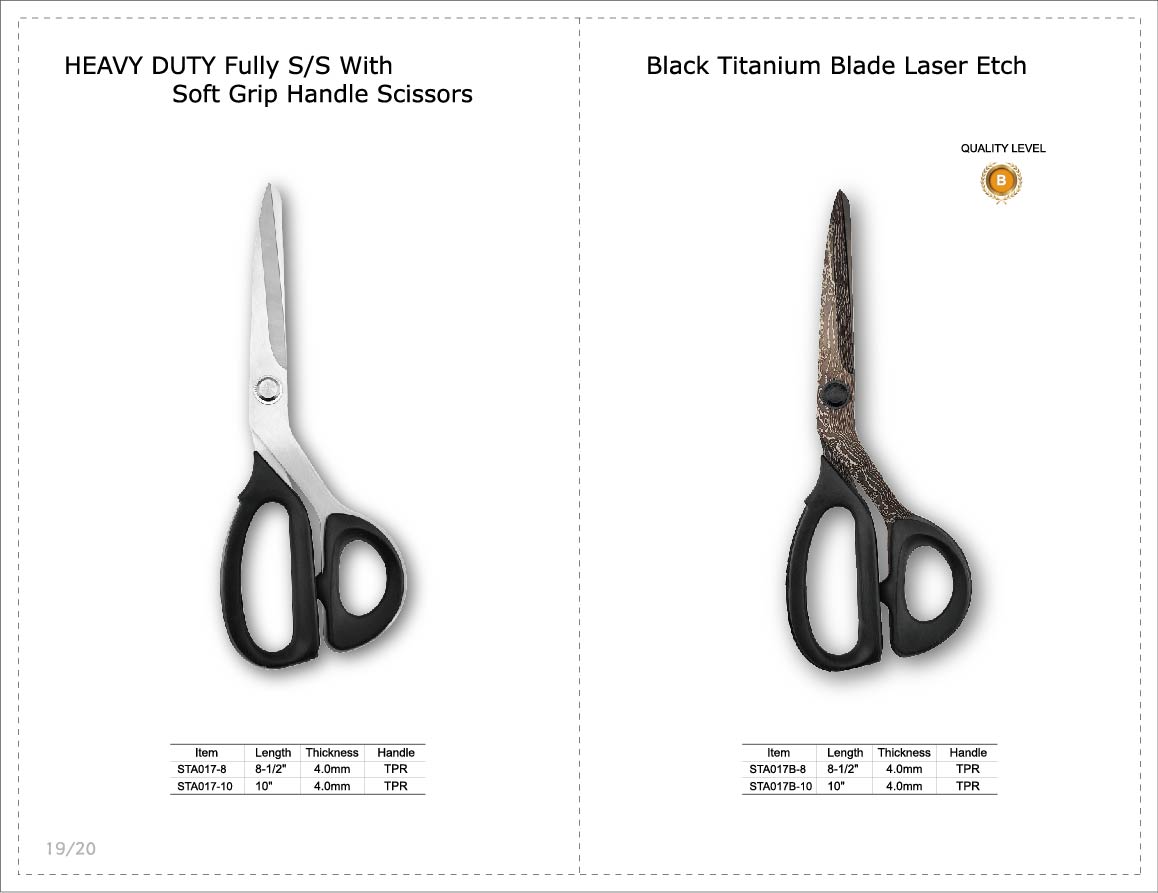
The original product information highlights two options: a heavy duty fully stainless steel scissors model and a black titanium blade scissors model. Both are described as available in 8-1/2 inch and 10 inch sizes, with 4 mm thickness and a soft TPR handle. Those explicit details provide a useful starting point for selection, but B2B buyers should still confirm specifications, samples, packaging, and quality requirements before placing an order.
Key Takeaways
- Choose cloth scissors by fabric use, blade size, blade finish, handle comfort, and expected cutting volume.
- The stated options include fully stainless steel scissors and black titanium blade scissors in 8-1/2 inch and 10 inch sizes.
- A 4 mm thickness and TPR handle are useful details to verify in samples and order documents.
- For wholesale or OEM sourcing, ask suppliers about tolerances, inspection methods, packaging, branding, and after-sales handling.
- Avoid assuming certifications, steel grades, coating tests, or production capacity unless the supplier provides written proof.
What Makes Cloth Scissors Different from General Scissors?
Cloth scissors are designed for controlled cutting through fabric rather than paper, cardboard, or mixed household materials. A good pair should open and close smoothly, follow a cutting line without dragging, and keep the fabric from bunching between the blades. Tailors and sewing users also care about hand comfort because cutting long fabric panels can be repetitive work.
For buyers comparing cloth scissors China suppliers, the practical questions are straightforward: Does the blade feel stable? Is the pivot movement consistent? Does the handle shape reduce pressure on the hand? Can the supplier keep the same finish and packaging across repeat orders? These questions matter more than generic descriptions such as premium, professional, or high quality.
Product Options Mentioned in the Source
The source article describes a heavy duty fully stainless steel model. Its main stated feature is full stainless steel construction, intended for durability and robust performance. It is also described with a soft thermoplastic rubber, or TPR, handle for comfort during longer use. The available sizes are 8-1/2 inch and 10 inch, with 4 mm thickness.
The source also describes a black titanium blade scissors option with a black blade and laser etched design. This model is positioned as a more visually distinctive option while keeping the same stated 8-1/2 inch and 10 inch size range, 4 mm thickness, and TPR handle. Buyers interested in retail presentation may value the appearance, but should still test cutting feel, coating consistency, and finish durability through samples.
Comparison Checklist for B2B Buyers
| Selection Point | Fully Stainless Steel Option | Black Titanium Blade Option | Buyer Check |
|---|---|---|---|
| Stated sizes | 8-1/2 inch and 10 inch | 8-1/2 inch and 10 inch | Confirm measured length on samples and order sheet. |
| Stated thickness | 4 mm | 4 mm | Ask how thickness is measured and controlled. |
| Handle | Soft TPR handle | Soft TPR handle | Test grip comfort with repeated opening and closing. |
| Visual style | Simple stainless steel appearance | Black blade with laser etched design | Check finish consistency across multiple samples. |
| Best-fit buying scenario | Workshops, sewing kits, general fabric cutting | Retail sets, giftable craft tools, branded ranges | Match the model to your end user and sales channel. |
How to Evaluate Samples Before Ordering
Before placing a wholesale or OEM order, request samples from the exact production or sample batch the supplier wants you to approve. Use them on the fabrics your customers actually cut, such as cotton, felt, denim, lining, or craft fabric. Do not judge only by one clean cut on thin material. A better test includes repeated long cuts, short detail cuts, and cutting near the blade tips.
- Check whether the blades meet evenly from pivot to tip.
- Open and close the scissors repeatedly to feel for looseness, scraping, or stiffness.
- Cut several fabric weights and note whether the fabric slips or frays.
- Inspect the handle edges for comfort, flashing, or pressure points.
- Compare several samples for consistent size, finish, screw tension, and packaging.
If the scissors include a decorative finish, such as a black blade with laser etching, ask how the supplier controls visual defects. For retail orders, appearance may affect returns even when cutting performance is acceptable.
Supplier Questions for Wholesale, OEM, and Private Label Orders
When sourcing cloth scissors made in China, clear communication reduces risk. Ask practical questions and request written answers. If you need private label packaging, confirm whether logos, color cards, barcode labels, instruction inserts, or carton markings are available. If you need a specific market requirement, ask the supplier to provide current documents rather than assuming compliance.
Useful questions include: What materials are used for the blade, handle, pivot, and packaging? What tolerances apply to length and thickness? Can the supplier provide pre-production samples for approval? How are blade sharpness, alignment, and handle finish inspected? What happens if incoming inspection finds defects? What are the available packaging options for wholesale, retail, or e-commerce fulfillment?
Also clarify commercial details such as minimum order quantity, lead time, payment terms, spare packaging, and mixed model ordering. These details are not stated in the original article, so they should be confirmed directly with the supplier before purchase.
Use and Care Guidance for End Users
Even good cloth scissors can perform poorly if they are used on the wrong materials. To keep cutting smooth, reserve fabric scissors for fabric and thread rather than paper, plastic ties, wire, or cardboard. Wipe the blades after use, keep the pivot area clean, and store the scissors closed in a dry place. If the scissors become stiff, users should follow the supplier's care instructions rather than forcing the pivot.
Retailers can reduce customer complaints by adding simple use guidance to packaging or product pages. Explain the intended fabric-cutting purpose, size choice, and basic care. For example, 8-1/2 inch scissors may suit general sewing baskets and smaller workspaces, while 10 inch scissors may suit longer cutting strokes on larger fabric pieces. The right choice depends on hand size, fabric type, and cutting habits.
Practical FAQ
Are cloth scissors made in China suitable for professional sewing use?
They can be, but suitability depends on the exact model, sample quality, and supplier consistency. Professional buyers should test samples under real cutting conditions before ordering.
What sizes are stated for these cloth scissors?
The source information states 8-1/2 inch and 10 inch sizes for both the fully stainless steel model and the black titanium blade model.
What does a TPR handle mean for users?
TPR refers to thermoplastic rubber. In this article's source, the handle is described as soft TPR, which is intended to provide a more comfortable grip during use.
Should I choose stainless steel or black titanium blade scissors?
Choose based on your sales channel and user preference. Stainless steel may suit a straightforward work-tool range, while the black blade and laser etched design may appeal to retail buyers who want a more distinctive look.
What should wholesale buyers confirm before purchase?
Confirm materials, sample approval, inspection standards, packaging, branding options, MOQ, lead time, and any compliance documents required for your market. Do not rely on assumptions for technical or legal requirements.
