




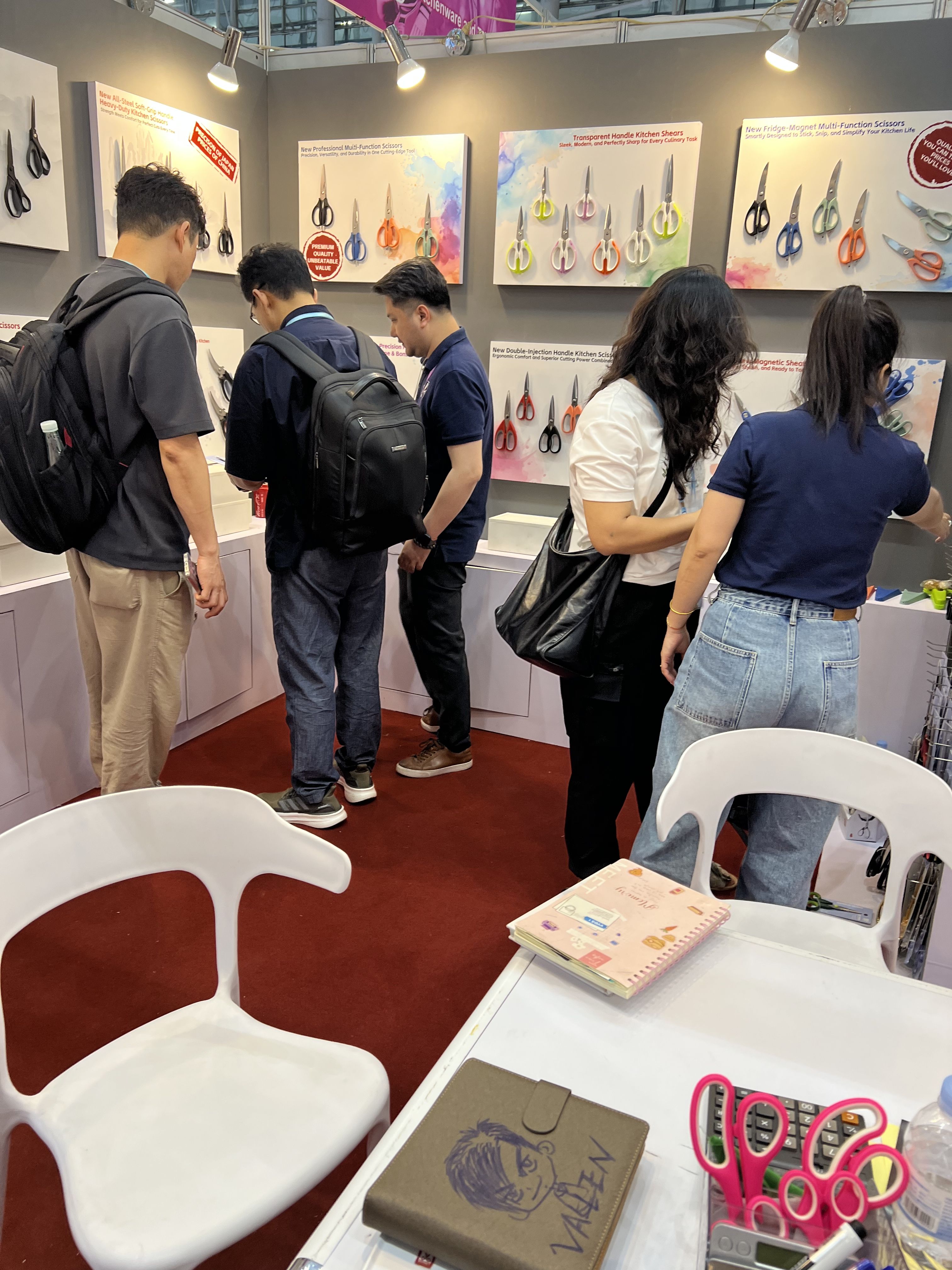
Kitchen Scissors at the Guangzhou Fair: Sourcing Guide for Buyers
The Guangzhou Fair has long been a place where homeware buyers compare practical kitchen tools, speak with suppliers, and review new product ideas in person. One product category that often draws attention is kitchen scissors. They are compact, easy to demonstrate, and useful across many retail and food-preparation settings. The original article highlighted scissors shown at the fair with transparent handles, bright color options, steel blades, ergonomic grips, and a magnetic storage function. For a buyer, those details are a starting point rather than a complete purchasing decision.
This guide rewrites the topic for organic search quality and focuses on how importers, wholesalers, online sellers, and private-label buyers can evaluate kitchen scissors responsibly. Instead of treating a fair sample as a finished sourcing answer, it explains what to inspect, what to ask, and how to compare offers before placing an order.
Key Takeaways
- Kitchen scissors are simple products, but blade performance, handle comfort, packaging, and storage features all affect customer satisfaction.
- At a trade fair, buyers should test samples directly and ask suppliers how production models compare with display samples.
- Features such as transparent handles, pink, orange, or blue colors, ergonomic grips, and magnetic storage should be verified against actual samples.
- Do not rely on general claims about steel, durability, or safety; ask for clear specifications, test information, and documentation where relevant.
- For wholesale or OEM orders, confirm packaging, labeling, inspection standards, lead time, and after-sales handling before confirming a supplier.
Why Kitchen Scissors Matter in Houseware Sourcing
Kitchen scissors sit between a low-cost accessory and a high-usage kitchen tool. Consumers may use them for herbs, vegetables, packaging, food preparation, and general household tasks. Because the tool is handled directly and used repeatedly, weak blades, uncomfortable grips, loose pivots, or poor finishing can quickly lead to complaints.
For retailers and distributors, kitchen scissors can also be a useful add-on item. They are relatively small, can fit into different kitchenware ranges, and can be positioned for everyday use. However, that does not mean buyers should choose only by appearance. A colorful handle may attract attention, but the repeat purchase value depends on cutting consistency, comfort, cleaning convenience, and reliable finishing.
What Was Highlighted in the Original Fair Article
The source article described kitchen scissors presented in connection with the Guangzhou Fair. It mentioned a transparent handle design, a magnetic function for convenient storage, steel blades, ergonomic grips, and color options such as pink, orange, and blue. It also described the scissors as suitable for herbs, vegetables, and tougher materials.
Those are useful product cues, but a sourcing team should treat them as claims to verify. For example, if magnetic storage is important, ask whether the magnet is built into the scissors or supplied through packaging or an accessory. If the supplier describes the blades as steel, ask what steel type is used, how it is finished, and whether the blade specification changes by model or price level. If the handles are transparent, inspect whether the material shows scratches, bubbles, stress marks, or color inconsistency.
Buyer Checklist: How to Evaluate Kitchen Scissors at a Trade Fair
A fair booth gives buyers the advantage of handling samples before requesting quotations. Use that time carefully. Bring a simple checklist, take photos of model numbers with permission, and record supplier answers immediately so similar products do not become confused later.
| Evaluation Area | What to Check | Questions to Ask the Supplier |
|---|---|---|
| Blade performance | Clean cutting on paper, herbs, packaging, and sample food-safe materials where available | What steel is used, and is the production blade the same as the fair sample? |
| Handle design | Comfort, grip opening, edge smoothness, and transparent handle finish | Can handle color be customized, and what color tolerance is accepted? |
| Pivot and assembly | Smooth opening, stable screw or rivet, and no wobble during cutting | How is pivot tightness inspected during production? |
| Magnetic storage | Strength, placement, and whether it is integrated or accessory-based | What surfaces is the magnetic function intended for, and are there usage warnings? |
| Packaging | Retail display, barcode space, instructions, and protection during shipping | Which packaging formats are available for wholesale or private label? |
| Compliance documents | Labeling, material statements, and market-specific requirements | What documents can be provided for the destination market? |
Features to Compare Before Requesting a Quote
When comparing kitchen scissors, separate visual features from functional features. Visual features include transparent handles, bright colors, retail card design, and shelf presentation. Functional features include blade sharpness, handle comfort, cutting leverage, magnetic storage, and ease of cleaning. Both matter, but they should not be priced as if they carry the same risk.
For example, a bright orange or blue handle may support a seasonal or promotional range. A transparent handle may look modern in product photography. But if the scissors are hard to open, pinch the user’s hand, or lose alignment, the design benefit will not protect the product from negative reviews. Buyers should request multiple samples, not just one display unit, and check consistency across samples.
OEM and Wholesale Questions to Ask
If the goal is OEM, private label, or wholesale distribution, the conversation should go beyond color and price. Ask practical questions that affect order execution and customer support. These questions are especially important when the product will be sold under your own brand.
- What customization options are available for handle color, logo placement, packaging, and instruction inserts?
- Is the magnetic function standard on the model, optional, or available only on selected versions?
- What is the normal inspection process for blade sharpness, handle finish, pivot tightness, and packaging defects?
- What sample approval process is used before mass production begins?
- What are the available packaging dimensions, carton details, and labeling options?
- Which commercial terms, lead times, and minimum order quantities apply to this model?
- How are defective goods, spare packaging, or customer complaints handled after delivery?
A responsible supplier should be able to answer these questions clearly or follow up with written details. If answers remain vague, continue comparing suppliers before committing.
Use-and-Care Points Retailers Can Communicate
Even when kitchen scissors are sourced for wholesale, consumer education matters. Clear use-and-care guidance reduces misuse and supports better reviews. Retail packaging or online listings can explain that kitchen scissors should be cleaned after food contact, dried before storage, and used only within the intended cutting range. If the scissors include a magnetic function, instructions should explain where and how the tool may be stored safely.
Buyers should avoid adding unsupported claims to product pages. Do not describe the scissors as dishwasher safe, rustproof, food-grade, professional-grade, or suitable for bones unless the supplier provides clear product specifications and evidence for those claims. Accurate, modest copy is better than exaggerated wording that creates compliance or customer-service problems.
Common Sourcing Mistakes to Avoid
The most common mistake is choosing the best-looking sample without testing several pieces. Another is comparing quotations without confirming whether the blade material, handle material, packaging, and magnetic feature are identical. Small changes can explain large price differences.
Buyers should also avoid assuming that fair samples represent mass production automatically. Ask whether the booth sample is handmade, pre-production, or from current stock. Confirm whether the same mold, color, blade, and packaging will be used for the final order. If the product is intended for a regulated market, ask which documents are available and have them reviewed by the buyer’s own compliance specialist.
FAQ
Are kitchen scissors from a trade fair ready for immediate wholesale purchase?
Not always. A fair sample is useful for first evaluation, but buyers should request quotations, production samples, packaging details, and written specifications before placing a wholesale order.
Can transparent handle colors be customized?
They may be customizable, but this depends on the supplier and model. Ask about available colors, minimum order quantity, color matching limits, and whether pink, orange, blue, or other colors are standard or custom.
What should buyers verify about steel blades?
Ask for the exact steel specification, finishing method, sharpness inspection process, and whether the production blade matches the sample. Avoid publishing unsupported grade or performance claims.
Is a magnetic function useful for kitchen scissors?
It can be useful for convenient storage, but buyers should verify how the magnetic feature works, what surfaces it is intended for, and whether safety or storage instructions are needed.
What is the best way to compare suppliers at the Guangzhou Fair?
Use the same checklist for each booth, collect written details, request comparable samples, and evaluate total value rather than only unit price. Focus on consistency, documentation, packaging, and communication quality.
Final Sourcing Advice
Kitchen scissors can be a strong everyday houseware item when the product is selected carefully. The Guangzhou Fair is a useful place to discover designs such as transparent handles, colorful grips, steel blades, ergonomic shapes, and magnetic storage functions. The buyer’s job is to turn that first impression into a controlled sourcing process. Test the sample, ask specific questions, document the answers, and confirm every feature before production. That approach protects both the buyer’s brand and the end user’s experience.
