




Left-Handed Children Scissors: A Practical Guide for Safe, Confident Cutting
Left-handed children often struggle with standard right-handed scissors. The issue is not only comfort. When a child uses scissors designed for the opposite hand, the blades may not align naturally with the cutting direction, the paper can tear instead of cut cleanly, and the child may twist the wrist to see the cutting line. That can turn a simple classroom or craft activity into a frustrating task.
Left-handed children scissors are designed to help young left-handed users hold, guide, and control the tool more naturally. For parents, teachers, school-supply retailers, and wholesale buyers, the goal is not to choose the most decorative pair. The better approach is to evaluate safety, hand fit, blade protection, and supplier transparency.
Key Takeaways
- Left-handed children scissors should support a natural left-hand grip and clear cutting visibility.
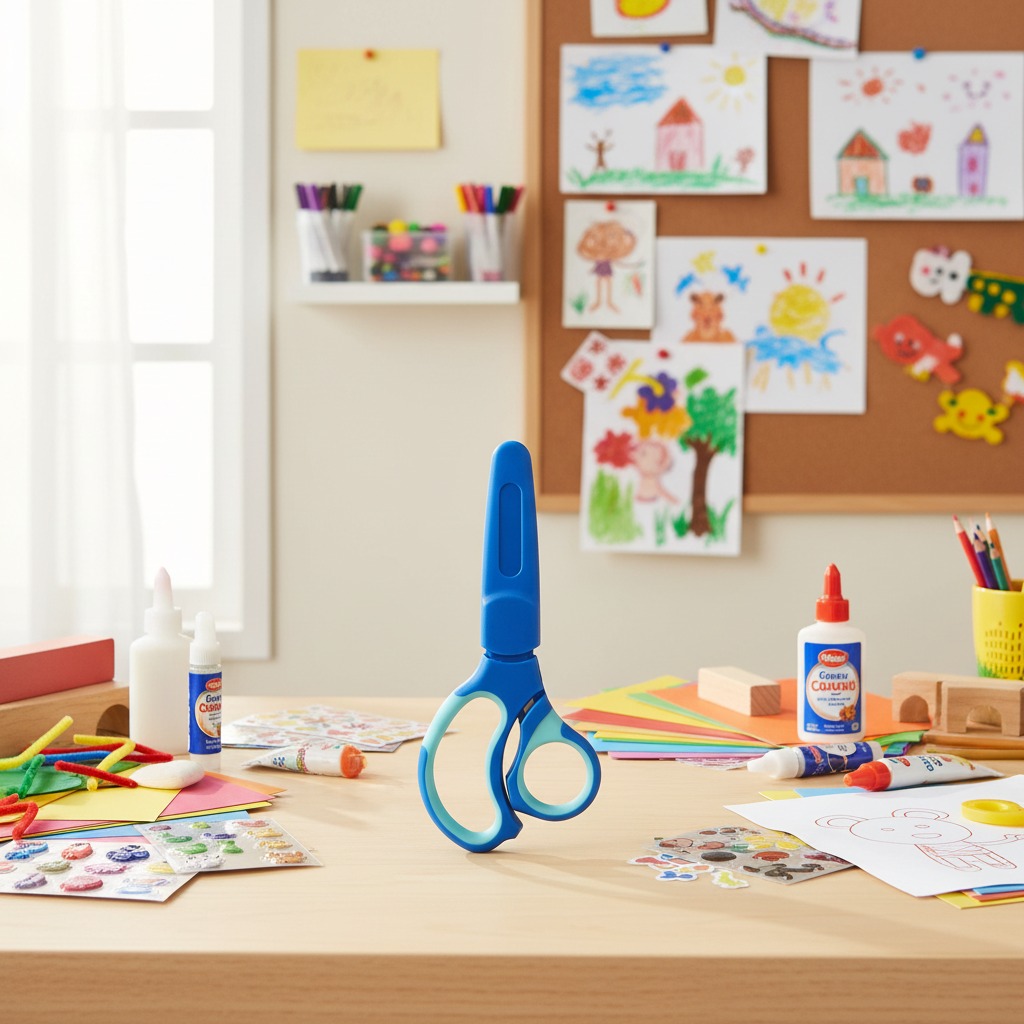
- A safety cover helps protect blades during storage and transport, especially in school bags or classroom bins.
- Rounded tips and child-focused handle shapes are important features to review before purchase.
- Wholesale and OEM buyers should confirm specifications, packaging, labeling, and compliance expectations directly with the supplier.
- Scissors for children should be matched to age, hand size, supervision level, and intended materials.
Why Left-Handed Scissors Matter for Children
Many adults assume that scissors are universal. In practice, handedness affects how the blades meet and how the child sees the cutting path. A right-handed pair can force a left-handed child to push the blades apart instead of pressing them together. This can lead to jagged edges, torn paper, and unnecessary hand strain.
For children who are still developing fine motor skills, the correct tool can support confidence. Clean cutting gives immediate feedback: the child sees that the movement works. This is especially useful in classrooms, art lessons, early learning centers, and home craft activities where scissors are used repeatedly.
Features to Check Before Buying
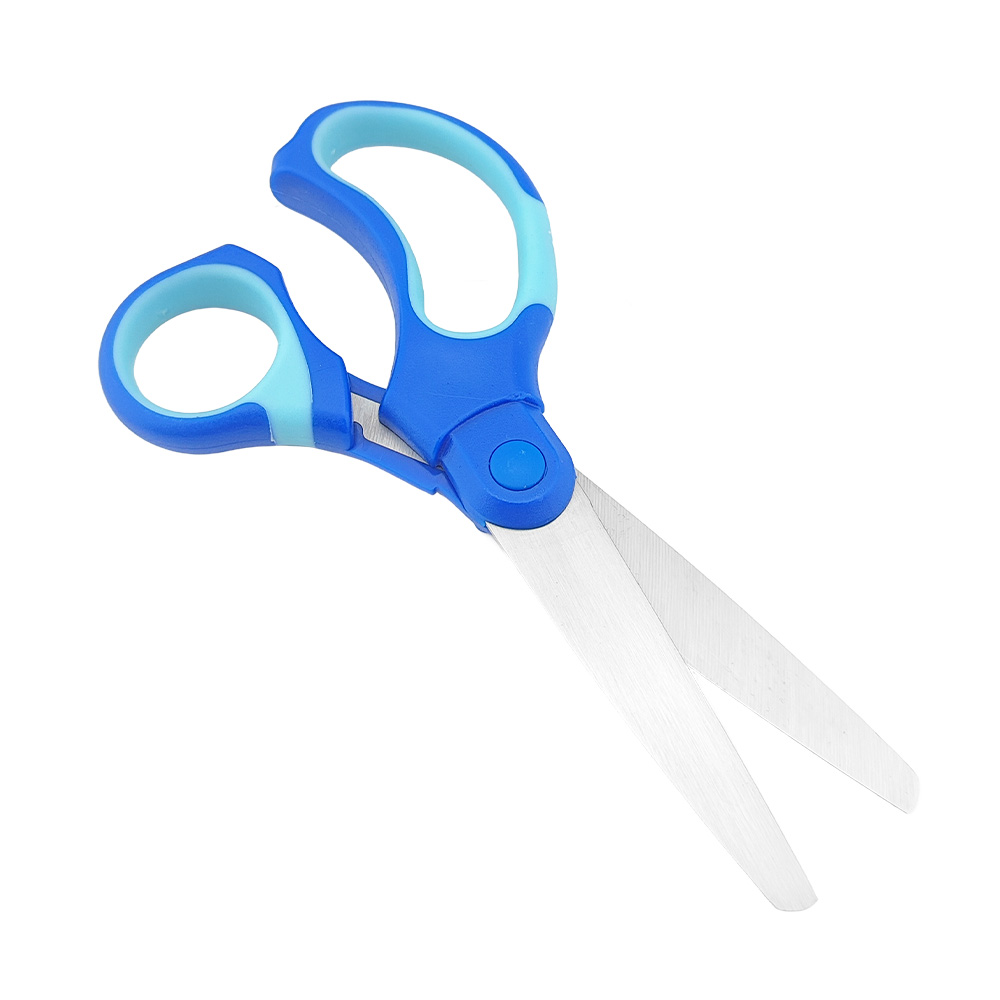
The original product description highlights left-handed scissors for kids, a safety cover, rounded tips, blunt edges, and blue handles with light blue accents. Those are useful starting points, but buyers should still verify details for the exact item they plan to purchase.
| Feature | Why It Matters | What to Ask or Check |
|---|---|---|
| Left-handed design | Helps children guide the blades and view the cutting line more naturally. | Is the blade orientation and handle shape made specifically for left-handed users? |
| Safety cover | Reduces exposed blade contact when scissors are stored or carried. | Does the cover fit securely, and is it included with each pair? |
| Rounded tips | Helps reduce the risk of accidental pokes during supervised school use. | Are the tips rounded on the production sample? |
| Handle comfort | A good grip helps children control the cut without excessive pressure. | What age range and hand size is the handle intended for? |
| Intended materials | Children’s scissors are usually chosen for paper and light craft tasks. | Which materials does the supplier recommend and which should be avoided? |
| Packaging and labeling | Important for retail, classroom distribution, and safety instructions. | Can the supplier provide packaging options and required warning labels? |
How Parents and Teachers Can Choose the Right Pair
For consumer-facing use, the best scissors are the ones that match the child’s ability and environment. A preschool child needs more supervision and a simpler tool than an older student working on independent projects. Handle size, blade length, and ease of opening and closing all affect usability.
Use this checklist when comparing options:
- Confirm the scissors are truly left-handed, not just labeled as suitable for both hands.
- Check that the handle fits the child’s fingers without forcing the thumb or wrist into an awkward angle.
- Look for a safety cover if the scissors will be stored in a pencil case, school bag, or shared classroom tray.
- Choose rounded tips for younger children and supervised classroom use.
- Test cutting on the intended material, such as paper or light craft sheets, before buying in quantity.
- Teach storage habits: close the blades, apply the cover, and return the scissors to a fixed place after use.
Use and Care Tips for Longer Service Life
Children’s scissors do not need complicated maintenance, but basic care helps preserve safe performance. Keep the blades dry after cleaning, and avoid using them on materials that are too thick or sticky unless the supplier confirms suitability. Cutting tape, glue-heavy paper, or rough materials may leave residue or dull the edge more quickly.
In classrooms, assign a storage container for left-handed scissors so they do not get mixed with right-handed pairs. This small habit saves time and helps left-handed students consistently find the tool they need. Teachers can also label the scissors or storage tray to prevent confusion.
B2B Sourcing Guidance for Schools, Retailers, and OEM Buyers
If you are sourcing left-handed children scissors for wholesale, private label, school supply programs, or OEM projects, do not rely only on product photos. Request production samples and written specifications before confirming an order. Photos can show color and general shape, but they cannot confirm cutting feel, cover fit, handle comfort, or packaging quality.
Key questions to ask a scissors supplier include:
- What is the exact left-handed blade orientation for this model?
- Is the safety cover included as standard or optional?
- What age group is the product intended for?
- What materials are recommended for cutting, and what materials are not recommended?
- Can packaging, colors, barcodes, or instructions be customized?
- What quality checks are performed before shipment?
- Which compliance documents, if any, can be provided for the target market?
- What are the current MOQ, lead time, sample policy, and carton details?
These questions help buyers avoid assumptions. They also make communication clearer when comparing an OEM scissors factory with a trading company or distributor. For children’s products, documentation and labeling expectations can vary by destination market, so buyers should confirm requirements with their own compliance team or local adviser.
Common Mistakes to Avoid
One common mistake is choosing scissors only by color. Bright handles can help children identify their tools, but color does not prove comfort or safety. Another mistake is buying “ambidextrous” scissors when a child specifically needs a left-handed design. Some universal handles may fit either hand, but the blade orientation may still favor right-handed use.
Bulk buyers should also avoid placing a large order without testing real samples. Ask several left-handed children or teachers to try the sample in a realistic setting. Observe whether the child can see the cutting line, whether the paper bends, and whether the safety cover is easy to use but not loose.
FAQ
Are left-handed children scissors different from regular scissors?
Yes. True left-handed scissors are designed so a left-handed user can control the blades and see the cutting line more naturally. This can reduce frustration and improve cutting accuracy.
Do children’s scissors still need adult supervision?
Yes. Even scissors with rounded tips and a safety cover should be used with age-appropriate supervision, especially by younger children.
What is the purpose of a safety cover?
A safety cover helps keep the blades covered when the scissors are not in use. It is useful for storage in classrooms, pencil cases, craft boxes, and school bags.
Can schools buy one type of scissors for every child?
Schools can standardize some supplies, but it is wise to keep clearly labeled left-handed scissors available for left-handed students. This supports better comfort and participation.
What should OEM buyers confirm before ordering?
OEM buyers should confirm left-handed blade orientation, sample quality, packaging, labeling, recommended age range, available customization, compliance documents, MOQ, and delivery schedule directly with the supplier.
Final Selection Advice
The right left-handed children scissors should make cutting simpler, safer, and less frustrating. For families and teachers, focus on fit, supervision, safety cover use, and the child’s confidence. For retailers, schools, and OEM buyers, focus on sample approval, clear specifications, and supplier communication. A well-chosen pair helps left-handed children take part in everyday craft and classroom work without having to adapt to a tool made for someone else.
