




Discover Superior Fabric Cutting Scissors for Tailoring
Good fabric cutting scissors make a visible difference in tailoring. Clean edges, accurate pattern pieces, and less hand strain all depend on using the right tool for the material and the task. Whether you sew garments at home, run a small alteration studio, or source tools for a training room, choosing scissors should be more deliberate than simply selecting the largest pair on the shelf.
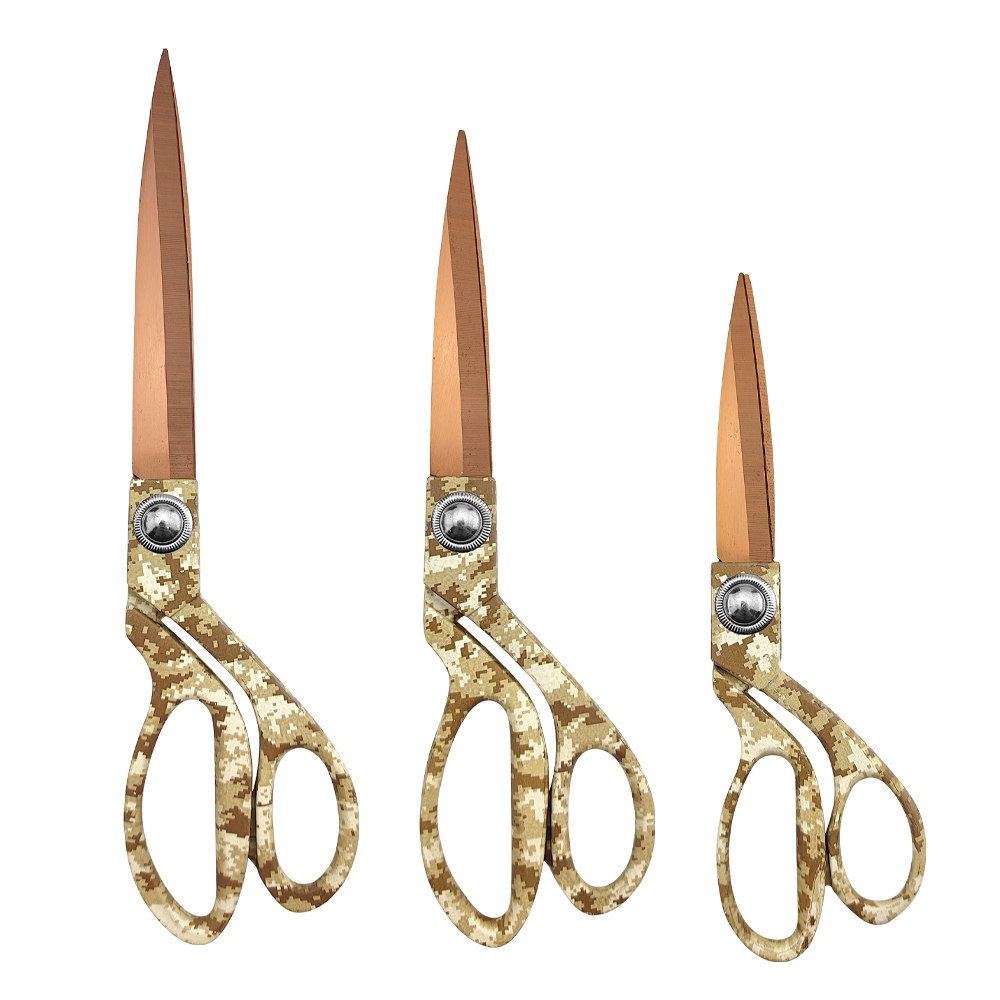
The original Bonet Houseware product introduction highlights a Deluxe Camo Craft Scissors Set designed for precision work, tailoring, and craft use. It describes an ergonomic handle design, a desert camouflage handle pattern, large tailor-scissor options, stainless steel blades with a rose gold finish, and smooth cutting action supported by a robust pivot system. This guide expands on how to evaluate those features in practical use, what questions buyers should ask before ordering, and how to keep fabric scissors performing well over time.
Key Takeaways
- Use dedicated fabric scissors for textiles only; cutting paper or packaging can dull the edge faster.
- Large tailor scissors are useful for long, straight cuts, while smaller craft scissors help with trimming and detail work.
- Comfort matters: handle shape, grip size, and cutting action affect fatigue during repeated cutting.
- Before purchasing for a studio or resale program, ask suppliers about blade material, finish, packaging, warranty terms, and quality checks.
Why Fabric Cutting Scissors Matter in Tailoring
Tailoring is a measurement-driven craft. Even a well-drafted pattern can become inaccurate if fabric shifts, snags, or frays during cutting. Fabric cutting scissors are shaped to glide along the cutting table while keeping the lower blade stable under the textile. This helps the user cut longer lines without lifting the fabric excessively.
For garment makers, accurate cutting affects seam matching, garment balance, and finishing quality. For craft users, it affects the neatness of appliqué, quilting pieces, felt shapes, and decorative textile work. A sharp, stable pair of scissors also reduces the temptation to force a cut, which can lead to uneven edges or hand discomfort.
Features to Check Before Choosing Scissors for Tailoring
When reviewing scissors for tailoring, look beyond appearance. A decorative handle or finish may be appealing, but performance depends on the relationship between blade sharpness, blade alignment, handle comfort, and pivot stability.
- Blade length: Longer blades are efficient for cutting yardage and straight pattern lines. Shorter blades are easier to control around curves and notches.
- Handle comfort: Ergonomic handles may reduce fatigue, especially for users cutting multiple garments or thick layers. Test whether the grip suits right-hand or left-hand use if that matters to your team.
- Pivot action: The joint should open and close smoothly without looseness. A weak pivot can cause fabric to fold between the blades instead of cutting cleanly.
- Blade finish: A rose gold finish, as described in the original product copy, can be part of the visual design. Ask whether the finish affects corrosion resistance, cleaning requirements, or maintenance.
- Material suitability: The original description mentions use on fabric, paper, and leather. In practice, it is best to keep one pair for fabric only if clean textile cuts are the priority.
Comparison Checklist: Which Scissor Type Fits Your Work?
| Scissor type | Best use | What to check | Potential limitation |
|---|---|---|---|
| Large tailor scissors | Long cuts on fabric yardage, garment panels, and pattern layouts | Blade alignment, handle comfort, table clearance, smooth pivot action | Can feel heavy for detail trimming or users with smaller hands |
| Medium fabric scissors | General sewing, alterations, craft textiles, and mixed studio use | Balance between control and cutting length | May be slower for very long cutting lines |
| Small craft scissors | Thread trimming, small curves, appliqué, and precision snips | Tip accuracy, grip control, safe storage | Not ideal for cutting large fabric pieces |
| Decorative handled scissors | Personal toolkits, gift sets, retail displays, and branded craft assortments | Whether the handle shape is comfortable as well as visually appealing | Design should not compromise grip or cutting stability |
Using Large Tailor Scissors Correctly
Large tailor scissors are valuable when cutting long pattern pieces such as trousers, dresses, curtains, table linens, or sample panels. To get the best result, place the fabric on a flat cutting surface and keep the lower blade close to the table. Open the scissors fully, cut with steady motion, and avoid lifting the fabric more than necessary. This helps maintain grain direction and pattern accuracy.
For layered fabric, test a small section first. Some textiles compress easily, while slippery or stretchy fabrics can shift. Use pattern weights, clips, or pins where appropriate. If you need to cut leather or heavy craft material, confirm that the scissor model is intended for that use and consider keeping separate tools for different materials.
Care and Maintenance for Longer Service Life
Even good scissors lose performance if they are stored loosely, used on abrasive materials, or exposed to moisture. Simple habits can extend usability and reduce the need for frequent replacement.
- Wipe blades after use, especially after cutting linty fabric or coated materials.
- Store scissors closed in a sleeve, pouch, drawer insert, or tool roll to protect the edge.
- Do not drop scissors; impact can affect alignment at the pivot or tips.
- Keep fabric scissors separate from office scissors used for paper, tape, cardboard, or labels.
- If the pivot becomes loose or stiff, ask the supplier whether adjustment or servicing is recommended for that model.
Sharpening may be possible, but it depends on blade geometry and finish. If you are buying scissors for professional use, ask in advance whether the scissors can be resharpened and whether sharpening affects any coating or decorative finish.
Guidance for Studios, Retailers, and Wholesale Buyers
If the purchase is for a tailoring school, sewing studio, retail craft program, or wholesale assortment, sourcing questions are as important as product appearance. Do not rely only on catalog phrases such as precision, durable, or ergonomic. Request clear answers that help you compare suppliers consistently.
- What blade material and hardness are used, and how are they verified?
- Is the rose gold finish decorative, protective, or both?
- What handle sizes are available, and are samples available for user testing?
- What packaging options are offered for retail display, kits, or bulk supply?
- What quality checks are performed for blade alignment, sharpness, pivot action, and cosmetic finish?
- Are replacement, return, or defect-handling terms clearly documented?
For OEM or private-label projects, buyers should also ask about logo placement, color options, packaging artwork requirements, lead times, and approval samples. Avoid assuming capacities, minimum order quantities, certifications, or compliance claims unless the supplier provides current documentation.
Practical FAQ
Can one pair of scissors be used for fabric, paper, and leather?
The original product description mentions fabric, paper, and leather use. However, for best textile performance, keep a dedicated pair for fabric. Paper and some craft materials can dull the edge faster.
Are large tailor scissors better than smaller scissors?
They are better for long, straight cuts and large fabric pieces. Smaller scissors are better for curves, tight corners, thread trimming, and delicate craft work. Many sewing spaces benefit from both.
What makes scissors comfortable for tailoring?
Comfort depends on handle shape, grip opening, weight, and smoothness of the pivot. An ergonomic design can help, but users should test fit whenever possible.
How should I evaluate scissors before buying in quantity?
Request samples and test them on the fabrics your team uses most. Check cutting smoothness, edge cleanliness, hand comfort, tip accuracy, and whether performance remains consistent after repeated use.
Does a decorative handle affect performance?
Not necessarily. A desert camouflage pattern or colored finish can make the tool visually distinctive, but the handle still needs to be stable, comfortable, and appropriate for the user’s hand size.
Fabric cutting scissors are simple tools, but choosing them well requires attention to real working conditions. Match the scissor size to the task, protect the blades, and ask suppliers specific questions before purchasing for professional or wholesale use.
