




Discover the Best Chinese Kitchen Scissors Manufacturer
Finding the right Chinese kitchen scissors manufacturer is not only about choosing a sharp pair of shears. For importers, wholesalers, private-label brands, and kitchenware retailers, the decision affects product consistency, packaging presentation, replacement rates, and customer satisfaction. Kitchen scissors are handled frequently, stored in drawers, used near food, and expected to cut a mix of herbs, packaging, poultry, vegetables, and household materials. That makes practical design and supplier reliability equally important.
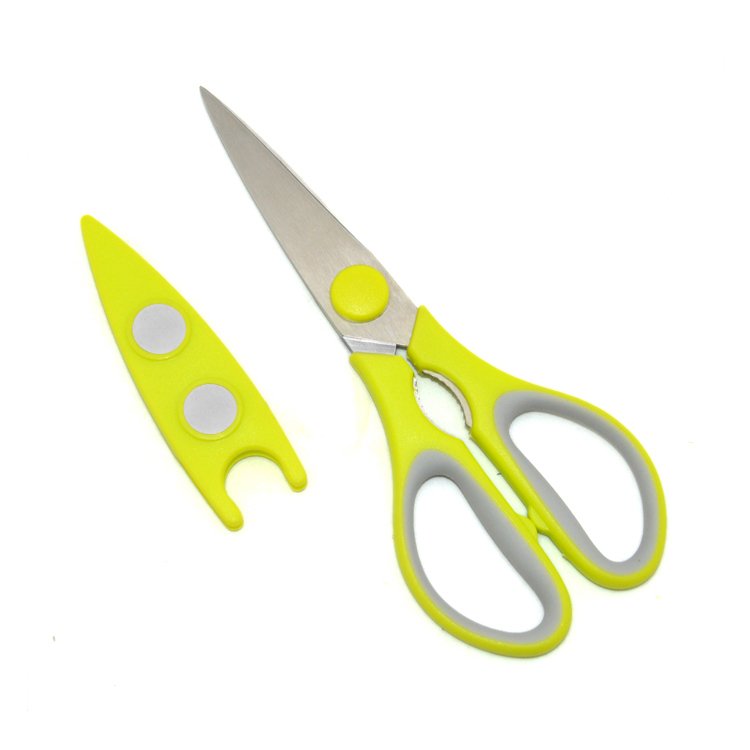
The original product concept highlights several useful features: kitchen scissors for everyday food preparation, a visible neon green handle, soft molded grips, stainless steel blades, a protective cover, and a magnetic blade cover for storage on a refrigerator or other magnetic surface. Those details create a helpful starting point, but B2B buyers should still verify every commercial and technical point directly with the supplier before placing a bulk order.
What Buyers Should Look For First
A good sourcing process starts with the use case. Kitchen scissors sold through supermarkets may need broad appeal and simple packaging. A private-label cooking brand may care more about handle comfort, visual identity, and giftable presentation. A restaurant supply distributor may prioritize durability, easy cleaning, and repeat-order consistency. Before comparing quotes, define who will use the scissors and what they will cut most often.
- Target channel: retail, wholesale, e-commerce, promotional, or food service.
- Expected tasks: herb cutting, package opening, poultry preparation, or general kitchen use.
- Storage preference: drawer storage, hanging hole, protective cover, or magnetic cover.
- Branding needs: color matching, logo placement, label design, or custom packaging.
- Quality expectations: blade sharpness, handle comfort, corrosion resistance, and safety during storage.
Blade Quality and Cutting Performance
The source article states that the scissors use stainless steel blades and are designed for precision cutting and durability. That is a useful claim, but buyers should not stop at the phrase “stainless steel.” Ask the manufacturer what steel type is used, how the blades are hardened, how sharpness is checked, and whether the factory can provide consistent samples from mass production rather than only from a showroom batch.
For kitchen scissors, blade alignment matters as much as blade material. Poor alignment can cause food to tear instead of cut cleanly. The pivot should feel stable without being too tight. If the scissors are intended for poultry or tougher packaging, request sample testing that reflects the intended use. Avoid relying only on photos, because blade geometry, grinding quality, and edge retention are difficult to judge visually.
Handle Comfort, Color, and Ergonomics
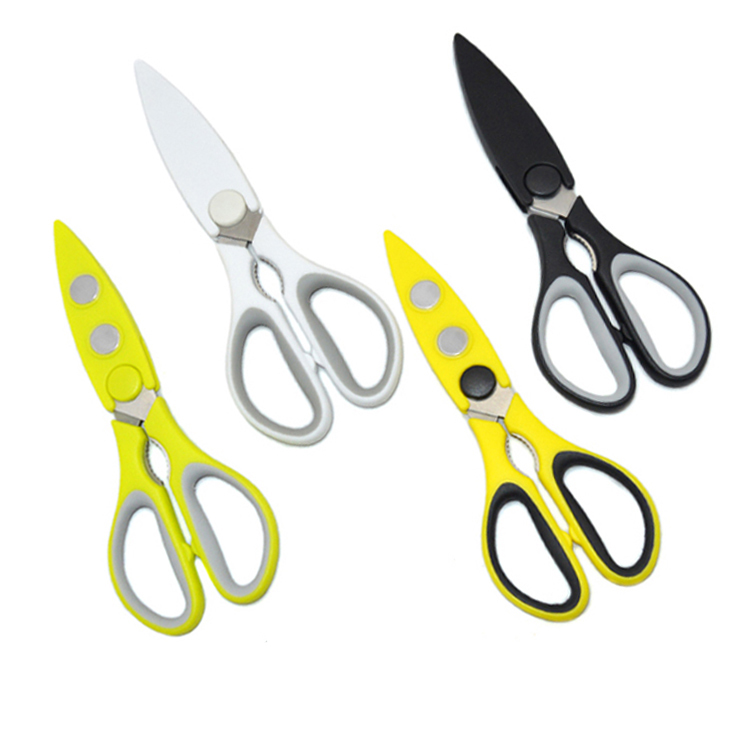
The highlighted product uses a vibrant neon green handle with soft molded grips. For buyers, this type of color can help a kitchen tool stand out in a drawer or online listing. However, color choice should match the target market. Bright colors may suit modern home kitchens, promotional programs, or youth-oriented retail ranges, while neutral colors may work better for professional or minimalist kitchenware lines.
Ergonomics should be checked with real hands, not only with CAD drawings. Ask whether the handle is comfortable for both right- and left-handed users if that is part of your product promise. Test grip comfort during repeated cutting, especially when hands are wet. If the handle uses a soft-touch area, ask how it performs after washing, drying, and normal kitchen exposure.
Why a Protective or Magnetic Cover Matters
A kitchen scissors with cover can solve several practical problems. It helps protect the blades from contact with other utensils, reduces the risk of accidental cuts when reaching into a drawer, and creates a cleaner presentation for retail packaging. The original article also describes a magnetic blade cover that allows storage on a refrigerator or other magnetic surface. That can be useful for consumers who want quick access without leaving scissors loose on a countertop.
For wholesale buyers, the cover should be evaluated as a separate component. Does it fit securely? Is it easy to remove? Does the magnet hold reliably on common magnetic surfaces? Could the cover scratch, crack, or loosen during transit? These questions are important because a weak accessory can create customer complaints even when the scissors themselves cut well.
Comparison Checklist for Supplier Evaluation
| Evaluation Point | What to Check | Questions to Ask the Supplier |
|---|---|---|
| Blade material | Stainless steel type, sharpness, alignment | What steel is used, and how is cutting performance tested? |
| Handle design | Grip comfort, color consistency, left/right-hand usability | Can the handle color and logo be customized for OEM orders? |
| Protective cover | Fit, safety, durability, storage convenience | Is the cover included by default, and how is it packed? |
| Magnetic function | Holding strength on suitable surfaces | Can you provide samples for magnet strength review? |
| Packaging | Retail display, barcode space, shipping protection | What packaging options are available for wholesale buyers? |
| Quality control | Inspection method, defect handling, production consistency | What checks are performed before shipment? |
OEM and Wholesale Sourcing Questions
When the topic is a factory or supplier, a strong buying decision depends on clear questions. Do not assume a manufacturer can meet your order requirements simply because a product photo looks suitable. Ask for samples, packaging files, lead time details, and inspection standards. If you need private-label service, confirm which parts can be customized: handle color, blade marking, cover color, packaging artwork, instruction card, and carton labeling.
Buyers should also discuss commercial details directly. Minimum order quantity, sample fees, tooling cost, payment terms, export documentation, and shipping method can vary by order and by customization level. If compliance documents or market-specific requirements are needed, ask what documents the supplier can provide and whether they apply to the exact product you plan to purchase.
Sample Testing Before Bulk Orders
Samples should be tested in realistic conditions. Cut herbs, thin packaging, thicker food packaging, and any food item relevant to your target customer. Check whether the scissors open smoothly after repeated use. Wash and dry them according to the intended care instructions, then look for rust, looseness, handle odor, or cover fit issues. If the product is marketed with a magnetic cover, test storage on different magnetic surfaces and verify that the scissors remain secure during normal kitchen movement.
It is also wise to compare pre-production samples with final shipment samples. Small changes in blade grinding, screw tightness, or handle material can affect user experience. A simple checklist can reduce misunderstandings before goods leave the factory.
Key Takeaways
- Choose a Chinese kitchen scissors manufacturer based on verified product performance, not photos alone.
- Stainless steel blades, ergonomic grips, and a protective cover are useful features when properly tested.
- A magnetic blade cover can improve storage convenience, but buyers should test its fit and holding strength.
- OEM buyers should confirm customization options, packaging details, inspection steps, and commercial terms in writing.
- Bulk orders should follow sample testing that reflects the actual customer use case.
FAQ
What makes kitchen scissors different from ordinary scissors?
Kitchen scissors are designed for food preparation and household kitchen tasks. Buyers should check blade strength, cleaning convenience, handle grip, and safe storage features such as a cover.
Should I choose kitchen scissors with a cover?
A cover is useful for drawer safety, blade protection, and retail presentation. If the cover is magnetic, test whether it holds securely on suitable magnetic surfaces.
Can a Chinese kitchen scissors manufacturer offer OEM branding?
Many suppliers may offer some customization, but buyers should confirm the exact options, costs, lead times, artwork requirements, and minimum order quantity before ordering.
How should I test samples before a wholesale order?
Test cutting performance, blade alignment, handle comfort, washing behavior, cover fit, packaging protection, and consistency across multiple sample units.
What supplier claims should be verified?
Verify material details, compliance documents, quality control procedures, packaging specifications, production lead time, and any performance claims that will appear in your marketing.
