




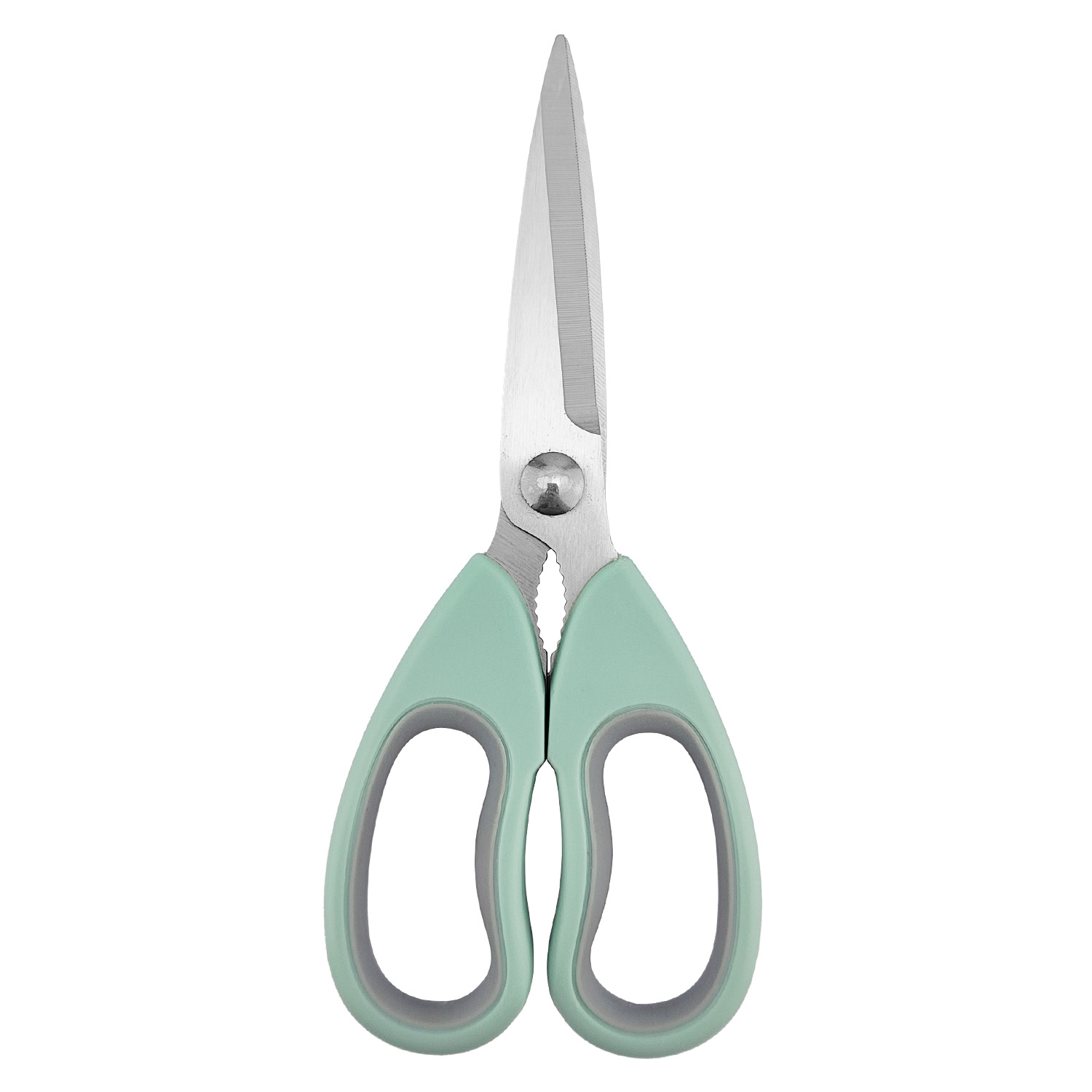
Discover the Best Kitchen Scissors for Precision and Comfort
Kitchen scissors are one of the most frequently reached-for tools in a busy kitchen. They help with trimming herbs, cutting food packaging, portioning soft ingredients, and handling small prep jobs where a knife and board may feel slower. The original Bonet article introduced the AquaPop Precision Scissors as an ergonomic kitchen scissors option designed for everyday cutting comfort. This updated guide focuses on how to evaluate kitchen scissors in a practical way, whether you are buying for home use, food service, retail, wholesale, or OEM sourcing.

Key Takeaways
- Good kitchen scissors should cut cleanly, feel stable in the hand, and reduce strain during repetitive use.
- Ergonomic handle design matters as much as blade sharpness, especially for long prep sessions or commercial use.
- For OEM or wholesale buying, ask suppliers clear questions about materials, packaging, inspection process, customization, and after-sales support.
- Do not judge scissors only by appearance; compare blade alignment, handle comfort, cleaning needs, and packaging suitability.
What Makes Kitchen Scissors Different from General Scissors?
Kitchen scissors are built for practical food-preparation tasks and general kitchen utility. Unlike office scissors, they may be used around moisture, food residue, plastic packaging, herbs, and sometimes tougher fibrous ingredients. That means buyers should look beyond basic sharpness. A useful pair should open smoothly, close without wobble, and maintain control when cutting small or slippery items.
The original article highlights precision, comfort, sharpness, durability, a sleek lightweight build, and a dual-material handle. These are useful selection points, but a buyer should still verify details before purchasing in volume. For example, if a supplier describes stainless steel blades, ask what grade is used, how the blade is finished, and whether the product has care instructions. If a handle is described as dual-material, ask how the soft and hard materials are bonded and how the grip performs when wet.
Ergonomic Features to Check Before Buying
Ergonomic kitchen scissors should feel comfortable in the hand without forcing the wrist into an awkward angle. The handle opening should fit the intended user group, and the grip should provide enough control without sharp edges or pressure points. If the scissors are intended for restaurants, catering teams, or retail consumers who cook frequently, comfort becomes a practical performance issue rather than a design extra.
When evaluating samples, test the scissors with repeated cuts rather than a single snip. Cut herbs, thin packaging, parchment, soft food packaging, and other realistic kitchen materials. Notice whether the blades drift apart, whether the handle pinches, and whether the scissors require too much force. For left- and right-handed users, confirm whether the handle and blade geometry truly work for both hands rather than relying only on a product claim.
Comparison Checklist for Product Selection
| Selection Point | What to Check | Why It Matters |
|---|---|---|
| Blade performance | Clean cutting, stable alignment, no snagging | Improves precision and reduces wasted effort |
| Handle comfort | Grip shape, pressure points, wet-hand control | Supports longer use with less hand fatigue |
| Material information | Ask for blade material details and handle composition | Helps compare suppliers accurately |
| Cleaning and care | Ask whether the design is easy to rinse and dry | Food prep tools need practical maintenance |
| Packaging options | Retail card, box, bulk pack, barcode, instructions | Important for wholesale, retail, and OEM programs |
| Quality control | Inspection steps, sample approval, defect handling | Reduces risk in repeat orders |
Everyday Uses for Kitchen Scissors
A well-designed pair of kitchen scissors can speed up many small tasks. They are useful for snipping herbs directly into a bowl, opening sealed food bags, trimming parchment paper, cutting twine, and portioning softer ingredients. Some users also rely on kitchen scissors for non-food kitchen tasks such as cutting labels or light packaging, though it is better to keep separate scissors for food and non-food use when hygiene matters.
For home users, the best kitchen scissors are usually the pair that stays sharp enough for common prep work and feels comfortable enough to use often. For commercial buyers, consistency matters more. A restaurant, retailer, or distributor may need a product that performs the same across many units, arrives in suitable packaging, and includes clear care guidance for end users.
Use and Care Guidance
Even durable scissors perform better with sensible care. Rinse food residue promptly, dry the blades before storage, and avoid twisting the scissors through materials they are not designed to cut. If the product instructions recommend hand washing, follow that guidance. Do not leave scissors soaking in a sink, because trapped water and food residue can affect both hygiene and cutting performance.
- Use kitchen scissors only for suitable kitchen tasks unless the supplier confirms broader use.
- Wipe or rinse after cutting sticky, acidic, or oily foods.
- Dry thoroughly before placing the scissors in a drawer or utensil holder.
- Store with the blades closed and away from children.
- Replace scissors if the blades become loose, damaged, or unsafe to operate.
OEM and Wholesale Sourcing Questions
Because the original article mentions an OEM scissors manufacturer, business buyers should approach selection with a structured sourcing checklist. Avoid assuming details that are not stated in product materials. Instead, ask direct questions and request samples before committing to a larger order.
Useful questions include: What blade material is used? What handle materials are available? Can the supplier provide private label packaging? What logo placement methods are supported? What is the sample lead time? What are the minimum order quantities? How are blade sharpness, alignment, handle finish, and packaging checked before shipment? Are care instructions included? What happens if a shipment contains defects?
For retailers and importers, packaging is also part of product quality. Ask whether the scissors can be packed for shelf display, e-commerce shipping, or bulk kitchen supply. If your market has specific labeling or compliance expectations, confirm requirements with a qualified professional and ask the supplier what documentation they can provide. Do not rely on assumptions or generic claims.
How to Evaluate Samples
Sample testing should be practical and repeatable. Create a small test routine that reflects real use: open food packaging, snip herbs, cut thin paper or parchment, and make repeated cuts for several minutes. Compare comfort, smoothness, blade control, and ease of cleaning. If several people will use the scissors, include users with different hand sizes.
For B2B buyers, record results in a simple scoring sheet. Include performance, handle feel, finish quality, packaging condition, and supplier communication. A product that looks appealing online may not be the best choice if sample quality is inconsistent or if the supplier cannot answer basic material and production questions clearly.
FAQ
What are ergonomic kitchen scissors?
They are kitchen scissors designed to reduce hand strain and improve control through handle shape, grip material, balance, and smooth cutting action.
Are kitchen scissors suitable for both home and professional kitchens?
Yes, but professional use requires closer attention to durability, cleaning, consistency, and replacement planning.
What should OEM buyers ask before ordering?
Ask about blade material, handle material, sample approval, packaging options, logo customization, quality checks, MOQ, lead time, and defect resolution.
How do I keep kitchen scissors in good condition?
Clean them after use, dry them before storage, avoid unsuitable materials, and follow the supplier's care instructions.
Should I choose scissors based only on sharpness?
No. Sharpness is important, but handle comfort, blade alignment, safe handling, cleaning, and supplier reliability are equally important for long-term use.
