




Discover the Best OEM Kitchen Scissors for Culinary Precision
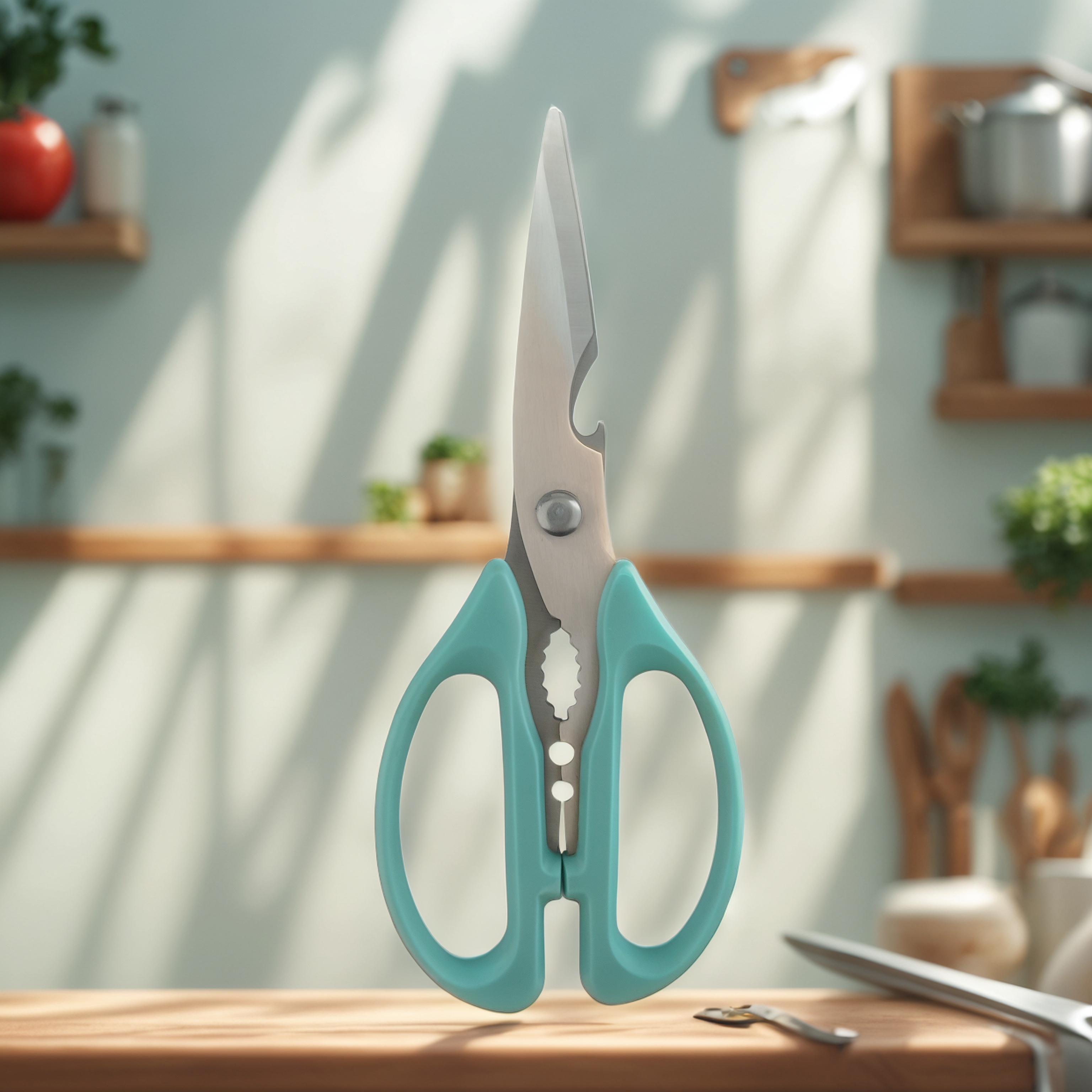
OEM kitchen scissors are a practical product category for retailers, distributors, promotional buyers, and kitchenware brands that want a useful tool with room for customization. The original article highlights a mint-green handled pair with stainless steel blades, a serrated inner grip, bottle opener function, nutcracker function, and an integrated lock mechanism. Those details make the product relevant for buyers looking beyond basic cutting tools, but a good sourcing decision should also consider ergonomics, durability checks, safety, packaging, and supplier communication.

Key Takeaways
- Evaluate OEM kitchen scissors as both a cutting tool and a customizable retail product.
- Confirm blade material, handle material, lock design, and accessory functions directly with the supplier.
- Ask for samples before approving color, grip comfort, packaging, or logo placement.
- Use clear quality criteria for sharpness, alignment, safety lock function, and corrosion resistance.
- Avoid choosing only by appearance; long-term user satisfaction depends on comfort and cutting consistency.
Why OEM Kitchen Scissors Attract B2B Buyers
Kitchen scissors are easy to understand, simple to demonstrate, and useful across many cooking routines. For B2B buyers, this makes them suitable for supermarket shelves, kitchenware collections, online bundles, gift sets, and private-label programs. OEM options add another layer of value because buyers may be able to discuss color, branding, packaging, and feature combinations with the supplier.
However, OEM does not automatically mean better. It means the buyer must define expectations clearly. Before moving to bulk orders, ask whether the supplier can provide drawings, material information, packaging options, logo methods, sample lead time, carton details, and any available test documentation. If compliance or market access is important in your destination country, ask what documents the supplier can provide rather than assuming the product already meets a specific standard.
Design and Ergonomics to Review
The source article describes a mint-green handle designed for comfortable gripping and reduced hand fatigue. For a buyer, this is a useful starting point, but it should be tested with real handling. Scissors that feel comfortable for a short demonstration may feel different during repeated cutting tasks such as trimming herbs, cutting poultry packaging, or portioning cooked food.
When reviewing samples, check handle opening size, inner edge smoothness, grip stability when wet, and whether the scissors suit both smaller and larger hands. If the target market includes home cooks, seniors, or food-service users, comfort is not a minor detail. It affects reviews, repeat orders, and return rates. Color can support branding, but the handle shape and surface finish should come first.
Blade Performance and Durability Checks
The original product description mentions stainless steel blades and clean cutting performance. Because stainless steel can refer to many compositions and finishes, B2B buyers should ask the supplier to identify the blade material and explain how sharpness and corrosion resistance are controlled. Do not rely only on a polished appearance.
Practical sample checks can include cutting herbs, thin plastic packaging, parchment, cooked meat, and light food-prep items. The blades should meet cleanly from pivot to tip without excessive wobble. After washing and drying, look for discoloration around the pivot and inner blade surfaces. If the scissors will be marketed for frequent kitchen use, ask the supplier how the pivot is assembled and whether replacement or tightening is possible.
Multi-Functional Features and Safety
According to the source article, these OEM kitchen scissors include a serrated inner grip, bottle opener, nutcracker function, and integrated lock mechanism. Multi-functional features can make a product more attractive, but each added function should be evaluated carefully. A weak bottle opener or awkward nutcracker can hurt the user experience even if the main blades perform well.
The lock mechanism deserves special attention. It should close securely, open without forcing, and not interfere with normal cutting. Buyers should test whether the lock remains stable after repeated use and whether it creates any pinch points. For retail packaging, consider including simple use-and-care instructions so customers understand what the added features are for and how to store the scissors safely.
Comparison Checklist for OEM Selection
| Selection Area | What to Check | Questions to Ask the Supplier |
|---|---|---|
| Blade quality | Sharpness, alignment, pivot stability, corrosion appearance | What blade material is used, and what quality checks are performed? |
| Handle design | Grip comfort, color consistency, surface finish, hand fit | Can the handle color, material, or logo placement be customized? |
| Safety features | Lock strength, closing smoothness, storage safety | How is the lock tested during production inspection? |
| Multi-function use | Bottle opener, nutcracker, serrated grip practicality | Which functions are standard, optional, or removable for OEM orders? |
| Packaging | Retail display, barcode space, instruction clarity, protection | What packaging formats and artwork requirements are available? |
| Commercial details | MOQ, lead time, sample cost, payment terms, shipping cartons | What are the current order terms for the requested customization? |
OEM Customization and Supplier Communication
For private-label buyers, customization should be handled as a controlled process rather than a casual color request. Start with a clear specification sheet that lists blade requirements, handle color, logo size, packaging format, instruction language, carton labeling, and inspection criteria. If any details are unknown, ask the supplier what options are commonly available and request photos or samples.
Buyers should also clarify approval steps. A reasonable process may include an initial sample, revised sample if needed, packaging proof, pre-production confirmation, and final inspection. Ask whether the supplier keeps reference samples and how changes are documented. This reduces misunderstandings when moving from sample approval to mass production.
Use, Care, and Retail Guidance
Even for B2B sourcing, end-user care matters because it influences product reviews. Kitchen scissors should be cleaned after contact with food, dried before storage, and kept locked when not in use if a lock is provided. If the scissors include multiple functions, packaging or inserts should explain them clearly without exaggeration.
- Wash and dry the scissors after food preparation, especially around the pivot.
- Use the blades only for appropriate kitchen tasks, not hard industrial materials.
- Keep the safety lock engaged during storage when the design allows it.
- Check the pivot and blade alignment periodically if the scissors are used often.
FAQ
What makes OEM kitchen scissors different from standard kitchen scissors?
OEM kitchen scissors may allow buyer-defined details such as handle color, branding, packaging, and selected functions. The exact options depend on the supplier, so they should be confirmed before quoting.
Which product details should be confirmed before placing a bulk order?
Confirm blade material, handle material, dimensions, weight, lock design, packaging, logo method, MOQ, lead time, sample process, and inspection standards. Ask for written confirmation rather than relying only on photos.
Are multi-functional kitchen scissors always better?
Not always. Added functions such as a bottle opener, nutcracker, or serrated grip are useful only if they work comfortably and do not weaken the main cutting experience. Test each function on samples.
How should buyers judge supplier reliability?
Look for clear communication, consistent samples, transparent commercial terms, quality-control explanations, and the ability to answer technical questions. If compliance documents are needed for your market, request them early.
Can the mint-green handle shown in the original product be customized?
The source article identifies a mint-green handle, but customization options must be confirmed with the supplier. Ask about available colors, color matching, minimum order requirements, and sample approval steps.
Final Sourcing Advice
The best OEM kitchen scissors for culinary precision are not selected by appearance alone. The mint-green handle, stainless steel blades, serrated inner grip, bottle opener, nutcracker, and integrated lock described in the original article provide a strong feature set to evaluate. For B2B buyers, the next step is to turn those features into measurable requirements: sample testing, written specifications, packaging review, and supplier questions about quality control. That approach helps buyers choose kitchen scissors that are practical for end users and realistic for private-label or wholesale sourcing.
