





Discover the Best OEM Poultry Scissors for Your Kitchen
OEM poultry scissors are a practical product category for kitchenware brands, distributors, retailers, and hospitality buyers that need a reliable cutting tool for poultry preparation and other everyday kitchen tasks. Unlike general-purpose scissors, kitchen bone scissors are usually selected for stronger cutting performance, safer grip, and easier control when handling chicken, small bones, herbs, packaging, or other food-preparation materials.
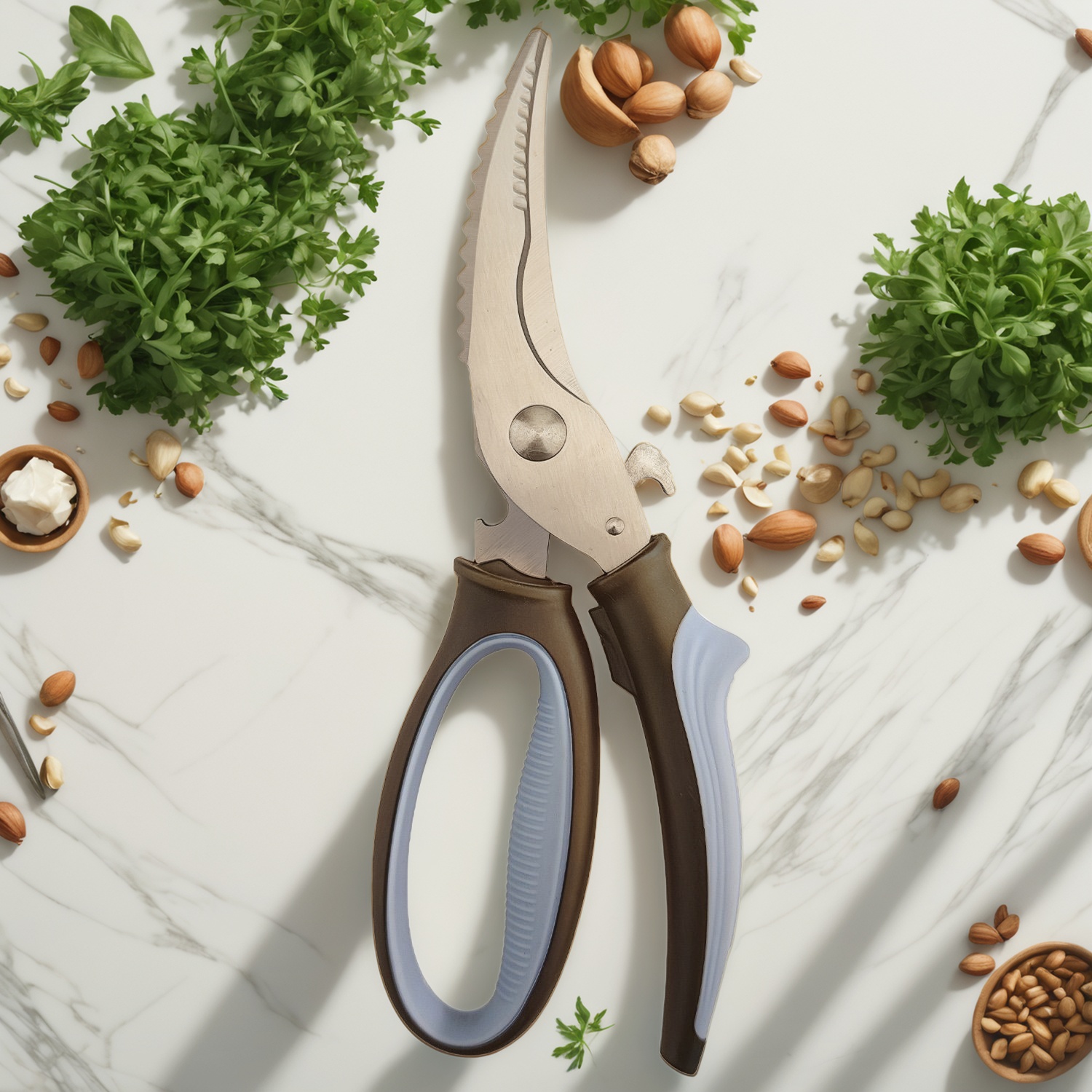
The original product description highlights several explicit features: stainless steel blades, a serrated edge, an ergonomic blue and black non-slip handle, and integrated bottle opener and nutcracker functions. These details make the product suitable for discussion as a multi-function kitchen shear, but B2B buyers should still verify all commercial, technical, and compliance details directly with the supplier before placing an OEM or wholesale order.
Key Takeaways
- OEM poultry scissors should be evaluated by cutting performance, grip comfort, safety, cleaning ease, and consistency across production batches.
- Stainless steel blades and a serrated edge are useful features, but buyers should ask the supplier to confirm the exact material grade and finishing process.
- Multi-function features such as a bottle opener and nutcracker can improve retail appeal, provided they do not compromise cutting control.
- For OEM projects, ask clear questions about branding options, packaging, samples, inspection standards, and documentation before confirming an order.
What Makes OEM Poultry Scissors Different?
OEM poultry scissors are made or customized for a buyer’s brand, channel, or product line. The buyer may need private-label packaging, color adjustments, logo placement, retail-ready presentation, or a product specification aligned with a target market. Because the article topic concerns OEM sourcing, the decision is not only about whether the scissors look useful. It is also about whether the supplier can produce consistent goods and communicate clearly during sampling, approval, production, and shipment.
For kitchen use, poultry scissors must provide controlled cutting rather than simply sharp blades. The user may be working with slippery poultry skin, joints, cartilage, food packaging, or small bones. The serrated edge mentioned in the original description is relevant because serrations can help grip material while cutting. However, buyers should request samples and test the shears under realistic use conditions instead of relying on product photos alone.
Blade, Handle, and Grip Considerations
The source content states that the blades are made from high-quality stainless steel. Stainless steel is commonly preferred for kitchen tools because it can support durability and easier cleaning, but buyers should not assume a specific grade unless the supplier provides it. Ask the poultry scissors manufacturer to confirm the blade material, hardness range, corrosion-resistance expectations, and recommended care instructions.
The handle deserves equal attention. The original article describes a blue and black non-slip grip with an ergonomic shape intended to reduce fatigue during extended use. For B2B buyers, this is important because handle comfort affects customer reviews, repeat purchases, and return rates. During sample testing, check whether the grip feels secure with dry and slightly wet hands, whether the handle opening suits different hand sizes, and whether the cutting motion feels stable.
Multi-Function Features: Useful or Distracting?
The product described includes a bottle opener and nutcracker integrated into the design. These functions can help position the item as a versatile kitchen tool, especially in retail channels where customers compare value at a glance. They may also support gift sets, barbecue accessories, or general kitchenware bundles.
At the same time, every additional function should be assessed carefully. A feature is only useful if it works reliably and does not make the scissors harder to clean, hold, or store. Buyers should test whether the nutcracker area feels sturdy, whether the bottle opener is easy to use, and whether either feature creates sharp edges or food-trap points. If the product is intended for food-contact markets, ask the supplier what documentation can be provided for the materials and finish; do not assume compliance without evidence.
Comparison Checklist for B2B Buyers
| Evaluation Area | What to Check | Questions to Ask the Supplier |
|---|---|---|
| Blade design | Sharpness, serrated grip, cutting control, blade alignment | What stainless steel is used, and can sample cutting tests be arranged? |
| Handle comfort | Non-slip feel, ergonomic shape, hand fit, fatigue during repeated use | Can handle color, logo, or material details be customized for OEM orders? |
| Multi-function parts | Bottle opener and nutcracker usability without reducing safety | Are these functions tested during production inspection? |
| Cleaning and maintenance | Food residue traps, ease of rinsing, drying, and storage | What care instructions should be printed on packaging or inserts? |
| Packaging and branding | Retail presentation, barcode space, instruction clarity | What packaging formats, artwork requirements, and approval steps are available? |
| Quality control | Batch consistency, appearance, cutting performance, functional checks | What inspection criteria are used before shipment? |
How to Assess a Poultry Scissors Manufacturer
A capable poultry scissors manufacturer should be able to answer practical questions in a direct and documented way. Start with product samples, then review the supplier’s communication speed, ability to explain materials, packaging support, and willingness to define inspection standards. If the product will carry your brand name, vague answers can become a risk later.
- Request physical samples and test them on poultry preparation tasks, packaging, and light kitchen use.
- Ask for written confirmation of material, finish, handle composition, and recommended care instructions.
- Review whether OEM branding is possible on the product, packaging, or user instructions.
- Clarify order quantities, lead times, sample costs, payment terms, and shipping responsibilities directly with the supplier.
- Define acceptable quality limits for blade alignment, handle defects, surface scratches, packaging damage, and function checks.
Buyers should avoid assuming factory capacity, minimum order quantity, certifications, or testing results unless they receive current documentation. If a supplier claims a specific standard or compliance status, ask for valid supporting documents and confirm whether they apply to the exact product version being purchased.
Product Positioning and Selection Tips
For wholesalers and retailers, the best OEM poultry scissors are not always the most complex. The right choice depends on the sales channel and end user. A supermarket buyer may prioritize clear packaging and broad household appeal. A kitchenware brand may focus on handle comfort and visual identity. A hospitality supplier may care more about repeat-use durability and cleaning guidance.
The blue and black handle described in the source gives the shears a recognizable appearance, while the stainless steel blades and serrated edge support functional positioning. The bottle opener and nutcracker can be emphasized as secondary benefits, but the core message should remain clear: these are kitchen shears designed for controlled poultry and food-preparation tasks.
Practical FAQ
Are OEM poultry scissors only for cutting poultry?
No. Poultry preparation is the main use case, but multi-function kitchen shears may also help with herbs, food packaging, small kitchen tasks, bottle opening, or nut cracking if those functions are included and tested.
What should buyers confirm before ordering?
Confirm the blade material, handle details, available customization, packaging options, care instructions, inspection standards, production timeline, and any required documents for the target market.
Can I claim the scissors are food safe or certified?
Only make those claims if the supplier provides valid documentation for the exact product and market. Do not rely on assumptions or generic statements.
How should samples be tested?
Test cutting control, grip comfort, blade alignment, cleaning ease, bottle opener function, nutcracker function, and packaging presentation. Use the same checks you expect for bulk production.
What makes a good bone scissors supplier?
A good supplier provides clear specifications, consistent samples, realistic lead-time information, practical OEM support, and transparent quality-control criteria before the order is confirmed.
