




Discover the Best Sewing Shears in China
For distributors, sewing brands, craft retailers, and tailoring-supply buyers, sourcing sewing shears in China can offer access to a wide range of designs and supplier options. The challenge is not simply finding a pair that looks attractive in a catalog. A reliable sewing shear should cut fabric cleanly, feel stable in the hand, and remain consistent across repeat orders. This guide explains how to evaluate sewing shears from China with a practical B2B purchasing mindset, while keeping the focus on product quality, supplier communication, and realistic order planning.
Key Takeaways
- Start with cutting performance, blade alignment, handle comfort, and finish consistency before comparing price.
- Ask suppliers clear questions about materials, production tolerances, packaging, inspection, and customization options.
- Request samples and test them on the fabrics your customers actually use, such as cotton, denim, felt, or layered cloth.
- Do not rely only on product photos; confirm dimensions, weight, edge finish, and packaging details before placing a wholesale order.
What Buyers Usually Mean by “Best” Sewing Shears
The best sewing shears for one buyer may not be the best choice for another. A tailoring school may prioritize durability and easy handling. A craft retailer may want an appealing handle design and gift-ready packaging. A wholesale distributor may focus on stable supply, barcode labeling, and consistent cartons. Before contacting sewing shear manufacturers, define your target customer and sales channel.
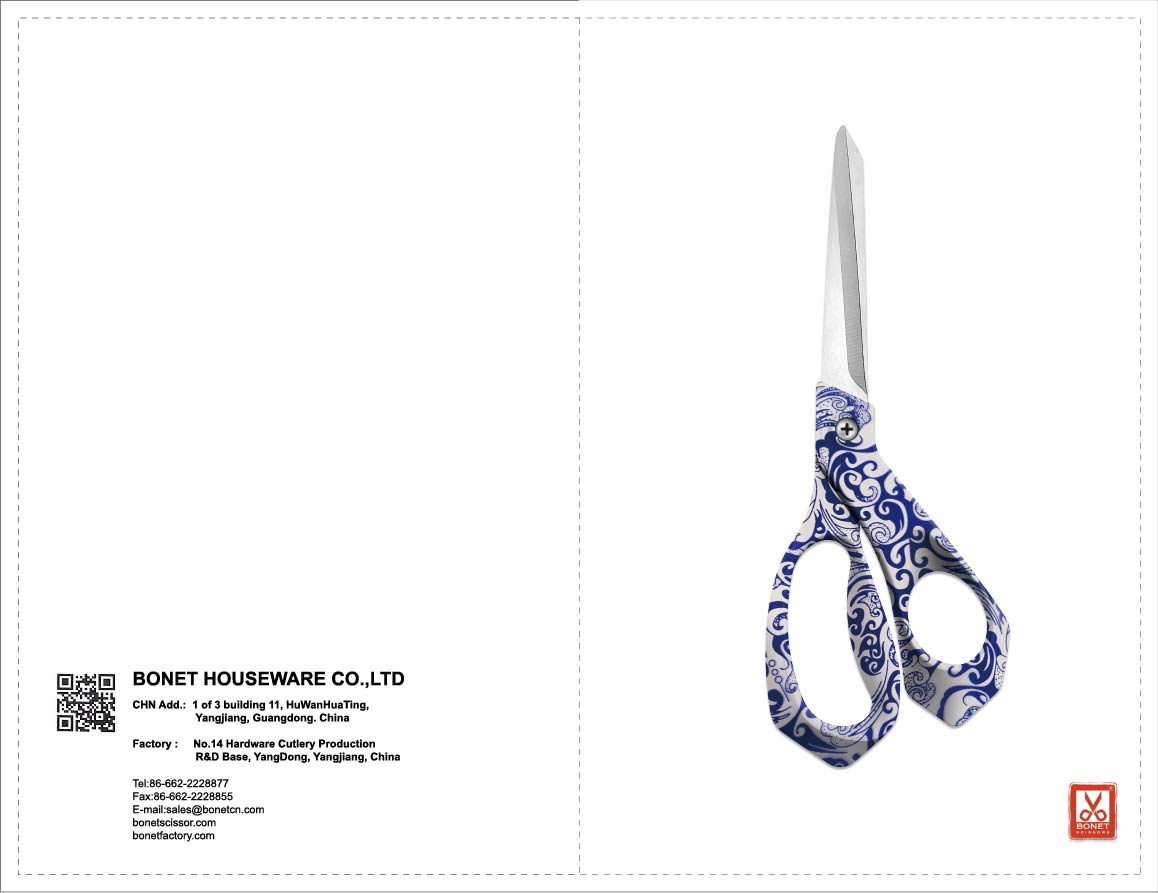
Important buying criteria include blade sharpness, smooth opening and closing, comfortable grip, clean finish, and reliable blade alignment. The original product shown here features a blue and white swirl pattern handle, which may be suitable for buyers who want a more distinctive look than plain utility scissors. However, appearance should be checked alongside practical cutting performance.
Blade Quality and Cutting Performance
Blade performance is the first issue to verify when sourcing sewing shears. Many buyers look for stainless steel blades because stainless steel is commonly associated with resistance to corrosion and a clean finish. If a supplier describes the blades as stainless steel, ask what material specification they use, how the blades are hardened, and whether they can provide documentation for the stated material. Avoid assuming a grade or hardness unless the supplier confirms it in writing.
During sample testing, check whether the shears can cut from the heel of the blade to the tip without snagging. Test single-layer and multi-layer fabric. The cut line should be clean rather than chewed or uneven. Also check whether the blades rub too tightly, open loosely, or leave gaps near the tip. These issues can become more obvious after repeated use.
Handle Design, Comfort, and Control
A sewing shear is used for longer, more controlled cuts than general household scissors. Handle comfort matters because fatigue can affect accuracy. A comfortable handle should allow the user to control the cutting angle without pressure points. For professional tailors or frequent hobby users, grip shape can be just as important as blade sharpness.
If you are buying for retail, the handle design also influences shelf appeal. The blue and white swirl pattern shown in the product image gives the shears a decorative look. For private label or OEM projects, ask whether handle color, pattern, logo placement, and packaging can be customized. Also ask whether the design shown is a standard item or subject to availability.
Supplier Evaluation Checklist
When comparing sewing shear suppliers in China, use a structured checklist instead of relying only on price quotes. A clear comparison reduces the risk of misunderstandings and helps your team evaluate each supplier on the same basis.
| Evaluation Point | What to Check | Questions to Ask the Supplier |
|---|---|---|
| Blade material | Material description and finish | What blade material is used, and can it be documented? |
| Cutting test | Clean cuts on target fabrics | Can samples be tested on cotton, denim, felt, or layered cloth? |
| Pivot and alignment | Smooth movement and stable blade contact | How is blade alignment checked during production? |
| Handle design | Comfort, grip size, and color consistency | Is the handle pattern standard, customizable, or seasonal? |
| Packaging | Retail pack, bulk pack, labeling, carton strength | What packaging options are available for wholesale orders? |
| Quality inspection | Incoming, in-process, and final checks | What inspection steps are used before shipment? |
Sample Testing Before Wholesale Orders
Samples are essential for sewing shears because small differences in blade grinding, pivot tension, and handle molding can change the user experience. Request more than one sample if possible, especially if you are comparing different sizes or handle types. Test each sample under the same conditions and record results.
- Inspect the surface finish for scratches, burrs, sharp handle edges, or loose screws.
- Open and close the shears repeatedly to check smoothness and resistance.
- Cut several fabric types, including the materials most relevant to your customers.
- Check the tip cut, because weak tip performance is common in lower-quality scissors.
- Confirm weight, length, packaging, and any printed information against the supplier’s quotation.
If the sample passes your test, keep it as a reference sample. For future orders, compare mass-production goods with the approved sample to verify consistency.
OEM, Branding, and Packaging Questions
Many B2B buyers need more than a standard product. They may need hang cards, blister packaging, printed logos, color labels, instruction inserts, carton marks, or marketplace-ready barcodes. Before discussing artwork, ask whether the supplier offers OEM or private-label services and what information they need from you.
Do not assume minimum order quantity, setup cost, lead time, or printing method. These details vary by supplier and product configuration. Ask practical questions: What is the MOQ for a standard item? What is the MOQ for custom packaging? Can the supplier provide a dieline? How are color differences controlled? Will production samples be provided before bulk manufacturing? Clear answers can prevent delays after the order is confirmed.
Balancing Price, Quality, and Consistency
Price matters in wholesale sourcing, but the lowest quote may not be the best value if returns, poor reviews, or inconsistent shipments follow. Sewing shears are performance tools, so customers quickly notice dull blades, uncomfortable handles, or weak alignment. A slightly higher unit cost may be justified if the product cuts better and reduces after-sales issues.
When comparing quotes, make sure each supplier is quoting the same product size, blade material description, handle design, packaging method, inspection standard, and shipment terms. If one quote is much lower than the rest, ask what has been changed. It may involve different packaging, thinner material, simpler finishing, or fewer inspection steps.
FAQ: Sourcing Sewing Shears in China
Are sewing shears from China suitable for professional buyers?
They can be, provided the buyer verifies samples, confirms specifications, and works with a supplier that communicates clearly about production and inspection.
What should I test first when a sample arrives?
Start with blade alignment, smooth opening and closing, tip cutting, and clean fabric cuts. Then review handle comfort, finish, packaging, and labeling.
Can I request custom handle colors or packaging?
Many suppliers may offer customization, but details such as MOQ, tooling, printing method, lead time, and cost should be confirmed directly with the supplier.
How can I avoid inconsistent quality in repeat orders?
Keep an approved sample, define inspection points in writing, confirm packaging specifications, and request pre-shipment checks before goods leave the factory.
What information should I prepare before contacting a supplier?
Prepare target size, expected use, packaging needs, estimated order quantity, branding requirements, destination market, and any testing or labeling expectations.
Final Thoughts
Sourcing the best sewing shears in China is a process of verification, not guesswork. Product photos and broad quality claims are only a starting point. Serious buyers should compare blade performance, handle comfort, packaging options, and supplier communication before committing to wholesale or OEM orders. With clear sample testing and precise questions, buyers can identify sewing shears that match their market needs and support dependable long-term supply.
