




Discover the Best Silicone Spoons for Everyday Cooking
Silicone spoons have become popular because they solve several common kitchen problems at once. They are gentle on non-stick cookware, comfortable for stirring soups and sauces, and easier to use around hot pans than many rigid plastic utensils. The original Bonet Houseware article introduced three useful directions: a heat-resistant silicone cooking spoon in a modern matte gray finish, a red smile spoon with an embossed smile face, and a cheerful coral-pink happy spoon. This updated guide looks at how to choose among styles like these based on real cooking needs rather than appearance alone.
A good silicone spoon should feel stable in the hand, reach the bottom of pots without awkward bending, and be easy to clean after contact with oil, tomato sauce, or thick stews. If you cook often with coated cookware, silicone is especially worth considering because it is less likely to scratch surfaces than metal. Still, not every spoon is right for every job, so the best choice depends on shape, handle comfort, heat performance, and how the spoon will be cleaned and stored.
Key Takeaways
- Choose a silicone spoon based on the foods you cook most often: soups, sauces, stews, rice, or serving dishes.
- Heat resistance matters, but buyers should confirm the specific temperature guidance from the product label or supplier.
- For non-stick cookware, silicone spoons are usually a safer everyday option than metal utensils.
- Fun designs such as smile-face spoons can be practical if the handle, bowl shape, and cleaning requirements still meet your needs.
- Inspect any silicone utensil regularly and replace it if it tears, cracks, becomes sticky, or holds strong odors after cleaning.
Why Choose a Silicone Spoon?
Silicone spoons are useful because they combine flexibility with a soft edge. When you stir a stew, scrape sauce from the side of a pot, or fold ingredients in a mixing bowl, the spoon can move smoothly without scraping loudly or damaging delicate cookware surfaces. This makes silicone a practical material for kitchens that use non-stick pans, ceramic-coated pots, or enamel cookware.
The original product description highlights food-grade silicone and heat-resistant use. Those are important points to verify when comparing options. A buyer should always check the actual heat rating supplied with the utensil, because safe use depends on the product’s construction and the cooking situation. A spoon used briefly for stirring soup faces different conditions than one left resting on the rim of a hot pan for a long time.
What to Look For Before Buying
The best silicone spoon is not simply the brightest color or the largest size. It should match the way you cook. For everyday home kitchens, look at five areas: bowl depth, edge flexibility, handle grip, weight, and cleaning ease. A deeper bowl helps with serving soups and curries. A flatter edge helps with stirring sauces and scraping the bottom of a saucepan. A balanced handle reduces hand fatigue when stirring thick foods.
If you are choosing for a shared kitchen, family kitchen, or hospitality setting, consistency matters. Ask whether the spoon design is easy to identify, stack, hang, or store. Bright colors such as red or coral pink can help utensils stand out in drawers, while a matte gray finish may suit a more neutral kitchen setup. Color is not only visual; it can also make organization easier when different utensils are assigned to different tasks.
Comparison and Selection Checklist
| Feature to Check | Why It Matters | Practical Buying Tip |
|---|---|---|
| Heat-resistant use | Helps the spoon perform around hot soups, sauces, and pans. | Confirm the stated temperature guidance before use, especially for high-heat cooking. |
| Soft silicone edge | Reduces the risk of scratching non-stick cookware. | Run a finger along the edge; it should feel smooth, not sharp or rough. |
| Bowl shape | Controls whether the spoon is better for stirring, scooping, or serving. | Choose deeper bowls for soup and flatter bowls for sauces or sautéed foods. |
| Handle comfort | Affects control during long stirring tasks. | Look for a grip that does not twist easily in the hand. |
| Rest design | Can help keep the spoon head from touching the counter. | Check that any raised rest is stable on your typical work surface. |
| Cleaning and odor control | Silicone can sometimes hold odors if not cleaned well. | Wash promptly after strong spices, garlic, or tomato-based sauces. |
Understanding the Three Spoon Styles
The heat-resistant silicone cooking spoon described in the original article is presented with a modern matte gray finish. This type of spoon is a good all-purpose option if you prefer understated tools and want one utensil for stirring, mixing, and serving. A neutral color can also fit well in kitchens where utensils are displayed on a rail or stored in an open crock.
The red smile spoon focuses on a more playful design. Its vibrant red color and embossed smile face make it easy to spot, and the original description notes a lightweight yet sturdy feel. It also mentions an innovative rest design intended to support cleanliness by keeping part of the spoon away from the counter. When considering a spoon like this, check whether the resting feature works with your counter height, pot rims, and storage method.
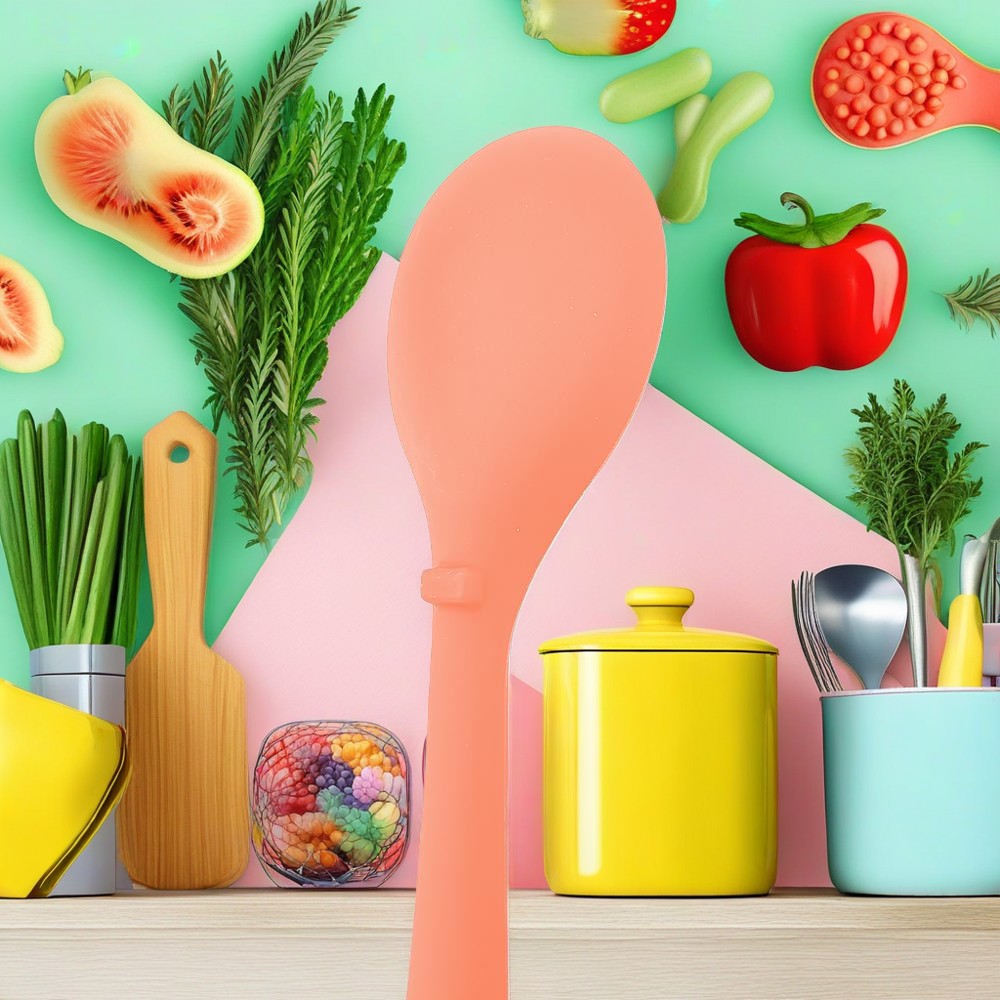
The happy spoon is described in a coral-pink tone with a cheerful embossed detail. The original article connects it with family and child-friendly cooking moments. For households where children help prepare simple foods, a friendly-looking utensil can make participation easier. However, adult supervision and safe cooking habits still matter more than color or decoration.
Best Uses in the Kitchen
Silicone spoons work well for everyday cooking tasks such as stirring porridge, mixing pasta sauce, serving vegetables, folding batter, and moving food in non-stick pans. They are particularly useful when a metal spoon would be too hard on the cookware surface. A spoon with a slightly flexible edge can reach the curve between the base and side of a saucepan, where sauces often stick.
- Use a deeper silicone spoon for soups, broths, beans, and stews.
- Use a flatter spoon for saucepans, scrambled eggs, and sautéed vegetables.
- Choose a bright color if the spoon needs to be easy to find in a busy drawer.
- Choose a neutral finish if you prefer a simple, coordinated utensil set.
- Keep one spoon for strongly flavored foods if odor transfer is a concern.
Care, Cleaning, and Storage
Most silicone utensils are straightforward to clean, but good habits extend their useful life. Rinse the spoon soon after cooking so sauces do not dry on the surface. Wash with warm water and dish soap, paying attention to embossed details or built-in rest areas where residue can collect. If the spoon develops lingering smells, soak it in warm soapy water and allow it to air-dry completely before storing.
Avoid cutting directly against a silicone spoon or scraping it with sharp tools. If the utensil shows deep cuts, peeling, cracks, or sticky areas that do not wash away, it is time to replace it. Storage also matters. Hanging the spoon can help it dry fully, while drawer storage should prevent the spoon from being compressed under heavy metal utensils.
Questions to Ask Before Choosing a Supplier or Retailer
If you are sourcing silicone spoons for a store, gift set, hospitality kitchen, or promotional kitchenware line, do not rely only on product photos. Ask practical questions before placing an order. What silicone material description is provided? What heat-use instructions appear on the packaging? Is the utensil one-piece or assembled from multiple parts? How should the spoon be cleaned? Are color options such as matte gray, red, or coral pink available consistently? Can the supplier explain packaging, labeling, and any applicable compliance documentation for your target market?
These questions help you compare products without assuming details that have not been provided. They also reduce the risk of ordering a spoon that looks appealing but does not fit your intended cooking use, retail positioning, or customer expectations.
FAQ
Are silicone spoons safe for non-stick cookware?
Silicone spoons are generally a good choice for non-stick cookware because their soft edges are less likely to scratch than metal. Always use normal care and avoid pressing damaged or rough utensil edges into coated surfaces.
Can I leave a silicone spoon in a hot pan?
It is better not to leave any utensil sitting in a hot pan longer than necessary. Even heat-resistant silicone should be used according to the temperature and care instructions supplied with the product.
Which is better: a deep spoon or a flat spoon?
A deep spoon is better for serving soups, stews, and beans. A flatter spoon is better for stirring sauces, folding ingredients, and scraping the bottom of a pot.
How do I remove odors from a silicone spoon?
Wash the spoon promptly, then soak it in warm soapy water if odors remain. Let it dry completely before storing. For strong spices or garlic, consider keeping one spoon for those foods.
When should I replace a silicone cooking spoon?
Replace it when you see cracks, tears, deep cuts, peeling, or sticky areas that remain after washing. A damaged spoon is harder to clean and may not perform as intended.
