




Multifunction Bottle Opener: How to Choose and Use One Well
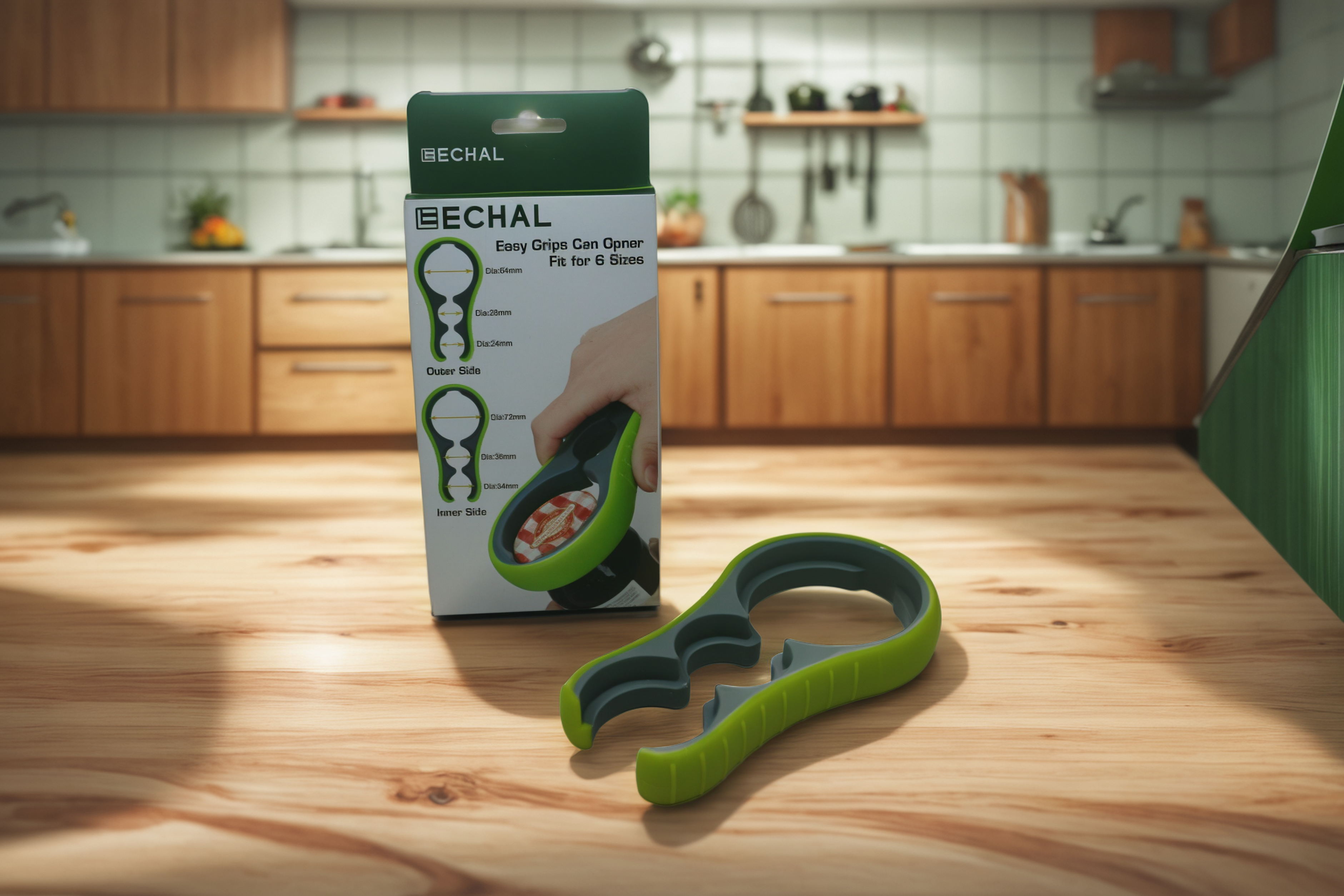
A stubborn lid can slow down a simple kitchen task. Whether you are opening a soda bottle, a condiment jar, a pickle jar, or another everyday container, the right opener can reduce hand strain and help you work more confidently. The Echal Easy Grips Can Opener is presented as a multifunction bottle opener designed for several common lid sizes, with a dual-sided layout and a soft green silicone grip. This guide explains what that means in practical use, how to judge whether a tool like this fits your kitchen, and how to care for it so it remains useful over time.
Key Takeaways
- A multifunction bottle opener is most useful when it fits the lid sizes you open most often.
- The Echal Easy Grips Can Opener is described with six lid-size positions: 64mm, 28mm, 42mm, 72mm, 36mm, and 34mm.
- A soft silicone grip and contoured shape can make twisting easier, especially when lids are slippery.
- Check fit, grip comfort, cleaning needs, and storage space before choosing any kitchen opener tool.
What a Multifunction Bottle Opener Is Designed to Do
A single-purpose opener may work well for one type of cap, but it can leave you searching for another tool when the lid size changes. A multifunction bottle opener is intended to cover several opening tasks with one compact utensil. For a household kitchen, this can mean fewer tools in the drawer and less time spent trying unsafe shortcuts such as knives, towel-wrapping, or excessive force.
The Echal Easy Grips Can Opener is positioned as a versatile opener for different jars and bottles. The original product description highlights a dual-sided design that accommodates six lid sizes. This is the most important feature to understand: instead of relying on one opening slot, the user chooses the side and opening size that best matches the container lid.
Lid-Size Fit: The Detail That Matters Most
Before buying or using any jar and bottle opener, compare the tool with the containers you actually open. A comfortable handle is helpful, but the opener must first make secure contact with the lid. According to the source information, this opener covers smaller diameters on the outer side and larger items on the inner side. The listed sizes are useful for judging fit, but real-world results can still depend on lid shape, ridges, and how tightly the container is sealed.
The outer side is described for 64mm, 28mm, and 42mm diameters. These may suit a range of smaller bottle caps and jars. The inner side is described for 72mm, 36mm, and 34mm diameters, offering additional options for larger or differently shaped lids. When checking a container, measure across the lid from one outside edge to the opposite outside edge. If the lid falls between listed sizes, test the closest position carefully rather than forcing the tool.
Comparison and Selection Checklist
| Selection Point | What to Check | Why It Matters |
|---|---|---|
| Lid compatibility | Compare your common lids with the six stated sizes: 64mm, 28mm, 42mm, 72mm, 36mm, and 34mm. | A close fit improves grip and reduces slipping. |
| Grip comfort | Look for a handle surface that feels secure when your hands are dry or slightly damp. | Comfort matters for repeated use and for users with limited hand strength. |
| Tool shape | Check whether the contoured shape fits your palm and twisting style. | A better hand position can reduce unnecessary wrist strain. |
| Storage | Confirm that the opener fits in your utensil drawer or a small kitchen organizer. | A compact tool is more likely to be kept within reach. |
| Cleaning | Review the supplier’s care instructions before washing or soaking. | Food residue around grip areas can affect hygiene and performance. |
How to Use It Without Damaging the Lid or Tool
Start by selecting the opening position that fits the lid most closely. Place the opener flat against the cap or jar lid so the gripping area makes even contact. Hold the container firmly on a stable surface, then twist with steady pressure. Avoid sudden jerks, because they can cause slipping and may spill the contents once the seal releases.
If a lid does not move, do not keep increasing force blindly. Check whether you selected the correct opening size, wipe moisture or oil from the lid, and try again. For vacuum-sealed jars, gently tapping around the lid edge or running warm water over the lid may help loosen the seal, provided the food packaging allows it. The opener should assist your grip; it should not be used as a lever to pry glass or deform lids aggressively.
Grip Comfort and Everyday Accessibility
The product description notes a soft green silicone grip and an ergonomically contoured shape. In practical terms, these features are meant to make the opener easier to hold and twist. This can be especially useful when lids are smooth, cold, oily, or difficult to grasp with bare hands. A non-rigid grip surface may also feel more comfortable during repeated food preparation tasks.
For users buying for a family kitchen, consider who will use the tool most often. Older adults, people with smaller hands, or anyone who finds tight lids frustrating may benefit from a wider gripping surface. However, comfort is personal. If possible, evaluate the handle size, the thickness of the tool, and how naturally the wrist turns when using it.
Cleaning, Storage, and Use-and-Care Tips
- Wipe the opener after opening sticky or oily containers, especially around the gripping areas.
- Follow the supplier’s washing instructions rather than assuming dishwasher suitability.
- Dry the tool before storing it in a closed drawer to reduce trapped moisture.
- Keep it away from sharp utensils that could damage soft grip surfaces.
- Do not use it on lids outside its practical size range or on containers that require a different opening method.
Because the opener is described as compact, it should be easy to store near other everyday utensils. The best place is wherever you naturally reach when preparing drinks, condiments, snacks, or cooking ingredients. A tool that is easy to find is more likely to be used correctly instead of being replaced by unsafe improvised methods.
Practical FAQ
What lids does this multifunction opener fit?
The source description lists six lid diameters: 64mm, 28mm, and 42mm on the outer side, plus 72mm, 36mm, and 34mm on the inner side. Measure your common lids to check whether they are close to these sizes.
Is it only for bottles?
It is described as a multifunction bottle opener and can opener, and the original text mentions use with items such as soda bottles, condiment jars, jam jars, and pickle jars. Suitability depends on lid shape and fit.
Can it help people who struggle with tight lids?
The soft silicone grip and contoured shape are intended to improve hold and reduce slipping. It may help with common tight lids, but very tight or damaged lids may still need another safe method.
How should I clean it?
Wipe away residue after use and follow the supplier’s care instructions. Do not assume dishwasher compatibility unless the supplier confirms it.
What should I ask before purchasing?
Ask for confirmed lid-size compatibility, care instructions, material details beyond the silicone grip, packaging information, and any warranty or return policy that applies to the product.
