




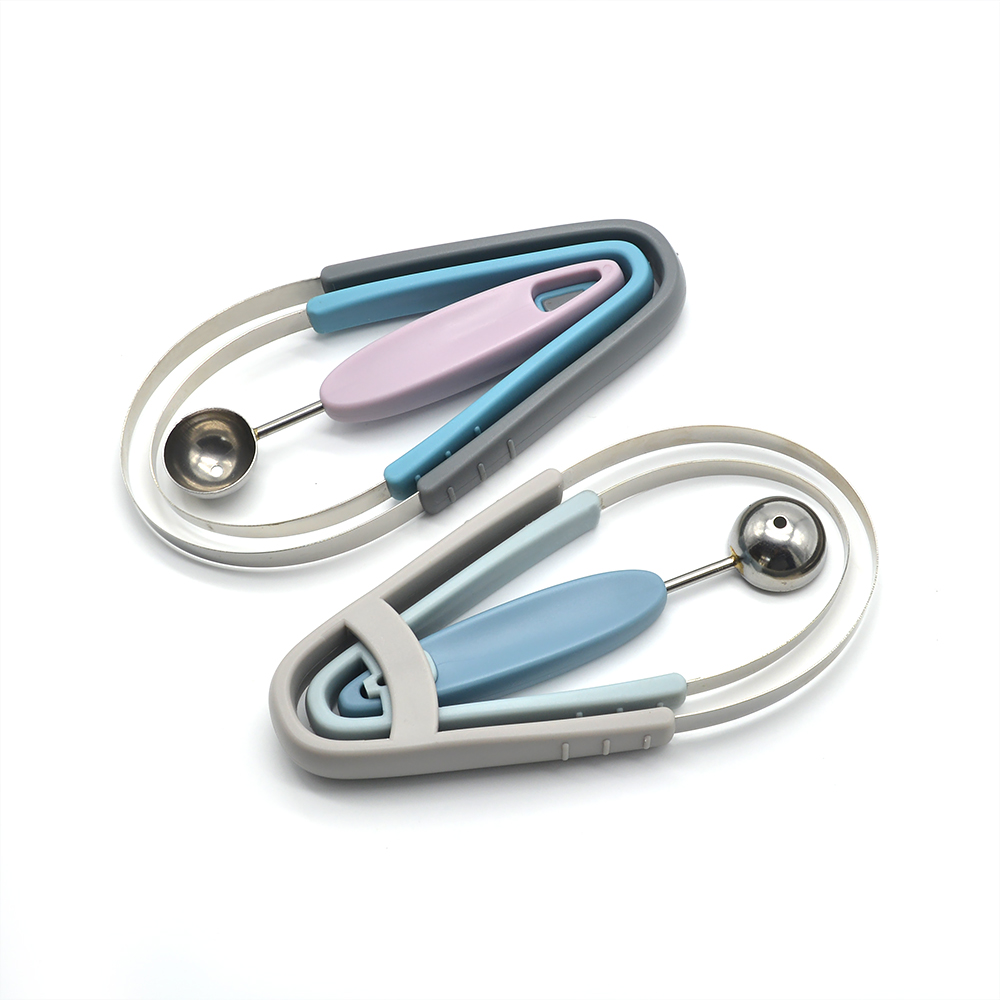
How to Source Nesting Fruit Scoops from a Factory
A nesting fruit scoop set is a small kitchen tool, but for retailers, distributors, promotional buyers, and private-label brands, it still deserves careful sourcing. The product has to scoop cleanly, feel comfortable in the hand, store neatly, and arrive consistently across bulk orders. Choosing a nesting fruit scoop factory is therefore not only about finding an attractive design. It is about understanding materials, tooling, inspection, packaging, communication, and whether the supplier can support your market requirements.
The original appeal of this product is easy to understand: fruit scoops help create melon balls, fruit salad, dessert garnishes, and decorative serving pieces, while a nesting design can reduce drawer clutter. For B2B buyers, the goal is to turn that practical appeal into a reliable product line with fewer quality surprises.
Key Takeaways
- Ask the factory what materials are used, rather than assuming a specific grade or finish.
- Request samples and test scooping performance, handle comfort, nesting fit, and cleaning ease.
- Compare factory, trading company, and mixed supplier options based on transparency and quality control.
- Confirm packaging, labeling, inspection process, lead time, and order terms before committing to bulk production.
What Makes a Nesting Fruit Scoop Different?
A standard fruit scoop or fruit baller is designed to cut rounded pieces from melon, watermelon, cantaloupe, papaya, and similar foods. A nesting fruit scoop set adds a storage-focused design: multiple scoop sizes or related tools fit together or stack in a compact way. This makes the product attractive for home kitchens, gift sets, supermarket kitchenware aisles, online bundles, and seasonal summer promotions.
However, nesting construction also creates sourcing questions. Do the pieces sit securely together? Are there sharp or uncomfortable edges where tools overlap? Does the set rattle excessively in retail packaging? Can the customer remove each piece easily? These practical details affect reviews, returns, and repeat orders.
Evaluating a Kitchenware Factory
When sourcing from a kitchenware factory, start by identifying whether the supplier actually manufactures the item, assembles it from outsourced parts, or acts as a trading company. None of these models is automatically wrong, but transparency matters. A direct factory may offer more control over tooling and production details, while a trading company may provide broader product selection. What matters is that the supplier can answer technical questions clearly and support consistent quality.
Useful questions include:
- Which production steps are completed in-house and which are outsourced?
- What materials are available for the scoop head, handle, and nesting components?
- Can the supplier provide existing designs, custom colors, or OEM packaging?
- How are samples approved before mass production?
- What inspection steps are used before shipment?
A professional supplier should be able to discuss these points without making vague promises. If details such as material, finish, carton packing, or labeling cannot be confirmed, treat that as a risk to be resolved before purchase.
Material, Handle, and Scooping Performance
The original article mentions durable stainless steel as a common material choice for fruit scoop manufacturing. If stainless steel is important for your product positioning, ask the factory to specify the material used and provide supporting documentation when relevant to your market. Do not rely on appearance alone, because polished metal surfaces can look similar while performing differently.
Performance depends on the scoop edge, bowl shape, handle grip, and connection between parts. A scoop should enter fruit with reasonable pressure and release the fruit ball without excessive sticking. The handle should feel stable when the user twists into firm melon flesh. If the set includes multiple scoop sizes, each one should have a clear use and not feel like a decorative add-on.
For consumer satisfaction, also check whether the tool is easy to clean. Fruit fibers and juice can collect around seams, joints, or nested areas. If the supplier claims dishwasher suitability or specific food-contact compliance, ask for evidence appropriate to your sales region instead of assuming it applies.
Supplier Options Compared
| Supplier type | Potential advantage | Key risk to check | Best buyer action |
|---|---|---|---|
| Direct kitchenware factory | More control over tooling, production feedback, and repeat orders | May have limited design range or higher customization thresholds | Ask for factory process details, samples, and production photos if available |
| Trading company | Can compare many kitchen tools and assemble mixed orders | Less direct control over manufacturing consistency | Confirm the actual producer, inspection method, and responsibility for defects |
| OEM or private-label supplier | Can support branding, packaging, colors, or set configuration | Custom work may involve tooling, artwork approval, or longer lead time | Request a written specification sheet and pre-production sample approval |
| Wholesale stock supplier | Faster sourcing for standard products | Limited control over future availability and product changes | Check current inventory, reorder stability, and packaging condition |
Sample Testing Checklist
Before placing a wholesale or OEM order, test samples as a buyer and as an end user. A short hands-on review can reveal problems that product photos will not show.
- Scooping test: Try the tool on different fruit textures, including soft melon and firmer fruit.
- Edge check: Look for burrs, uneven rims, or rough contact points.
- Handle comfort: Test grip stability with wet hands, since fruit preparation is often messy.
- Nesting fit: Confirm that the pieces stack or fit together smoothly without forcing.
- Cleaning review: Rinse after use and check whether pulp remains in seams or corners.
- Packaging drop risk: Shake the retail pack lightly to see whether tools move, scratch, or create noise.
Document your findings with photos and notes. If you request improvements, make sure the factory confirms them in an updated sample or written specification before mass production.
OEM, Packaging, and Commercial Questions
Nesting fruit scoop sets are often sold as compact kitchen gadgets, giftable cooking tools, or add-on items in broader kitchenware ranges. Packaging therefore matters. Ask whether the supplier can support your preferred retail format, such as a color box, hanging card, window box, or simple bulk packing. If you need barcode placement, warning text, language versions, or brand artwork, provide files early and request a packaging proof.
Commercial details should be confirmed directly with the supplier. Ask about minimum order quantity, sample cost, tooling or mold charges if customization is required, production lead time, payment terms, carton dimensions, and shipping marks. These details vary by supplier and should not be assumed from a catalog image.
Quality Control Before Shipment
A clear inspection plan reduces disputes. For a nesting fruit scoop, inspection may include quantity count, appearance, material confirmation where applicable, edge smoothness, handle assembly, nesting function, packaging accuracy, and carton labeling. If your business sells through online channels, appearance consistency is especially important because customers compare delivered goods with product photos.
For larger orders, consider a pre-shipment inspection by your team or a third-party service. Share an approved sample and checklist with the inspector. The most useful quality standard is one both buyer and supplier understand before production begins.
FAQ
What is a nesting fruit scoop used for?
It is used to create rounded fruit pieces for salads, desserts, drinks, garnishes, and serving platters. The nesting design helps the set store more compactly.
Should I choose stainless steel for a fruit scoop?
Stainless steel is commonly used for scoop heads because it can provide a firm cutting edge, but buyers should ask the supplier to confirm the exact material and provide documentation when needed.
Can a factory make a private-label fruit scoop set?
Some suppliers may offer OEM packaging, colors, or branding, but capabilities differ. Ask about artwork requirements, sample approval, MOQ, tooling needs, and lead time.
How do I compare two factory quotations?
Do not compare price alone. Check material, set contents, packaging, inspection process, sample quality, payment terms, lead time, and responsibility for defective goods.
What is the most important sample test?
Scooping performance and handle stability are essential. If the tool bends, slips, feels rough, or fails to nest neatly, it may create customer complaints even if it looks good in photos.
Final Sourcing Advice
A nesting fruit scoop factory should be evaluated like any other kitchenware supplier: through clear specifications, sample testing, transparent communication, and documented quality expectations. The best choice is not simply the lowest quotation or the most attractive catalog photo. It is the supplier that can consistently deliver a practical, comfortable, easy-to-store product that matches your target market and order requirements.
