




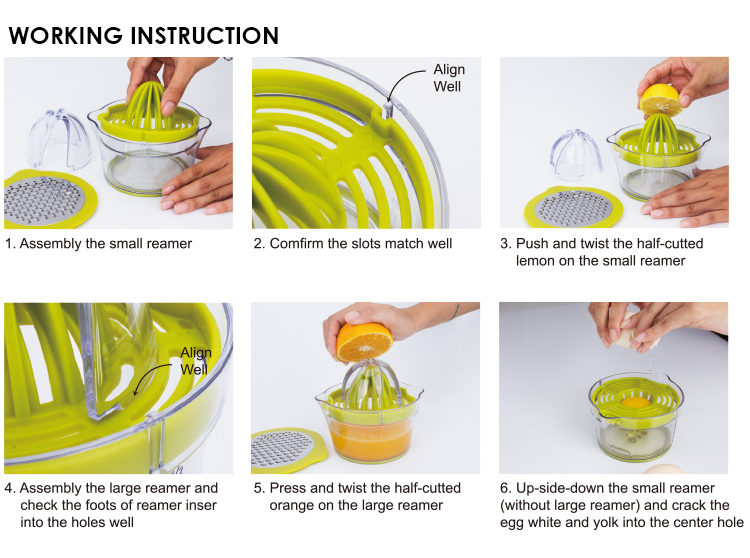
Multifunction Manual Juicer Guide for Fresh Citrus
A multifunction manual juicer is a simple kitchen tool for people who want fresh citrus juice without setting up an electric appliance. It is especially useful for lemons, limes, oranges, and grapefruits used in breakfast drinks, salad dressings, marinades, baking, cocktails, and everyday cooking. The best use case is not high-volume juicing; it is quick, controlled extraction when you need a measured amount of juice and want cleanup to stay easy.
The original product description highlights a compact manual juicer with a transparent container, ounce and milliliter measurement markings, a ridged reamer, a base that can serve as a juice container, and an ergonomic pouring spout. This guide explains how those features help in real kitchen use, what to check before buying, and how to keep the tool clean and practical over time.
Key Takeaways
- A manual citrus juicer is best for small to moderate quantities, not commercial-scale production.
- Transparent measurement markings help with recipes, portion control, and drink mixing.
- A ridged reamer can improve juice extraction from common citrus fruits when used with steady pressure and rotation.
- Compact manual designs are easy to store and do not require plugs, cords, or batteries.
- Before purchase, check capacity, marking readability, spout design, cleaning method, and whether parts fit securely.
Who This Type of Juicer Is For
A compact hand juicer suits home cooks, small apartment kitchens, office pantries, campers, and anyone who needs citrus juice in controlled amounts. It is also useful for people who prefer quiet kitchen tools. Because it is operated by hand, there is no motor noise and no dependency on electricity.
It is not the right choice if you regularly juice large bags of fruit or expect the speed of an electric citrus press. Manual juicing requires hand pressure, and output depends on the fruit size, ripeness, and how firmly you press and twist. For everyday lemons and oranges, however, the tool can be more convenient than taking out a larger appliance.
How the Measuring Container Helps
One useful feature mentioned in the source article is the transparent container with ounce and milliliter markings. This matters because citrus juice is often used as an ingredient, not just as a drink. A recipe may call for 30 ml of lemon juice, two ounces of lime juice, or a measured amount for a marinade. Visible markings reduce the need for a separate measuring cup.
For the best results, place the container on a flat surface after juicing and read the level at eye height. If foam or pulp makes the line hard to see, let the liquid settle for a moment. Measurement markings are practical, but buyers should still ask the supplier for the maximum capacity and whether the printed or molded scale is designed to remain readable after repeated washing.
Using the Ridged Reamer Effectively
The reamer is the raised, ridged cone that extracts juice from the cut fruit. To use it well, cut the citrus fruit across the middle, place the cut side over the reamer, press down, and rotate the fruit back and forth. The ridges help break the juice sacs so liquid can flow into the container below.
For oranges and grapefruits, start with moderate pressure and increase gradually. For lemons and limes, rolling the fruit gently on the counter before cutting can help soften it. Remove visible seeds before squeezing if you want smoother juice. The original description notes pulp separation; in practice, the amount of pulp retained will depend on the design of the straining area and the fruit itself, so check product photos or samples if pulp control is important to you.
Comparison and Buying Checklist
When comparing manual juicers, avoid choosing only by appearance. Small design differences affect daily use, especially if you plan to measure ingredients, pour directly from the container, or clean the tool quickly after cooking.
| Feature to Check | Why It Matters | Question to Ask Before Buying |
|---|---|---|
| Measurement markings | Helps with recipes, drinks, and portion control | Are both ounces and milliliters easy to read? |
| Container capacity | Determines how often you need to empty it | What is the usable volume before pouring? |
| Reamer shape | Affects extraction from different citrus sizes | Is it suitable for lemons, limes, oranges, and grapefruit? |
| Pouring spout | Reduces spills when transferring juice | Does the spout pour cleanly without dripping? |
| Part fit | Prevents wobbling during twisting | Do the top and base sit securely together? |
| Cleaning method | Impacts convenience after sticky citrus use | Is hand washing recommended, and are crevices easy to rinse? |
Beyond Orange Juice: Practical Everyday Uses
A multifunction manual juicer is most naturally used for citrus, but its value often comes from small kitchen tasks. Fresh lemon juice can brighten soups, sauces, and roasted vegetables. Lime juice is useful for tacos, dressings, and cold drinks. Grapefruit or orange juice can be measured for breakfast servings, glazes, or desserts.
The source article also refers to use with small batches of other soft fruits. If you try this, keep expectations realistic. A hand citrus reamer is not the same as a blender, food processor, or electric juicer. Very soft fruits may release some juice or pulp, but fibrous fruits, hard fruits, and leafy greens are not appropriate for this style of tool. If a supplier markets the product for non-citrus use, ask which fruits are recommended and whether any accessories are required.
Cleaning, Storage, and Maintenance
Citrus juice contains natural sugars and acids, so cleaning soon after use is important. Rinse the reamer and container under warm water before juice dries on the ridges. Use a soft sponge or brush to remove pulp from grooves and around the spout. If the product instructions specify hand washing, follow that guidance rather than assuming dishwasher compatibility.
Because the base can function as a container, it may also be used for short-term holding while you finish a recipe. For storage, make sure all parts are dry before nesting or placing the juicer in a cabinet. This reduces trapped moisture and keeps measurement markings easier to read. Avoid using abrasive pads on transparent surfaces because scratches can make the scale harder to see over time.
Manual vs. Electric Juicing
The main advantage of a manual juicer is control. You decide how much pressure to apply, when to stop, and how much juice to make. It is quiet, compact, and simple to move from drawer to counter. There are no cords to untangle and no motor base to wipe down.
An electric juicer may be better for frequent high-volume use or for people with limited hand strength. A manual tool is better when speed means less setup rather than more power. If your typical need is one lemon for a dressing or one orange for a small glass of juice, manual operation is often the more efficient workflow.
Practical FAQ
Can this type of juicer handle grapefruit?
Yes, a ridged manual reamer can be used with grapefruit, but comfort depends on the size of the reamer and container. Larger fruit may require more hand pressure and may produce more juice than a small container can hold.
Are ounce and milliliter markings necessary?
They are not essential, but they are very helpful if you follow recipes, mix drinks, or track portions. Dual markings reduce the need for a separate measuring cup.
Does a manual juicer remove all pulp?
Not necessarily. Many manual citrus juicers reduce seeds and large pulp pieces, but pulp level varies by design. If pulp-free juice is important, you may still want to strain the juice after extraction.
Is it suitable for children to use?
It can be a good supervised kitchen task because there is no motor. Adults should still handle knife work, check stability, and supervise pressing and pouring.
What should buyers ask a supplier before ordering?
Ask about product dimensions, container capacity, materials, washing instructions, packaging, measurement scale durability, and whether samples are available. Do not assume specifications that are not stated in the product listing.
