




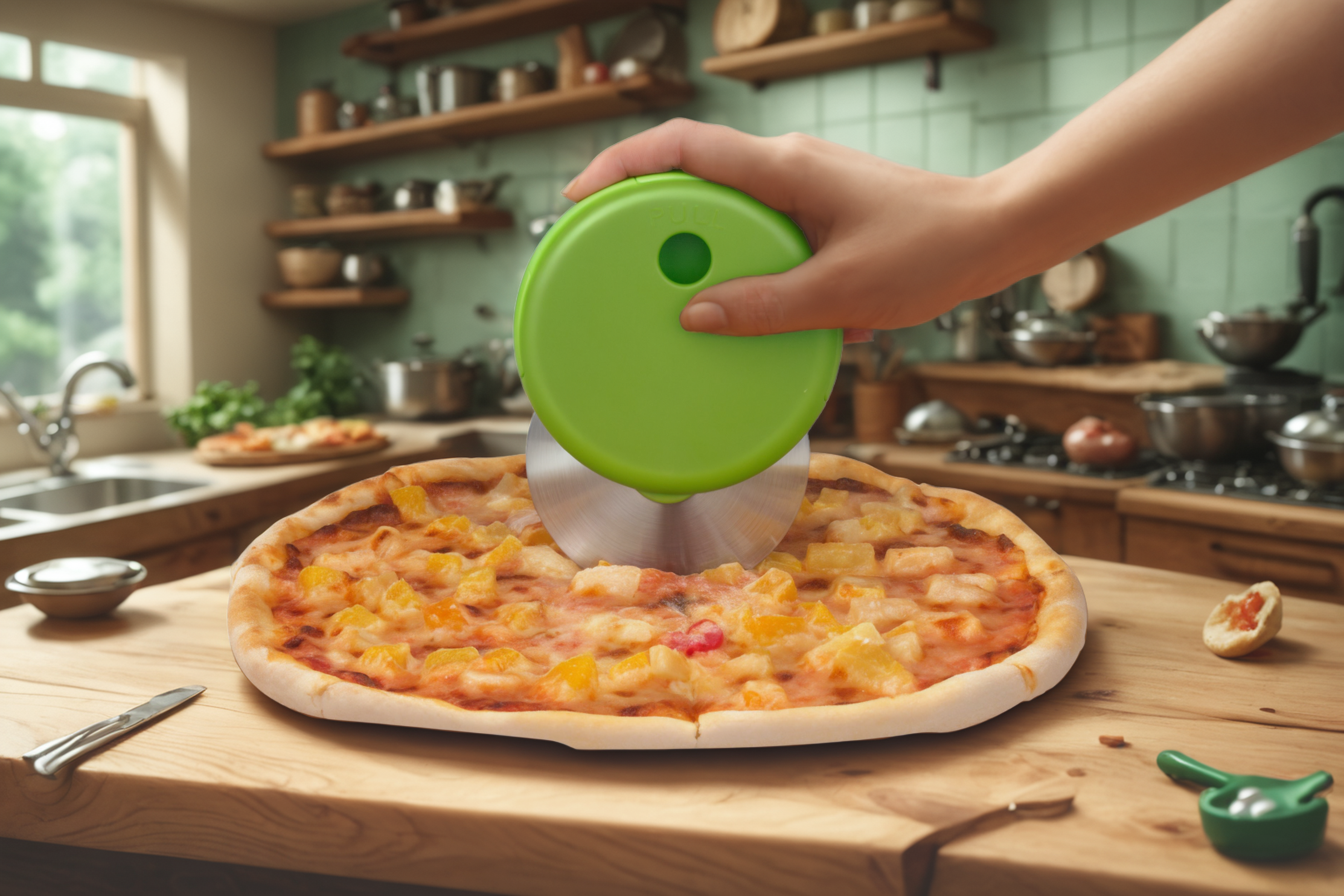
Pizza Cutter Revolution: A Practical Guide to Cleaner Slices
A good pizza cutter should do one simple job well: cut through crust, cheese, and toppings without dragging everything across the tray. If you have ever used a small kitchen knife on a hot pizza, you know the result can be uneven slices, shifted toppings, and a messy serving experience. A dedicated cutter is not only faster; it can also help keep the shape and texture of each slice intact.
The original article introduced the Pizza Cutter Revolution as a modern pizza cutting tool with a comfortable grip, stainless steel blade, detachable blade mechanism, built-in finger guard, and compact design. This guide expands that idea into practical buying, use, and care advice so shoppers can compare options more confidently and maintain the tool properly over time.
Key Takeaways
- Choose a pizza cutter based on blade sharpness, grip comfort, safety, cleaning, and storage needs.
- A stainless steel blade, as described in the original product article, is a common choice for durability and easy cleaning.
- Safety details such as a finger guard and stable handle matter, especially in family kitchens.
- Detachable designs can simplify cleaning, but users should check how securely the parts reconnect.
- For best results, cut pizza on a suitable board or tray and clean the blade soon after use.
Why a Dedicated Pizza Cutter Works Better Than a Knife
A pizza combines several textures in one food: crisp or chewy crust, melted cheese, sauce, vegetables, meat, and sometimes a thick edge. A standard knife presses down and often pulls toppings with it. A rolling pizza wheel is designed to move forward while applying pressure, which helps separate the slice without sawing back and forth.
The difference is especially noticeable with thin crust pizza, where toppings can slide easily, and with thick crust pizza, where a dull knife may crush the edge before cutting through it. A dedicated cutter also lets you portion the pizza quickly while it is still hot, reducing the time between oven and table.
Core Features to Compare Before Buying
When reading pizza cutter reviews, look beyond the appearance of the tool. The best choice depends on how often you eat pizza, the type of crust you prefer, and how much cleaning effort you are willing to accept. The original product description highlights several practical features that are worth considering in any modern cutter.
| Feature | Why It Matters | What to Check |
|---|---|---|
| Blade material | A stainless steel blade can support clean cutting and routine washing. | Ask whether the blade resists staining and how it should be dried after use. |
| Blade sharpness | A sharper edge reduces topping drag and crust crushing. | Check user feedback on thick crust, thin crust, and cheese-heavy pizzas. |
| Grip design | A comfortable handle improves control and reduces hand strain. | Look for a shape that supports a firm, natural hold. |
| Finger guard | A guard helps keep fingers away from the blade path. | Confirm that the guard does not interfere with cutting pressure. |
| Detachable mechanism | Removable parts can make cleaning easier. | Check that the blade locks securely after reassembly. |
| Storage size | A compact cutter is easier to keep in a drawer or utensil organizer. | Consider whether it needs a blade cover or protected storage space. |
Grip Comfort and Cutting Control
Handle comfort is more important than many buyers expect. A pizza cutter is used with downward pressure, and if the grip is too small, slippery, or awkward, the blade may wobble. That can create uneven slices and increase the chance of slipping near hot food.
The original article describes the Pizza Cutter Revolution as having an ergonomic grip designed to fit comfortably in the hand. When evaluating this type of feature, consider who will use the tool. A handle that works for an adult with larger hands may not feel the same for someone with smaller hands. If possible, look for product photos that show the tool in use, not only on a plain background.
Blade Design, Safety, and Cleaning
The blade is the working part of the cutter, so sharpness and maintenance matter. The original article refers to a stainless steel blade and a detachable blade mechanism. Stainless steel is widely used in kitchen tools because it is practical for repeated food contact and washing, but it should still be cleaned and dried properly. Leaving sauce, cheese, or moisture on any blade can shorten its useful life.
A detachable blade can be useful because cheese and oil often collect around the center of a pizza wheel. However, convenience should not come at the cost of stability. Before use, make sure all removable parts are fully attached. If the blade feels loose or the locking mechanism does not sit correctly, do not continue cutting until it is assembled properly.
The built-in finger guard mentioned in the source article is another useful safety point. It creates separation between your hand and the blade, but it does not replace careful use. Always cut away from your body, keep fingers clear of the wheel, and avoid letting children use the cutter without close adult supervision.
How to Use a Pizza Cutter for Better Results
Technique matters even with a good cutter. Let the pizza rest for a short moment after removing it from the oven so the cheese firms slightly. Place it on a stable cutting surface, such as a pizza pan or board that can handle blade contact. Start at one edge, apply steady pressure, and roll through the center in one continuous motion where possible.
- Position the pizza on a stable, heat-safe surface.
- Hold the handle firmly with your fingers behind the guard.
- Cut across the full diameter in a straight line.
- Rotate the pizza or change angle for the next cut.
- Wipe the blade between cuts if toppings build up.
For thicker crusts, use slightly more downward pressure and move slowly. For thin crusts, a faster rolling motion may be enough. Avoid cutting directly on delicate nonstick surfaces unless the pan manufacturer confirms it is safe.
Care, Storage, and Everyday Maintenance
Clean the cutter soon after use, before cheese hardens around the blade. If the design is detachable, separate the parts according to the supplier’s instructions. Wash with warm water and mild dish soap, then dry thoroughly before putting it away. If dishwasher use is important to you, confirm that with the supplier or product care instructions rather than assuming it is safe.
For storage, keep the blade away from loose utensils that may damage the edge or create a risk when reaching into a drawer. A compact design, as noted in the original article, can help reduce drawer clutter, but the blade should still be positioned safely. If a blade cover is not included, consider storing it in a utensil tray section where the wheel is not exposed to hands.
Who Is This Type of Pizza Cutter Best For?
A modern wheel-style pizza cutter is a good fit for households that make frozen pizza, homemade pizza, flatbreads, quesadillas, or pastry portions. The combination of an ergonomic handle, stainless steel blade, detachable cleaning design, and finger guard is most useful for people who want a simple tool that is easy to control and clean.
It may not be the only option for every kitchen. Some users prefer rocker-style pizza blades for very large pizzas, while others like compact palm-held cutters. The right choice depends on storage space, comfort, and how much cutting surface you need.
FAQ
Is a pizza wheel better than a knife?
For most pizzas, yes. A wheel rolls through the crust and toppings, while a knife often drags cheese and toppings out of place.
Can I use a pizza cutter on other foods?
Yes, many people use pizza cutters for flatbreads, tortillas, dough, pastry strips, and sandwiches. Always clean it between foods.
How do I know if the detachable blade is safe?
After reassembly, the blade should feel secure and rotate smoothly without wobbling. If it does not lock in place, do not use it.
Should I put a pizza cutter in the dishwasher?
Check the supplier’s care instructions first. If dishwasher suitability is not stated, hand washing and thorough drying is the safer routine.
What should I ask before buying online?
Ask about blade material, cleaning instructions, whether the blade detaches, storage safety, warranty terms, and any usage limitations for specific cookware surfaces.
