




How to Choose and Use a 3-Piece Knife Set for Everyday Kitchen Prep
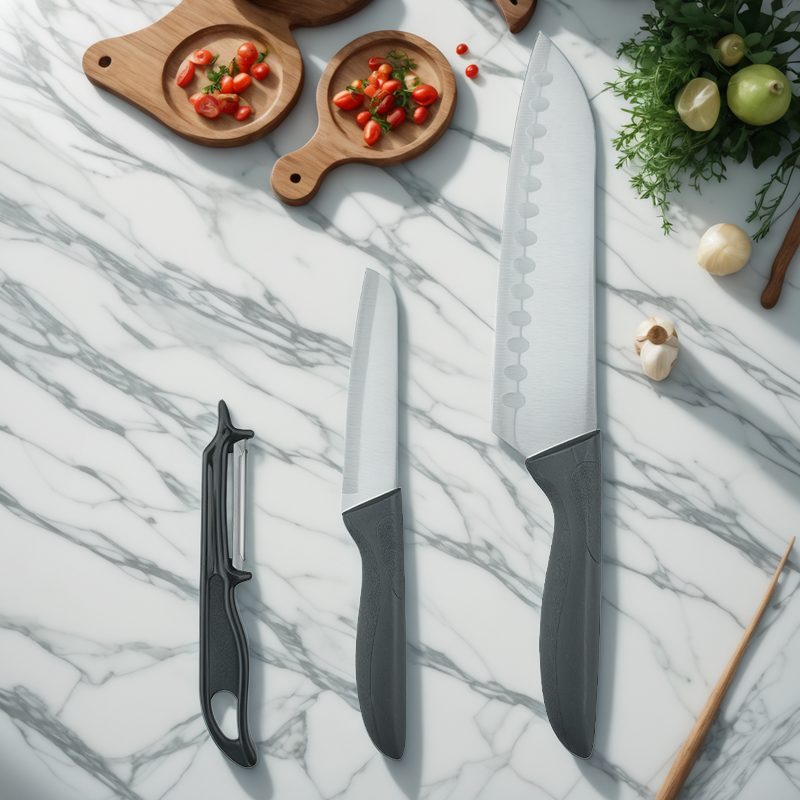
A 3-piece knife set is a compact way to cover many daily kitchen tasks without filling a drawer with tools you rarely use. The set described in the original product article includes a santoku knife, a paring knife and a peeler. Together, these tools handle chopping, slicing, trimming, peeling and detail work for fruit, vegetables, herbs and many home-cooking preparations.
This guide explains what each piece is best for, what to check before buying, and how to use and maintain the set safely. It is written for practical product selection rather than as a list of marketing claims.
Key Takeaways
- A three-piece set is most useful when it includes one larger prep knife, one small detail knife and one efficient peeler.
- The santoku knife is suited to chopping, slicing and mincing; the paring knife is better for trimming and small controlled cuts.
- A comfortable handle and a blade that is easy to control matter as much as sharpness.
- Hand washing, prompt drying and safe storage help preserve performance and reduce accidents.
What Is Included in This 3-Piece Kitchen Knife Set?
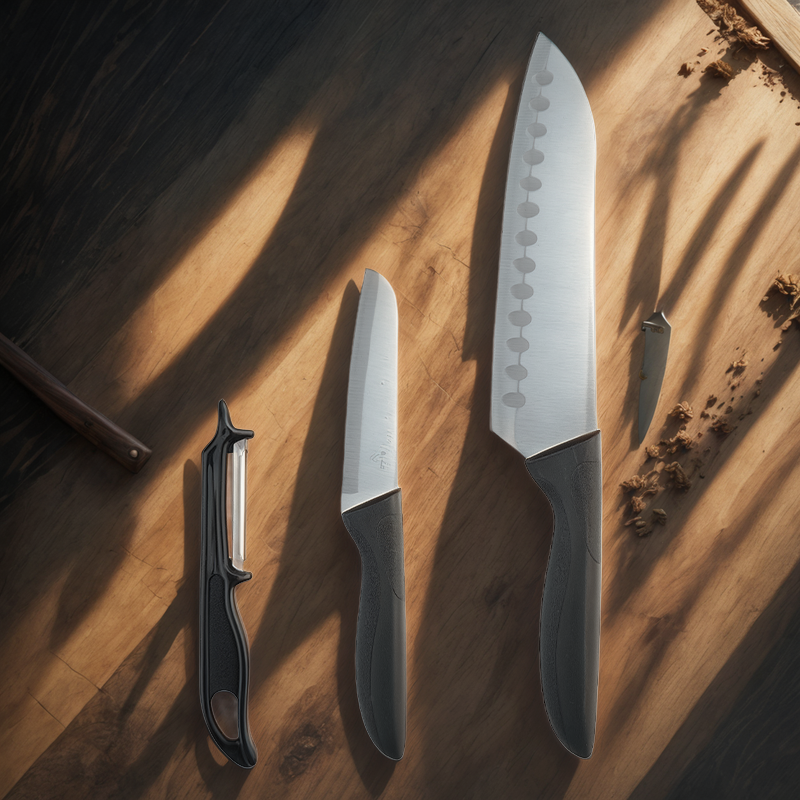
The original article identifies three core tools: a santoku knife, a paring knife and a sleek peeler. That combination is popular because it separates kitchen tasks by size and level of control. Instead of forcing one knife to do everything, you can choose the tool that matches the ingredient and cut.
The santoku knife is the main preparation knife. It is described with a stainless steel blade and a hollow edge intended to reduce friction and help limit food sticking to the blade. The paring knife is compact and intended for precise work such as peeling, trimming and shaping smaller ingredients. The peeler completes the set for removing skins from fruit and vegetables quickly and with less waste when used correctly.
Using the Santoku Knife for Chopping, Slicing and Mincing
A santoku knife is commonly used for straight, controlled cuts. In this set, it is presented as the central tool for chopping, slicing and mincing. It is a good choice for onions, cucumbers, carrots, herbs, boneless proteins and many other everyday ingredients, provided the food is suitable for the blade and cutting surface.
To use it well, keep the food stable on a cutting board and guide the blade with a steady grip. A hollow edge can help reduce drag on some foods, but it does not replace proper technique. Avoid twisting the blade through hard items, scraping the edge sideways across the board or using the knife on frozen food. Those habits can dull or damage a blade and make cutting less predictable.
Using the Paring Knife for Detail Work
The paring knife is designed for smaller, more controlled tasks. It can be used for trimming stems, removing blemishes, shaping fruit, segmenting small produce and making precise cuts where a larger knife would feel awkward. Its value is not speed; its value is control.
Use the paring knife on a cutting board whenever possible, especially if you are new to detail work. If you hold food in your hand while trimming, cut away from your body and keep fingers clear of the path of the blade. A compact knife can still cause injury if used casually. For repetitive peeling of long vegetables, the peeler is usually more efficient and safer than trying to do everything with a paring knife.
Using the Peeler Efficiently
The peeler in this set is described as streamlined, sharp and comfortable to hold. A peeler is often underestimated, but it can save time and reduce food waste when the blade removes only a thin layer of skin. It is useful for potatoes, carrots, apples, cucumbers and other produce with skins that you want to remove before cooking or serving.
For best results, wash produce before peeling and keep a stable grip. Peel away from your fingers and rotate the ingredient as needed rather than forcing the peeler through awkward angles. If the peeler starts to skip, tear the skin or require excessive pressure, it may need cleaning or replacement depending on its design.
Comparison Checklist: Which Tool Should You Use?
| Kitchen task | Best tool in the set | Why it fits | Tip for better results |
|---|---|---|---|
| Chopping vegetables | Santoku knife | Larger blade supports repeated prep cuts | Use a stable board and keep fingertips tucked |
| Slicing fruit or boneless ingredients | Santoku knife | Suitable for clean, controlled slicing | Let the sharp edge do the work; avoid pressing hard |
| Trimming small produce | Paring knife | Compact size improves control | Work slowly and cut away from fingers |
| Decorative cuts or shaping | Paring knife | Better for detailed movements | Make shallow cuts first, then refine |
| Removing skins from produce | Peeler | Designed to remove thin outer layers | Keep the ingredient steady and use even strokes |
What to Check Before Buying a 3-Piece Knife Set
When comparing a 3-piece kitchen knife set, look beyond the number of pieces. A smaller set can be more useful than a large set if the tools are comfortable, balanced and appropriate for your cooking habits.
- Blade description: Confirm what blade material is stated by the seller. The original description mentions stainless steel, but buyers should still check care instructions and sharpening guidance.
- Handle comfort: The source highlights ergonomic handles. If possible, check whether the handle shape suits left- and right-handed users and whether it feels secure when dry.
- Intended tasks: Make sure the santoku, paring knife and peeler match what you cook most often.
- Storage method: Ask whether the set includes blade guards, packaging for storage or recommendations for a knife block or magnetic strip.
- Cleaning guidance: Confirm whether the seller recommends hand washing, dishwasher use or specific drying steps.
Care, Cleaning and Safe Storage
Good knife care is simple but important. Wash knives soon after use with mild dish soap and a soft sponge, then dry them promptly. Leaving knives wet in a sink can affect appearance, increase the chance of accidental cuts and make edges contact other utensils. Even when a blade is described as stainless steel, routine drying is still a sensible habit.
Store the santoku and paring knife so the edges do not rub against other tools. A knife block, drawer insert, magnetic strip or individual blade cover can help protect both the blade and the user. Keep knives away from children and do not leave them hidden under towels or soaking water. For the peeler, rinse away starches or produce residue and dry it before storage.
Practical FAQ
Is a 3-piece knife set enough for a beginner kitchen?
For many daily tasks, yes. A santoku knife, paring knife and peeler cover a wide range of preparation work. You may later add a bread knife, carving knife or kitchen shears depending on your cooking habits.
What is the santoku knife best used for?
It is best for general preparation such as chopping vegetables, slicing ingredients and mincing herbs. It should not be used as a cleaver, screwdriver, can opener or tool for frozen food.
When should I use the paring knife instead of the santoku?
Choose the paring knife for small ingredients, trimming, peeling by hand and fine detail work. Its smaller blade gives better control when precision matters more than speed.
How do I keep the knives sharp?
Use an appropriate cutting board, avoid glass or stone surfaces, wash and dry the knives by hand, and store the edges safely. Ask the supplier for recommended sharpening methods for the specific blade design.
Can the peeler replace a paring knife?
No. A peeler is efficient for removing skins, while a paring knife is more versatile for trimming, shaping and detailed cuts. They complement each other rather than performing the same role.
Final Thoughts
A well-chosen 3-piece knife set can simplify everyday food preparation by giving each tool a clear role. Use the santoku knife for larger prep cuts, the paring knife for detail work and the peeler for efficient skin removal. Before buying, confirm the seller’s material, cleaning, sharpening and storage recommendations, then maintain the tools consistently. Good habits will do more for long-term performance than owning extra knives you do not use.
