




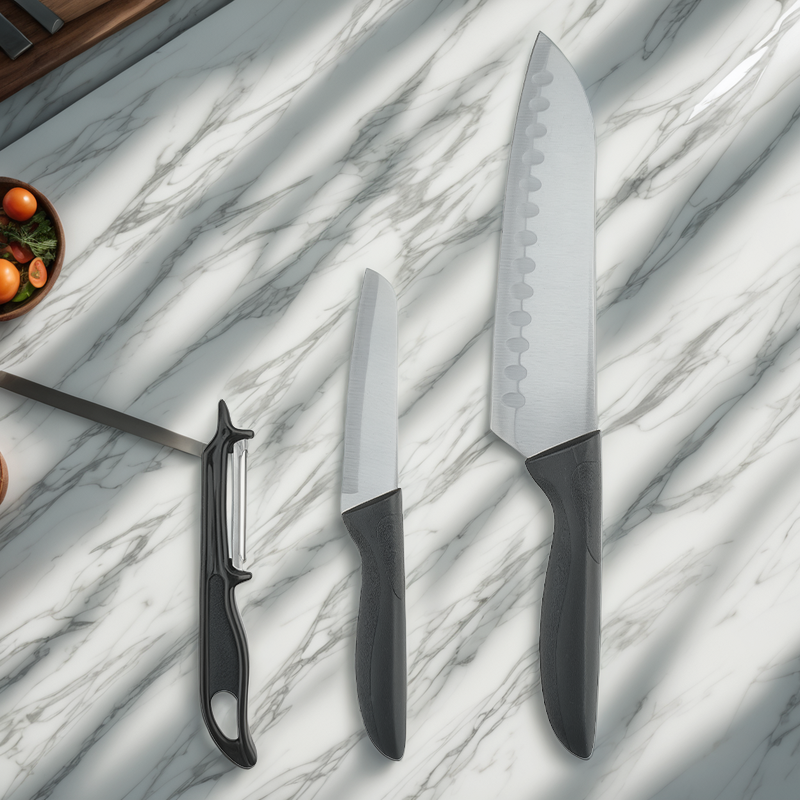
Discover the Ultimate 3-Piece Knife Set for Your Kitchen
A well-chosen 3-piece kitchen knife set can cover most everyday prep work without crowding a drawer with tools you rarely use. For home cooks, small apartments, starter kitchens, or anyone simplifying their countertop setup, a set built around a Santoku knife, a utility knife, and a peeler offers a practical balance of cutting, trimming, slicing, and peeling tasks.
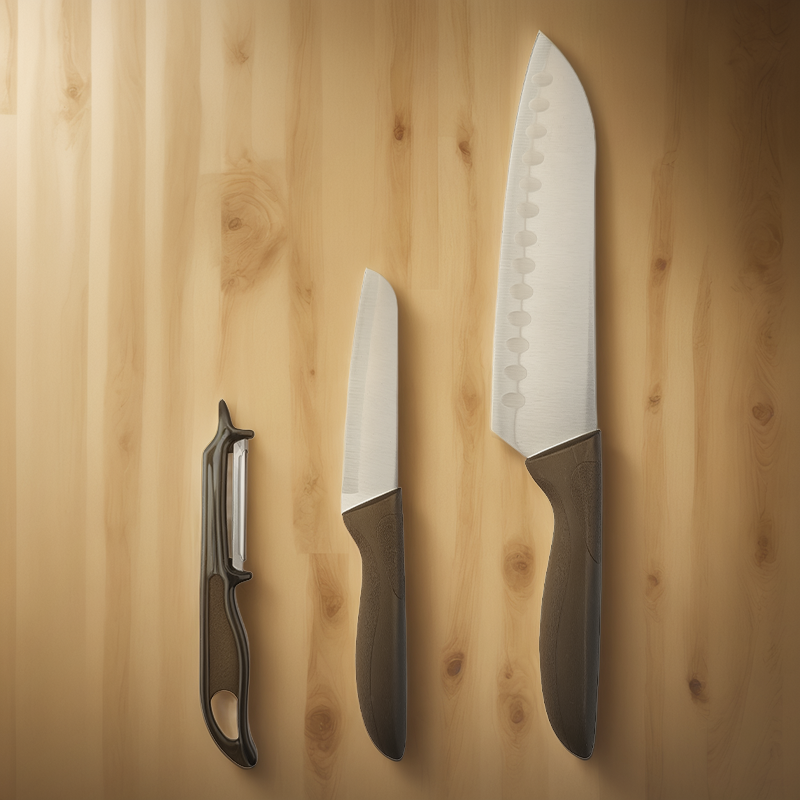
The set described here includes three core tools: a Santoku knife with a broad blade and hollow-edge grooves, a utility knife for smaller cutting jobs, and a peeler for fruits and vegetables. The design shown uses a modern black and silver color scheme, and the original product description notes stainless steel blades and ergonomic handles. Rather than treating the set as decoration, the best way to judge it is by how well each piece supports safe, repeatable food preparation.
Key Takeaways
- A 3-piece set is best for cooks who want essential tools without buying a large knife block.
- The Santoku knife handles most chopping, slicing, and mincing jobs.
- The utility knife is useful for smaller foods and controlled detail work.
- The peeler saves time on potatoes, carrots, apples, citrus, and similar produce.
- Good cutting boards, hand washing, safe storage, and regular maintenance help extend useful life.
What Is Included in a Practical 3-Piece Knife Set?
A useful three-piece set should not simply be three random blades. Each tool should solve a different kitchen task. In this case, the Santoku knife is the main preparation knife. Its wider blade helps with vegetables, herbs, and proteins, while the hollow-edge grooves are intended to reduce food sticking during slicing. The utility knife fills the gap between a large prep knife and a small paring-style tool. It is suited to fruit, cheese, small vegetables, sandwiches, and trimming work. The peeler completes the set by removing skins quickly and with less waste than using a large knife for the same task.
This combination is especially helpful if you cook simple meals several times a week. You can chop onions and greens with the Santoku, slice tomatoes or fruit with the utility knife, and peel potatoes or carrots with the peeler. The set does not replace every specialty knife, but it covers the preparation jobs most people repeat daily.
Santoku Knife: The Main Prep Tool
The Santoku is the workhorse of this type of set. Its broad blade profile is useful when chopping vegetables, slicing boneless proteins, or mincing herbs. The hollow-edge grooves mentioned in the original product information can help limit friction between the blade and certain foods, although results vary by ingredient and cutting technique. For example, cucumber slices, potato pieces, or soft cheese may release more easily than they would from a completely flat blade.
For best results, use a smooth forward-and-down motion rather than forcing the blade straight through food. Keep fingertips curled under on the guiding hand, and let the knife do the work. A stable cutting board is just as important as the knife itself. If the board slides, place a damp towel underneath it before cutting.
Utility Knife: Small Jobs With Better Control
The utility knife is the tool many cooks reach for when a full-size prep knife feels too large. It is suitable for cutting apples, slicing citrus, trimming small pieces of meat, portioning cheese, or preparing garnishes. Because it is lighter and narrower than a Santoku knife, it can provide better control on small ingredients.
It is also useful during quick meals. If you are making a lunch plate, trimming vegetables for a salad, or slicing a roll, the utility knife is often the most convenient option. However, avoid using it for heavy-duty cutting such as bones, frozen foods, or hard squash unless the supplier clearly states that the knife is designed for that use.
Peeler: A Simple Tool That Improves Prep Speed
A peeler may seem basic, but it can make a noticeable difference in daily cooking. Using a peeler instead of a knife can remove thinner layers from potatoes, carrots, cucumbers, apples, and similar produce. That means less waste and a more consistent result. The original description highlights a lightweight build, a sharp blade, and an ergonomic grip, all of which matter when peeling multiple ingredients.
When choosing or assessing a peeler, look at how comfortably it fits your hand and whether it glides smoothly without digging too deeply into the food. After use, rinse it carefully because peel residue can collect near the blade. Dry it before storage to reduce moisture exposure.
Comparison Checklist: Which Tool Should You Use?
| Kitchen Task | Best Tool in the Set | Why It Fits | Use Tip |
|---|---|---|---|
| Chopping vegetables | Santoku knife | Broad blade supports repeated slicing and chopping | Use a stable board and controlled strokes |
| Mincing herbs | Santoku knife | Blade shape works well for quick prep | Gather herbs into a tight pile first |
| Slicing fruit | Utility knife | Smaller size offers better control | Use gentle pressure to avoid crushing soft fruit |
| Trimming small ingredients | Utility knife | Useful for detail work and smaller cuts | Keep fingertips away from the cutting line |
| Removing vegetable skins | Peeler | Designed to remove thin outer layers efficiently | Peel away from your body when possible |
How to Choose a 3-Piece Knife Set
Before buying any kitchen knife set, think about how you cook. A compact 3-piece set is ideal if you mainly prepare vegetables, fruit, boneless proteins, snacks, and everyday meals. If you regularly break down whole poultry, cut through bones, or prepare large hard vegetables, you may need additional specialty knives.
Use this quick selection checklist:
- Handle comfort: Hold each piece if possible. The handle should feel secure, not slippery or awkward.
- Blade purpose: Confirm that the Santoku, utility knife, and peeler match the foods you prepare most often.
- Care expectations: Ask whether hand washing is recommended and whether dishwasher use may affect the finish or edge.
- Storage needs: Plan for a knife guard, drawer insert, magnetic strip, or block to protect edges and hands.
- Supplier information: If product details matter to you, ask the seller about blade material, handle material, warranty terms, and sharpening guidance rather than assuming specifications.
Use and Care Tips for Longer Service
Even a good knife performs poorly if it is misused. Cut on wood, bamboo, or quality plastic boards rather than glass, stone, or metal surfaces. Wash knives by hand with mild detergent, then dry them promptly. Avoid leaving knives loose in a sink, where they can be damaged or cause injury.
Store each piece so the cutting edge does not scrape against other utensils. If the blade begins to drag through food instead of cutting cleanly, it may need honing or sharpening. Follow the supplier’s care instructions, and do not use the knives as screwdrivers, can openers, pry tools, or frozen-food cutters.
FAQ
Is a 3-piece knife set enough for everyday cooking?
For many home kitchens, yes. A Santoku knife, utility knife, and peeler cover common tasks such as chopping vegetables, slicing fruit, trimming small foods, and peeling produce.
What is the Santoku knife best used for?
It is best for general prep work, including slicing, chopping, and mincing. The broad blade and hollow-edge grooves make it especially practical for many vegetable and protein tasks.
Should these knives go in the dishwasher?
Hand washing is usually the safer choice for preserving edges, handles, and finish. Check the supplier’s care instructions before using a dishwasher.
How should I store the set safely?
Use blade guards, a knife block, a drawer organizer, or a magnetic strip. Avoid loose drawer storage because it can dull edges and increase the risk of cuts.
What should I ask before purchasing?
Ask about the exact blade material, handle material, recommended care, sharpening method, warranty coverage, and whether replacement or after-sales support is available.
