




OEM Kitchen Scissors Set: Practical Sourcing Guide for Buyers
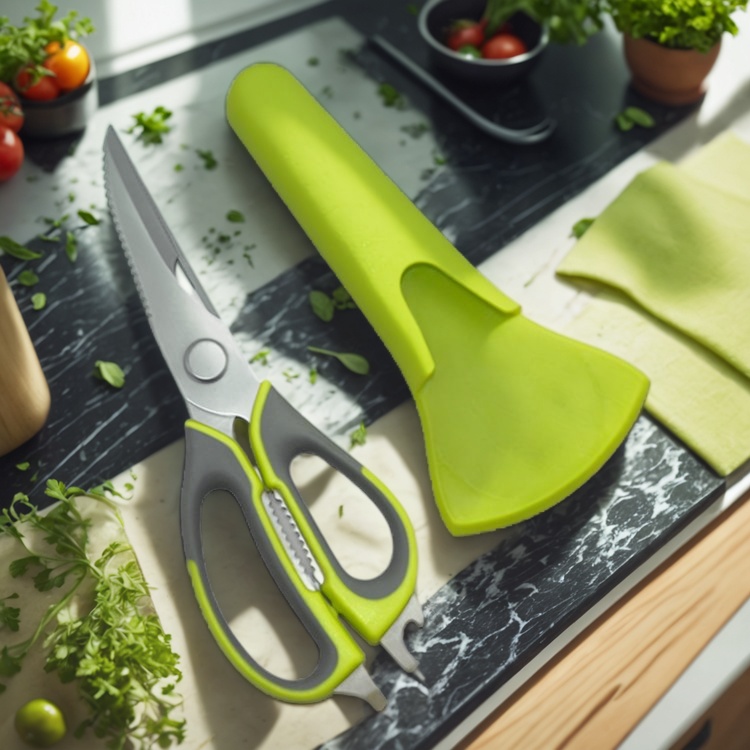
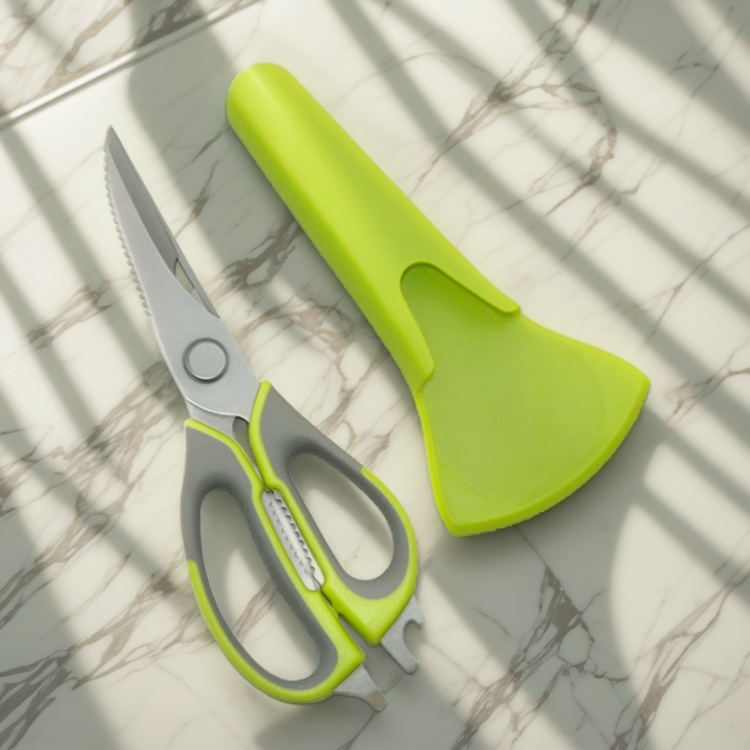
For retailers, distributors, promotional product buyers, and kitchenware brands, an OEM kitchen scissors set is not only a cutting tool. It is a small but highly visible product that customers use often, store in busy drawers, and judge quickly by comfort, sharpness, safety, and durability. The original product article highlights a multi-functional kitchen scissors set with a protective cover, a built-in sharpener in the sheath, stainless steel blades, serrated cutting performance, a bottle-opening function, and a lime-green and dark gray ergonomic handle. Those are useful starting points, but B2B buyers need a more structured way to evaluate whether a scissors set fits their market and sourcing plan.
This guide explains what to check before placing an OEM or wholesale order, how to compare functional details, and what questions to ask a supplier before confirming packaging, branding, and quality requirements.
Key Takeaways
- An OEM kitchen scissors set should be evaluated by cutting performance, grip comfort, safety storage, and realistic end-user tasks.
- The original product includes stainless steel blades, a serrated blade, an ergonomic lime-green and dark gray handle, a protective sheath, and a sheath sharpener.
- Buyers should not rely on appearance alone; request samples and define inspection points before mass production.
- For wholesale programs, packaging, labeling, barcode needs, and replacement policy should be discussed early.
- Missing commercial details such as MOQ, lead time, certifications, and test reports should be confirmed directly with the supplier.
What Makes Kitchen Scissors Suitable for OEM Projects?
Kitchen scissors are attractive for OEM programs because they are compact, practical, and easy to adapt for different retail channels. A buyer may want a branded handle color, a private-label carton, a multilingual instruction card, or a product bundle with other kitchen tools. However, the core product must still perform well in everyday use.
For this topic, the key sourcing intent is not simply finding scissors that look good in a catalog. Buyers should confirm whether the set can handle common kitchen tasks such as snipping herbs, trimming food packaging, cutting cooked food into smaller portions, and managing tougher items where a serrated blade is useful. The original article mentions chicken bones, but buyers should verify the intended cutting scope with the supplier and avoid overstating performance on retail packaging unless it is supported by clear product guidance and testing.
Core Product Features to Review
The source article describes a multi-functional kitchen scissors set with several practical features. Each one should be checked during sample evaluation, because small differences in execution can affect customer satisfaction.
| Feature to Check | Why It Matters | Buyer Questions |
|---|---|---|
| Stainless steel blades | Supports cutting durability and resistance to rust when properly used and dried. | What stainless steel specification is used, and is documentation available? |
| Serrated blade edge | Helps grip slippery or tougher food surfaces during cutting. | What materials or foods is the serrated edge designed to cut? |
| Protective cover | Improves drawer safety and helps protect the blade edge during storage. | How secure is the fit, and will it stay in place during shipping and use? |
| Built-in sharpener | Adds convenience if the sharpener is easy to use and clearly explained. | Are instructions included, and what sharpening method is recommended? |
| Ergonomic handle | Affects grip comfort, control, and fatigue during repeated cutting. | Can handle colors or logo placement be customized? |
| Bottle opener function | Adds multi-use value for consumers who prefer fewer kitchen tools. | Is the opener position safe and comfortable during use? |
How to Evaluate Samples Before Ordering
Sample testing should be simple, repeatable, and relevant to your market. A grocery channel may prioritize affordability and safe storage, while a cookware retailer may focus more on hand feel and cutting precision. If you are comparing several suppliers, use the same checklist for every sample.
- Inspect the blade alignment when the scissors open and close.
- Test cutting on common items such as herbs, food packaging, parchment, and light kitchen prep materials.
- Check whether the serrated area grips cleanly without excessive tearing.
- Place the cover on and off several times to judge fit and ease of use.
- Hold the handle with wet and dry hands to assess comfort and control.
- Review all edges, joints, and plastic parts for burrs, looseness, or sharp non-cutting surfaces.
For any claim that may appear on packaging, such as rust resistance, dishwasher suitability, heavy-duty cutting, or food-contact compliance, ask for evidence rather than relying on a general description. If documentation is not available, keep consumer-facing claims conservative.
OEM Customization Points to Discuss
OEM customization can help align the scissors set with a brand identity, but each change may affect production cost, timing, or inspection requirements. Buyers should separate cosmetic changes from performance-related changes. Handle color, logo placement, insert cards, and retail packaging are usually easier to discuss than changes to blade geometry, material, or hinge design.
Useful questions for a supplier include: What handle colors are available? Can the lime-green and dark gray color scheme be adjusted? What logo methods are suitable for the handle, sheath, or packaging? Can the product be packed in a blister card, color box, or simple export carton? Are barcode labels, warning labels, or multilingual instructions available? What artwork format is required, and when must final packaging files be approved?
Safety, Care, and End-User Instructions
Because kitchen scissors have exposed cutting edges, clear use-and-care guidance is important. The protective sheath described in the original article is a valuable safety feature, especially for customers who store scissors in a drawer. The built-in sharpener can also be helpful, but it should be supported by clear instructions so users do not damage the blade or use the sharpener incorrectly.
Practical consumer instructions may include hand washing, drying promptly after use, keeping the scissors away from children, storing with the cover in place, and using the tool only for intended kitchen tasks. If the product is not confirmed as dishwasher safe, do not add that claim. If the steel grade is not specified in your approved product data, describe the blades only as stainless steel, as stated in the source.
Wholesale Quality Control Considerations
For wholesale orders, inspection criteria should be agreed before production. This reduces disputes and makes it easier to compare the delivered goods with approved samples. A basic inspection plan may include visual appearance, blade sharpness, opening and closing smoothness, handle color consistency, sheath fit, package condition, label accuracy, and quantity per carton.
Buyers should also ask about the supplier's process for pre-production samples, production photos, final random inspection, and handling of defective units. Do not assume details such as MOQ, lead time, factory capacity, third-party test results, or certifications. These are commercial and compliance details that should be confirmed in writing for each order and destination market.
FAQ
What is an OEM kitchen scissors set?
It is a kitchen scissors product supplied for a buyer's brand or retail program, often with customized packaging, colors, labeling, or logo placement. The actual customization options depend on the supplier.
What features are explicit in this product description?
The source describes stainless steel blades, a serrated blade, a protective cover, a sharpener built into the sheath, a bottle opener function, and a lime-green and dark gray ergonomic handle.
Should buyers request samples before a wholesale order?
Yes. Samples help verify cutting feel, blade alignment, sheath fit, handle comfort, packaging quality, and whether the product matches your customer expectations.
Can I claim the scissors are dishwasher safe or certified?
Only if the supplier provides confirmed product data or documentation for those claims. If not, use conservative care instructions and ask the supplier for the required evidence.
What should be confirmed before placing an OEM order?
Confirm MOQ, lead time, customization options, packaging format, labeling requirements, inspection standards, payment terms, shipping terms, and any compliance documents needed for your target market.
