




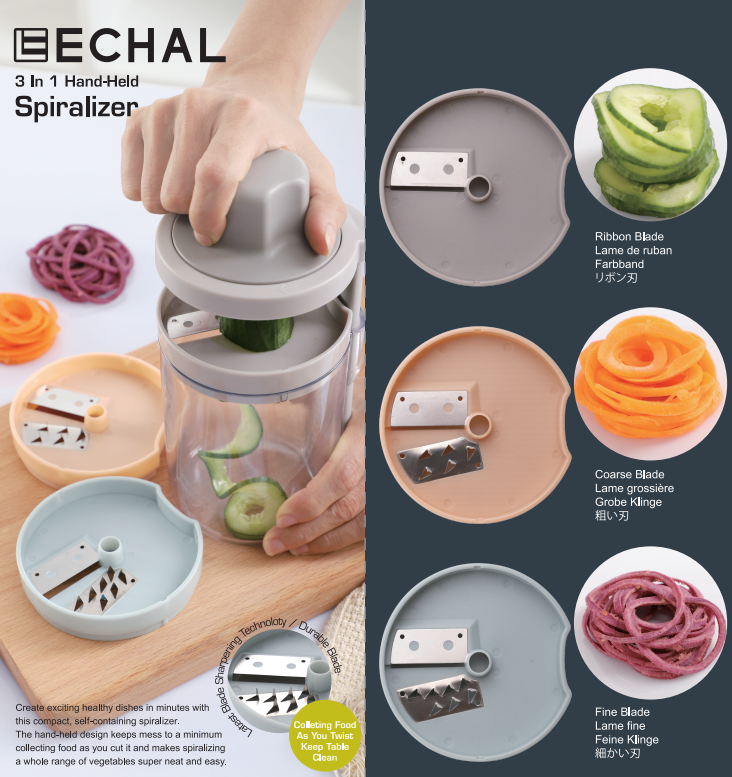
Handheld Spiralizer Guide: Choosing a Practical Vegetable Spiral Slicer
A handheld spiralizer is a compact kitchen tool designed to turn firm vegetables into ribbons, spirals, or noodle-like strands without using a bulky countertop machine. For home cooks, it can make zucchini, carrots, potatoes, cucumbers, and similar produce easier to use in salads, stir-fries, garnishes, and low-carb noodle alternatives. For retailers, wholesalers, and kitchenware buyers, the same product category raises a different question: how do you choose a reliable spiralizer supplier without overpaying for features customers may not need?
This guide explains what a handheld spiral slicer does well, where it has limitations, and what sourcing teams should ask before placing an OEM, wholesale, or private-label order. It avoids assuming any material grade, certification, capacity, or performance result unless the supplier can document it.
What a Handheld Spiralizer Is Best For
The main advantage of a handheld spiralizer is simplicity. It is small enough for kitchens with limited drawer space, easy to carry for travel or outdoor cooking, and fast to use for single portions. Unlike larger tabletop spiralizers, it usually does not require assembly or suction to a counter. Users insert or rotate vegetables by hand, allowing the blade area to cut long strands or curls.
Common uses include zucchini noodles, carrot spirals for salads, cucumber ribbons, potato spirals, and decorative vegetable toppings. It is particularly useful when the goal is quick preparation rather than high-volume production. A restaurant prep line or meal-kit factory may need larger equipment, but for household cooking, trial recipes, or compact retail assortments, a handheld format is often enough.
Key Takeaways
- A handheld spiralizer is most suitable for quick vegetable prep, small portions, and kitchens with limited storage space.
- Buyers should verify blade material, handle design, cleaning method, packaging, and safety instructions directly with the supplier.
- For B2B sourcing, ask for samples and written specifications before discussing bulk orders, OEM branding, or private-label packaging.
- Consumer satisfaction depends on realistic expectations: firm, straight vegetables usually work better than soft or irregular produce.
Product Selection Checklist
Whether you are purchasing for personal use or evaluating a product line for wholesale, focus on practical details. A good handheld kitchen gadget should be comfortable, stable, and easy to clean. It should also include clear instructions so end users understand which vegetables work best and how to avoid the blade area.
| Selection Point | Why It Matters | Questions to Ask |
|---|---|---|
| Blade information | Sharpness and durability affect cutting quality. | What blade material is used, and is it documented in the specification sheet? |
| Grip and shape | Comfort affects control, especially when rotating firm vegetables. | Is the design easy to hold with wet hands? Is a food holder included? |
| Cleaning method | Food can lodge near blades or inside narrow channels. | Is hand washing recommended? Are cleaning instructions included? |
| Vegetable compatibility | Not every vegetable produces clean spirals. | Which vegetables has the supplier tested in product demonstrations? |
| Retail packaging | Packaging influences shelf appeal, storage, and shipping protection. | Can packaging dimensions, materials, and artwork options be confirmed? |
| Safety communication | Blades require clear user warnings. | Are safety warnings, age guidance, and care instructions provided? |
How to Use a Handheld Spiralizer Effectively
For best results, choose firm vegetables with a relatively straight shape and consistent diameter. Wash and trim the ends first. If the tool has a food holder or cap, use it to protect fingers as the vegetable becomes shorter. Rotate steadily rather than forcing the produce through the blade; pressure that is too strong can lead to uneven strands or loss of control.
- Wash the vegetable and trim flat ends for better contact.
- Choose a size that fits the opening of the spiralizer.
- Insert the vegetable straight into the cutting area.
- Twist with steady pressure while keeping fingers away from the blade.
- Stop before the remaining piece becomes too short to hold safely.
- Rinse the tool promptly so starch or vegetable fibers do not dry on the blade.
Zucchini and cucumber are popular for fresh salads, while carrots and potatoes may require firmer pressure. If strands break frequently, the vegetable may be too soft, too wide, too curved, or not aligned with the blade.
Supplier Evaluation for Wholesale and OEM Buyers
If you are sourcing a handheld spiralizer from a manufacturer or trading supplier, do not rely only on product photos. Request a sample and test it with the vegetables your customers are most likely to use. Check how comfortable it feels, whether the spiral strands are consistent, and how difficult it is to clean after use.
Before moving to a bulk purchase, ask the supplier for a written product specification. This may include materials, dimensions, packaging details, carton information, care instructions, and available branding options. If the supplier mentions certifications, test reports, or compliance with market requirements, ask for current documents and confirm whether they apply to the exact product model being quoted.
For private-label projects, clarify artwork responsibilities, sample approval steps, lead time, color matching process, and how product changes will be communicated. If minimum order quantity, pricing, or production capacity matters to your purchasing plan, request those details directly rather than assuming standard terms.
What Consumers Notice After Purchase
End users usually judge a handheld spiralizer by three things: how easily it cuts, how safe it feels, and whether it is annoying to clean. Even a compact product can disappoint if the blade clogs, the grip slips, or the instructions are unclear. Retail buyers should pay attention to these factors because returns and negative reviews often come from mismatched expectations.
Clear packaging and instructions can help. For example, a product insert can explain that very soft vegetables may not spiral cleanly and that small leftover vegetable ends are normal. It can also remind users to keep fingers away from the blade and to wash the tool carefully after use. These details are not glamorous, but they reduce confusion and improve the user experience.
Care, Cleaning, and Storage Tips
Because a spiralizer has a cutting edge, cleaning should be done slowly and safely. Users should avoid wiping directly across the blade with fingers. A small cleaning brush can help remove vegetable fibers from narrow spaces. If the supplier states that the item is dishwasher safe, buyers should confirm whether that applies to the complete product or only certain parts. When in doubt, gentle hand washing and thorough drying are safer recommendations.
- Rinse soon after use to prevent dried-on starch or pulp.
- Use a brush rather than fingers around blade areas.
- Dry fully before storage to reduce trapped moisture.
- Store away from children and avoid loose placement in crowded drawers.
- Follow the supplier’s care instructions for the exact model.
Practical FAQ
Can a handheld spiralizer replace a countertop spiralizer?
For small portions and occasional vegetable noodles, yes. For high-volume prep or frequent batch cooking, a countertop model may be faster and less tiring.
Which vegetables work best?
Firm vegetables with a straight shape usually perform best. Zucchini, carrots, cucumbers, and potatoes are common examples, but results depend on size, freshness, and the tool design.
What should B2B buyers request before ordering?
Ask for a physical sample, product specification sheet, packaging details, care instructions, available branding options, and any relevant compliance documents for the target market.
Is a sharper blade always better?
A sharp blade helps produce cleaner cuts, but safety design, grip comfort, and cleaning access are also important. Buyers should evaluate the full user experience, not blade claims alone.
How can retailers reduce returns?
Use accurate product descriptions, include clear use instructions, avoid exaggerated promises, and explain which vegetables are suitable. Good expectation-setting is often as important as the tool itself.
Final Buying Advice
A handheld spiralizer is useful when it is presented honestly: a compact tool for quick vegetable spirals, not a replacement for every slicing or prep task. For consumers, the right choice depends on comfort, safe handling, easy cleaning, and compatibility with the vegetables they cook most often. For wholesale and OEM buyers, the best approach is to verify details through samples, written specifications, and clear supplier communication. A practical product, accurately described, is more likely to earn repeat purchases than one marketed with vague claims.
