




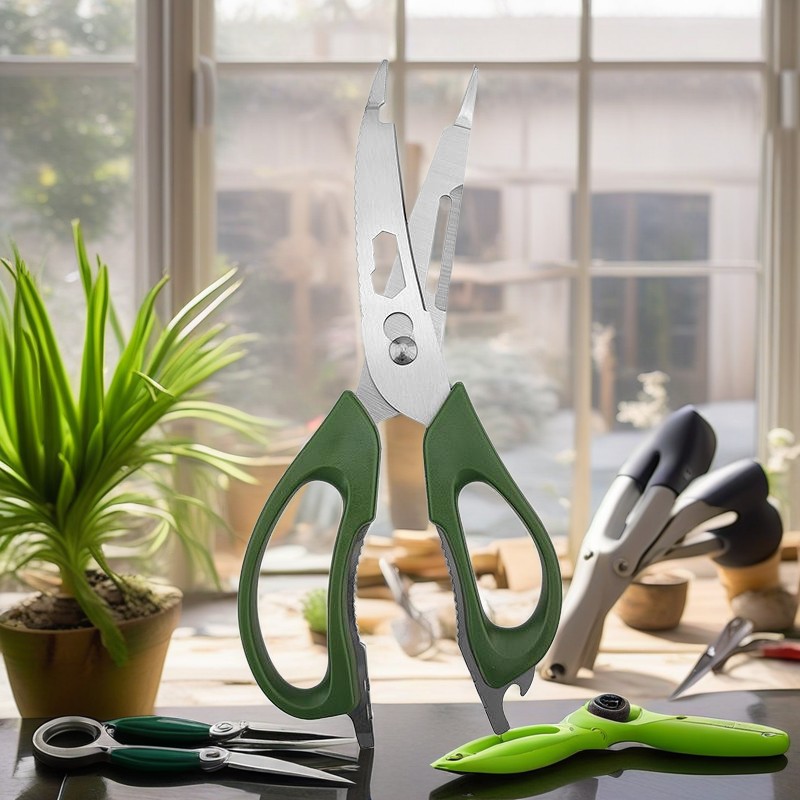
Versatile Outdoor Scissors for Camping, Gardening and Home Tasks
Outdoor scissors are easy to overlook until a campsite, garden corner or repair job needs a clean cut. A well-chosen pair of multifunction outdoor scissors can help with rope trimming, food preparation, fabric cutting, small DIY tasks and everyday emergency use around the home. The original product description highlights stainless steel blades, sharp cutting performance, durable construction, ergonomic handles, and extra functions such as a built-in bottle opener and nutcracker. Those are useful details, but buyers should still evaluate how the scissors will actually be used before choosing a model.
This guide explains what outdoor scissors are best suited for, what to check before buying, and how to care for them so they remain reliable in wet, dusty or high-use environments. It is written for practical users: campers, gardeners, homeowners, outdoor retailers and anyone comparing utility scissors for repeated use.
Key Takeaways
- Multifunction outdoor scissors are most useful when they combine strong cutting ability with safe, comfortable handling.
- Stainless steel blades can help resist everyday moisture, but they still need cleaning and drying after outdoor use.
- Extra tools such as a bottle opener or nutcracker are helpful only if they do not make the scissors bulky or difficult to control.
- For camping, prioritize portability, easy cleaning and reliable cutting of rope, packaging, food and fabric.
- For gardening or home repair, check hand comfort, blade alignment and whether the scissors can handle tougher materials.
What Makes Outdoor Scissors Different?
Standard household scissors are usually designed for paper, packaging or light craft work. Outdoor scissors need to handle more varied materials: cord, plant stems, food packaging, cloth, tape, light plastic and sometimes small branches or rugged fabric. That wider range places more stress on the blade edge, pivot and handle.
The original article describes these scissors as sharp, precise and durable, with stainless steel blades and ergonomic handles. Those qualities matter because outdoor use often involves awkward angles, damp hands and repetitive cutting. A comfortable grip reduces fatigue, while a stable blade helps prevent tearing rather than cutting. If the scissors are intended for food preparation during camping, easy cleaning becomes just as important as cutting power.
Common Uses for Camping and Outdoor Activities
Camping scissors are popular because they can replace several small tools in a cooking kit or gear pouch. They can trim rope, open food packaging, cut herbs or vegetables, prepare simple meals, snip tape, adjust straps, and help with quick repairs. Compared with a knife, scissors can offer more control when cutting flexible materials such as fabric or cord.
However, they should not be treated as a substitute for heavy pruning shears, saws or rescue tools unless the supplier clearly states that the product is designed for those uses. If you expect to cut thick branches, metal wire or dense rope frequently, ask the seller what materials the scissors are intended to handle and whether replacement or sharpening guidance is available.
Comparison Checklist Before You Buy
| Selection Point | What to Check | Why It Matters |
|---|---|---|
| Blade material | Confirm whether the blades are stainless steel and ask about maintenance needs. | Stainless steel helps in damp outdoor conditions, but it is not maintenance-free. |
| Cutting tasks | Match the scissors to rope, food prep, fabric, packaging, plants or light DIY work. | A tool that works well for camping meals may not be ideal for heavy garden cutting. |
| Handle comfort | Look for an ergonomic grip and enough space for secure hand placement. | Comfort improves control during repeated cuts and reduces slipping. |
| Extra functions | Check built-in features such as a bottle opener or nutcracker. | Added functions are useful when they do not compromise balance or safety. |
| Cleaning | Ask whether the pivot area is easy to rinse and dry after food or garden use. | Dirt, sap and food residue can reduce performance over time. |
| Storage | Check whether a cover, pouch or safe storage method is provided. | Outdoor gear often travels in bags where exposed blades can damage other items. |
How to Use Outdoor Scissors Safely
Good outdoor scissors are practical, but they are still sharp tools. Use them on stable surfaces when possible, especially when cutting rope, food or slippery packaging. Avoid twisting the blades sideways through hard materials, because that can strain the pivot or knock the edges out of alignment. If a material requires excessive force, switch to a more suitable tool rather than forcing the cut.
- Keep fingers away from the cutting path, especially when working in low light.
- Clean the blades before and after food preparation.
- Dry the scissors after rain, washing or contact with wet plants.
- Store them closed and protected when packed with camping gear.
- Do not use the nutcracker or bottle opener functions unless the scissors are firmly controlled.
Care and Maintenance for Longer Service
Outdoor tools fail faster when moisture, sand, sap and food residue are left on them. After camping or gardening, wipe the blades clean with a damp cloth, then dry them fully. If the pivot becomes stiff, remove visible debris and follow the supplier's care instructions. Do not assume that every pair can be placed in a dishwasher or soaked for long periods; ask the supplier if cleaning guidance is not provided.
For food-related use, keep outdoor scissors separate from tools used on soil, plants or repair materials. Cross-use is convenient, but hygiene matters. If one pair is used for garden stems and another for camp cooking, label or store them separately. This simple habit keeps outdoor meals cleaner and reduces the need for heavy scrubbing.
Guidance for Retailers and Bulk Buyers
Retailers, wholesalers and sourcing teams should evaluate outdoor scissors beyond appearance. Product listings often emphasize versatility, but purchase decisions should be based on confirmed use cases and documented specifications. Before ordering in quantity, ask the supplier which materials the scissors are designed to cut, what the blade material is, whether the handle material is identified, and what packaging or storage accessories are available.
If OEM or private label options are being considered, avoid assuming details such as minimum order quantity, lead time, certifications, test reports, or custom packaging availability. Ask directly and request written confirmation. For a mixed outdoor category, it may also be useful to compare several samples: one optimized for camping food prep, one for garden utility, and one for general household emergency use. Hands-on sample testing can reveal grip comfort, blade smoothness and cleaning difficulty better than photos alone.
FAQ
Can outdoor scissors cut rope?
Yes, multifunction outdoor scissors are commonly used for cutting rope and cord, but performance depends on the rope thickness and fiber type. For thick or high-strength rope, confirm suitability with the supplier before buying.
Are stainless steel blades enough for outdoor use?
Stainless steel is a useful feature for outdoor scissors because it can better handle moisture than many untreated metals. Even so, the blades should be cleaned and dried after use to reduce staining, residue and pivot stiffness.
Can the same scissors be used for food and gardening?
They can be, but it is not ideal unless they are thoroughly cleaned between tasks. For regular use, keep one pair for food preparation and another for soil, plants or repair work.
Are built-in tools like a bottle opener and nutcracker worthwhile?
They can be useful for camping and household tasks if they are easy to access and do not make the scissors uncomfortable. Check how the added functions affect grip, weight and storage.
What should bulk buyers ask before sourcing outdoor scissors?
Ask about blade material, intended cutting applications, handle design, cleaning instructions, packaging, sample availability, customization options, order requirements and any available product documentation. Do not rely on assumptions when comparing suppliers.
Final Thoughts
Multifunction outdoor scissors are valuable because they solve small, repeated problems: cutting rope, opening packaging, preparing food, trimming plants, handling craft tasks and supporting emergency home repairs. The best choice is not necessarily the heaviest or the one with the most extra tools. It is the pair that fits the user's real tasks, feels safe in the hand, cleans easily and stores securely with other gear. Whether buying one pair for camping or comparing options for resale, focus on verified materials, practical handling and clear supplier answers.
