




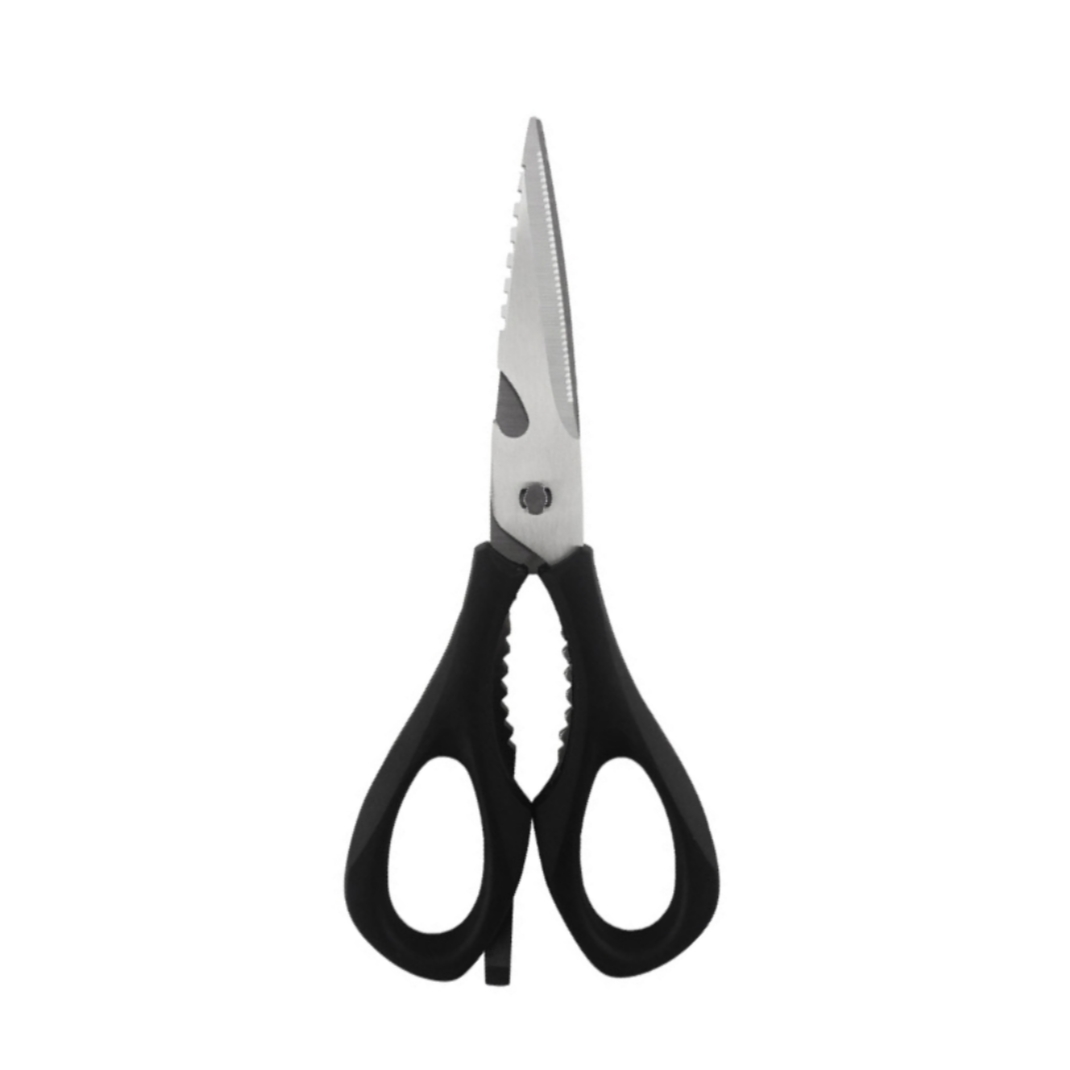
Discover the Versatility of OEM Kitchen Scissors
OEM kitchen scissors are a practical product category for retailers, distributors, promotional buyers, and kitchenware brands that want a compact tool with broad everyday use. Unlike a single-purpose knife, kitchen scissors can help users trim meat, cut herbs, open food packaging, portion cooked food, and handle small preparation tasks without switching tools. For B2B buyers, the opportunity is not only the product itself, but also how well the scissors match the target market, packaging channel, and quality expectations.
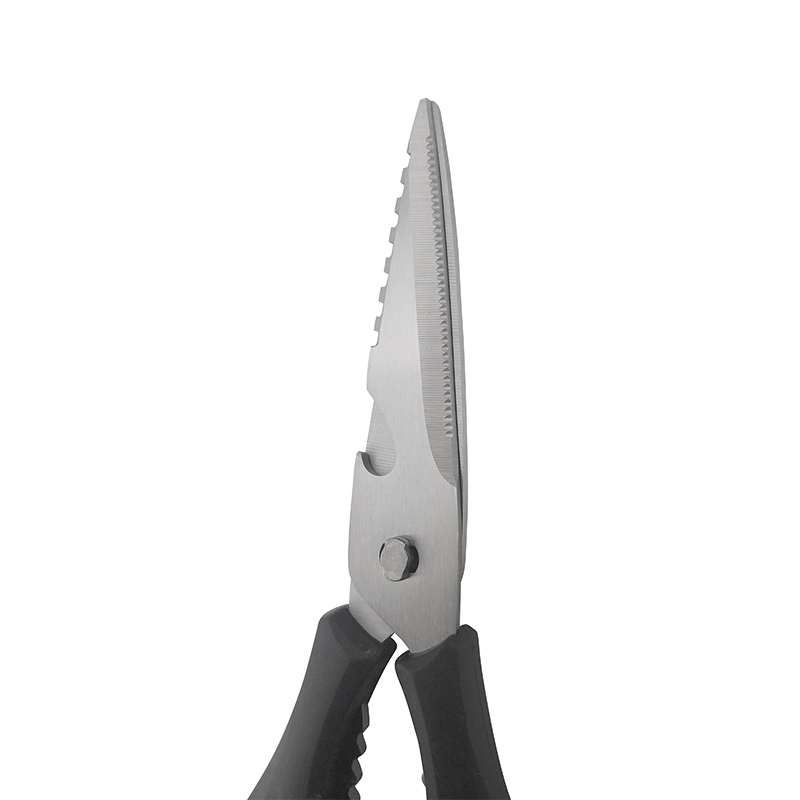
The original product description highlights multi-function kitchen scissors made with stainless steel, a razor-sharp edge, an ergonomic handle with a soft non-slip grip, suitability for left- and right-handed users, and added functions such as a bottle opener, nutcracker, and serrated gripping section. Those are useful selling points, but an OEM sourcing decision should go further. Buyers should confirm materials, finish, blade geometry, packaging, inspection standards, and customization options before placing an order.
Why OEM Kitchen Scissors Attract B2B Buyers
Kitchen scissors are easy to understand, relatively compact to ship, and suitable for many retail formats. They can be positioned as a general kitchen tool, a food preparation accessory, a gift set component, or a value-added item in a broader cookware range. Because the product is familiar, buyers can focus on differentiation: handle comfort, blade sharpness, added functions, retail packaging, and brand presentation.
For OEM projects, the main benefit is flexibility. A buyer may need private-label packaging, a specific handle color, a different instruction sheet, barcode placement, or a presentation that fits an online marketplace listing. Before assuming these options are available, ask the supplier what customization is supported, what files are required, and whether there are extra tooling, printing, or sampling charges.
Core Features to Evaluate Before Ordering
A multi-function pair of kitchen scissors should feel stable in the hand and cut cleanly through common kitchen materials. The source article states that the scissors use stainless steel and a soft non-slip ergonomic handle. When evaluating samples, buyers should test the scissors in realistic scenarios rather than judging only by appearance.
- Cutting performance: Test herbs, thin packaging, poultry skin, cooked meat, and other relevant materials for the target market.
- Grip comfort: Check whether the handle suits different hand sizes and whether the non-slip surface remains comfortable during repeated use.
- Blade alignment: Open and close the scissors several times to confirm smooth action and consistent contact between blades.
- Added functions: Try the bottle opener, nutcracker, and serrated gripping area to see whether they are useful or merely decorative.
- Cleaning access: Ask whether the design is intended to separate for cleaning, or whether users should clean it as a fixed tool.
Comparison Checklist for OEM Selection
The table below can help purchasing teams compare supplier samples consistently. It avoids relying on marketing claims alone and encourages buyers to document the questions that matter for wholesale and private-label projects.
| Evaluation Area | What to Check | Questions to Ask the Supplier |
|---|---|---|
| Blade material | Stainless steel is stated in the source description | What steel type is used, and can it be documented? |
| Sharpness | Clean cutting on common food prep tasks | How is sharpness inspected before shipment? |
| Handle | Soft, non-slip ergonomic grip is stated | What handle materials and colors are available? |
| Multi-function parts | Bottle opener, nutcracker, and serrated section | Are these features standard or optional for OEM orders? |
| Packaging | Retail-ready presentation and user instructions | Can private-label artwork, barcode, and carton marks be added? |
| Quality control | Consistent blade action and finish | What inspection criteria are used for mass production? |
How to Assess a Kitchen Scissors Manufacturer
When the topic is OEM or wholesale, supplier evaluation is as important as product selection. A kitchen scissors manufacturer should be able to explain its production process, sampling timeline, packaging workflow, and quality control method in practical terms. Avoid relying only on catalog photos. Request samples, compare them against your retail positioning, and document the approved sample clearly before production begins.
Buyers should also ask how the supplier manages consistency between sample and bulk production. For example, confirm whether the same blade finish, handle texture, color, and packaging materials will be used in the final order. If the product will be sold through supermarkets, specialty kitchen stores, or e-commerce platforms, ask for packaging dimensions, carton details, and image support that fit the channel. Do not assume any certification, compliance status, or testing result unless the supplier provides current documentation for the exact item and market.
Product Positioning for Different Sales Channels
OEM kitchen scissors can be positioned differently depending on the buyer's customer base. For value-focused retail, simple packaging and clear feature callouts may matter most. For online sales, photography, precise product descriptions, and clear care instructions can reduce returns. For gift or bundle programs, the scissors may need coordinated colors or packaging that matches other kitchen tools.
The multi-function design described in the original article is especially relevant when buyers want one item to communicate several uses. However, more functions are not always better. If the bottle opener or nutcracker adds bulk but does not suit the target audience, a simpler model may perform better. The best choice is the one that fits the user's real cooking habits and the buyer's price, packaging, and quality requirements.
Key Takeaways
- OEM kitchen scissors are useful for brands and distributors because they combine common kitchen cutting tasks with compact retail appeal.
- The stated features include stainless steel blades, a soft non-slip ergonomic handle, left- and right-hand usability, a bottle opener, nutcracker, and serrated gripping section.
- B2B buyers should test real samples for cutting performance, comfort, blade alignment, and cleaning practicality.
- Commercial details such as steel grade, customization, MOQ, lead time, compliance documents, and inspection standards should be confirmed directly with the supplier.
Practical FAQ for OEM Kitchen Scissors Buyers
What should I confirm before requesting a quote?
Confirm the model, blade material details, handle material and color, packaging type, logo placement, order quantity, destination market, and any documentation required for your sales channel. Clear information helps the supplier provide a more accurate quote.
Are multi-function kitchen scissors better than standard scissors?
They can be better when the added functions are useful to the end user. A bottle opener, nutcracker, and serrated gripping section may add convenience, but buyers should test whether those features work well and fit the intended price point.
Can the scissors be customized for private label sales?
Many OEM projects include some level of customization, but the exact options should be confirmed with the supplier. Ask about logo methods, packaging artwork, color choices, sample approval, and any cost or quantity requirements.
What quality checks are important for bulk orders?
Important checks include blade sharpness, opening and closing smoothness, handle finish, surface defects, packaging accuracy, carton labeling, and consistency against the approved sample. Buyers should agree on inspection criteria before production.
How should end users care for kitchen scissors?
General care guidance should be based on the supplier's instructions. Buyers can ask whether the scissors require hand washing, whether they are designed to separate for cleaning, and how users should dry and store them to maintain performance.
