




How to Choose a Stainless Steel Grater Supplier for Wholesale Kitchenware
Finding the right stainless steel grater supplier is not just about locating a low unit price. For retailers, distributors, private-label brands, and foodservice buyers, the better question is whether a supplier can provide consistent product quality, clear communication, suitable packaging, and reliable support from sample review through repeat orders. A grater is a simple kitchen tool, but small differences in blade sharpness, handle comfort, surface finish, and packaging can affect customer satisfaction and return rates.
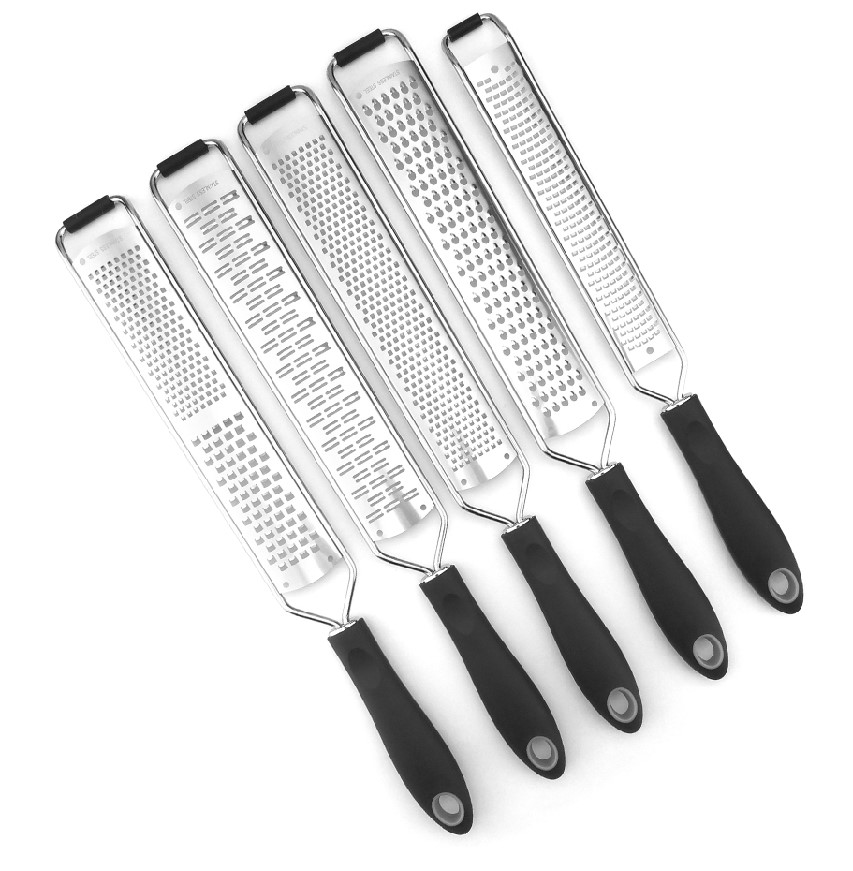
The original article highlights stainless steel kitchen graters, including options such as fine blades for citrus zest, ultra-coarse blades for vegetable shreds, soft-touch handles, bidirectional grating, and uses such as grating nuts or creating chocolate ribbons. This rewritten guide keeps those useful selection points while focusing on practical B2B sourcing decisions. Use it as a checklist when comparing stainless steel grater manufacturers, OEM partners, or wholesale kitchenware suppliers.
Key Takeaways
- Match the grater style to your sales channel: retail, foodservice, promotional, or private label.
- Request samples and check blade sharpness, handle comfort, burrs, cleaning ease, and packaging strength.
- Ask suppliers direct questions about materials, customization, lead time, MOQ, inspection process, and replacement policy instead of assuming details.
- Compare fine, coarse, ultra-coarse, ribbon, and bidirectional grating options based on real customer use cases.
- Do not rely only on catalog photos; a sample test is the fastest way to identify quality gaps.
What Buyers Should Expect From a Stainless Steel Grater Supplier
A capable supplier should help you choose a product that fits your market rather than pushing a single design. For example, a supermarket buyer may need retail-ready packaging and barcodes, while a restaurant supply distributor may prioritize durability, easy cleaning, and carton efficiency. A private-label brand may need logo placement, packaging artwork support, and consistent finishing across batches.
Before discussing price, ask for the supplier's available grater categories, blade options, handle materials, packaging formats, and sample policy. If the supplier offers OEM or private-label service, clarify which parts can be customized: handle color, logo, blade shape, carton marks, instruction insert, or retail packaging. Avoid assuming that every supplier can support every customization without tooling, artwork, or minimum order requirements.
Compare Common Stainless Steel Grater Options
Different grater types serve different cooking tasks. A fine blade is often used for citrus zest, hard cheese, garlic, ginger, or spices. A coarse blade works for cheese, vegetables, and everyday preparation. An ultra-coarse blade is better suited to thicker vegetable shreds, while ribbon-style cuts can be useful for chocolate, firm vegetables, or decorative preparation. Some designs also support bidirectional grating, which can improve efficiency when used correctly.
| Grater Option | Best Use Case | B2B Buying Check |
|---|---|---|
| Fine blade | Citrus zest, hard cheese, ginger, garlic | Check sharpness, clogging, and whether the zest is clean rather than crushed. |
| Coarse blade | Cheese, carrots, zucchini, everyday prep | Test cutting consistency and confirm the blade does not bend during use. |
| Ultra-coarse blade | Hearty vegetable shreds and thicker textures | Assess safety, edge finish, and whether the product feels stable under pressure. |
| Ribbon or shaving blade | Chocolate ribbons, firm vegetables, garnish work | Review cut appearance and whether the blade catches or tears ingredients. |
| Bidirectional grating | Faster back-and-forth grating tasks | Confirm user safety, control, and clear instructions on the package or insert. |
Quality Checks Before Placing a Wholesale Order
Because graters involve sharp surfaces, quality inspection should be practical and hands-on. Start with sample testing using the ingredients your target customers are likely to use. Try citrus, hard cheese, chocolate, nuts, and vegetables if those uses are relevant to your assortment. Observe whether the grater cuts cleanly, whether food builds up on the surface, and whether the handle remains comfortable during repeated strokes.
Next, inspect the product finish. Look for burrs, uneven edges, loose parts, rough handle seams, weak welds or joints, and inconsistent polishing. If the product has a soft-touch handle, test grip comfort with dry and slightly wet hands. Also check whether the product can be cleaned easily, because residue caught in small gaps can create customer complaints.
For bulk sourcing, ask how the supplier controls consistency between samples and mass production. Useful questions include: What inspection steps are used before shipment? Can pre-shipment photos or inspection reports be provided? How are defective items handled? Can the supplier confirm packaging drop-test expectations or carton strength? These are questions, not assumptions; the supplier should provide clear answers before you commit to scale.
OEM, Private Label, and Packaging Questions to Ask
If you are sourcing from stainless steel grater manufacturers for an own-brand program, details matter. A grater may look generic online, but your final product depends on material selection, blade tooling, handle design, logo method, packaging structure, and batch consistency. Ask early whether your project requires existing molds or new tooling, and confirm who owns any custom artwork or tooling if applicable.
- Which blade styles are available from existing production?
- Can the handle color, logo, or packaging be customized?
- What information is needed for a quotation: quantity, packaging, artwork, target market, and delivery terms?
- What are the sample cost, sample time, production lead time, and approval process?
- What carton packing details, product dimensions, and gross weight data can be provided?
- What compliance documents or test reports are available, if required by your market?
Do not invent compliance status when listing products online. If your market requires specific documentation, request it from the supplier and verify whether it applies to the exact product, material, and production batch you plan to buy.
How to Match Graters to Your Sales Channel
For retail shelves, packaging presentation and clear usage information are important. Customers should understand whether the grater is fine, coarse, ultra-coarse, ribbon-style, or multipurpose. If the grater is part of a series, consistent packaging design can make the assortment easier to shop. Clear cleaning and safety instructions also reduce misuse.
For foodservice and restaurant supply, the buyer may care more about durability, quick cleaning, and repeat availability. A comfortable handle can matter when staff use the tool many times a day. For e-commerce, photos, dimensions, blade close-ups, and accurate descriptions help prevent returns caused by mismatched expectations. For promotional or gift channels, packaging cost and perceived value may be as important as the grater design itself.
Practical FAQ for Stainless Steel Grater Sourcing
What should I test in a stainless steel grater sample?
Test blade sharpness, cutting consistency, handle comfort, cleaning ease, product weight, surface finish, and packaging strength. Use realistic ingredients such as citrus, cheese, vegetables, nuts, or chocolate depending on your target market.
Is a fine blade or coarse blade better for wholesale buyers?
Neither is universally better. A fine blade suits zesting and hard cheese, while a coarse or ultra-coarse blade suits vegetables and thicker shreds. Many buyers carry more than one style to cover different customer needs.
Can a supplier provide OEM or private-label graters?
Some suppliers can, but capabilities vary. Ask about logo methods, handle colors, packaging customization, artwork requirements, tooling needs, minimum order quantity, sample approval, and production lead time.
What commercial details should I confirm before ordering?
Confirm quotation validity, payment terms, delivery terms, sample policy, MOQ, lead time, packing method, inspection process, defect handling, and available compliance documents for your destination market.
How can I avoid quality problems in repeat orders?
Approve a final sample, define packaging and product specifications in writing, request pre-shipment checks, and compare production goods against the approved sample before accepting large-volume shipments.
Final Sourcing Advice
A stainless steel grater supplier should be evaluated on more than catalog variety. The best fit is the supplier that can explain product options clearly, provide samples, answer technical and commercial questions, and support the quality level required by your sales channel. By comparing blade styles, testing samples carefully, and confirming OEM or wholesale details in writing, buyers can reduce sourcing risk and build a more reliable kitchenware assortment.
