




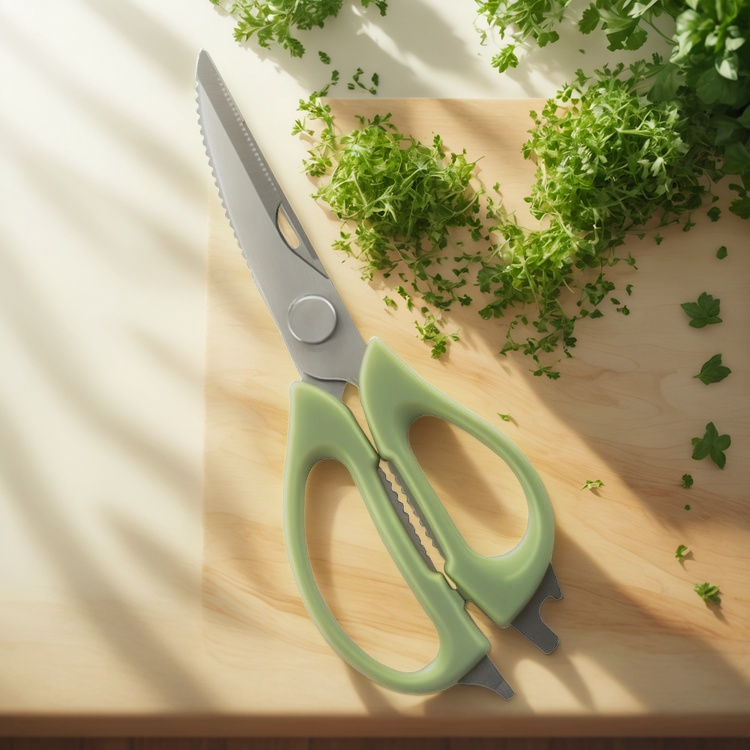
Discover Versatile Multi-Functional Kitchen Shears

Multi-functional kitchen shears are designed for people who want one compact tool to handle frequent cutting, trimming, opening, and light kitchen utility tasks. For home cooks, they can reduce the need to reach for a knife and board for every small job. For retailers, distributors, and OEM buyers, they are also a product category where small design choices can affect user comfort, safety perception, packaging value, and repeat orders.
The original product description highlights a pair of kitchen shears with stainless steel blades, a serrated edge on one blade, ergonomic non-slip handles, and built-in functions such as a bottle opener, nutcracker, and screwdriver tip. Those are useful details, but buyers should still evaluate how each feature performs in real use and what commercial information a supplier can document before placing an order.
Key Takeaways
- Choose kitchen shears based on the tasks your customers actually perform, not the longest feature list.
- Stainless steel blades, serration, handle comfort, and cleaning access are core points to inspect.
- Multi-function tools can add value, but each added feature should feel safe, accessible, and durable.
- OEM buyers should ask suppliers about materials, samples, packaging options, lead times, and quality-control procedures.
- Do not rely only on photos; test cutting performance, grip comfort, and cleaning convenience with real ingredients.
What Multi-Functional Kitchen Shears Are Used For
A good pair of kitchen shears can be used for snipping herbs, cutting packaging, trimming dough, portioning soft vegetables, and handling small food-prep jobs where a knife may be less convenient. The serrated edge described in the original article is especially relevant because serration can help grip slippery surfaces such as poultry skin or leafy herbs during cutting.
The additional functions, including a bottle opener, nutcracker, and screwdriver tip, position the shears as a kitchen utility tool rather than a single-purpose cutter. These add-ons may be helpful in a busy kitchen, but they should not compromise the primary function: clean, controlled cutting. When assessing samples, start with the cutting action before judging the secondary tools.
Feature Checklist for Product Selection
Whether you are sourcing for wholesale, private label, or retail shelves, compare samples with a structured checklist. The table below outlines practical inspection points.
| Feature | What to Check | Why It Matters |
|---|---|---|
| Blade material | Confirm the stainless steel type and finish with the supplier | Affects corrosion resistance, sharpening behavior, and buyer confidence |
| Serrated blade | Test on herbs, poultry skin, packaging, and soft vegetables | Helps prevent slipping during common kitchen cuts |
| Handle design | Check grip comfort with dry and slightly wet hands | Comfort and control affect everyday usability |
| Built-in tools | Try the bottle opener, nutcracker, and screwdriver tip safely | Secondary functions should be practical, not decorative |
| Cleaning access | Ask whether the design can be cleaned thoroughly after food contact | Food residue can collect around joints and textured areas |
| Packaging | Review retail display, instructions, warnings, and barcode needs | Important for shelf presentation and customer understanding |
How to Evaluate Cutting Performance
Start testing with everyday kitchen materials rather than extreme demonstrations. Try fresh herbs, parchment, plastic food packaging, cooked meat, raw poultry skin if appropriate for your market, and thin dough. A balanced pair of shears should open and close smoothly, cut without excessive hand force, and return a predictable feel across repeated cuts.
Blade alignment is another key point. If the blades flex away from each other or leave uncut fibers, the user may experience tearing rather than cutting. For OEM sourcing, request samples from the same production process intended for your order, then compare multiple units for consistency. A single good sample is useful, but consistency across samples is more important for wholesale buyers.
Comfort, Safety, and Cleaning Considerations
The original description mentions ergonomic, non-slip handles. That is a meaningful feature when users cut for longer prep sessions or work with damp hands. However, handle comfort is subjective. Buyers should consider hand sizes in the target market, left- or right-hand use expectations, finger opening size, and whether the handle edges create pressure points.
Cleaning is equally important because kitchen shears often touch meat, herbs, oils, and packaging. Ask the supplier how the hinge area should be cleaned and whether the product includes any care instructions. If the shears are not designed to separate for cleaning, buyers should pay special attention to residue-prone areas. If dishwasher use is important for your market, ask the supplier for written confirmation rather than assuming it.
OEM and Wholesale Sourcing Questions
For buyers looking at a Yangjiang scissors factory, kitchen scissors manufacturer, or OEM scissors supplier, the most useful conversations are specific. Avoid asking only for the lowest price. Instead, clarify product structure, customization options, quality checks, packaging, and order terms.
- What stainless steel material is used for the blades, and can it be documented on the quotation?
- Which parts of the design can be customized, such as handle color, logo placement, packaging, or tool combination?
- Can the supplier provide pre-production samples before mass production?
- What quality-control checks are performed for blade sharpness, hinge movement, handle finish, and built-in tools?
- What are the available packaging formats for retail, e-commerce, or bulk wholesale?
- What are the current MOQ, lead time, payment terms, and shipping options?
- Are care instructions, warning labels, and market-specific labeling requirements supported?
These questions help keep the sourcing process factual. If a supplier makes claims about materials, certifications, performance testing, or compliance, request documents that match the exact product model and order specification.
When Multi-Function Is Worth It
Multi-function kitchen shears are most useful when the added tools support real kitchen behavior. A bottle opener can be convenient. A nutcracker can be practical if the handle and hinge are strong enough for the intended use. A screwdriver tip may help with light tasks, but it should be clearly positioned as a convenience feature rather than a replacement for a proper toolbox.
For retailers, the best product story is not simply “more functions.” It is a clear explanation of how the shears help with food prep, packaging, and small kitchen jobs while remaining comfortable to hold and easy to clean. For consumers, the same principle applies: choose a pair that feels controlled in the hand and performs the cutting tasks you do most often.
Practical FAQ
Are multi-functional kitchen shears better than regular scissors?
They are better for kitchen-specific tasks because they are designed around food prep, grip control, and utility features. Regular household scissors may not be suitable for repeated food contact or thicker kitchen materials.
What should I test before choosing an OEM kitchen shears supplier?
Test cutting consistency, blade alignment, handle comfort, cleaning access, and the usefulness of each built-in tool. Also ask for written details on materials, customization, packaging, MOQ, lead time, and quality checks.
Is a serrated blade useful on kitchen shears?
Yes, a serrated blade can help grip slippery ingredients and reduce sliding during cutting. It is especially relevant for herbs, poultry skin, and flexible packaging.
Can kitchen shears be washed in a dishwasher?
Do not assume dishwasher suitability. Ask the supplier for the recommended cleaning method for the exact model, especially if the shears include multiple built-in tools or a hinge area that may trap residue.
What information should appear on retail packaging?
Useful packaging normally explains the main functions, care instructions, safety notes, material information, barcode requirements, and brand details. For specific markets, confirm local labeling requirements with a compliance professional.
