




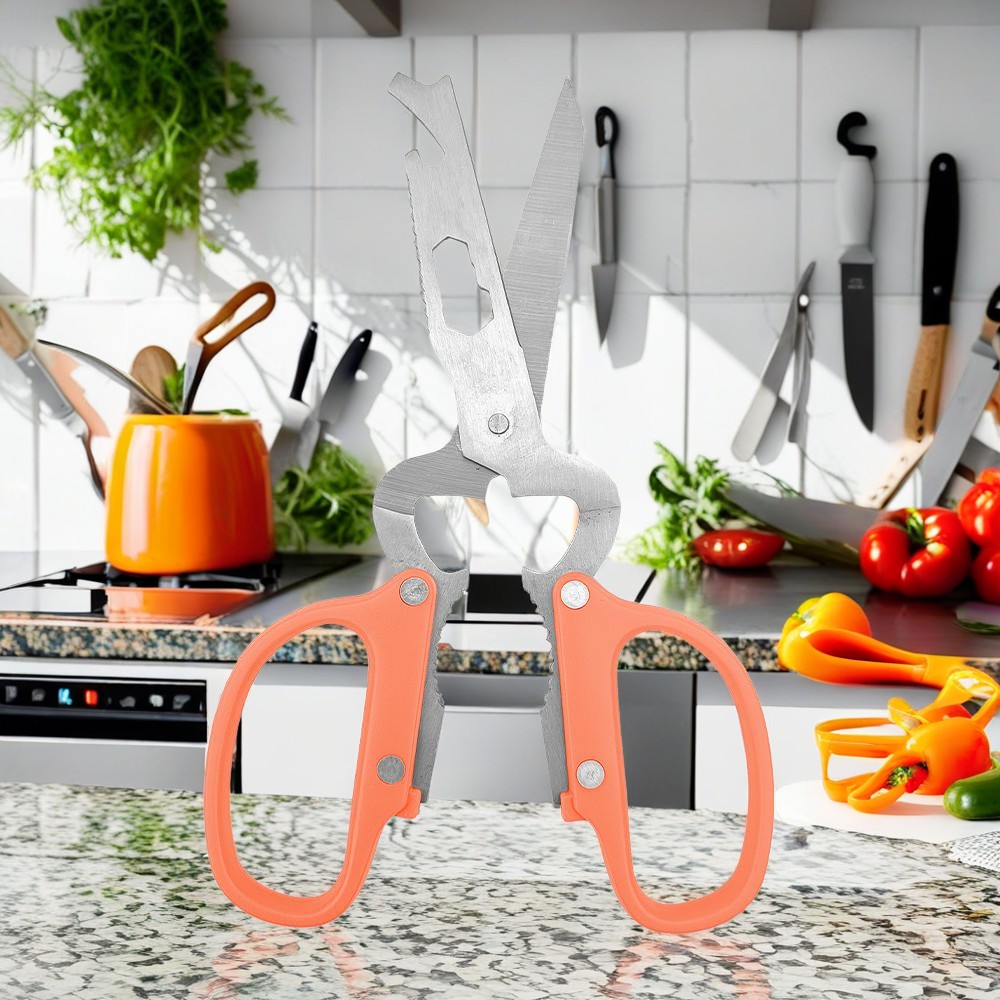
Multifunction Kitchen Scissors: A Practical Guide for Everyday Use
Multifunction kitchen scissors are one of those tools that earn their place by saving small amounts of time again and again. The original product description highlights a lemon or mint green pair of steel kitchen scissors with stainless steel blades, soft-grip ergonomic handles, detachable blades, and added functions such as a bottle opener, nutcracker, can opener, fish scaler, and flat screwdriver. Those features make the product more than a simple cutting tool, but the real value depends on how it is used, cleaned, stored, and selected for the tasks in your kitchen.
This guide explains where multifunction kitchen scissors are helpful, what to check before buying, and how to maintain them safely. It is written for home cooks, shared kitchens, small hospitality teams, and anyone comparing kitchen shears for practical everyday use.
Key Takeaways
- Multifunction kitchen scissors are useful for cutting food, trimming packaging, opening bottles, scaling fish, and handling light household tasks.
- Stainless steel blades are practical for kitchen use, but buyers should still ask about corrosion resistance, sharpening, and food-contact suitability.
- Detachable blades can make cleaning easier because food residue is less likely to remain trapped near the hinge.
- Soft-grip ergonomic handles can improve comfort, especially during repeated cutting tasks.
- Extra functions are helpful only if they are sturdy, easy to access, and simple to clean after use.
What Makes Multifunction Kitchen Scissors Useful?
Standard scissors are usually designed for paper or light packaging. Kitchen scissors, by contrast, are intended for messier and more demanding tasks. A multifunction version adds small built-in tools so that one compact item can support several jobs around the kitchen.
Common uses include snipping herbs, cutting food packaging, trimming vegetables, portioning cooked noodles, opening sealed bags, cutting parchment paper, and handling light poultry preparation. The original article also states that the stainless steel blades are sharp enough to cut through thick poultry bones, packaging, and delicate herbs. In real use, it is wise to match the tool to the job: fine herbs need clean, sharp blades, while poultry bones require strong construction, a secure grip, and careful hand placement.
The added functions can also be convenient. A bottle opener may help during meal service. A nutcracker can reduce the need for a separate tool. A fish scaler may be useful for people who prepare whole fish. A flat screwdriver can help with small, non-electrical adjustments, although it should not replace a proper screwdriver set for repairs.
Feature Checklist Before You Buy
When comparing multifunction kitchen scissors, look beyond the number of functions printed on the packaging. A tool with many features is not automatically better. It should feel stable, clean easily, and perform the tasks you actually do.
| Feature | Why It Matters | What To Check |
|---|---|---|
| Stainless steel blades | Suitable for wet kitchen tasks and repeated washing | Ask what type of stainless steel is used and how to prevent corrosion |
| Detachable blade design | Makes it easier to clean around the hinge | Confirm how the blades separate and lock back together |
| Soft-grip ergonomic handles | Improves comfort during repeated cutting | Check grip size, texture, and left- or right-hand usability |
| Built-in opener or nutcracker | Adds convenience for occasional tasks | Make sure the extra tool is easy to use and not awkwardly placed |
| Compact design | Fits drawers, tool rolls, or outdoor cooking kits | Check overall length and storage protection |
Best Everyday Uses in the Kitchen
Multifunction kitchen scissors are especially useful for jobs where a knife and cutting board feel unnecessarily slow. They can cut herbs directly over a bowl, trim mushroom stems, snip cooked bacon, divide flatbread, cut open vacuum bags, or portion dried fruit. For people cooking in small kitchens, scissors can also reduce the number of tools on the counter.
For poultry or fish, use extra care. Kitchen shears can help cut skin, fins, small bones, or joints, but the user should avoid forcing the blades through material that feels too hard. Forcing any cutting tool increases the risk of slipping. If preparing raw meat or fish, wash the scissors immediately after use and keep them separate from ready-to-eat foods until cleaned.
For non-food tasks, keep the limits clear. Opening food packaging, cutting twine, or opening bottles may be reasonable. Using the flat screwdriver function for heavy household repairs is not. A kitchen tool should not be exposed to chemicals, electrical work, or dirty workshop tasks if it will later touch food.
Cleaning and Hygiene: Why Detachable Blades Help
The original product description notes that detachable blades support easier hygienic maintenance by reducing trapped food particles. This is an important point. The hinge area of kitchen scissors can collect oil, herbs, meat fibers, or sticky sauce. If the blades separate, the user can clean the inner surfaces more thoroughly.
After use, rinse away visible residue, wash with warm water and dish soap, and scrub around the hinge and handle edges. Dry the scissors completely before storage because moisture left in joints or textured grips can shorten the useful life of the tool. If the scissors are dishwasher safe, the supplier should state that clearly; if not, hand washing is the safer assumption.
For raw poultry, seafood, or meat, clean immediately and avoid placing the scissors on surfaces used for salad, bread, or cooked food. In shared kitchens, consider labeling scissors by use category, such as general prep or raw protein, to reduce cross-contamination risk.
Comfort, Grip, and Safe Handling
Soft-grip ergonomic handles are mentioned in the original description as a way to reduce fatigue. This matters because cutting through thicker packaging or poultry requires hand pressure. A slippery or uncomfortable handle can make the tool harder to control.
Before choosing a pair, consider hand size and grip preference. The handle openings should not pinch the fingers, and the tool should not feel blade-heavy. If multiple people will use the same scissors, choose a design that suits a wide range of hand sizes. A bright lemon or mint green color, as described in the original article, may also make the scissors easier to spot in a drawer or picnic kit.
Safe handling is simple but important: cut away from your body, keep fingertips clear of the blade path, and store the scissors closed. If the product includes a protective cover or lock, use it. If not, store it in a drawer section where the blades will not contact loose hands or other tools.
Care Tips to Extend Service Life
- Wash and dry the scissors soon after cutting wet, acidic, salty, or oily foods.
- Separate detachable blades only according to the supplier instructions, then reassemble them securely.
- Do not twist the blades while cutting hard items, because this can affect alignment.
- Use the nutcracker, opener, scaler, and screwdriver functions only for light tasks they are designed to handle.
- Check the hinge regularly for looseness, residue, or rough movement.
- Sharpen or replace the scissors when they crush herbs or slip on packaging instead of cutting cleanly.
Questions to Ask a Supplier or Retailer
If you are buying for a household, restaurant prep area, gift set, or wholesale assortment, ask specific questions rather than relying on broad marketing phrases. Useful questions include: What stainless steel is used for the blades? Are the blades detachable for cleaning? Is the product intended for dishwasher cleaning or hand washing only? Does it include instructions for safe use with poultry, fish, or nuts? Are replacement units, packaging options, or after-sales support available? Are there food-contact declarations or test documents available for the target market?
For business buyers, avoid assuming manufacturing capacity, minimum order quantity, certification status, or custom branding options unless the supplier confirms them in writing. Product photos and short descriptions are helpful starting points, but purchasing decisions should be based on samples, documentation, inspection criteria, and actual performance testing in your use case.
FAQ
Can multifunction kitchen scissors replace a chef's knife?
No. They are a helpful companion tool for snipping, trimming, opening, and light cutting, but a chef's knife is still better for chopping, slicing, and precise board work.
Are detachable kitchen scissors easier to clean?
Usually, yes. A detachable design allows better access to the hinge area, where food residue often collects. Always dry the parts before reassembly and storage.
Can these scissors be used for poultry bones?
The original description says the blades can cut thick poultry bones. In practice, users should cut carefully, avoid forcing the tool, and stop if the scissors slip, bend, or feel unstable.
Should I use the same scissors for food and household tasks?
It is better to keep food-use scissors separate from tools used for repairs, chemicals, gardening, or non-food materials. This helps protect hygiene and blade condition.
What matters more: many functions or strong basic cutting?
Strong, clean cutting matters most. Extra functions such as a bottle opener, nutcracker, fish scaler, can opener, or flat screwdriver are useful only if the scissors remain safe, comfortable, and easy to clean.
