




OEM Poultry Scissors: A Practical Sourcing Guide for Kitchenware Buyers
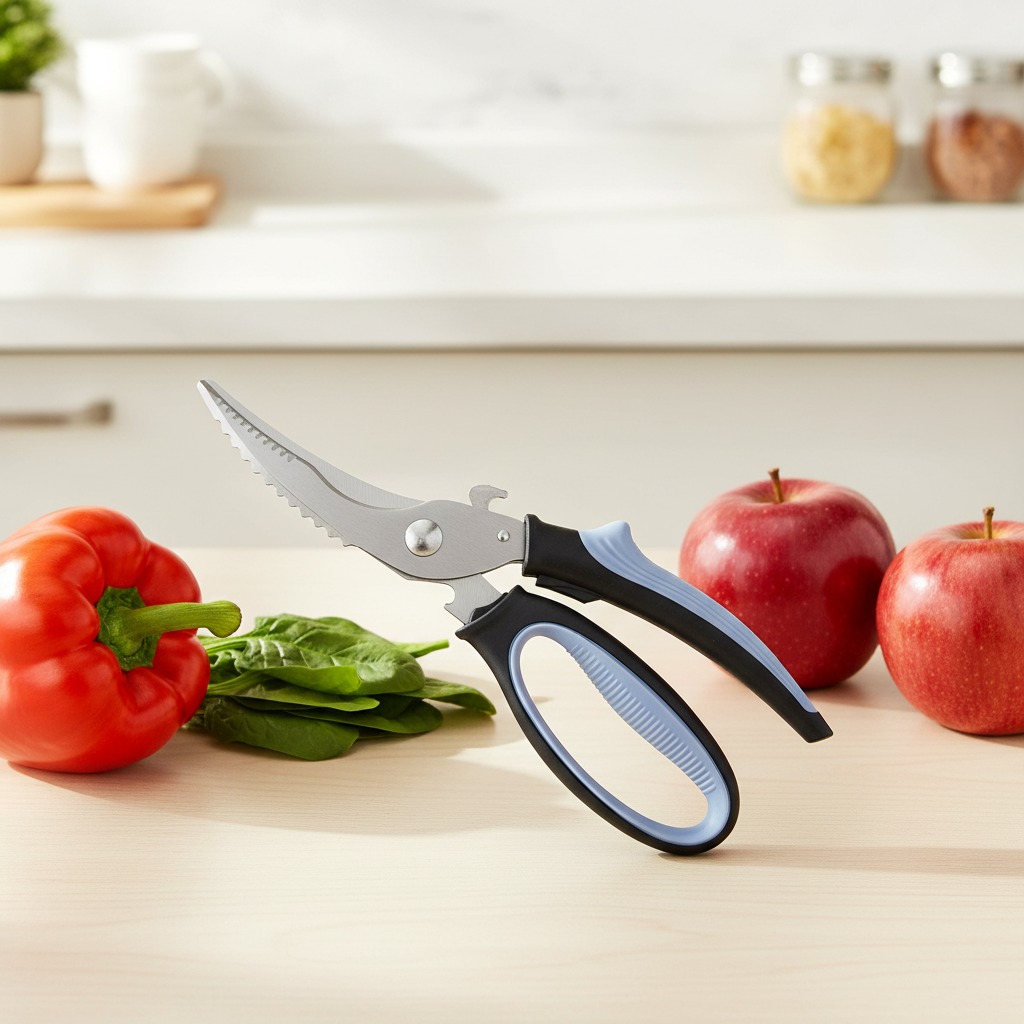
OEM poultry scissors are a focused product category for retailers, importers, promotional buyers, and kitchenware brands that need reliable cutting tools for poultry preparation. Unlike general household scissors, poultry scissors are commonly selected for tasks such as trimming skin, portioning cooked or raw poultry, and cutting through joints where a knife may be less convenient.
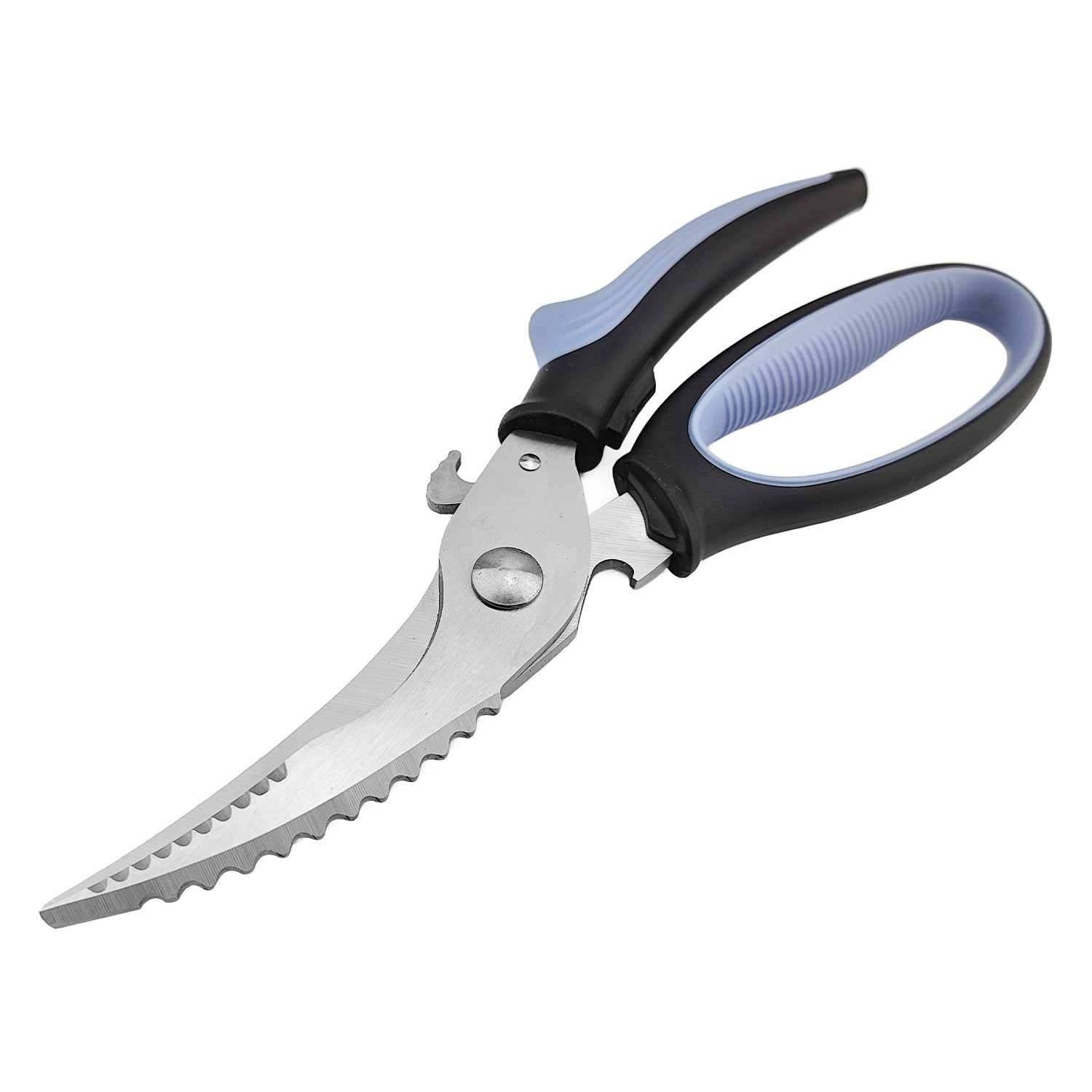
The original product description highlights several useful features: stainless steel blades, a serrated section for improved grip, black and blue ergonomic handles, plus built-in bottle opener and nutcracker functions. For an OEM or wholesale buyer, these details are a starting point, not the full specification. The real sourcing work is to confirm materials, dimensions, packaging, testing expectations, customization options, and consistency before placing an order.
Key Takeaways
- OEM poultry scissors should be evaluated by cutting performance, handle comfort, cleaning practicality, and packaging suitability.
- Multi-functional kitchen shears can add value, but each extra function should be tested for real use, not just appearance.
- Buyers should ask suppliers to confirm blade material, hardness, finish, corrosion-resistance expectations, and food-contact documentation where required.
- For private label or wholesale programs, clarify logo method, color options, carton details, inspection standards, and lead time before sampling.
What Makes Poultry Scissors Different from General Kitchen Scissors?
Poultry scissors are usually expected to handle tougher kitchen jobs than light-duty food scissors. Buyers should look at blade leverage, cutting angle, pivot strength, handle stability, and how the serrated area engages slippery food surfaces. A pair of scissors may look strong in product photos, but performance depends on the full construction and quality control behind it.
For OEM programs, the product should also match the target retail channel. A professional kitchenware line may prioritize durability and a clean, simple design. A supermarket or promotional set may need multi-function appeal and attractive packaging. An online marketplace seller may focus on product images, clear feature communication, and lower return risk from confusing claims.
Feature Checklist for Multi-Functional Kitchen Shears
The source article describes the poultry scissors as multi-functional kitchen shears with stainless steel blades, a serrated section, ergonomic black and blue handles, a bottle opener, and a nutcracker. Use the checklist below to turn those features into practical purchasing questions.
| Feature to Review | Why It Matters | Questions to Ask a Supplier |
|---|---|---|
| Stainless steel blades | Important for sharpness, hygiene, and resistance to kitchen moisture. | What stainless steel grade is used? What hardness range is targeted? Is the blade polished, brushed, or otherwise finished? |
| Serrated section | Helps grip poultry skin, herbs, or packaging during cutting. | Where is the serration placed? Is it designed for food cutting, shell cracking, or general grip? |
| Ergonomic handles | Reduces hand fatigue and improves control during repetitive preparation. | What handle material is used? Can handle colors be customized? Is there a left-hand option? |
| Bottle opener and nutcracker | Adds utility but may affect weight, cleaning, and user expectations. | Are these functions tested during sampling? Are instructions included on packaging? |
| OEM packaging | Impacts shelf presentation, shipping protection, and retail compliance. | Can the supplier provide blister card, color box, hang tag, or bulk packing? What artwork file format is needed? |
How to Evaluate a Kitchen Scissors Supplier
When sourcing OEM poultry scissors, avoid judging a supplier only by a low unit price. A dependable kitchen scissors supplier should be able to answer practical product and production questions clearly. Request samples from the same construction that would be used for mass production, then compare cutting feel, alignment, pivot tightness, handle comfort, and surface finish.
Ask whether the supplier can provide product drawings or specification sheets. If your market requires specific food-contact, labeling, packaging, or safety documentation, ask for the relevant documents before confirming the order. Do not assume a product is compliant in your destination market simply because it is sold as kitchenware.
- Request pre-production samples and keep an approved reference sample.
- Confirm blade material, handle material, color, size, weight, and packaging.
- Define acceptable appearance defects and functional inspection points.
- Clarify logo placement, printing method, and artwork approval process.
- Ask how replacement parts, spare samples, or after-sales issues are handled.
OEM Customization Points Buyers Should Confirm
OEM poultry scissors can be adapted for different retail identities, but customization should be controlled carefully. Common customization discussions include handle color, logo application, product name, instruction language, packaging format, barcode placement, and carton marks. If the product will be sold through e-commerce, packaging should also protect the scissors during parcel delivery.
Buyers should ask which parts are flexible and which require tooling or longer lead time. A color change may be easier than a structural redesign. A logo on the handle may require a different process than a logo on packaging. If the scissors include a bottle opener or nutcracker, make sure the user instructions and product claims are accurate and not overstated.
Quality Control for Poultry Scissors Orders
Quality control should include both appearance and function. For poultry scissors, inspection can cover blade sharpness, pivot movement, opening and closing smoothness, handle fit, burrs or sharp edges outside the cutting area, stain marks, packaging accuracy, and carton condition. If the product is intended to cut poultry bones or joints, buyers should define a realistic cutting test with the supplier instead of using vague language such as “heavy duty.”
It is also wise to confirm cleaning guidance. Some kitchen shears are designed to separate for washing, while others are not. If detachable construction is not specified, do not assume it is included. Clear use-and-care instructions can reduce customer complaints and help end users maintain performance.
Positioning Chinese Scissors for Poultry in a Product Line
The phrase “Chinese scissors for poultry” may be used by buyers searching for supply options from China or for scissor styles associated with poultry preparation. For B2B sourcing, the important point is not the label but the match between product design and the market need. A value-oriented retail line may need a compact multi-functional shear, while a specialist kitchenware brand may want a more robust model with fewer add-on features and stronger product education.
Before selecting a final model, compare the scissors against competitor products in your target channel. Review handle comfort, blade length, perceived quality, retail packaging, and customer review themes. This helps determine whether the chosen OEM poultry scissors should be sold as an everyday kitchen shear, a poultry preparation tool, or a multi-purpose utility item.
Practical FAQ
What should I ask first when contacting a poultry scissors supplier?
Start with the exact product specification: blade material, handle material, size, weight, functions, packaging, logo options, sample availability, lead time, and inspection process.
Are multi-functional kitchen shears always better?
Not always. Extra functions such as a bottle opener or nutcracker can be useful, but they should not compromise cutting comfort, cleaning, or durability. Test every claimed function during sampling.
Can I request private label packaging?
Many OEM kitchenware suppliers can discuss private label packaging, but buyers should confirm artwork requirements, printing method, minimum order expectations, packaging dimensions, and barcode placement directly with the supplier.
What quality checks are important before shipment?
Check cutting performance, blade alignment, pivot tightness, handle fit, surface finish, packaging accuracy, carton labeling, and whether the delivered goods match the approved sample.
Should I claim the scissors are suitable for bones?
Only make that claim if the supplier confirms the intended use and you have validated performance with appropriate testing. Otherwise, use more specific language such as trimming poultry, cutting skin, or general poultry preparation.
