




OEM Poultry Kitchen Shears: Practical Sourcing and Selection Guide

OEM poultry kitchen shears are designed for a focused job: cutting, trimming, and portioning poultry more safely and efficiently than a general kitchen knife in many everyday tasks. For retailers, importers, distributors, and private-label kitchenware buyers, the value is not only in the cutting tool itself but also in how consistently a supplier can produce it, customize it, pack it, and support repeat orders.
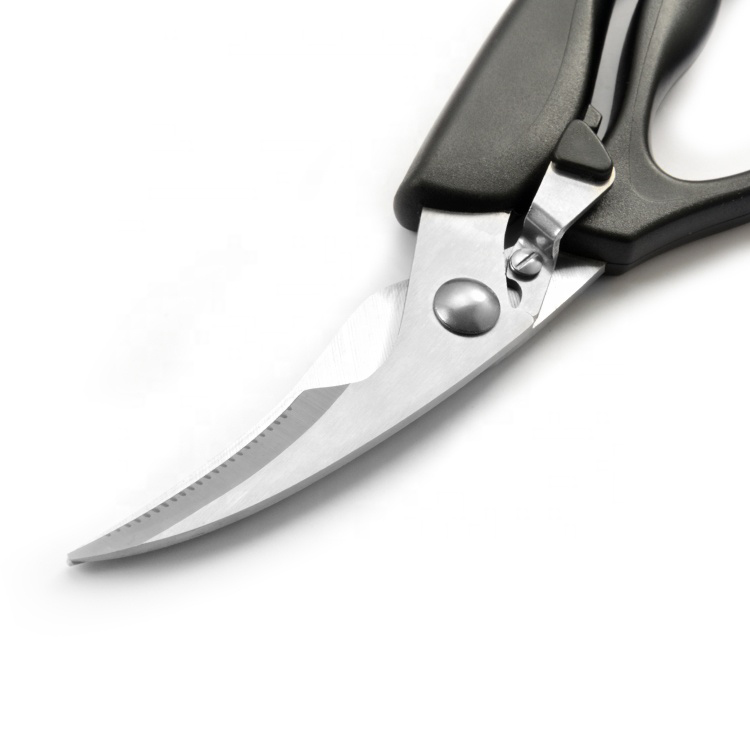
The original product information highlights several useful points: the shears are positioned for poultry processing, they use stainless-steel blades, include serrated edges for grip, have black ergonomic handles, and add functions such as a bottle opener and nutcracker. Those details make the product suitable for a practical sourcing discussion, especially for buyers comparing OEM poultry shears with standard household scissors or simple multipurpose kitchen shears.
Key Takeaways
- Choose poultry shears based on cutting performance, grip, cleaning access, and repeatable production quality.
- Ask suppliers to confirm blade material, handle material, packaging options, customization scope, and inspection standards.
- Serrated edges can help grip poultry skin, cartilage, and small bones, but buyers should request samples for testing.
- Multifunctional features such as a bottle opener or nutcracker are useful only if they do not weaken comfort or cleaning.
- For OEM orders, clarify commercial details instead of assuming MOQ, lead time, certifications, or test results.
What Makes Poultry Shears Different from General Kitchen Scissors?
General kitchen scissors are often used for opening packaging, trimming herbs, or cutting soft food. Poultry shears need a stronger cutting profile because they may be used on chicken skin, small bones, joints, cartilage, and slippery surfaces. The blade shape, pivot strength, handle comfort, and grip all matter more when the task involves force and control.
A serrated edge, explicitly noted in the source article, is one of the practical features to consider. Serrations can help hold food in place while cutting, reducing the chance of sliding. This is especially helpful when trimming raw chicken or cutting around joints. However, serration quality varies, so a buyer should not judge by appearance alone. Samples should be tested on common kitchen tasks before placing a larger OEM order.
Core Features to Evaluate Before Sourcing
When reviewing OEM poultry kitchen shears, buyers should separate visible features from performance factors. A product may look strong in photos, but its real value is proven through handling, cutting tests, washing, and repeated use.
| Evaluation Point | Why It Matters | Questions to Ask the Supplier |
|---|---|---|
| Blade construction | Impacts sharpness, corrosion resistance, and cutting durability. | What stainless-steel type is used? How is hardness or sharpness checked? |
| Serrated edge | Helps grip poultry skin and slippery surfaces. | Is the serration pattern fixed, or can it be adjusted for OEM orders? |
| Pivot strength | A weak pivot can loosen during heavy cutting. | What inspection is performed on opening, closing, and cutting alignment? |
| Handle design | Affects comfort, safety, and user fatigue. | What handle material is used? Can color or branding be customized? |
| Extra functions | Features like a nutcracker or bottle opener add utility. | Do added functions affect cleaning, balance, or packing requirements? |
| Packaging | Important for retail presentation and safe shipping. | What packaging options are available for private label or wholesale orders? |
OEM and Wholesale Buyer Guidance
For B2B sourcing, the best approach is to treat poultry shears as both a kitchen tool and a repeatable product program. Beyond the sample itself, buyers should verify how the supplier manages consistency from batch to batch. This is especially important if the product will be sold under a retailer brand, included in a kitchen tool set, or distributed across multiple sales channels.
Before confirming an OEM project, ask about customization boundaries. Possible discussion points include handle color, logo placement, blade marking, hang-tag design, blister card design, gift box options, carton marking, and instruction inserts. Do not assume that every option is available or cost-neutral. A responsible buyer should request artwork requirements, sample timing, packing dimensions, carton quantities, and any tooling or printing charges in writing.
Commercial details such as minimum order quantity, production lead time, payment terms, inspection process, and shipping method should be confirmed directly with the supplier. If a market requires specific compliance documentation, buyers should ask whether relevant reports are available for the exact product and material configuration being ordered.
How to Test Samples in a Real Kitchen
Sample testing should be practical rather than overly complicated. The goal is to determine whether the shears are comfortable, predictable, and suitable for the intended market. Use several users if possible, because hand size and grip strength influence feedback.
- Cut raw chicken skin, cartilage, and small joints to check grip and cutting control.
- Open and close the shears repeatedly to feel pivot smoothness and alignment.
- Test the handle with wet hands to evaluate slip resistance and comfort.
- Use the nutcracker and bottle opener functions if they are part of the final product offer.
- Wash and dry the shears, then inspect the pivot and blade areas for trapped food or water.
- Compare several samples from the same supplier to check consistency.
Buyers should record feedback with photos and short notes. If a blade feels rough, a pivot is loose, or the handle causes pressure points, raise the issue before moving to mass production. Small adjustments at the sample stage can prevent larger quality problems later.
Use and Care Guidance for End Users
Although this article focuses on sourcing, end-user care instructions are important for customer satisfaction. Poultry shears should be washed promptly after contact with raw meat, then dried thoroughly before storage. Users should avoid leaving them in standing water, especially around the pivot area, because trapped moisture can shorten the service life of many kitchen tools.
Clear instructions can also reduce misuse. Poultry shears are not a replacement for heavy-duty butcher tools, garden pruners, or hardware cutters. Retail packaging or inserts should explain intended use, safe handling, cleaning steps, and storage recommendations. If the shears have detachable blades, locking functions, or dishwasher guidance, those details should come only from the confirmed product specification.
Common Sourcing Mistakes to Avoid
One common mistake is choosing a product only because it has many functions. Extra features are useful when they support the main purpose, but they should not compromise cutting strength or cleaning. A second mistake is approving a sample without testing it on real poultry. Paper-cutting tests do not show how the shears perform on slippery skin or joints.
Another risk is unclear branding and packaging communication. For OEM orders, buyers should confirm logo size, logo method, color tolerance, barcode placement, warning text, and market-language requirements early. If the product will be sold online, request accurate product images and dimensions rather than relying only on factory sample photos.
FAQ
Are OEM poultry kitchen shears only for professional kitchens?
No. They can be suitable for home cooks, retailers, food-service buyers, and kitchenware distributors. The key is matching the product quality and packaging to the sales channel.
What supplier details should I confirm before ordering?
Ask about blade material, handle material, customization options, sample availability, MOQ, lead time, packaging, inspection process, and any compliance documents required for your market.
Do serrated blades make a difference?
Serrated edges can help grip poultry and reduce slipping while cutting. Buyers should still test samples because serration design and sharpness can vary.
Can multifunction poultry shears replace other kitchen tools?
They can reduce the need for some small tools, especially when they include a nutcracker or bottle opener, but they should still be used within the supplier's intended-use guidance.
How should poultry shears be cleaned?
Wash them after contact with raw poultry, pay attention to the pivot and handle areas, and dry them fully before storage. Follow the supplier's confirmed cleaning instructions for the exact model.
Final Buying Perspective
OEM poultry kitchen shears are a practical product category when buyers focus on performance, comfort, hygiene, and supplier reliability. The stainless-steel blades, serrated cutting edge, ergonomic black handles, and added bottle opener and nutcracker functions described in the source make this product worth evaluating for private-label or wholesale kitchenware programs. The right decision, however, should be based on samples, documented specifications, and clear supplier communication rather than assumptions.
