




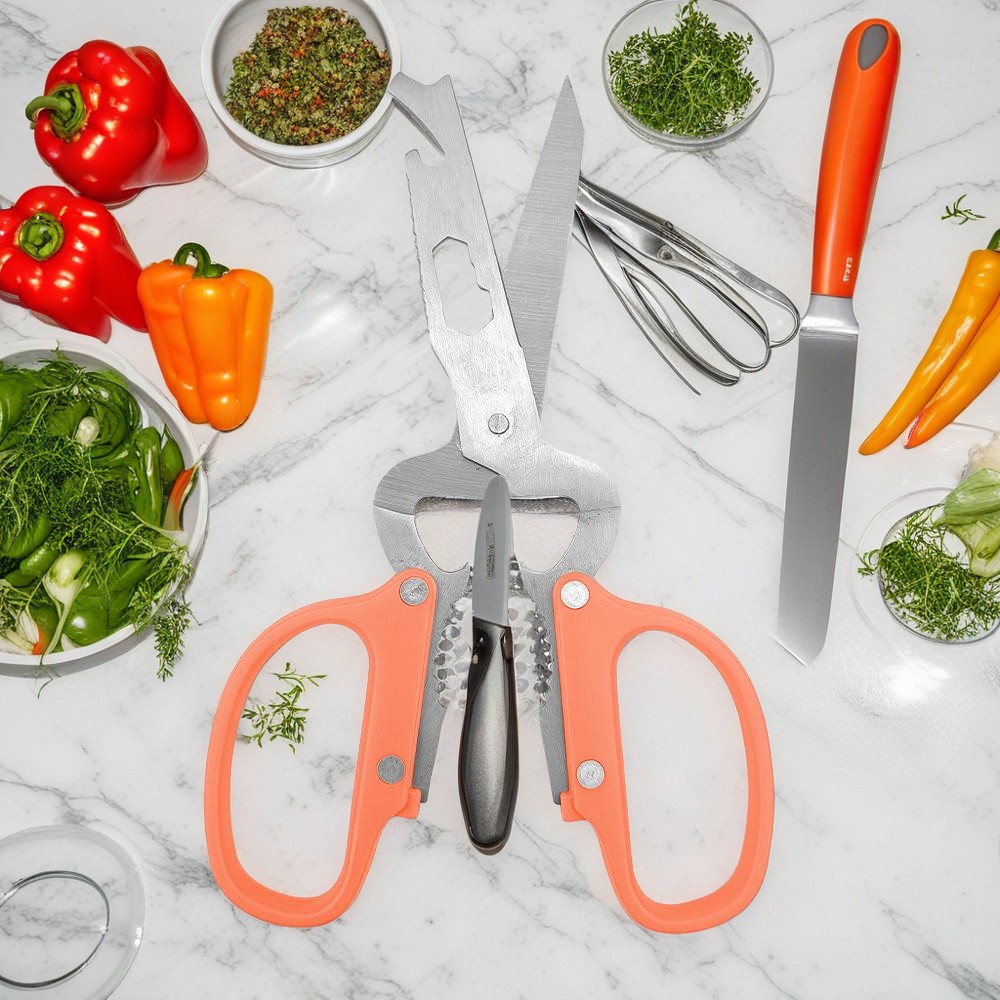
Multifunctional Scissors: Kitchen Shears and Utility Tool in One
Multifunctional scissors are designed for people who want one compact tool to handle several everyday jobs. In the kitchen, they can cut herbs, open packaging and help with food preparation. Around the home, they may be useful for crafts, light repairs and simple utility tasks. The original product concept combines kitchen scissors with added functions such as a bottle opener, nutcracker, serrated edge and wire stripper, making it more versatile than a standard pair of scissors.
This guide explains what multifunctional scissors are best used for, which features matter most, and how to clean and maintain them safely. It is written for practical product selection rather than hype: a good pair should feel secure in the hand, cut cleanly, separate for cleaning if designed to do so, and match the tasks you actually perform.
Key Takeaways
- Multifunctional scissors are most useful when you regularly switch between cutting, opening, cracking or light utility tasks.
- Important selection factors include blade quality, handle grip, detachable blade design, comfort and ease of cleaning.
- Do not use household scissors for heavy-duty industrial cutting, electrical work or tasks beyond the tool’s intended purpose.
- For kitchen use, cleaning and drying after each use are essential, especially when cutting food or wet materials.
What Makes Multifunctional Scissors Different?
Standard scissors are built mainly for cutting. Kitchen shears are stronger and often shaped for food preparation. Multifunctional scissors go a step further by combining cutting blades with several built-in utility features. According to the original product description, this type of tool may include stainless steel blades, an ergonomic lime green handle, a bottle opener, nutcracker, serrated edge, wire stripper and a blade design that can be separated for cleaning or used as individual pieces.
The benefit is convenience. Instead of reaching for a separate opener, cracker or small utility tool, you may be able to complete several simple jobs with one item. That can be helpful in small kitchens, camping kits, craft rooms, garden work areas or general home drawers where storage space is limited.
Best Everyday Uses for Multifunctional Scissors
The most common use is food preparation. Kitchen-style scissors can trim herbs, cut cooked meat, open food packaging, snip vegetables and portion soft foods. A serrated edge can help grip slippery materials better than a smooth blade. If the blades separate, cleaning can be easier after contact with food.
Outside the kitchen, multifunctional scissors may be used for light household tasks such as cutting twine, trimming paper, opening plastic packaging, working on simple crafts or keeping in an outdoor picnic kit. The integrated bottle opener and nutcracker functions are useful for casual food and drink preparation. A wire stripper may be convenient for very light, appropriate utility work, but users should be cautious: it is not a substitute for professional electrical tools, and it should not be used on live wires.
Feature Checklist Before You Buy
Not every multifunctional scissor design is equally practical. Some tools add many functions but become uncomfortable, hard to clean or awkward to store. Use the checklist below to compare options based on real use.
| Feature | Why It Matters | What to Check |
|---|---|---|
| Blade material | Stainless steel or rust-resistant steel can support durability and easier maintenance. | Ask what steel is used and how it should be cleaned. |
| Handle design | A comfortable handle improves control during repeated cutting. | Look for a secure grip and enough space for your hand size. |
| Left and right hand use | A neutral handle shape can make the tool easier for more people to use. | Check whether the design feels natural in both hands. |
| Detachable blades | Separable blades can make washing and drying easier. | Confirm how the blades separate and lock back together. |
| Extra functions | Openers, nutcrackers and serrated edges add convenience. | Choose functions you will actually use, not just the longest feature list. |
| Cleaning needs | Food residue can collect near hinges and textured areas. | Check whether the tool is hand-wash only and how to dry the joint. |
How to Use Them Safely and Effectively
Multifunctional scissors work best when used with moderate pressure and the correct part of the tool. Use the main blades for cutting food, paper, twine or packaging. Use the serrated area only where extra grip is needed. Use the bottle opener and nutcracker functions as intended, keeping fingers away from pressure points. If the tool includes a wire stripper, use it only for suitable low-risk tasks and never on connected or energized wires.
- Inspect the blades before use to make sure they are clean, aligned and securely joined.
- Cut on a stable surface when working with food or slippery packaging.
- Avoid twisting the blades through hard materials, as this can affect alignment.
- Keep the hinge area clear of food particles, adhesive and grit.
- Store the scissors closed, away from children and loose items in a drawer.
Cleaning and Care for Kitchen Use
Because multifunctional scissors may be used with food, cleaning is not optional. Wash the blades soon after cutting meat, herbs, sticky packaging or wet ingredients. If the blades separate, open them according to the manufacturer’s instructions and clean each side thoroughly. Pay attention to the hinge, serrated edge and any textured tool areas where residue can remain.
Dry the scissors completely before storage. Even when a product is described as rust-resistant, trapped moisture can still reduce performance over time. If the handle has textured gripping areas, wipe them carefully so food oils do not build up. Avoid leaving the tool soaking in a sink, where the blades may be damaged or may create a safety hazard for anyone reaching into the water.
When Multifunctional Scissors Are Better Than Separate Tools
A combined tool makes sense when convenience matters more than specialization. For example, it is practical for a compact kitchen, office pantry, picnic basket, camping box, craft table or general household drawer. If you only need to cut, a simple pair of scissors may be enough. If you frequently prepare food, open bottles, crack nuts or handle light utility tasks, multifunctional scissors can reduce clutter.
However, separate tools may still be better for demanding jobs. A dedicated chef’s knife is better for precision slicing. Professional wire strippers are safer and more accurate for electrical work. Heavy-duty shears are better for thick material, wire mesh or garden branches. The right approach is to treat multifunctional scissors as a flexible everyday helper, not a replacement for every specialized tool.
Practical FAQ
Can multifunctional scissors replace kitchen knives?
No. They are useful for snipping herbs, trimming food and opening packaging, but knives are still better for slicing, chopping and precision preparation.
Are detachable blades important?
They are very helpful for cleaning, especially after food contact. If the blades detach, make sure the locking mechanism feels secure when reassembled.
Can I put multifunctional scissors in the dishwasher?
Follow the supplier’s care instructions. If the product information is unclear, hand washing and immediate drying are usually the safer approach for maintaining the hinge and blade edges.
What should buyers ask before purchasing?
Ask about blade material, cleaning method, whether the blades separate, intended uses, handle dimensions, packaging options and any available safety or care instructions. Avoid assuming specifications that are not stated.
Are they suitable for left-handed users?
The original description mentions a design that can adapt to left- and right-handed users. Even so, left-handed buyers should check the grip shape and blade action before committing to regular use.
Final Buying Advice
Choose multifunctional scissors based on the tasks you repeat most often. A comfortable ergonomic handle, durable cutting blades, practical added functions and easy cleaning matter more than a long list of features. For kitchen and household use, the best tool is one that cuts reliably, feels secure, washes easily and stores safely. If those basics are met, multifunctional scissors can be a practical addition to daily home, cooking and light utility routines.
