




3-Blade Peeler Guide: How to Choose and Use a Multi-Blade Peeler

A good peeler should remove skin cleanly without wasting too much food, slipping in the hand, or taking up unnecessary space in the drawer. A 3-blade peeler is designed for cooks who prepare a variety of fruits and vegetables and want more than one peeling style in a compact tool. Instead of relying on a single blade for every task, this type of peeler typically combines a straight blade, a serrated blade and a julienne blade for different textures and cuts.
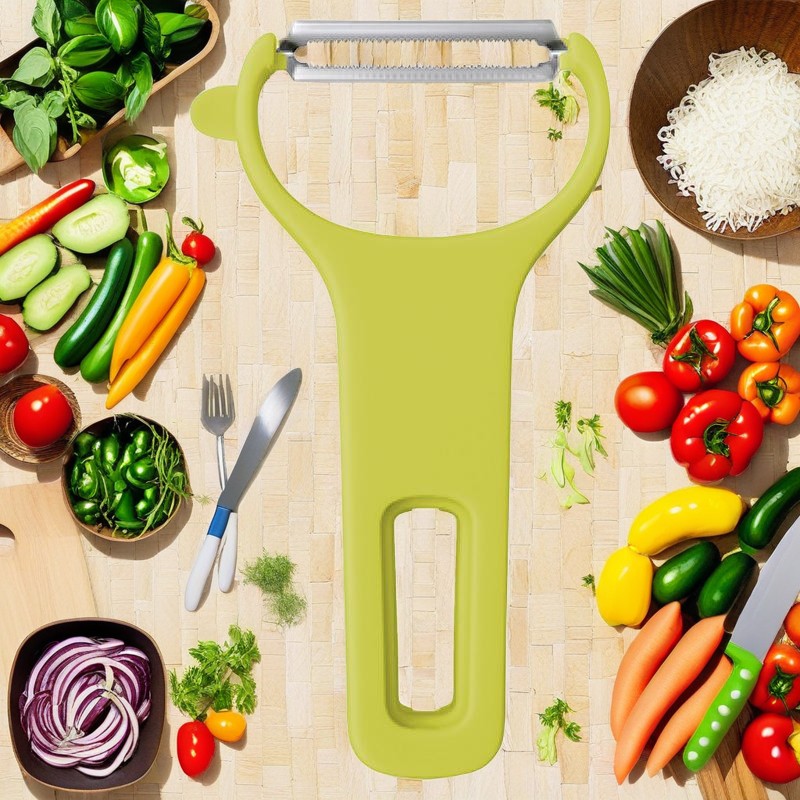
The original Bonet Houseware product description highlights a compact 3-in-1 peeler set with color-coded blade identification, a stackable design, a lime-green shaped structure, an open slot for storage, and serrated stainless steel blade use for soft produce such as tomatoes, peaches and zucchini. This guide explains what those features mean in real kitchen use and how to decide whether a multi-blade peeler suits your cooking habits.
Key Takeaways
- A 3-blade peeler is useful when you regularly prepare both firm vegetables and delicate soft-skin produce.
- Straight, serrated and julienne blades serve different tasks; choosing the right one improves control and reduces food waste.
- Look for secure grip, easy blade identification, convenient storage and simple cleaning before buying.
- Use light pressure and stable cutting angles, especially with soft fruit and julienne strips.
What Is a 3-Blade Peeler?
A 3-blade peeler is a kitchen tool or set that provides three peeling functions. The exact format can vary by product: some models rotate between blades in one handle, while others use separate compact peelers that stack together. The product described here is presented as a 3-in-1 peeler set with three different blades and a space-saving stackable design.
The practical advantage is flexibility. A single straight peeler may work well on potatoes and carrots, but it may drag on tomatoes or fail to create neat decorative strips. With three blade types available, the user can match the blade to the ingredient instead of forcing one tool to do every job.
Blade Types and Best Uses
The most important part of selecting a multi-blade peeler is understanding what each blade is meant to do. The source article names three functions: straight peeling, serrated peeling for soft fruits, and julienne cutting for ribbons or strips.
| Blade type | Best for | Useful result | Use tip |
|---|---|---|---|
| Straight blade | Firm vegetables such as carrots, potatoes and cucumbers | Clean, thin peel removal | Use steady strokes and rotate the vegetable as you work. |
| Serrated blade | Soft-skin produce such as tomatoes, peaches and zucchini | Better grip on delicate skins | Apply light pressure to avoid crushing soft flesh. |
| Julienne blade | Vegetable strips for salads, garnishes and quick stir-fry prep | Thin ribbons or matchstick-style cuts | Use long, even strokes on a stable cutting board. |
How to Choose the Right Multi-Blade Peeler
For home kitchens, the best peeler is not always the most complex one. It is the one you can identify quickly, hold securely and clean without frustration. A color-coded design can help users pick the correct blade at a glance, especially when several people share the same kitchen.
When comparing 3-blade peelers, consider the following checklist:
- Blade choice: Confirm that the set includes the blade styles you will actually use: straight, serrated and julienne.
- Handle comfort: Check whether the handle shape feels stable for your hand size and peeling direction.
- Storage: A stackable design or hanging slot can help in small drawers and compact kitchens.
- Cleaning access: Look for areas where peel or vegetable fibers might get trapped and consider how easily they can be rinsed.
- Safety: Blades should be easy to distinguish and store so users do not reach blindly onto a sharp edge.
Using Each Blade Safely and Efficiently
Peeling is a simple task, but technique matters. For straight peeling, hold the ingredient firmly and peel away from your fingers. Long, relaxed strokes usually remove thinner strips than short, forceful strokes. If the skin is tough, rotate the vegetable and work in sections rather than pushing harder.
For the serrated blade, let the teeth catch the surface. This is useful for produce with tender skins, including the tomatoes, peaches and zucchini mentioned in the original description. Pressing too hard can bruise the ingredient, so keep your grip steady and allow the blade texture to do the work.
For julienne cutting, place longer vegetables on a cutting board when possible. Pull the blade in one direction to create consistent strips. This is helpful for carrot ribbons, cucumber garnish, zucchini strips or decorative vegetable toppings. Keep fingers behind the blade path and stop before the vegetable becomes too small to hold securely.
Care, Cleaning and Storage Tips
Because peelers come into contact with moist produce, they should be cleaned promptly after use. Rinse the blade area under running water to remove peel fragments, then wash with mild dish soap. If food fibers remain around the blade, use a soft brush rather than your fingers. Dry the peeler before storage to keep the handle and blade area cleaner between uses.
The product description mentions an open slot for convenient storage and a stackable design that saves drawer space. These details are especially useful in apartments, shared kitchens or prep areas where drawer organization matters. If you store the peeler in a crowded utensil drawer, consider keeping the blades covered or separated from loose tools to reduce accidental contact.
Who Benefits Most from a 3-in-1 Peeler?
A 3-blade peeler makes sense for people who cook with varied produce. If your prep work is mostly potatoes and carrots, a basic straight peeler may be enough. But if you also peel peaches, tomatoes or zucchini, or if you like vegetable ribbons for salads and garnishes, the extra blades can save time and improve results.
It is also practical for households that want fewer single-purpose gadgets. Instead of buying separate peelers for different produce, a compact multi-blade option can keep the main functions together. The key is to choose a design that is easy to identify and comfortable to use, because a tool that feels awkward will stay in the drawer no matter how many functions it has.
Practical FAQ
What is the serrated blade for?
The serrated blade is intended for produce with delicate or slippery skins. The original description specifically mentions tomatoes, peaches and zucchini. The small teeth help catch the surface so you do not need excessive pressure.
Can the julienne blade replace a knife?
It can reduce knife work for thin strips and decorative ribbons, but it does not replace a chef’s knife for chopping, dicing or trimming. Use it when you want consistent narrow strips from suitable vegetables.
Is a 3-blade peeler suitable for small kitchens?
Yes, if the design is compact and easy to store. The described product includes a stackable format and an open storage slot, both of which can help reduce drawer clutter.
How do I avoid wasting food while peeling?
Use the correct blade for the ingredient, keep pressure light and peel in smooth strokes. A sharp, suitable blade should remove the skin without taking thick layers of flesh.
What should I check before purchasing?
Check the blade functions, grip comfort, storage method, cleaning access and whether the blade layout is easy to understand. If buying for a shared kitchen, color-coded identification can be especially helpful.
