




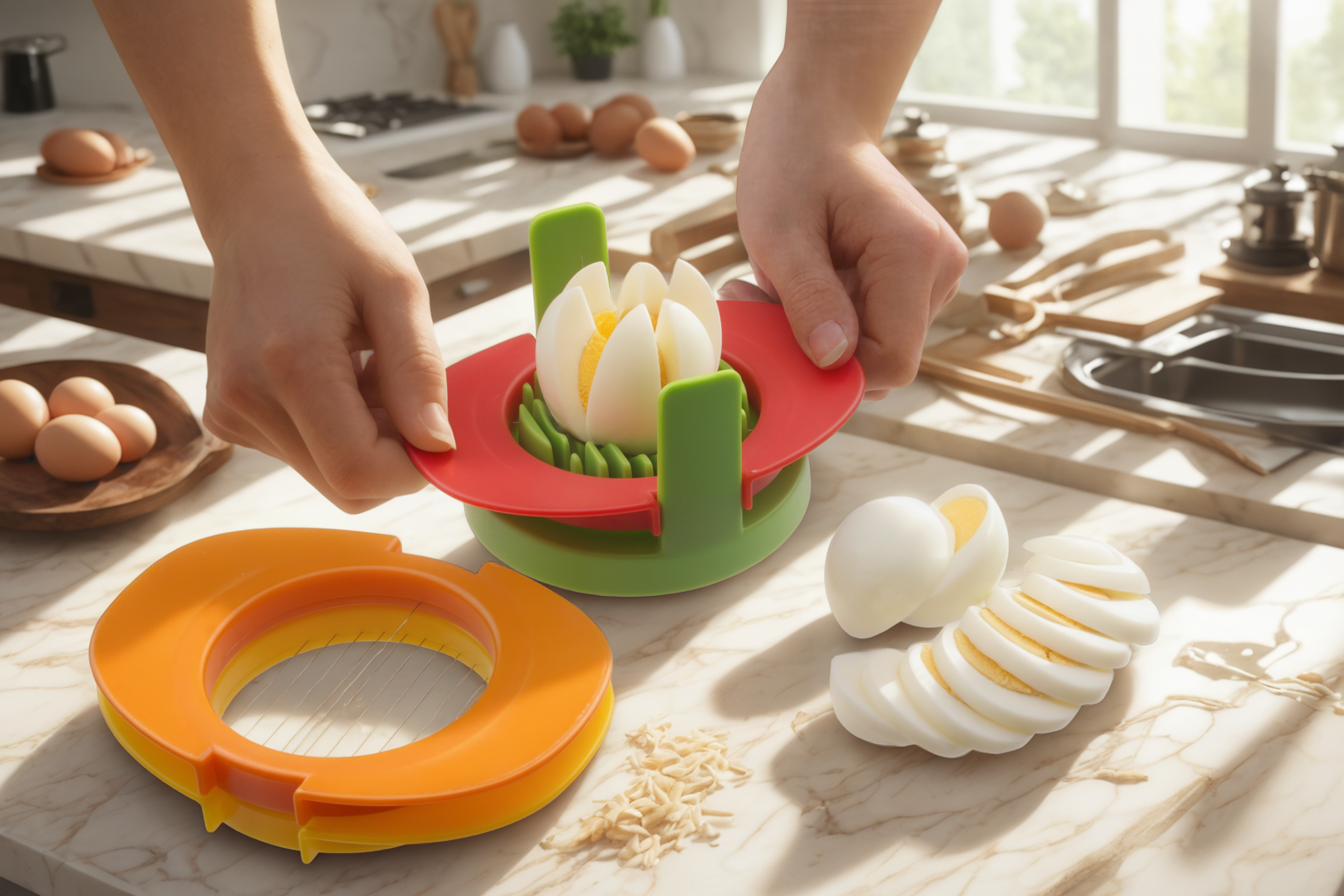
Multi-Style Egg Slicer: A Practical Tool for Neater Boiled Egg Prep
Boiled eggs are simple to cook, but cutting them neatly is not always as easy as it looks. A knife can drag the yolk, flatten the egg, or create slices that vary in thickness. For salads, sandwiches, lunch boxes, appetizer trays, and deviled egg preparation, a dedicated egg slicer can make the job faster and more consistent.
The original product concept highlighted a multi-style egg slicer with two cutting modes: one frame with stainless steel wires for thin, even rounds, and another with precision blades for wedge cuts. That combination is useful because different dishes need different shapes. Round slices work well for layering, while wedges are better for plating and serving. This guide explains how to use this type of egg cutter, what to compare before choosing one, and how to care for it so it stays practical in daily kitchen use.
Key Takeaways
- A multi-style egg slicer is best for hard-boiled eggs that have cooled and peeled cleanly.
- Wire cutting frames are useful for uniform round slices; blade-style frames can create wedge cuts for platters and salads.
- Look for stable operation, easy cleaning, compact storage, and materials suitable for food contact.
- Do not force oversized or very soft eggs through the cutter, as this can damage wires or produce messy cuts.
- For wholesale or sourcing decisions, ask suppliers about materials, packaging, replacement parts, quality checks, and compliance documents instead of assuming details.
What a Multi-Style Egg Slicer Does
A standard egg slicer usually cuts one shape: thin round slices. A multi-style version adds more flexibility by giving the user more than one cutting frame or cutting direction. In the product description provided, one frame uses stainless steel wires to produce even rounds, while another uses blades to make wedge cuts. This allows the same compact tool to support everyday meals and more decorative serving needs.
Round slices are helpful when you want a flat, stackable shape. They sit neatly on toast, sandwiches, salads, and canapes. Wedges create more height and texture, which makes them useful for appetizer plates, bento-style meals, and shared dishes. The main benefit is not that the tool performs a complicated task, but that it performs a repetitive task with more consistency than most people achieve with a knife.
Best Uses in Everyday Cooking
An egg slicer is most effective when it is used for foods that match its shape and pressure limits. It is designed around boiled eggs, especially eggs with a firm white and set yolk. If the egg is undercooked or still warm, the cut may be messy. For best results, boil the eggs, cool them thoroughly, peel them carefully, and place them centered in the base before pressing down.
Common uses include egg salad prep, sandwich toppings, noodle bowl garnish, breakfast plates, picnic salads, and party trays. For deviled eggs, wedge or lengthwise cuts can help with portioning, while round slices are better when the egg is used as a topping. A slicer can also be useful in meal-prep kitchens because it reduces the time spent cutting multiple eggs by hand.
Comparison Checklist: What to Look For
Before buying an egg slicer for home use, food service, or resale, compare the practical details. The table below can help you evaluate a product without relying only on photos or short descriptions.
| Feature to Check | Why It Matters | Question to Ask |
|---|---|---|
| Cutting modes | More than one mode supports both round slices and wedges. | Does the slicer include separate frames or settings for different cuts? |
| Cutting material | Wires and blades affect slice shape, durability, and cleaning. | What are the wires or blades made from, and are replacement parts available? |
| Base stability | A stable base helps prevent slipping and uneven pressure. | Does the base hold the egg securely during cutting? |
| Cleaning access | Food residue can collect around wires, hinges, and grooves. | Can the cutting frame and base be cleaned easily by hand? |
| Storage size | Compact tools are easier to keep in drawers or small kitchens. | What are the packed and product dimensions? |
| Food-contact information | Buyers may need documentation for retail or professional use. | What food-contact material information or test reports can the supplier provide? |
How to Use an Egg Slicer Cleanly
- Start with a fully cooked hard-boiled egg. Let it cool before peeling.
- Remove shell fragments, especially from the bottom curve of the egg.
- Place the egg in the base so it sits evenly and does not roll.
- Choose the round-slice frame or wedge-cut frame depending on the dish.
- Press down with steady, even pressure. Avoid twisting the frame.
- Lift the cutter slowly, then transfer the slices with a spoon or small spatula if needed.
- Rinse the tool soon after use to prevent yolk from drying on wires or blades.
The key is controlled pressure. If the egg is too soft, the yolk may smear. If the egg is too large for the base, forcing it can bend wires or lead to uneven cuts. A simple habit—cooling eggs completely before slicing—improves both presentation and cleanup.
Care, Cleaning, and Storage Tips
Egg residue dries quickly, so rinsing the slicer soon after use is the easiest way to keep it clean. Use warm water and mild dish soap, paying attention to the wire frame, blade area, hinge points, and base grooves. If small bits of yolk remain, a soft brush can help remove them without aggressive scraping.
Check the supplier’s care instructions before using a dishwasher. Not every kitchen tool is designed for dishwasher heat, detergents, or rack pressure. If the care instructions are not available, hand washing is the safer default. Dry the slicer before storing it to reduce moisture around metal cutting parts and to keep the drawer clean.
Guidance for Retailers, Wholesalers, and OEM Buyers
If you are sourcing egg slicers for retail, promotional programs, private label, or kitchenware distribution, focus on verifiable product details. The original article describes a lightweight, compact, food-safe construction, but buyers should still request documentation rather than making assumptions. Ask the supplier for material specifications, packaging options, carton information, labeling capabilities, quality inspection process, and any available food-contact compliance documents for the markets where the product will be sold.
For OEM or wholesale projects, also clarify whether the product supports branding, custom colors, instruction inserts, barcodes, spare parts, and after-sales handling. Confirm the minimum order quantity, lead time, sample process, payment terms, and defect handling policy directly with the supplier. If the product is intended for online sales, request clear product photos, use instructions, and accurate dimensions to reduce returns caused by mismatched expectations.
Practical FAQ
Can an egg slicer cut soft-boiled eggs?
It is not recommended for very soft eggs. The white may not hold its shape, and the yolk can run or smear. A firm hard-boiled egg gives the cleanest result.
What is the difference between wire slicing and blade cutting?
Wire frames are commonly used for thin, even round slices. Blade-style cutting sections can create wedge shapes, which are useful for serving plates and salads.
Can I use it for foods other than eggs?
Some users try soft foods, but results depend on the food’s size and texture. Avoid hard foods or anything that requires force, because the tool is designed around boiled eggs.
How do I prevent the egg from breaking while slicing?
Use cooled, fully set eggs, place the egg in the center of the base, and press down steadily. Do not cut eggs that are too large for the slicer.
What should business buyers confirm before ordering?
Ask about materials, food-contact documentation, packaging, branding options, samples, lead time, quality checks, and replacement or defect policies. These details should be confirmed in writing before purchase.
A multi-style egg slicer is a small tool, but it solves a real kitchen problem: cutting boiled eggs neatly and repeatedly. When selected carefully and used with the right eggs, it can make meal prep more consistent without adding complexity to the kitchen.
