




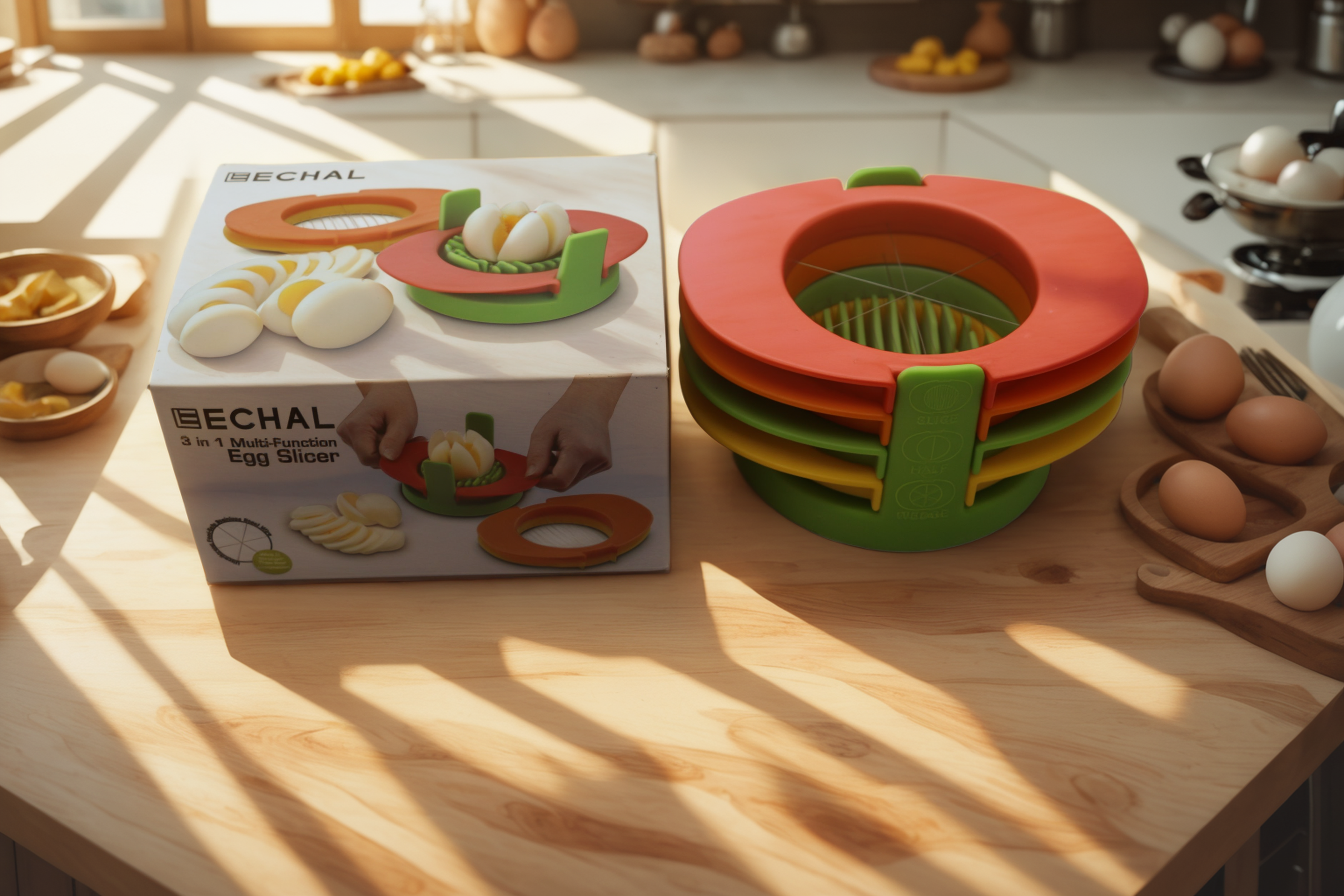
How to Cut Boiled Eggs Evenly with the Echal 3-in-1 Egg Slicer
Cutting boiled eggs sounds simple until the yolk crumbles, the white tears, or every piece ends up a different size. For everyday salads, lunch boxes, party trays, and garnishes, consistent egg pieces make preparation faster and presentation cleaner. A dedicated egg slicer can help by guiding the egg through fixed cutting wires instead of relying on a kitchen knife and a steady hand.
The Echal 3-in-1 Multi-Function Egg Slicer is designed for three common cuts: slices, halves, and wedges. The original product description highlights a three-layer design in red, yellow, and green, with metal slicing wires and a compact, stackable structure. This guide explains how to use that kind of tool well, what to check before buying an egg slicer, and how to care for it so it remains useful in daily food preparation.
Key Takeaways
- A 3-in-1 egg slicer is best for boiled eggs that are fully cooked, cooled, and peeled cleanly.
- The Echal slicer is described as offering three cutting options: slices, halves, and wedges.
- Uniform pieces are useful for egg salad, green salads, sandwiches, lunch boxes, and decorative plates.
- Metal slicing wires should be handled gently, cleaned promptly, and checked for bending or looseness.
- Before purchase, compare cut options, storage size, cleaning method, hand comfort, and the supplier’s care instructions.
Why Boiled Eggs Are Difficult to Cut by Hand
A boiled egg combines two different textures in one small ingredient. The white is firm but slippery, while the yolk can be soft, dry, or crumbly depending on cooking time. When using a knife, pressure from the blade can push the egg out of position. A dull knife may drag through the white and break the yolk apart. Even a sharp knife can produce uneven pieces if the egg rolls or if each cut is spaced by eye.
Uniformity matters for more than appearance. In egg salad, even pieces mix more predictably with dressing. On a composed salad, similar slices make portioning easier. For children’s meals or prepared snack boxes, consistent pieces are easier to pick up and arrange. A slicer helps by holding the egg in place and cutting through it at fixed intervals.
What the Echal 3-in-1 Egg Slicer Is Designed to Do
The Echal 3-in-1 Multi-Function Egg Slicer is presented as a compact kitchen tool with three colorful layers. According to the source description, the red, yellow, and green layers correspond to multiple cutting options, allowing users to prepare boiled eggs as neat slices, halves, or wedges. This is useful when one ingredient needs to serve different dishes during the same meal prep session.
For example, slices are practical for sandwiches and salad toppings. Halves work well for breakfast plates or deviled egg preparation before filling. Wedges are useful for garnish, bento-style meals, and platters where the shape needs to be visible. The tool is also described as stackable, which can be helpful in small kitchens where drawer space is limited.
Cut Options Compared
Choosing the right cut depends on the dish. The table below shows common uses for each option and what to watch for during preparation.
| Cut type | Best uses | Preparation tip | Common mistake |
|---|---|---|---|
| Slices | Sandwiches, green salads, toast, rice bowls | Place the egg lengthwise for longer oval slices | Using a warm egg that sticks or breaks |
| Halves | Breakfast plates, deviled eggs, simple snacks | Center the egg so both halves are similar | Pressing too quickly and shifting the egg |
| Wedges | Garnishes, platters, lunch boxes, noodle bowls | Use fully chilled eggs for cleaner edges | Overcooking until the yolk becomes dry and crumbly |
How to Use an Egg Slicer for Cleaner Results
The best results start before the egg reaches the slicer. Cook the eggs to the doneness you prefer, then cool them completely in cold water. Chilled eggs usually hold their shape better than warm eggs. Peel carefully, removing small shell fragments that could interfere with the wires or mark the egg surface.
- Open the chosen cutting layer and place the peeled boiled egg in the cradle.
- Align the egg according to the shape you want: lengthwise for longer slices or centered for balanced halves or wedges.
- Press the cutting frame down with steady, even pressure rather than a sudden forceful motion.
- Lift the frame fully before removing the cut egg pieces.
- Wipe or rinse away yolk residue before cutting the next egg, especially when preparing several servings.
If the egg tears instead of cutting cleanly, check three things: the egg may be too warm, the yolk may be too soft, or residue may be stuck on the wires. A quick rinse and a colder egg often improve the next cut.
How to Choose a Good Egg Slicer
When comparing egg slicers, focus on practical details rather than decorative claims. A bright color can make the tool easy to find in a drawer, but comfort, stability, and cleaning are more important for regular use. The original Echal description mentions ergonomic handling, metal slicing wires, and a compact stackable form. Those are useful features to evaluate in any similar product.
- Cutting options: Decide whether you need only slices or a multi-function tool for slices, halves, and wedges.
- Wire alignment: Look for evenly spaced wires that close cleanly into the base.
- Hand comfort: The frame should be easy to press without your fingers approaching the wires.
- Storage: A stackable or slim design is helpful if your drawers are crowded.
- Cleaning guidance: Ask whether the supplier recommends hand washing or provides dishwasher instructions.
- Replacement and support: If buying for repeated use, ask what support is available if wires loosen or parts are damaged.
Care, Cleaning, and Safe Handling
Egg yolk can dry quickly on cutting wires, so cleaning soon after use is the easiest approach. Rinse the slicer under running water to remove loose egg, then wash according to the supplier’s care instructions. Use a soft brush if residue remains between wires. Avoid twisting or pulling the wires during cleaning, because wire tension and alignment are important for even cuts.
Let the slicer dry fully before stacking or storing it. Moisture trapped between layers can create odor or residue over time. Store the tool where heavier utensils will not press against the cutting frame. Although an egg slicer is not a chef’s knife, the wires are still cutting components, so keep fingers clear when closing the frame and supervise children if they help with meal preparation.
Practical Ways to Use Uniform Egg Pieces
A 3-in-1 slicer is most useful when it becomes part of a repeatable prep routine. Boil several eggs at once, cool them, and slice only what you need for the next meal. Sliced eggs can top toast, cold noodles, grain bowls, and salads. Halves are convenient for simple breakfasts or for making deviled eggs. Wedges add structure to platters with vegetables, cheese, or cured foods.
For egg salad, try slicing the egg once, rotating the pieces carefully, and cutting again if you want a smaller dice-like texture. Do this gently, because egg slicers are primarily made for clean directional cuts, not heavy chopping. If you need very fine pieces, finish with a fork after the first slice.
FAQ
Can an egg slicer be used with soft-boiled eggs?
It can be difficult. Very soft yolks may smear or leak through the wires. For cleaner slices, use eggs with a firmer set and chill them before cutting.
Does the Echal 3-in-1 slicer only cut eggs?
The source article focuses on boiled eggs. Some people use similar slicers for soft foods, but you should follow the supplier’s instructions and avoid hard ingredients that could bend the wires.
Why are my slices uneven?
The egg may not be centered, the pressure may be uneven, or the wires may have residue or misalignment. Clean the wires, reposition the egg, and press steadily.
Should I hand wash the slicer?
Check the supplier’s care instructions. If dishwasher guidance is not provided, hand washing is the safer default for protecting wire tension and reducing wear.
What should I ask before buying in quantity?
Ask the supplier about materials, cleaning recommendations, packaging, warranty or replacement policy, available colors, carton details, and any applicable compliance documentation for your market.
