




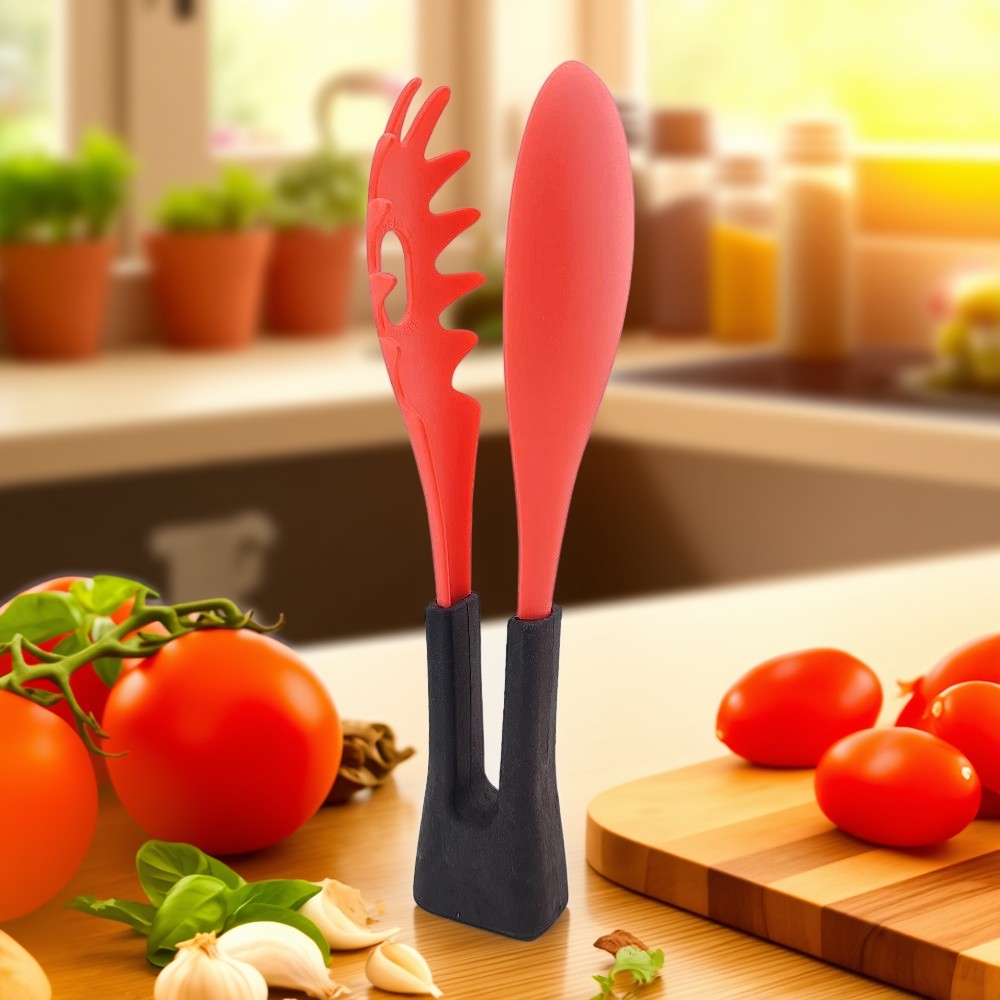
Spaghetti Spoon and Ladle Set: A Practical Guide for Everyday Cooking
A two-piece utensil set can be more useful than a drawer full of rarely used tools when it covers the tasks you repeat most often. The original product concept is simple: a red spaghetti spoon and a soup ladle, paired with a black silicone holder for countertop storage. For home cooks, small cafés, rental kitchens, and food-prep spaces, this kind of set can make pasta, soup, broth, and sauce service more organized.
This guide explains what to look for, how to use each utensil well, and how to care for the set without turning a basic kitchen tool into a confusing purchase.
Key Takeaways
- A spaghetti spoon is best for lifting noodles, portioning pasta, and draining excess water back into the pot.
- A ladle is suited to soup, broth, sauces, stews, and other liquids that need controlled serving.
- The holder matters because it keeps wet or sauce-covered utensils off the counter between uses.
- If buying for frequent use, confirm heat resistance, cleaning instructions, and cookware compatibility with the seller.
- Choose the set based on your cooking habits, not only on color or appearance.
What Is Included in This Type of Utensil Set?
The set described in the original article includes two primary tools: a spaghetti spoon and a soup ladle. The spaghetti spoon has prongs for catching and lifting noodles, plus a center hole that can help with portion measuring and draining. The ladle is intended for soups, sauces, and broths. A black silicone holder is included to keep the utensils upright or organized on the counter.
The red color makes the tools easy to spot in a utensil container or busy kitchen drawer. Color is not the most important buying factor, but it can be practical when several people share the same kitchen and need to identify tools quickly.
How the Spaghetti Spoon Helps with Pasta
A regular spoon can stir pasta, but it does not lift long noodles efficiently. The prongs on a spaghetti spoon help catch strands of spaghetti, linguine, or similar pasta shapes so you can move them from pot to plate with less slipping. The center hole is often used as a rough portion guide, though actual serving size depends on pasta shape, appetite, and whether the pasta is a main dish or side dish.
For best results, stir pasta early in the cooking process to prevent clumping. When the pasta is ready, use the spoon to lift a manageable amount, pause briefly over the pot so water can drain, and then transfer it to a serving bowl or pan. Avoid overloading the spoon; smaller lifts are cleaner and reduce the chance of splashing hot water.
When to Use the Ladle
The ladle is the better tool when the food is mostly liquid. It can be used for soup, broth, stew, gravy, curry sauce, tomato sauce, and other dishes where a flat spoon would spill too easily. A deeper bowl gives better control when serving from a pot into bowls, cups, or food containers.
In everyday cooking, the ladle also helps with consistency. If you use the same ladle for each serving, portions are more even. This is helpful for family meals, packed lunches, and small food-service settings where repeatable serving size matters.
Comparison Checklist: What to Review Before Buying
Before choosing a utensil set, compare practical details rather than relying only on product photos. Use the checklist below when evaluating this style of spaghetti spoon and ladle set.
| Feature to Check | Why It Matters | Question to Ask |
|---|---|---|
| Heat resistance | Utensils may touch hot pots, boiling water, or sauces. | What temperature range does the supplier state? |
| Material description | The original description refers to food-grade silicone. | Is the material clearly listed on the product page or packaging? |
| Cookware compatibility | Soft-edged utensils can help reduce scratches on some cookware. | Is it suitable for nonstick, stainless steel, or ceramic cookware? |
| Handle comfort | A comfortable grip improves control when serving hot food. | Is the handle shape easy to hold when wet? |
| Holder stability | A holder keeps utensils off the counter during cooking. | Does the holder stay steady when both tools are stored? |
| Cleaning method | Care requirements affect daily convenience. | Is hand washing recommended, or is dishwasher cleaning allowed? |
Use and Care Tips
Even durable utensils last longer when they are used correctly. Do not leave any utensil resting in a hot pan for long periods unless the manufacturer clearly says it can tolerate that heat. After using the tools with tomato sauce, curry, or deeply colored foods, rinse them promptly to reduce the chance of staining.
- Wash before first use with warm water and mild dish soap.
- Use the spaghetti spoon for lifting noodles, not scraping stuck food from the bottom of a pan.
- Use the ladle for liquids and semi-liquids; avoid forcing it through dense frozen food.
- Place used utensils in the holder during cooking to keep counters cleaner.
- Dry the holder and tools fully before long-term storage.
If the set is marketed as heat-resistant or food-grade silicone, keep any packaging or supplier information so you know the stated limits. If those details are not provided, ask before buying, especially if the tools will be used in a busy kitchen.
Who Is This Set Best For?
This type of set is best for cooks who regularly prepare pasta, soup, noodles, sauces, or broth-based dishes. It is also useful in compact kitchens because two tools cover many serving tasks. For a student apartment, small office pantry, holiday rental, or starter kitchen, the combination is more practical than buying several single-purpose utensils.
For restaurants, caterers, or wholesale buyers, the evaluation should be more formal. Ask potential suppliers about material documentation, packaging options, available colors, carton details, cleaning guidance, and whether samples are available. Do not assume commercial suitability from appearance alone; confirm the information needed for your market and use case.
Common Mistakes to Avoid
- Choosing a utensil only because it matches the kitchen color scheme.
- Using the ladle to stir very thick foods that require a stronger spoon or spatula.
- Leaving utensils in direct contact with hot cookware longer than necessary.
- Ignoring the holder size and then storing the set loose in a crowded drawer.
- Assuming all silicone utensils have the same heat rating or cleaning instructions.
Practical FAQ
Can the spaghetti spoon measure one serving of pasta?
The center hole can be used as a rough guide for long pasta, but it is not a universal measurement. Serving size varies by pasta type and meal plan, so use it as a convenience rather than an exact nutrition measure.
Is the ladle only for soup?
No. A ladle is useful for broth, sauce, stew, gravy, and similar foods. It is designed for controlled serving of liquids and semi-liquids.
Will these utensils scratch nonstick cookware?
The original description presents the tools as suitable for scratch-free cookware use. Still, buyers should confirm the material and care guidance from the seller and avoid using any utensil as a scraper.
How should I store the set?
Use the included holder when you want quick access on the counter. If storing in a drawer, make sure the tools are clean and dry to avoid residue buildup.
What should wholesale or OEM buyers ask a supplier?
Ask about material specifications, heat-resistance information, available packaging, color options, sample policy, quality control process, and any documentation required for your sales market. If a claim matters to your customers, request written confirmation.
