




OEM Kitchen Scissors: Practical Sourcing Guide for Buyers
OEM kitchen scissors are a small product category, but they can carry real value for wholesalers, importers, supermarkets, online sellers, and private-label kitchenware brands. A good pair supports everyday food preparation, while a poorly selected model can lead to complaints about comfort, cutting performance, rust, packaging, or inconsistent finishing. For B2B buyers, the goal is not simply to find a low unit price. The goal is to define the right product, confirm the supplier can make it consistently, and set clear expectations before bulk production.
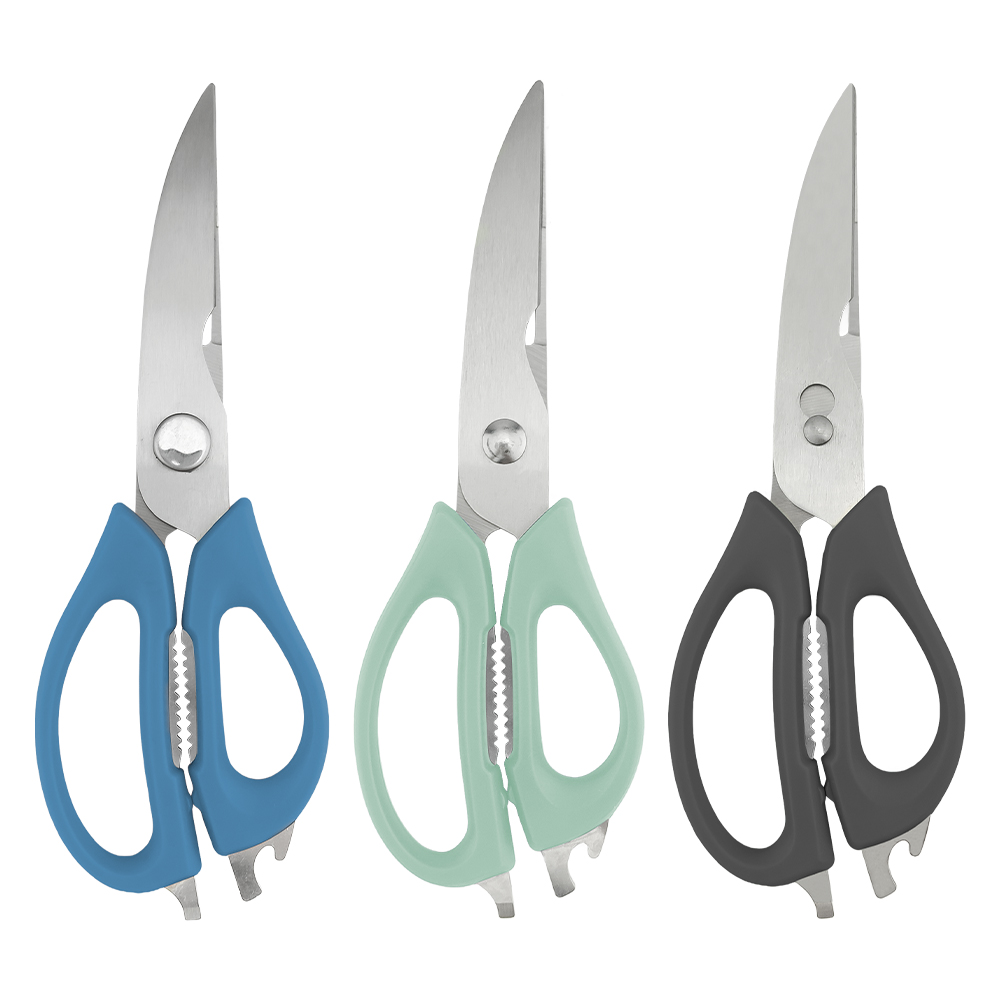
The original Bonet Houseware article introduced a multi-functional kitchen scissors product with color options, ergonomic handles, stainless steel blades, a slightly curved blade design, and integrated handle tools such as a bottle opener and nut cracker. Those are useful product points, but buyers still need a structured sourcing process. This guide explains how to evaluate OEM kitchen scissors for real commercial use without relying on vague claims or decorative language.

Key Takeaways
- Start with the target sales channel, retail price position, and expected user tasks before choosing a scissors design.
- Confirm blade material, handle material, surface finish, packaging, and inspection standards directly with the supplier.
- Multi-functional features such as a bottle opener or nut cracker can add value, but they should be tested for durability and comfort.
- For OEM orders, ask clear questions about customization options, sample approval, production lead time, and quality control workflow.
- Do not assume certifications, MOQ, capacity, or compliance results unless the supplier provides current documents.
What Makes Kitchen Scissors Suitable for OEM Programs?
OEM kitchen scissors need to satisfy both product users and commercial buyers. Users care about sharpness, grip comfort, ease of cleaning, balance, and whether the scissors can handle common kitchen tasks such as snipping herbs, trimming meat, opening food packaging, or preparing poultry. Buyers care about repeatable production quality, branding options, packaging execution, shipment protection, and after-sales risk.
The product described in the source uses stainless steel blades and ergonomically designed handles. It is also available in Blue, Mint Green, and Charcoal colorways. These facts are helpful because they point to a product that can fit different retail displays or brand identities. However, for OEM purchasing, color and appearance should be treated as only one part of the specification. A buyer should also confirm blade thickness, hardness target, handle material, assembly method, edge finishing, and whether the blade can be separated for cleaning if that matters to the market.
Core Product Features to Review
Kitchen scissors often look similar in photos, but small details affect user satisfaction. The slightly curved blade design mentioned in the original article may help guide cutting through food and packaging, but buyers should test samples with realistic tasks. Do not evaluate only by cutting paper. Test herbs, thin plastic packaging, cooked meat, raw poultry skin, and light bones if that is part of the intended use.
Handle comfort also matters. Ergonomic handles can reduce hand fatigue during repeated cutting, but comfort depends on hand size, handle opening, internal edge smoothness, and grip texture. If the product is intended for broad retail distribution, ask several people to test the sample rather than relying on one opinion. If the market includes left-handed users, ask whether the design is suitable or whether a separate version is required.
Comparison Checklist for OEM Kitchen Scissors
| Item to Check | Why It Matters | Questions to Ask the Supplier |
|---|---|---|
| Blade material | Affects sharpness, corrosion resistance, and perceived quality. | What stainless steel is used, and can it be confirmed in writing? |
| Blade design | Influences cutting control across herbs, packaging, meat, and poultry. | Is the curved blade standard, and are alternative blade shapes available? |
| Handle design | Impacts grip comfort, safety, and repeat use. | What handle material is used, and can the color be customized? |
| Integrated tools | Features such as bottle opener and nut cracker may increase utility. | How are these functions tested during inspection? |
| Logo and packaging | Important for private-label and retail presentation. | What branding methods and packaging formats can be quoted? |
| Quality inspection | Reduces the risk of inconsistent edge, loose assembly, or cosmetic defects. | What inspection steps are used before shipment? |
How to Work with a Kitchen Scissors Supplier
When sourcing from a kitchen scissors supplier or Yangjiang scissors factory, begin with a written product brief. Include the target market, sales channel, expected retail positioning, packaging style, color requirements, logo placement, carton needs, and any performance expectations. If you need the product for a regulated market, ask the supplier what documents they can provide, but do not assume compliance until you review current, order-relevant paperwork.
Sampling is essential. Request pre-production samples that match the intended blade, handle color, logo, and packaging as closely as possible. If the supplier sends an existing sample first, use it only for initial evaluation. Before mass production, approve a final sample and keep it as the reference standard for inspection. This reduces confusion when discussing blade finish, handle color, opening tension, and packaging details.
Private Label and Customization Considerations
OEM buyers often focus on visible branding, but the full customer experience includes packaging strength, instruction text, warnings, barcode placement, and how the scissors are secured inside the package. If the product includes extra functions such as a bottle opener and nut cracker, the packaging should explain them clearly without overpromising. Claims such as dishwasher safety, food-contact compliance, or special coating performance should only be used when supported by supplier documentation and relevant testing.
Color selection should be based on the sales channel. The source article mentions Blue, Mint Green, and Charcoal. Blue and Mint Green may suit modern homeware assortments, while Charcoal can fit a more neutral kitchen tool range. For private-label programs, ask whether these are standard colors or whether custom color matching is available. If color consistency matters, define an agreed color reference and tolerance before production.
Quality Control Points Before Shipment
A practical inspection plan for OEM kitchen scissors should cover both function and appearance. Check that the scissors open and close smoothly, the blades meet properly, the edge is clean, the handle has no sharp plastic edges, and the integrated tools are formed correctly. Look for rust marks, oil residue, burrs, poor polishing, loose rivets or screws, inconsistent logo printing, and damaged packaging.
For larger orders, buyers may use third-party inspection or their own quality team. The inspection standard should be agreed in advance. If you require drop tests for packaging, corrosion checks, torque checks, or repeated cutting tests, discuss them before order confirmation. A supplier can only quote and plan accurately when the requirements are clear.
Common Sourcing Mistakes to Avoid
- Choosing only by product photo without testing cutting performance.
- Approving one sample but ordering a different material, color, or packaging later.
- Using marketing claims that have not been verified by documents or tests.
- Ignoring packaging durability for e-commerce or long-distance shipping.
- Failing to define acceptable cosmetic defects before production.
FAQ
What should I ask before ordering OEM kitchen scissors?
Ask about blade material, handle material, available colors, logo options, packaging choices, sample process, lead time, inspection method, and what documents the supplier can provide for your target market.
Are multi-functional kitchen scissors better for wholesale?
They can be attractive because features such as a bottle opener and nut cracker add practical value. However, buyers should test whether these functions work comfortably and do not weaken the handle design.
Can I use my own brand on kitchen scissors?
Many OEM programs allow private-label branding, but the available methods depend on the product and supplier. Confirm logo position, size, technique, sample cost, and packaging artwork requirements.
How do I judge sample quality?
Test real kitchen tasks, check blade alignment, inspect the handle finish, verify color consistency, review packaging, and compare the sample against your written specification.
Should I source from a specialized scissors manufacturer?
A specialized manufacturer may offer deeper experience with blade finishing, assembly, and functional testing. Buyers should still verify capabilities through samples, communication, documents, and inspection results.
Final Thoughts
OEM kitchen scissors can be a strong addition to a kitchenware assortment when the product is selected with care. The best approach is to combine practical user testing with disciplined sourcing questions. Confirm the materials, evaluate the ergonomic handle, test the stainless steel blades, review the multi-functional details, and define packaging and inspection standards before placing a bulk order. That process helps buyers reduce risk and build a more reliable private-label or wholesale kitchen tool program.
