




Sewing Shear Factory Sourcing Guide for Tailor Scissors
Choosing a sewing shear factory is not only about finding an attractive pair of scissors. For wholesalers, craft brands, sewing kit suppliers, and OEM buyers, the right decision affects cutting consistency, user comfort, packaging quality, repeat orders, and after-sales issues. A good sourcing process should compare the product itself and the factory’s ability to communicate clearly, sample reliably, and support commercial requirements.
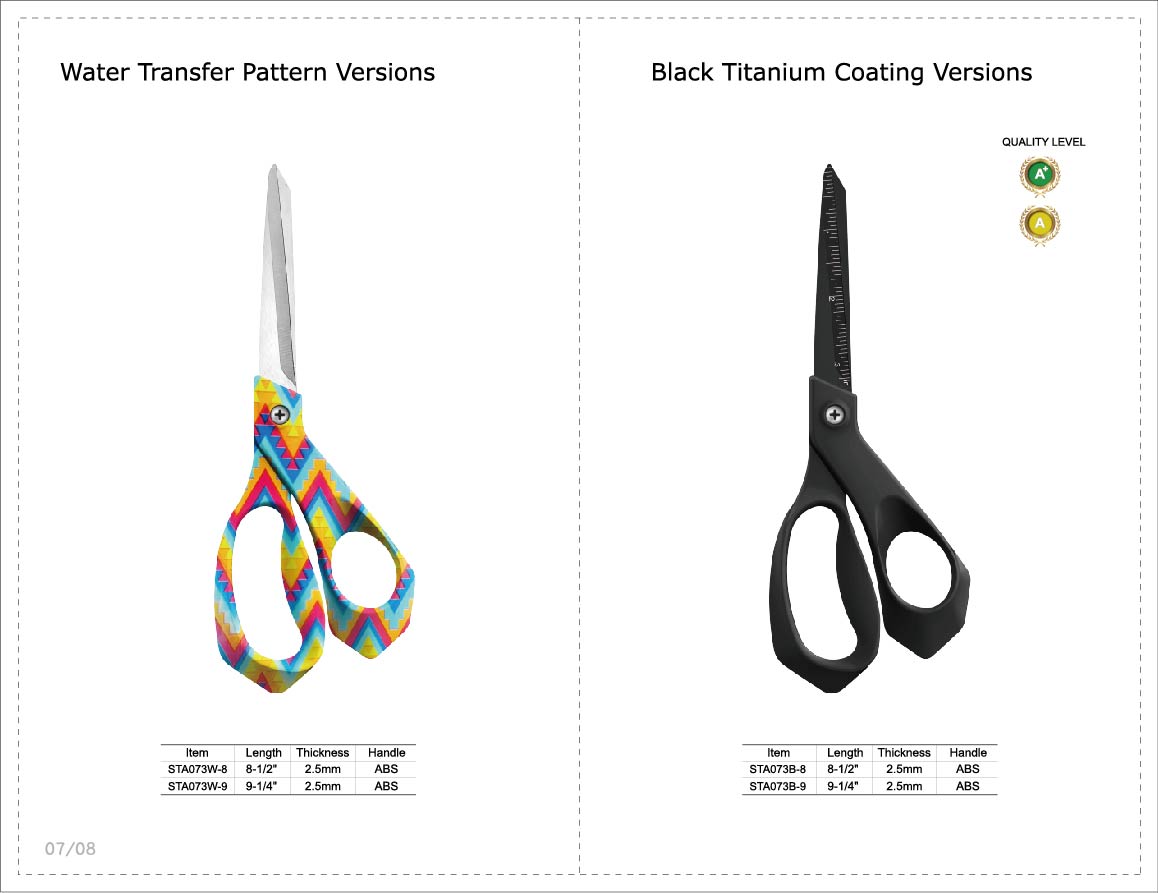
The original Bonet Houseware article introduced two visual directions for tailor scissors: Water Transfer Pattern scissors with multicolored zigzag ABS handles, and Black Titanium Coating versions with a matte black appearance. It also noted two available lengths, 8-1/2 inch and 9-1/4 inch, and 2.5 mm thick blades. This guide expands those product points into practical sourcing advice for buyers evaluating sewing shears for wholesale, private label, or retail assortment planning.
Key Takeaways
- Start with the end user: home sewing, tailoring, classroom use, craft kits, or professional workrooms may need different sizes and finishes.
- Confirm explicit specifications with the supplier, including length, blade thickness, handle material, coating, packaging, and labeling options.
- Request samples before bulk orders and test them on the fabrics your customers commonly use.
- For OEM or wholesale projects, ask about customization limits, artwork requirements, lead time, carton details, and quality inspection procedures.
Understand the Two Product Directions
Water Transfer Pattern sewing shears are designed for buyers who want a more decorative product. The source article describes vibrant, multicolored zigzag designs transferred onto ABS handles. This type of visual treatment can work well for craft retail, giftable sewing tools, hobby kits, and brands that want shelf presence without changing the basic scissor structure.
The Black Titanium Coating versions take a more understated approach. The article describes a matte black finish and titanium-coated blades, paired with ABS handles. This look may be better suited for tailor shops, professional sewing suppliers, minimalist retail lines, or customers who prefer a cleaner workbench aesthetic. When discussing coated blades, avoid assuming performance claims that have not been confirmed. Instead, ask the factory what the coating is intended to improve, how it is applied, and how it should be cared for.
Match Size and Handling to the User
The article lists 8-1/2 inch and 9-1/4 inch options. Those are practical sizes for many sewing and craft cutting tasks, but the best choice depends on the buyer’s target market. A longer shear may help users cut longer straight lines with fewer strokes, while a slightly shorter option may feel easier to control for smaller hands, classrooms, or home craft use.
Handle comfort should be tested directly. ABS handles are mentioned in the source article, but comfort depends on shape, balance, finger opening, weight, and how the shear feels after repeated cutting. If you sell to professional users, ask multiple testers to cut sample fabric for several minutes rather than judging only by appearance.
Comparison Checklist for Buyers
| Item to Compare | Water Transfer Pattern Shears | Black Titanium Coating Shears | Questions to Ask the Factory |
|---|---|---|---|
| Visual direction | Multicolored zigzag handle design | Matte black blade appearance | Can colors, patterns, or finishes be adjusted for OEM orders? |
| Handle material | ABS handles stated in source | ABS handles stated in source | What handle colors, textures, or logo positions are available? |
| Sizes | 8-1/2 inch and 9-1/4 inch stated | 8-1/2 inch and 9-1/4 inch stated | Are both sizes available for sampling and bulk purchase? |
| Blade detail | 2.5 mm thick blades stated | 2.5 mm thick blades stated | What blade material, edge process, and inspection method can be confirmed? |
| Best-fit channel | Craft retail, sewing kits, gift sets | Tailoring, professional supply, modern retail | Which packaging style is recommended for your sales channel? |
How to Evaluate a Sewing Shear Factory
A reliable sewing shear factory should be able to answer technical and commercial questions without vague promises. Buyers should ask for a current product specification sheet, available finishes, packaging formats, sample costs, production lead time, and inspection standards. If the project involves private label or custom sewing shears, request artwork templates and confirm whether logos can be placed on the handle, blade, hang tag, insert card, or outer carton.
Do not rely only on catalog photos. Ask for close-up images of the pivot area, blade edge, handle molding, coating surface, and packaging. If you plan to reorder, confirm whether the factory can keep the same appearance across batches and how it handles color or finish tolerance. For products with decorative patterns, ask whether each piece is identical or whether slight pattern variation is normal.
Sample Testing Before Wholesale Orders
Before placing a sewing shear wholesale order, test samples in realistic conditions. Use the fabrics your customers actually cut, such as cotton, denim, felt, lining fabric, or craft material. Check whether the shears cut cleanly from the base of the blade to the tip, whether the pivot feels too tight or too loose, and whether the handle causes discomfort after repeated use.
- Inspect the pair visually for scratches, coating marks, uneven handles, or loose fittings.
- Open and close the shears several times to evaluate smoothness.
- Cut straight lines, curves, and small notches on sample fabric.
- Compare both sizes with the same cutting tasks.
- Record feedback from more than one tester before approving the order.
OEM, Packaging, and Commercial Questions
For OEM sewing scissors, the product is only one part of the project. Buyers should confirm packaging dimensions, barcode placement, instruction text, warning labels if needed for the target market, and carton packing method. If the factory has not provided certifications, test reports, or compliance documents, do not assume they exist. Ask directly what documents are available and whether third-party testing can be arranged if your market requires it.
Commercial details also need written confirmation. Ask about minimum order quantity, sample time, mass production lead time, payment terms, spare parts or defect handling, and whether mixed sizes or mixed finishes are possible in one order. These questions help prevent misunderstandings after artwork or deposits have already been approved.
Use and Care Guidance for End Customers
Even when sourcing for B2B, clear consumer guidance reduces complaints. Sewing shears should be used for fabric and craft materials appropriate to the blade, not for wire, food, or hard household materials. Users should keep the blades dry, wipe away lint, store shears closed, and avoid dropping them on hard floors. If the blade has a decorative or coated surface, customers should avoid abrasive cleaning pads unless the supplier confirms they are safe.
FAQ
What should I ask a sewing shear factory first?
Start with confirmed specifications: size, blade thickness, handle material, finish, packaging, sampling policy, lead time, and available customization. Then ask how quality is inspected before shipment.
Are Water Transfer Pattern shears suitable for wholesale?
They can be suitable when your market values visual variety, craft appeal, or giftable sewing tools. Request samples to check pattern appearance, handle feel, and cutting performance before ordering.
What is the difference between the two Bonet Houseware options described?
The Water Transfer Pattern option features multicolored zigzag ABS handles. The Black Titanium Coating option has a matte black appearance with titanium-coated blades and ABS handles. Both were described with 8-1/2 inch and 9-1/4 inch sizes and 2.5 mm thick blades.
Can I assume a coating improves durability?
No. Unless a supplier provides specific test results or written claims, treat coating benefits as something to verify. Ask what the coating is, why it is used, and how it performs under normal use.
How many samples should a buyer test?
Test at least several pairs from the intended size and finish, especially for wholesale or OEM programs. Larger buyers may also request pre-production samples before mass production.
