




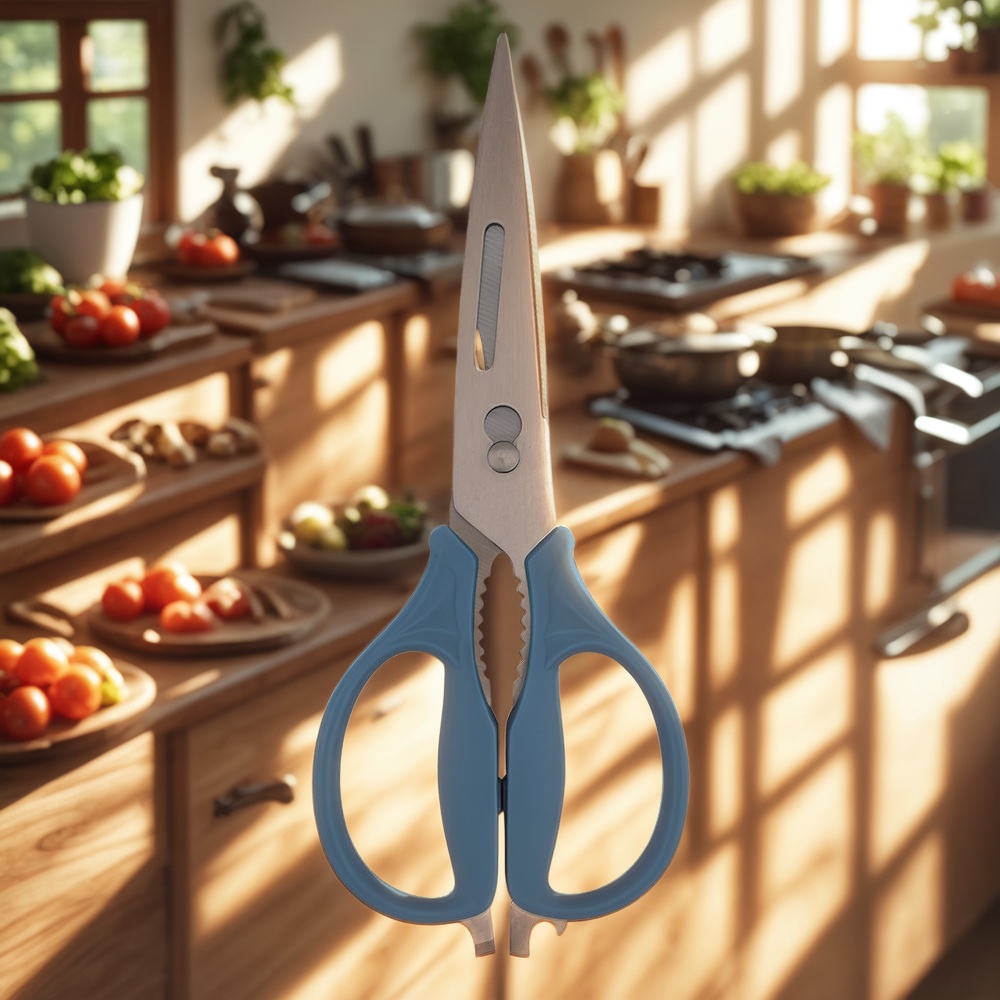
OEM Kitchen Scissors: Sourcing Guide for Buyers
OEM kitchen scissors are a common product category for houseware brands, distributors, promotional buyers, and retail sourcing teams. They are compact, practical, and easy to position across kitchen tool lines, gift sets, and general household assortments. However, sourcing them well requires more than choosing a shape from a catalog. Buyers need to understand blade design, handle comfort, packaging, consistency, and supplier communication before moving into sampling or production.
The original article highlights OEM kitchen scissors, stainless steel blades, Yangjiang manufacturing, and the value of customization. This rewritten guide expands those ideas into a practical sourcing framework. It does not assume any specific factory capacity, certification, material grade, minimum order quantity, or test result. Instead, it explains what professional buyers should ask and compare when selecting an OEM kitchen scissors supplier.
Key Takeaways
- OEM kitchen scissors should be evaluated for cutting performance, handle comfort, safety, packaging suitability, and repeatable production quality.
- Yangjiang is widely associated with kitchen tool manufacturing, but buyers should still verify each supplier’s processes, samples, and documentation.
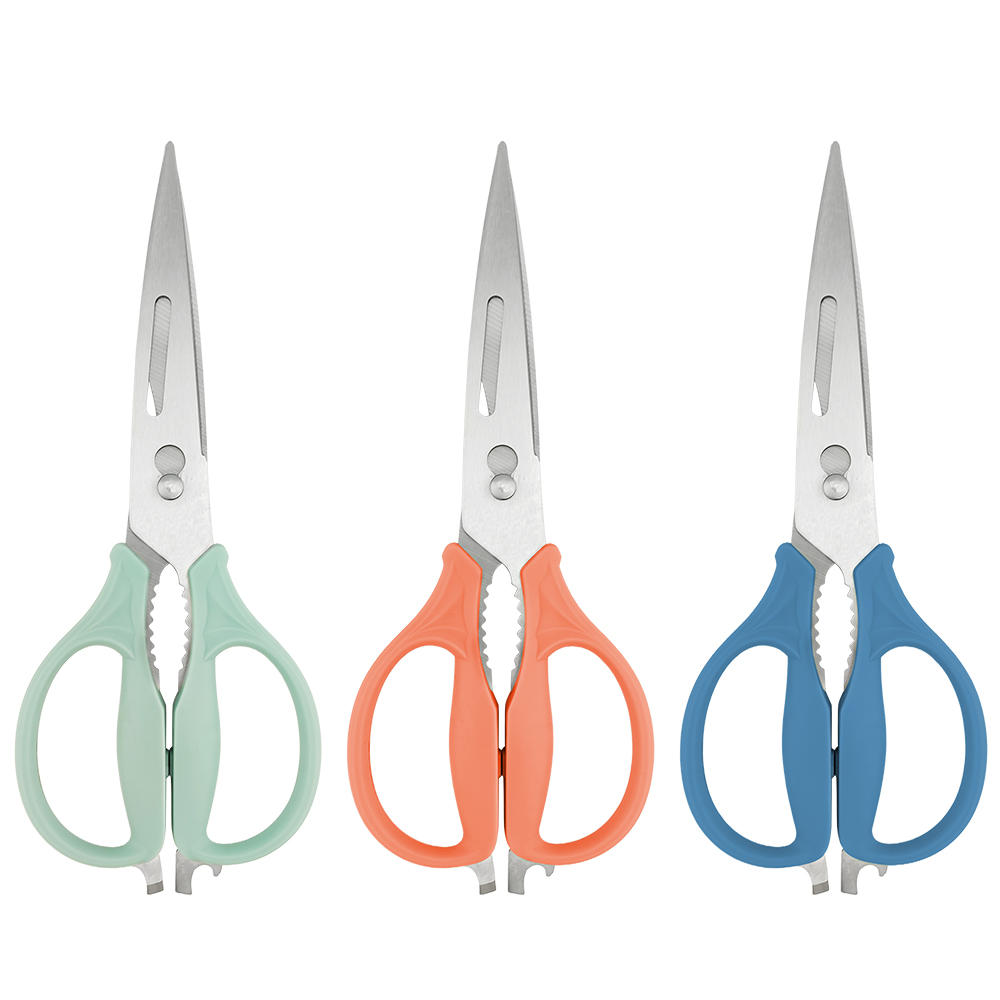
- Customization can include handle shape, blade function, color, logo placement, retail packaging, and bundled accessories, depending on supplier capability.
- Do not rely only on product photos. Request samples, check edge alignment, test common kitchen tasks, and confirm quality standards in writing.
- For B2B orders, ask clear questions about materials, lead times, inspection methods, replacement policy, packaging drop resistance, and export documentation.
What OEM Kitchen Scissors Are
OEM kitchen scissors, sometimes called kitchen shears, are cutting tools produced for another company’s brand, packaging, or specification. In a simple OEM arrangement, a buyer may select an existing model and apply private labeling. In a more customized program, the buyer may request changes to the handle, blade profile, color, logo, packaging, or accessory set.
Kitchen scissors are used for everyday food preparation and household cutting tasks. Depending on the design, they may be intended for trimming herbs, cutting packaging, preparing poultry, opening food bags, or general kitchen use. Some models are promoted as multi-functional kitchen tools, but buyers should be careful with such wording unless the function is clearly supported by the product design and tested during sampling.
The source article refers to stainless steel blades. That is a useful baseline fact, but buyers should go further and ask the supplier what stainless steel type is used, how the blades are heat treated, how corrosion resistance is checked, and whether the blade material is suitable for the target market’s expectations. If a supplier does not provide a material grade or test report, do not invent one in marketing content or product listings.
Why Yangjiang Matters in Kitchen Tool Sourcing
Yangjiang is well known in the kitchen tool and cutting tool industry. Many buyers associate the region with knives, scissors, and related metal housewares. This concentration can be helpful because suppliers may have experience with blade processing, handle assembly, polishing, packaging, and export orders.
That said, a regional reputation is not a substitute for supplier qualification. Two factories in the same city may differ significantly in management, production equipment, quality control, sample accuracy, communication speed, and export experience. Buyers should assess the specific supplier, not only the location.
When discussing Yangjiang kitchen scissors with a manufacturer or trading partner, ask where key processes are completed. For example, are blades stamped or forged in-house, or purchased from another workshop? Is handle assembly completed by the same supplier? Who performs final inspection? These questions help buyers understand supply chain control and reduce surprises during production.
How to Define Your OEM Requirements
Before requesting a quotation, prepare a clear product brief. A vague inquiry such as “send price for kitchen scissors” often leads to mismatched quotations. A better brief explains the target market, sales channel, preferred design, packaging type, order expectations, and quality priorities.
Useful requirement details include:
- Product purpose: general kitchen use, food preparation, gift set, supermarket retail, online marketplace, or promotional program.
- Blade expectations: length, thickness, edge type, tip shape, detachable or fixed structure, and any special cutting function.
- Handle design: color, grip shape, left-hand or right-hand use, comfort requirements, and preferred material if known.
- Branding: logo on blade, handle, packaging, instruction card, or outer carton.
- Packaging: hanging card, blister, color box, sleeve, bulk pack, or customized retail packaging.
- Compliance questions: market destination, food-contact expectations, labeling language, barcode needs, and any documents required by the importer.
- Commercial information: target quantity, expected delivery window, sample request, and inspection plan.
If you are unsure about one detail, say so. A good supplier can recommend available options, but the buyer should still confirm final specifications in writing before production.
Comparison Checklist for Supplier Evaluation
The table below can help sourcing teams compare OEM kitchen scissors suppliers consistently. It is not a certification checklist and should not replace professional quality control, but it is a useful starting point for buyer conversations.
| Evaluation Area | What to Check | Questions to Ask the Supplier |
|---|---|---|
| Blade material | Stainless steel type, thickness, edge finish, corrosion expectations | What material is used, and can you provide supporting documentation if required? |
| Cutting performance | Clean cutting on herbs, packaging, meat preparation tasks, or the buyer’s intended use | Can you send samples for function testing before quotation approval? |
| Handle comfort | Grip size, surface feel, balance, finger opening, left or right-hand suitability | Can handle color, texture, or shape be customized for our target market? |
| Assembly quality | Blade alignment, screw or rivet tightness, smooth opening and closing | How do you inspect alignment and operating smoothness during production? |
| Branding options | Logo placement, printing durability, packaging artwork accuracy | Which logo methods are available, and what artwork format do you need? |
| Packaging | Retail protection, barcode space, hanging display, carton strength | Can you provide dielines and packing details before mass production? |
| Quality control | Incoming materials, in-process checks, final inspection, defect handling | What inspection steps are used, and can we arrange third-party inspection? |
Customization Options to Discuss
Customization is one of the main reasons buyers choose an OEM kitchen scissors program. Common areas include visual branding, color selection, handle design, packaging, and product set configuration. The best option depends on the order size, timeline, tooling requirements, and target price point.
Logo placement should be considered carefully. A logo on the blade may look professional, but the method, durability, and food-contact considerations should be discussed. A logo on the handle may be more visible in retail photography. A logo on the packaging can support branding without changing the tool itself.
Handle customization can affect both appearance and usability. Ask whether the supplier offers existing handle molds or whether a new mold would be required. If a new mold is needed, clarify tooling cost, ownership, development time, sample approval steps, and what happens if adjustments are required after the first sample.
Packaging customization is especially important for retail and e-commerce. A hanging card may work for shelf display, while a box may provide better protection for online shipping. Buyers should request packaging mockups, carton information, and drop or handling expectations where relevant. Do not assume packaging will be strong enough for your sales channel without testing.
Sample Testing Before Placing an Order
Product samples are essential. Photos can show shape and color, but they cannot confirm cutting feel, alignment, sharpness, grip comfort, or finishing quality. When a sample arrives, test it in a consistent way and record results. If multiple team members evaluate samples, use the same checklist so feedback is comparable.
For kitchen scissors, practical sample checks may include cutting paper packaging, trimming herbs, cutting food bags, opening and closing repeatedly, checking handle comfort, and inspecting whether blades rub unevenly. If the scissors are intended for heavier use, test them against the tasks claimed in the final product description. If the design includes detachable blades or additional functions, verify that the function is intuitive and safe for the target user.
Also review finish details. Look for burrs, rough handle edges, uneven polishing, loose screws, misaligned blades, weak printing, color variation, or packaging damage. A sample should not be treated as a guarantee of mass production quality, but it establishes a reference. Keep an approved sample and include it in your purchase agreement or quality file.
Quality and Compliance Questions Buyers Should Ask
Kitchen tools may be subject to different requirements depending on the destination market, sales channel, and intended use. Because requirements vary, buyers should ask suppliers direct questions and consult their importer, compliance team, or testing partner when necessary.
Useful questions include:
- What blade material and handle material are used in the quoted model?
- Can material information be documented for our records?
- What quality checks are performed before packing?
- What defect criteria do you use for scratches, loose assembly, poor cutting, rust marks, or packaging damage?
- Can we approve a pre-production sample before mass production?
- Can third-party inspection be arranged before shipment?
- What export documents can be provided for this order?
- Are there any market-specific labeling or packaging points we should confirm?
These questions are not meant to create unnecessary complexity. They protect both buyer and supplier by making expectations clear. If a supplier cannot answer a question immediately, ask for written follow-up rather than accepting assumptions.
How to Build a Clear Purchase Specification
Once the sample is approved, convert the discussion into a written specification. This can include product photos, model number, blade material as confirmed by the supplier, handle color, logo position, packaging artwork, carton quantity, acceptable defect limits, inspection method, and delivery terms. For customized items, attach approved artwork files and packaging dielines.
A clear specification reduces the risk of disputes. For example, “black handle” may not be enough if the buyer expects a specific shade. “Sharp blade” is subjective unless supported by agreed sample standards or practical cutting tests. “Retail packaging” can mean many formats. The more specific the agreement, the easier it is to inspect production fairly.
Practical FAQ
What is the difference between OEM and wholesale kitchen scissors?
Wholesale kitchen scissors are usually existing products purchased in bulk with limited changes. OEM kitchen scissors are produced for a buyer’s brand or specification, which may include logo, color, packaging, or functional adjustments.
Can I customize the handle and packaging?
Often yes, but it depends on the supplier’s available molds, production process, order quantity, and timeline. Ask whether customization uses existing options or requires new tooling.
Should I choose a Yangjiang kitchen scissors supplier?
Yangjiang is known for kitchen tools and cutting products, so it is a relevant sourcing region. Still, evaluate each supplier individually through samples, documentation, inspection process, and communication quality.
What should I test in a kitchen scissors sample?
Check cutting performance, blade alignment, opening and closing smoothness, handle comfort, edge finish, logo quality, packaging strength, and whether the tool matches your intended product claims.
What information should I avoid claiming in my product listing?
Avoid claiming a specific steel grade, certification, test result, safety approval, or special function unless the supplier provides evidence and the claim is appropriate for your market.
Conclusion
OEM kitchen scissors can be a strong addition to a houseware product line when buyers approach sourcing with clear requirements and realistic quality checks. The most important steps are defining the intended use, comparing suppliers carefully, testing samples, confirming customization details, and documenting the final specification before production.
Rather than treating kitchen scissors as a simple commodity, B2B buyers should evaluate them as a branded tool that must perform consistently in everyday use. With the right questions and a disciplined sourcing process, buyers can reduce risk and build a product that fits their market, packaging strategy, and customer expectations.
