




OEM Tailor Scissors: Practical Sourcing Guide for Buyers
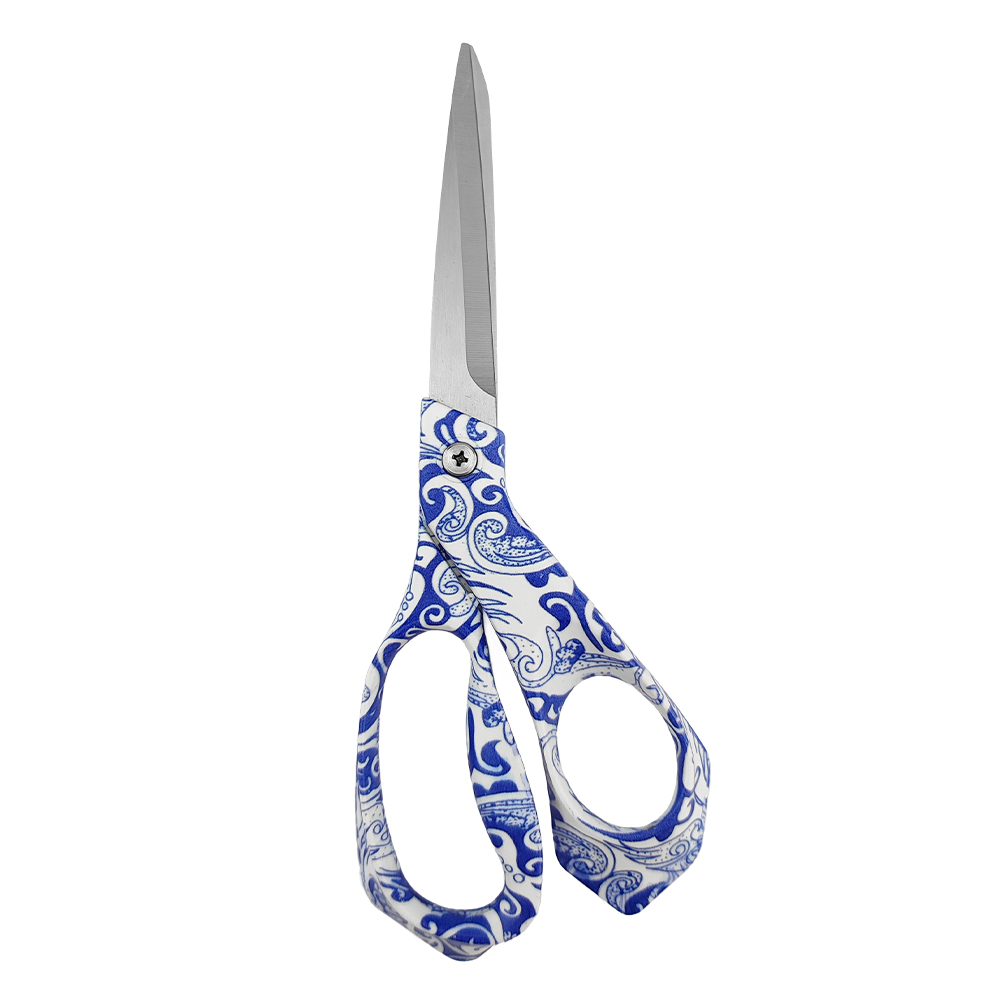
OEM tailor scissors are a small product category with a large impact on user satisfaction. Tailors, sewing studios, craft brands, fabric shops, and promotional product buyers all need scissors that cut cleanly, feel comfortable, and hold up under regular use. The original product description highlights several useful facts: the scissors have stainless steel blades, a blue and white paisley handle pattern, and an ergonomic handle shape intended to reduce strain during longer cutting sessions. Those details matter, but they are only the starting point for a good sourcing decision.

For wholesale and OEM buyers, the right question is not simply whether a sample looks attractive. You also need to understand cutting performance, blade consistency, handle fit, packaging options, inspection criteria, and what information the supplier can verify before production. This guide explains how to evaluate OEM tailor scissors in a practical, buyer-focused way.
What OEM Tailor Scissors Should Deliver
Tailor scissors are expected to cut fabric smoothly and predictably. Unlike general household scissors, they are often used for longer strokes, pattern cutting, trimming, craft work, and repeated daily tasks. A good pair should open and close without rough resistance, meet cleanly at the blade edge, and provide enough control for straight lines and curves.
For an OEM order, consistency is just as important as one good sample. Buyers should ask how the supplier controls blade alignment, handle finishing, opening tension, and final inspection. If the product will be sold under your brand, inconsistent feel from unit to unit can create returns and damage customer trust, even if the design looks appealing in product photos.
Blade Material and Cutting Performance
The source article states that the blades are made from stainless steel. That is a useful fact because stainless steel is widely used for scissors due to its corrosion resistance and suitability for sharp cutting edges. However, buyers should not assume a specific grade, hardness, coating, or edge retention result unless the supplier provides those details.
When evaluating samples, test the scissors on the materials your customers are likely to cut. For sewing and craft channels, this may include cotton fabric, felt, paper patterns, lightweight cardboard, ribbon, and layered cloth. The goal is not only a sharp first cut but also smooth performance across repeated cuts.
- Check whether the blades meet cleanly from pivot to tip.
- Cut along the full blade length, not only near the center.
- Test both straight cuts and curved pattern cuts.
- Watch for snagging, pushing, or fabric folding.
- Ask what blade material details and inspection standards can be documented.
Handle Design, Comfort, and Appearance
The original article describes a vibrant blue and white paisley pattern on the handles. This decorative detail can be valuable for retail differentiation, gift sets, sewing kits, and craft-focused brands that want a tool with more personality than a plain industrial design. Visual appeal can influence conversion, especially when the product is sold online or displayed in a retail pack.
Comfort still needs to come first. The handle is described as ergonomic and shaped for a secure grip during extended use. Buyers should confirm this through real handling tests. Ask several people with different hand sizes to use the sample for repeated cutting. Look for pressure points, slipping, awkward finger placement, or fatigue. A handle that photographs well may not be the best choice for professional users if the grip is too narrow, too rigid, or poorly balanced.
OEM Customization Questions to Ask
OEM sourcing often involves changes to branding, packaging, colors, or assortments. Before confirming a tailor scissors order, clarify exactly what can be customized and what requires new tooling, artwork approval, or longer lead time. Do not assume that every decorative handle pattern, logo method, or package type is available for every order size.
Useful questions include: Can the handle color or pattern be changed? Is private label branding available on the blade, handle, hang tag, or packaging? What artwork format is required? Can the supplier provide pre-production samples? What is the process for approving color, print placement, barcode labels, and carton marks? If the scissors are part of a sewing kit or craft set, ask whether the supplier can match them with other items or whether you need separate sourcing.
Comparison Checklist for Buyer Evaluation
A structured comparison helps prevent decisions based only on appearance. Use the table below when reviewing samples from multiple suppliers or when comparing different versions of the same tailor scissors design.
| Evaluation Area | What to Check | Questions for the Supplier |
|---|---|---|
| Blade performance | Clean cutting, smooth opening, tip alignment, no fabric snagging | What blade material details, edge process, and inspection steps can be confirmed? |
| Handle comfort | Grip shape, pressure points, balance, suitability for longer use | Are alternate handle sizes, colors, or patterns available for OEM orders? |
| Visual design | Blue and white paisley finish, print consistency, retail appeal | Can decorative patterns be customized, and how are color differences controlled? |
| Packaging | Protection, shelf display, barcode space, brand presentation | Which packaging options are available, and can samples be supplied before production? |
| Quality control | Consistent tension, blade meeting point, surface finish, safe packing | What inspection criteria are used before shipment, and can inspection photos be shared? |
Sampling and Inspection Before Bulk Orders
Samples are essential for OEM tailor scissors because small differences in pivot tension, blade contact, and handle finishing can change the user experience. Request samples that match the intended production version as closely as possible. If the sample uses different materials, packaging, or decoration methods, ask the supplier to explain what may change in mass production.
During sample review, create a simple scoring sheet. Rate sharpness, smoothness, grip comfort, appearance, packaging fit, and perceived durability. If several people will use the scissors in the target market, gather their feedback before placing an order. For professional or craft users, a short practical test is more useful than a visual review alone.
For larger orders, discuss inspection arrangements in advance. Buyers may ask about acceptable quality limits, functional checks, carton labeling, and whether third-party inspection is possible. The goal is to define expectations clearly before production begins, not after problems are discovered.
Packaging and Retail Positioning
Packaging should protect the blade tips, prevent scratches, and communicate the intended use. For retail channels, consider whether the product needs a hanging card, blister pack, paper sleeve, gift box, or bulk packaging. Each option affects freight efficiency, shelf presentation, and unboxing experience.
Because the handle pattern is visually distinctive, packaging should allow customers to see the design if retail display is important. At the same time, the sharp edges must be secured to reduce damage during transport and handling. Ask the supplier for packaging samples or photos before approving the final layout.
Key Takeaways
- OEM tailor scissors should be evaluated for cutting performance, comfort, consistency, and packaging, not appearance alone.
- The source product features stainless steel blades and a blue and white paisley handle pattern, but further specifications should be confirmed with the supplier.
- Sample testing should include real materials such as fabric, paper patterns, ribbon, or craft materials used by the target customer.
- Buyers should ask clear questions about customization, quality control, packaging, and documentation before placing a wholesale order.
FAQ
What should I test first when reviewing OEM tailor scissors?
Start with cutting performance. Test the full blade length on the materials your customers will use most often. Then review handle comfort, opening smoothness, blade alignment, and packaging protection.
Can I assume all stainless steel tailor scissors have the same quality?
No. Stainless steel is a broad material category. Ask the supplier what material details, hardness information, finishing process, and quality checks can be provided for the specific product.
Is a decorative handle suitable for professional users?
It can be, if the handle is also comfortable, secure, and durable. The blue and white paisley pattern gives the scissors a distinctive look, but professional buyers should still test grip comfort and long-session usability.
What OEM details should be confirmed before production?
Confirm logo placement, handle color or pattern options, packaging style, barcode and carton label requirements, sample approval process, inspection criteria, production lead time, and any order quantity requirements.
How can buyers reduce risk on a first order?
Request representative samples, define inspection points in writing, approve packaging before production, and ask the supplier which commercial details must be confirmed before a purchase order is placed.
