




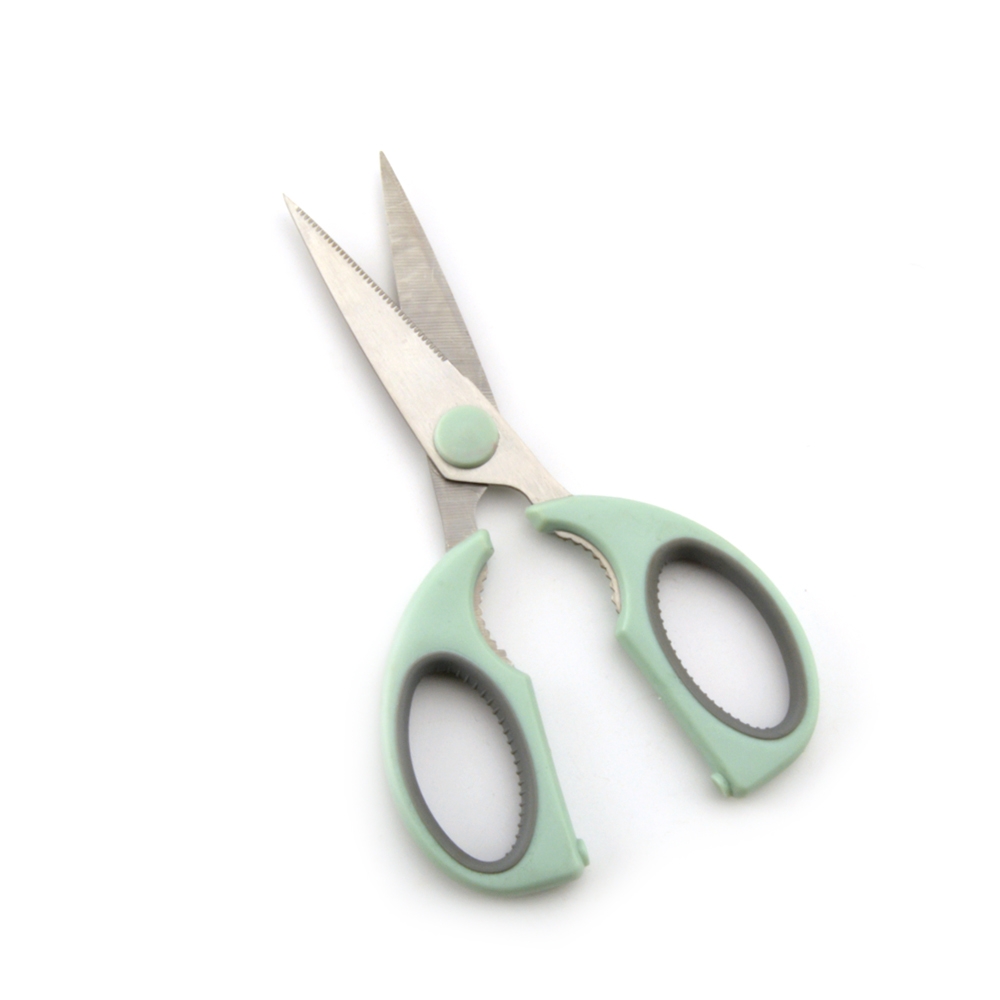
OEM Kitchen Scissors: Practical Sourcing Guide for B2B Buyers
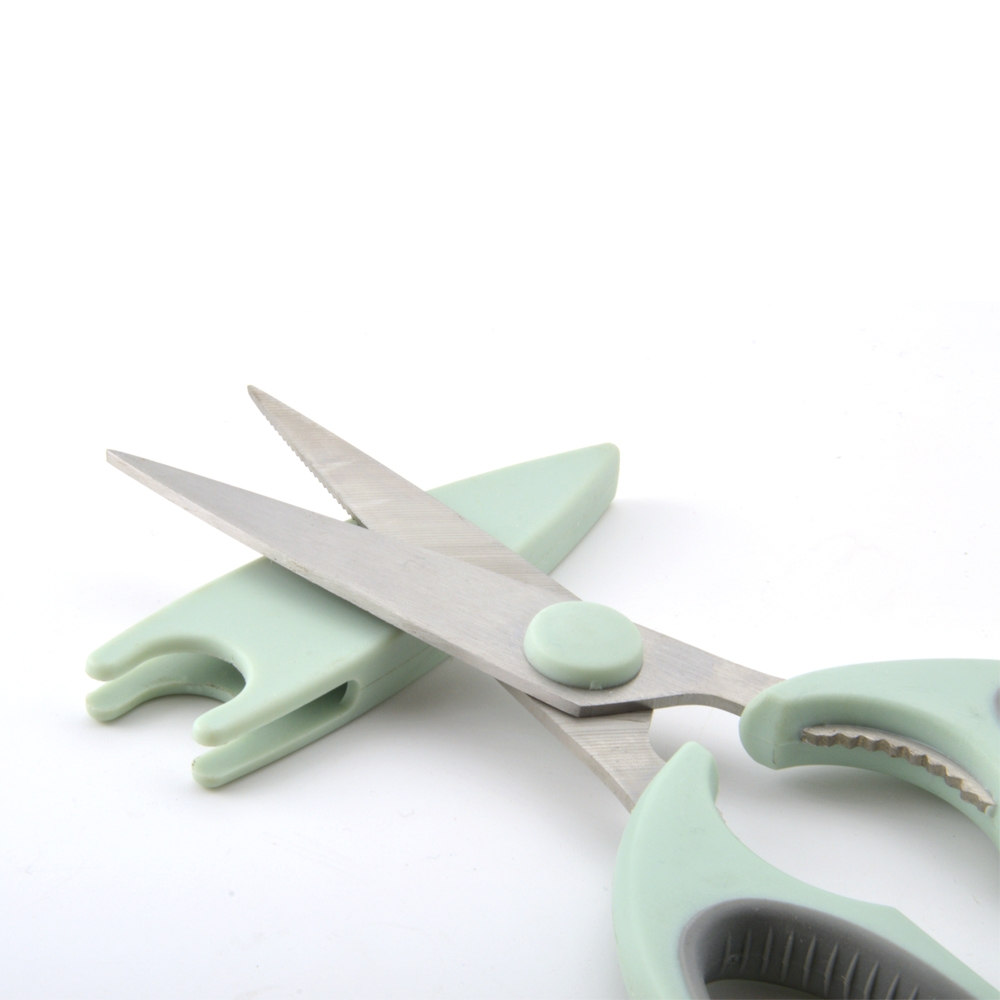
OEM kitchen scissors are a common item in houseware, kitchen tool, supermarket, gift set, and private-label assortments. They are simple at first glance, but buyers still need to evaluate blade design, handle comfort, safety storage, packaging, customization options, and supplier communication before placing an order. The original product presentation highlights a mint green multi-functional kitchen scissors model with a protective cover, serrated edges, ergonomic handles with soft-touch interiors, and a built-in bottle opener. Those details make the product relevant for buyers looking for a practical household tool that can fit into coordinated kitchen ranges or promotional lines.
This guide is written for importers, wholesalers, brand owners, and sourcing teams comparing OEM kitchen scissors from suppliers, including factories in Yangjiang, a well-known cutlery and kitchenware manufacturing region. It does not assume unconfirmed specifications, certifications, prices, or order quantities. Instead, it explains what to check, what to ask, and how to make a more reliable sourcing decision.
Key Takeaways
- Kitchen scissors with a cover can improve storage safety and help protect the cutting edges in drawers or retail packaging.
- For OEM sourcing, confirm all commercial and technical details directly with the supplier, including materials, packaging, logo methods, MOQ, lead time, and inspection standards.
- Do not judge kitchen scissors only by appearance; cutting performance, handle comfort, blade alignment, and cover fit are equally important.
- A Yangjiang kitchen scissors factory may offer useful cutlery experience, but buyers should still verify samples, production consistency, and documentation.
What Makes OEM Kitchen Scissors Different?
OEM kitchen scissors are produced for a buyer’s brand, retail channel, or product program rather than sold only as a generic item. The OEM process may include choices such as handle color, cover color, logo placement, card or box packaging, barcode labeling, and assortment planning. In the source article, the highlighted model is mint green and includes a matching protective cover, which can be useful for brands building a fresh, coordinated kitchenware line.
For B2B buyers, OEM does not simply mean adding a logo. It means confirming whether the product matches the intended market position. A budget retail line may prioritize competitive cost and simple packaging, while a specialty kitchenware brand may place more emphasis on grip feel, blade finishing, and user instructions. Before asking for a quotation, prepare a target brief: expected retail channel, packaging format, quantity range, color preference, and any product claims that must be supported.
Product Features to Review Before Ordering
The original article mentions several useful design elements: serrated edges, soft-touch interiors on the handles, a built-in bottle opener, and a protective cover. Each feature should be reviewed through samples instead of relying only on catalog images.
Serrated edges can help grip food or packaging during cutting, especially when the user needs control. However, the exact cutting result depends on blade geometry, alignment, sharpness, and the material being cut. The protective cover is also important. It should slide on securely without being too tight, cover the cutting area properly, and resist easy cracking during normal storage. The built-in bottle opener may add convenience, but buyers should check whether it is comfortable to use and whether its location affects hand feel.
Comparison Checklist for Supplier Evaluation
| Evaluation Point | What to Check | Questions to Ask the Supplier |
|---|---|---|
| Blade performance | Cutting paper, herbs, packaging, and common kitchen tasks during sample testing | What blade material and hardness are used, and can this be documented? |
| Handle comfort | Grip shape, soft-touch interior, hand clearance, and comfort during repeated cuts | Can the handle color or surface finish be customized for OEM orders? |
| Protective cover | Fit, coverage, stability, and ease of removal | Is the cover included as standard, and can it match the handle color? |
| Multifunction design | Usefulness of the bottle opener and whether it interferes with cutting | Are there alternative models with or without added functions? |
| Packaging | Retail card, box, insert, label, and barcode requirements | What artwork files, dielines, and packing details can the supplier provide? |
| Quality control | Visual finish, blade alignment, screw or rivet stability, and cover consistency | What inspection process is used before shipment? |
Why a Protective Cover Matters
Kitchen scissors are often stored in busy drawers with knives, peelers, and other utensils. A cover helps reduce accidental contact with the blades and may protect the edges from rubbing against other tools. For retail sales, a cover also makes the product easier to present as a complete kitchen accessory rather than a loose cutting tool.
When evaluating kitchen scissors with cover, check more than color matching. The cover should stay in place during handling, but it should not require excessive force to remove. If the product is intended for supermarket shelves, e-commerce fulfillment, or gift sets, ask whether the cover remains secure during transport testing and packaging handling. Buyers should also ask whether the cover material and color can be customized and whether color variation is controlled between production batches.
Sourcing from a Yangjiang Kitchen Scissors Factory
Yangjiang is widely associated with cutlery and kitchen tool manufacturing, so it is a logical region for buyers researching kitchen scissors manufacturers. A factory located in a specialist manufacturing cluster may have access to related supply chains, tooling resources, and production experience. Still, location alone is not a substitute for verification.
When contacting a Yangjiang kitchen scissors factory or trading partner, request a clear product specification sheet. If the supplier cannot provide confirmed details at the inquiry stage, treat those items as open questions rather than assumptions. Useful questions include: What blade material is used? What are the available handle materials and colors? Is the bottle opener part of the standard mold? What packaging options are available? What logo methods are possible? What is the expected lead time after artwork approval? What inspection criteria are applied before shipment?
OEM Customization Points Buyers Should Clarify
Customization can add value, but it can also create delays if details are unclear. For OEM kitchen scissors, the most common customization areas include handle color, sheath color, logo position, packaging design, and set configuration. If the mint green style is the reference product, buyers may ask whether other colors are available and whether a color sample or Pantone-style reference is required.
- Confirm the base model and whether any tooling changes are needed.
- Request pre-production samples if color, logo, or packaging is customized.
- Approve artwork, warnings, labels, and barcode placement before mass production.
- Define acceptable visual and functional inspection criteria in writing.
- Clarify carton packing, shipping marks, and documentation needs before shipment.
Buyers should avoid making product claims unless they are supported by supplier documentation and applicable market requirements. For example, do not claim a specific steel grade, dishwasher suitability, food-contact compliance, or certification unless the supplier provides reliable confirmation and the claim is appropriate for the destination market.
Sample Testing and Quality Checks
Sample testing should reflect real use. Ask for several samples, not just one, and compare them for consistent blade alignment, handle finish, screw or pivot stability, cover fit, and cutting feel. Use the same simple tests across different suppliers so the comparison is fair. Cut paper, thin plastic packaging, herbs, and other common kitchen materials. If the product will be sold for heavier tasks, define those tasks clearly and verify whether the model is suitable.
For shipment inspection, buyers can create a checklist covering appearance, function, packaging, labeling, quantity, carton condition, and any agreed customization. If third-party inspection is required, discuss this early with the supplier so timing and access are clear.
Practical FAQ
What should I ask before buying OEM kitchen scissors?
Ask about blade material, handle material, cover inclusion, logo options, packaging, MOQ, lead time, sample cost, inspection standards, and documents available for your market.
Are kitchen scissors with a cover better for wholesale programs?
They can be easier to position as a safer and more complete kitchen item, especially for drawer storage, gift sets, and retail display. The cover fit should be checked during sampling.
Can the mint green color be changed for private label orders?
Color customization may be possible, but it depends on the supplier’s materials, molds, order quantity, and production process. Buyers should request color samples and confirm any extra cost or lead time.
Is a built-in bottle opener necessary?
It is useful for some buyers, but not essential for every range. Consider your target customer and test whether the added function affects comfort or packaging presentation.
How can I compare different kitchen scissors manufacturers?
Use the same sample tests, request written specifications, compare packaging support, review communication speed, and confirm how the supplier handles quality control before shipment.
Final Sourcing Advice
OEM kitchen scissors are a small product, but small differences affect user satisfaction and repeat orders. A model with serrated edges, soft-touch handle interiors, a bottle opener, and a protective cover can be a practical option for many kitchenware programs when its details are confirmed through samples and supplier communication. For best results, treat sourcing as a structured process: define the target product, verify specifications, test samples, approve customization, and document inspection expectations before production begins.
