




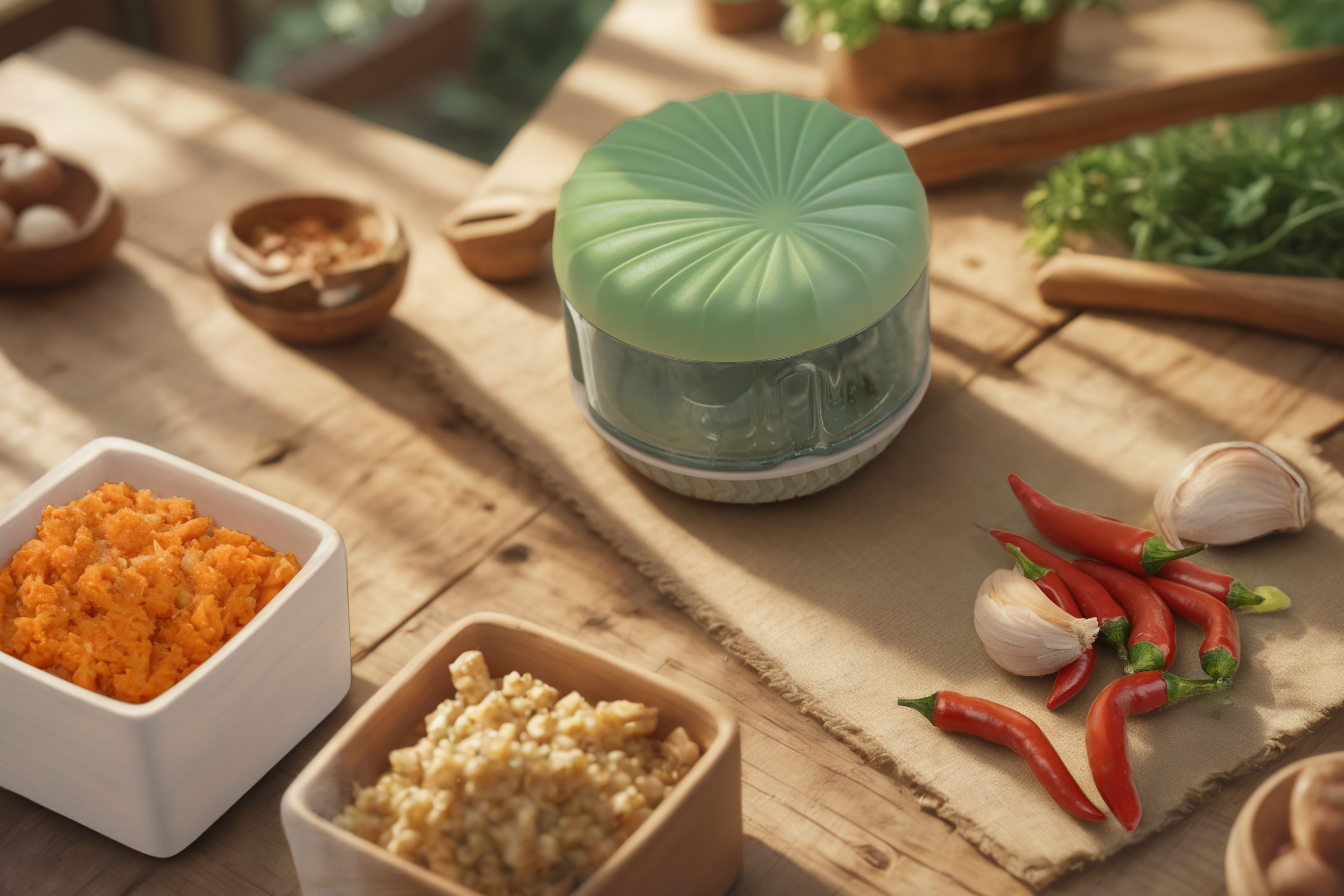
Manual Garlic Mincer: A Practical Guide to Compact Food Choppers
A manual garlic mincer is a simple kitchen tool for cooks who want faster prep without setting up an electric appliance. The product described in the original article is a compact manual food chopper with a soft mint-green lid, a transparent container, internal blades, an ergonomic lid, and an anti-slip base. It is positioned as a small tool for garlic, chili, carrots, and other quick chopping tasks.
This guide looks beyond appearance and explains how to choose, use, clean, and evaluate a compact garlic mincer for everyday cooking. Whether you make sauces, stir-fries, salad toppings, or chili pastes, the right manual chopper can reduce repetitive knife work while still giving you control over texture.
Key Takeaways
- A compact manual chopper is best for small quantities of garlic, chili, herbs, and soft vegetables.
- A transparent container helps you monitor texture and avoid over-chopping.
- Manual operation means no batteries, cables, or countertop power outlet are needed.
- Check stability, blade access, cleaning steps, and replacement-part availability before buying.
- Use short pulses and do not overload the container for more even results.
What This Type of Garlic Mincer Does Well
A compact manual food chopper is designed for quick prep jobs. Instead of pulling out a large processor, you can add peeled garlic cloves, small chili pieces, or pre-cut vegetables to the container and chop them by hand. The transparent container is useful because it lets you see whether the ingredients are still coarse, finely minced, or turning into paste.
This format is especially helpful when preparing small amounts. For example, one or two cloves of garlic can be awkward to process in a large appliance, and chopping chili by hand may leave strong residue on fingers and cutting boards. A small chopper keeps the task contained and can help reduce mess on the countertop.
Design Features Worth Paying Attention To
The original product description highlights a soft mint-green lid inspired by a flower petal, which gives the tool a clean, minimal look. While color and shape matter for many kitchens, practical design should come first. A lid should be easy to grip, comfortable to press or operate, and simple to align with the container. If it feels awkward, the tool may not be used often.
The anti-slip base is another useful feature. Manual chopping creates downward or rotational force, so a base that grips the counter can make operation steadier. This is particularly important when processing firmer ingredients. Buyers should also inspect how the blade assembly is positioned and removed. A good compact chopper should feel secure in use while still being reasonable to clean.
Manual Chopper vs. Garlic Press vs. Knife
No single garlic tool is best for every cook. A manual chopper, garlic press, and chef’s knife each produce a different result. The table below compares common use cases so you can decide whether this type of compact mincer fits your cooking routine.
| Tool | Best For | Texture Control | Cleaning Effort | Limitations |
|---|---|---|---|---|
| Manual garlic mincer / compact chopper | Small batches of garlic, chili, herbs, and soft vegetables | Good, because you can stop when the texture looks right | Moderate; blades and container need careful washing | Not ideal for large batches or very hard ingredients |
| Garlic press | Crushing peeled or unpeeled garlic cloves depending on design | Limited; usually produces a crushed paste-like result | Can be tricky if garlic fibers clog holes | Less versatile for vegetables and mixed ingredients |
| Chef’s knife | Any quantity, from rough chop to fine mince | Excellent with skill and time | Easy; knife and board only | Requires technique and may be slower for repetitive prep |
How to Use a Compact Manual Food Chopper
For best results, treat a compact chopper as a finishing tool rather than a heavy-duty processor. Cut large ingredients into smaller pieces before adding them to the container. This helps the internal blades catch the food evenly and reduces strain on the mechanism.
- Peel garlic cloves or wash and trim other ingredients.
- Cut chili, carrots, or larger vegetables into small pieces before loading.
- Do not fill the container to the top; leave room for movement.
- Secure the lid and place the chopper on a stable, dry surface.
- Operate in short pulses, checking the transparent container frequently.
- Stop when the texture matches your recipe, from coarse chop to finer mince.
If ingredients stick to the sides, pause and gently shake the container or use a utensil after removing the lid. Avoid reaching near exposed blades with your fingers.
Ingredient Ideas and Realistic Expectations
A small manual garlic mincer can support many everyday recipes. Garlic for stir-fries, chili for dipping sauces, herbs for dressings, and small vegetable mixes for salads are all suitable uses. The original article also mentions carrots, but firmer vegetables should be cut into small pieces first and used in modest quantities.
Do not expect a compact manual chopper to replace a full-size food processor. It is not meant for large batches of salsa, nut butters, dough, or hard root vegetables in bulk. Its value is convenience: it sits in a drawer or small cabinet, needs no electricity, and can be used for the kind of quick task that often slows down weeknight cooking.
Cleaning and Care Tips
Cleaning is one of the most important factors in whether a kitchen gadget becomes part of daily cooking. Rinse the container soon after use, especially after garlic or chili, because strong aromas and pigments can linger. Wash the lid, container, and blade assembly according to the supplier’s care instructions. If dishwasher safety is not clearly stated, ask the seller before placing parts in a dishwasher.
- Use a brush or running water to remove food around blades.
- Dry parts fully before storage to reduce trapped moisture.
- Store blades in the assembled container or another safe place.
- Avoid abrasive pads if the container surface scratches easily.
- Check the lid mechanism periodically for stuck food particles.
What to Check Before Buying
Because product specifications can vary, shoppers should ask practical questions before choosing a manual garlic mincer. What parts are removable for cleaning? Is the container capacity suitable for your usual recipes? Can the supplier confirm the intended ingredients and any restrictions? Are spare parts available if the blade assembly or lid mechanism wears out?
Also consider handling. If possible, check whether the lid is comfortable, whether the anti-slip base grips well on your countertop, and whether the container is easy to hold when emptying chopped ingredients. A compact tool should save time, not create extra steps.
FAQ
Can this type of chopper mince garlic finely?
Yes, a compact manual chopper can mince garlic finely if you use short pulses and avoid overfilling. The final texture depends on the blade design, ingredient quantity, and how long you operate it.
Is a manual garlic mincer better than an electric chopper?
It depends on the task. Manual models are convenient for small amounts and need no power. Electric choppers are usually better for larger batches or repeated heavy prep.
Can I use it for chili and carrots?
The original product description mentions chili and carrots. For best results, remove chili stems and cut carrots into small pieces first. Very hard or oversized pieces may not chop evenly.
How do I prevent garlic smell from staying in the container?
Rinse soon after use, wash with warm water and dish soap, and dry fully. If odors remain, follow the supplier’s cleaning guidance and avoid harsh chemicals unless approved for the product.
What should I ask the supplier before purchase?
Ask about material details, care instructions, dishwasher suitability, blade replacement, recommended ingredient limits, warranty terms, and whether any safety or compliance documentation is available for your market.
