




Egg Slicer Buying and Use Guide for Neat, Fast Food Prep
Cutting boiled eggs with a knife sounds simple, but anyone who prepares salads, lunch boxes, canapes, sandwiches, or buffet trays knows the result can be inconsistent. Yolks crumble, whites slide away, and slices often vary in thickness. An egg slicer is a small kitchen tool designed to solve that specific problem: it holds the egg in place and cuts it into even pieces with less effort.
This guide explains how to choose an egg slicer, what it can and cannot do, and how to use it for better results. It is written for practical home cooks, small food-service teams, and buyers comparing kitchen preparation tools without relying on exaggerated claims.
Key Takeaways
- An egg slicer is best for fully cooked, peeled eggs that are cool enough to hold their shape.
- Uniform slices improve presentation for salads, appetizers, sandwiches, and garnishes.
- Some slicers can also handle soft foods such as mushrooms, strawberries, kiwis, and soft cheeses.
- Before buying, check the stability of the base, wire tension, cleaning access, and storage size.
- A slicer is not a substitute for a knife when cutting hard vegetables, frozen foods, or large ingredients.
Why Use an Egg Slicer Instead of a Knife?
A knife offers flexibility, but it requires more attention when the goal is neat, repeated slices. Boiled eggs are soft and curved, so they tend to move under the blade. If the yolk is slightly dry, it may crumble. If the egg is warm, it may compress. A slicer reduces these problems by placing the egg in a shaped base and cutting through it in one controlled motion.
The main benefit is consistency. Even slices are useful when you want a salad topping to look tidy or when preparing multiple servings quickly. For family breakfasts, packed lunches, or simple meal prep, the time saved may be modest each day, but the tool becomes useful when repeated cutting is part of your routine.
How an Egg Slicer Usually Works
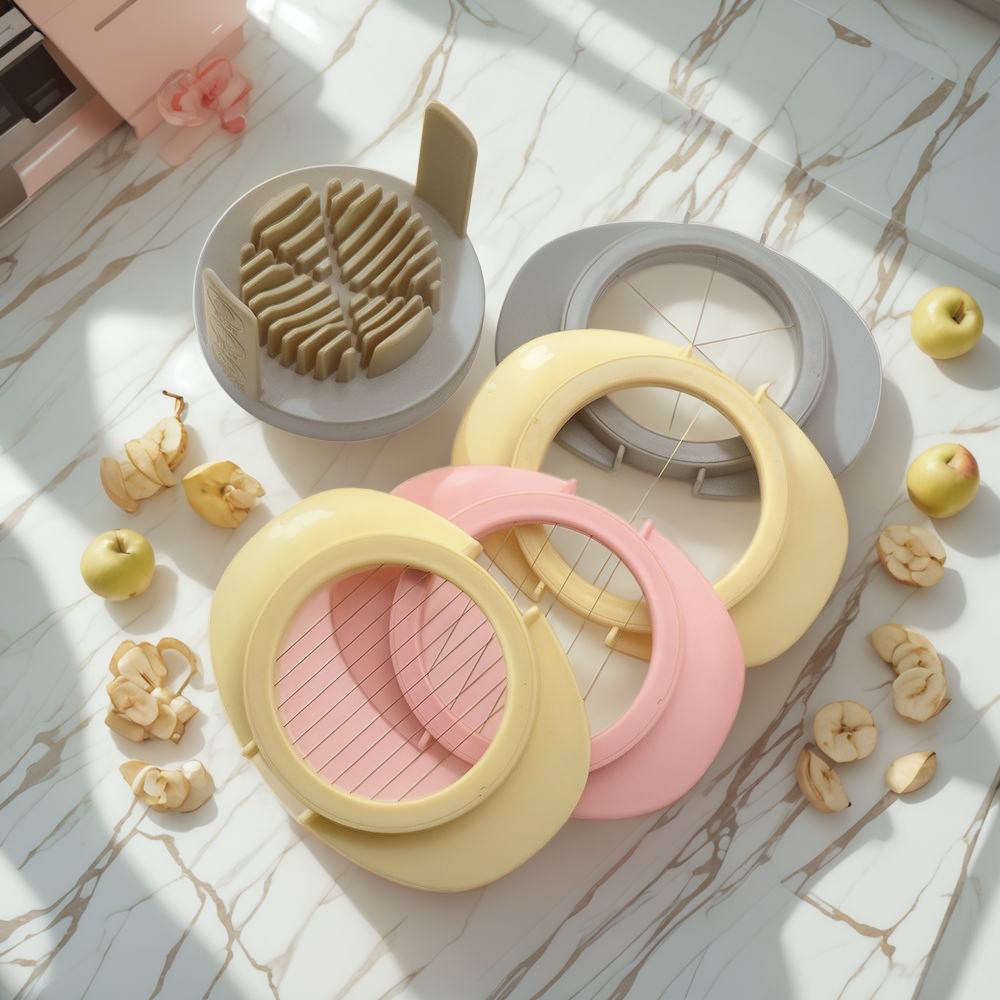
Most egg slicers include a base with a shallow cradle and a hinged cutting frame. The egg sits in the cradle while wires or cutting elements pass through it. Many modern designs focus on a compact footprint and simple handling. The original article referenced slicers with a durable cutting base, ergonomic grooves to hold ingredients, and fine stainless-steel wires; when comparing products, verify those details on the actual item page or packaging rather than assuming they apply to every model.
Some slicers are single-purpose tools for straight slices. Others include interchangeable inserts or allow the user to rotate the egg for wedges or diced pieces. Multi-function versions can be convenient, but more parts also mean more surfaces to clean and store.
What to Look for When Choosing an Egg Slicer
The best egg slicer for you depends on how often you cook, how much storage space you have, and whether you plan to cut other soft foods. Use the following checklist before purchasing.
| Feature to Check | Why It Matters | Practical Buying Tip |
|---|---|---|
| Stable base | Keeps the egg from sliding during cutting | Look for a cradle that supports the egg securely and sits flat on the counter. |
| Wire or blade alignment | Affects slice thickness and neatness | Check that the cutting elements line up cleanly with the slots in the base. |
| Ease of cleaning | Egg yolk can collect around wires and hinges | Choose a design with open areas that can be rinsed and wiped without difficulty. |
| Handle comfort | Improves control when cutting several eggs | Test whether the frame lowers smoothly without requiring excessive force. |
| Storage size | Small kitchens need compact tools | Consider whether the slicer fits in a drawer and whether extra inserts need a case. |
| Food compatibility | Not every slicer works well beyond eggs | If you want to slice strawberries, mushrooms, kiwi, or soft cheese, confirm the product is intended for those foods. |
Foods You Can Cut Besides Eggs
Although the name suggests a single use, many egg slicers can be helpful for soft ingredients. The key word is soft. The tool may work well for peeled boiled eggs, tender mushrooms, ripe strawberries, peeled kiwi, and some soft cheeses. These ingredients benefit from even cuts and are small enough to fit into the cradle.
Avoid using an egg slicer on hard carrots, raw potatoes, dense apples, frozen foods, bone-in items, or anything too large for the base. Forcing hard ingredients through the wires can bend or break the cutting elements and may create a safety risk. If in doubt, use a knife and cutting board.
How to Get Cleaner Slices
Small technique changes make a noticeable difference. First, cook the eggs fully and let them cool before slicing. Warm eggs are softer and more likely to deform. Second, peel carefully so the surface stays smooth. Third, place the egg lengthwise for oval slices or crosswise for smaller round slices, depending on the presentation you want.
- Set the slicer on a flat, dry surface.
- Place the peeled boiled egg in the cradle without forcing it.
- Lower the cutting frame in one steady motion.
- Lift the frame and remove the slices gently with a spoon or fork.
- For diced egg, rotate the sliced egg carefully and cut again if your slicer design allows it.
If yolk sticks to the wires, rinse the slicer between batches. This is especially useful when preparing several eggs for potato salad, egg salad, ramen toppings, or breakfast plates.
Cleaning and Care Tips
Egg residue dries quickly, so cleaning the slicer soon after use is easier than waiting. Rinse away yolk and white under running water, then use a soft sponge or small brush around the wires, hinge, and base slots. Avoid twisting the wires while cleaning. If the product instructions allow dishwasher use, follow those instructions; if not, hand washing is the safer default.
Dry the slicer before storing it, especially around the cutting elements and hinge. Store it where the frame will not be pressed by heavier utensils. A bent cutting wire or misaligned frame can reduce cutting quality.
When an Egg Slicer Is Worth Buying
An egg slicer is worth considering if you regularly prepare boiled eggs for salads, sandwiches, breakfast plates, or party trays. It is also useful for anyone who wants consistent slices without spending time on careful knife work. If you rarely eat boiled eggs and already cut soft foods comfortably with a knife, it may not be essential.
For small cafes, catering prep areas, or office pantry settings, durability and cleaning access matter more than appearance. Ask suppliers practical questions: What materials are used in the base and cutting wires? Are replacement parts available? Is the tool intended for commercial or household use? What cleaning method is recommended? These questions are more useful than judging by color or photos alone.
Practical FAQ
Can an egg slicer cut raw eggs?
No. Egg slicers are intended for cooked, peeled eggs. Raw eggs do not hold a shape and should not be placed in this type of tool.
Should eggs be hot or cold before slicing?
Cool eggs usually slice more cleanly. Let boiled eggs cool and peel them before placing them in the slicer.
Can I use an egg slicer for cheese?
Some soft cheeses may work, but dense or firm cheeses can strain the wires. Check the product guidance and avoid forcing the tool.
Why are my egg slices breaking apart?
The egg may be overcooked, too warm, or not seated properly in the cradle. Dried yolk on the wires can also cause tearing, so rinse between batches when needed.
What is the most important feature to compare?
Stability and cutting alignment are the most important. A slicer that holds the egg securely and cuts straight will usually give better results than one chosen only for its appearance.
Final Thoughts
An egg slicer is a simple tool, but it can improve speed and consistency in everyday food preparation. Choose one with a stable base, clean cutting action, and a design that is easy to wash. Use it for boiled eggs and suitable soft foods, avoid hard ingredients, and clean it promptly after use. With the right expectations, it can be a practical addition to a kitchen drawer rather than another unused gadget.
