




Multi-Functional Bottle Opener: Practical Guide to Easier Jar and Bottle Opening
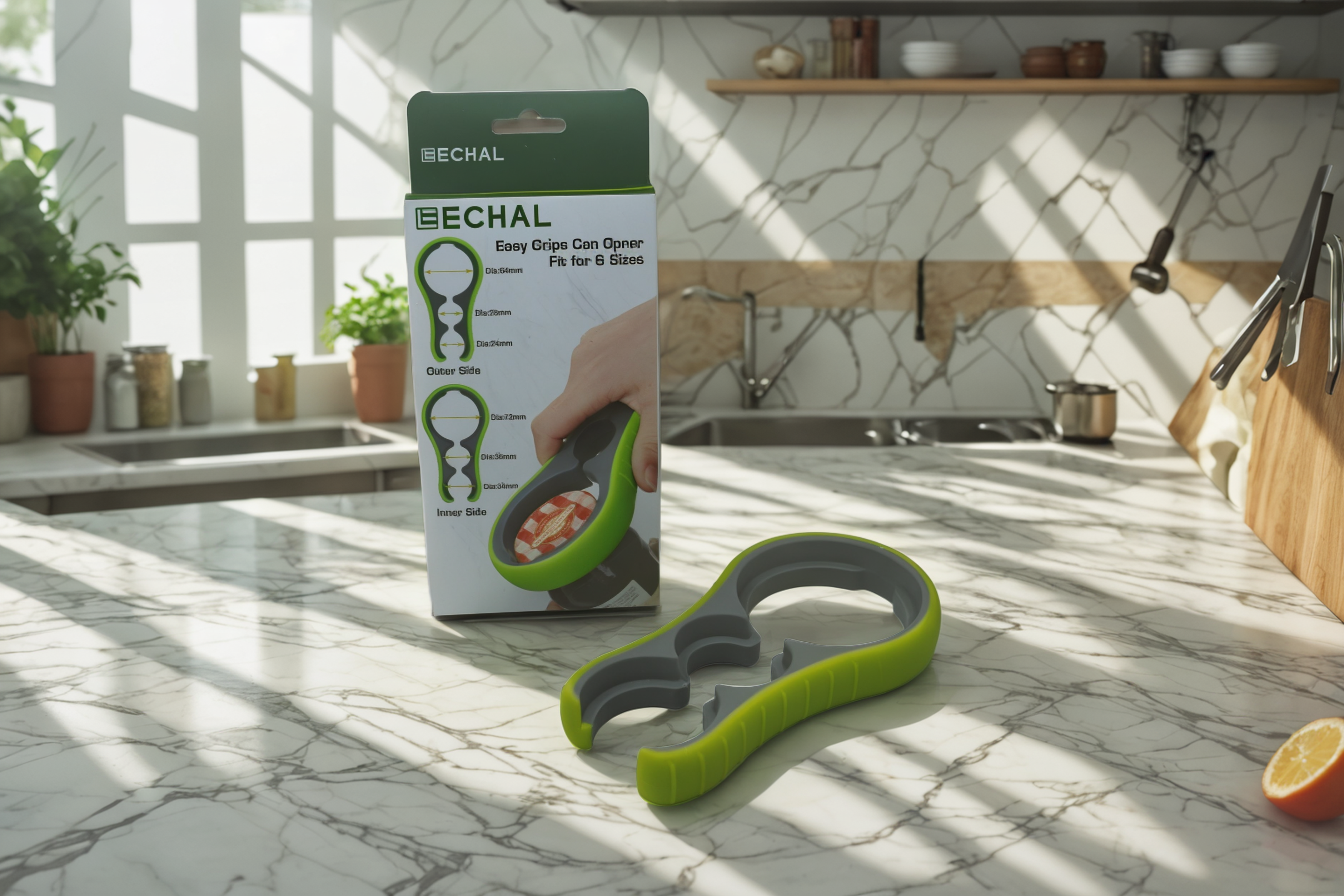
Stubborn jar lids, tight bottle caps and sealed food containers can slow down everyday kitchen work. A multi-functional bottle opener is designed to reduce that effort by giving the user more grip, leverage and control than fingers alone. The Eechal Easy Grips Can Opener described in the original product information is positioned as a compact kitchen tool for opening a range of lid sizes, with a textured grip and a green-and-gray two-tone appearance.
This guide explains how this type of opener works, what features matter most, how to compare it with other opening tools and how to use it safely. It is written for home users, kitchenware buyers and retailers evaluating a practical household product category rather than looking for a purely decorative accessory.
Key Takeaways
- A multi-functional bottle opener is useful when one tool needs to handle several lid and cap sizes.
- The original product description states that this opener is designed for six lid diameters: 64mm, 42mm, 28mm, 72mm, 36mm and 34mm.
- Texture, grip comfort and leverage are more important than appearance when choosing an opener for frequent use.
- Buyers should confirm material details, packaging, care instructions and any compliance requirements directly with the supplier.
- For best results, match the opening slot to the lid size and keep the tool clean and dry after use.
What a Multi-Functional Bottle Opener Is Designed to Do
A standard bottle opener usually performs one task: lifting a crown cap from a beverage bottle. A multi-functional opener expands that purpose by offering different contact points for caps, jar lids and small sealed containers. Instead of relying on hand strength alone, the tool helps transfer pressure around the lid edge or cap surface.
This can be especially useful for households where several people share the kitchen, including users who may have reduced hand strength, wet hands during cooking or difficulty gripping smooth glass jars. It can also be convenient for picnic baskets, small pantry areas or office break rooms where keeping multiple tools is not practical.
Lid Compatibility and Size Coverage
The most useful fact from the original product description is the stated six-size lid compatibility. The opener is described as having dual-sided functionality. The outer side is intended for lids with diameters of 64mm, 42mm and 28mm. The inner side is stated to accommodate 72mm, 36mm and 34mm lids. This range suggests the tool is designed for a mix of medium jars, smaller caps, coffee tins, jam containers and similar household packaging.
Before buying any opener, check the containers you use most often. Measure the lid diameter across the widest point, then compare it with the opener’s stated range. A tool with many slots is only helpful if those slots match your real kitchen needs.
| Selection point | What to check | Why it matters |
|---|---|---|
| Lid size range | Compare common jar and cap diameters with the opener’s supported sizes | A mismatched opener may slip or fail to grip properly |
| Grip texture | Look for a surface that is easy to hold with dry or slightly damp hands | Better grip reduces strain and improves control |
| Tool shape | Check whether both sides are easy to position around lids | Good alignment helps prevent twisting at an awkward angle |
| Storage size | Consider drawer, hook or travel storage needs | A compact opener is easier to keep accessible |
| Care instructions | Ask whether it should be hand washed or is suitable for other cleaning methods | Correct cleaning can help preserve the tool’s surface and usability |
Ergonomic Grip and Everyday Comfort
The original article highlights an ergonomic design and textured grip. For this product category, ergonomics should be understood in practical terms: the opener should feel stable in the hand, provide enough surface area to press or twist and reduce the need to squeeze tightly. A textured handle or grip area can help prevent slipping, particularly when the user is preparing food and hands are not completely dry.
When evaluating comfort, do not rely only on product photos. If sourcing for retail or wholesale, request samples and test them with different users. Ask whether the tool feels comfortable for small and large hands, whether the edges are smooth and whether the opener remains stable when used on lids of different sizes.
How to Use a Multi-Functional Opener Safely
Although the exact method depends on the lid and slot size, the basic process is simple. Choose the opening point that best matches the lid, seat the tool firmly around the cap or lid edge and apply steady pressure rather than sudden force. If the tool slips, stop and reposition it instead of twisting harder.
- Wipe moisture or oil from the lid and from the grip area of the opener.
- Select the side and opening size closest to the container lid diameter.
- Place the opener squarely over or around the lid so it makes full contact.
- Turn slowly with controlled pressure until the seal loosens.
- Remove the lid by hand once resistance has reduced.
Avoid using the opener on containers that are damaged, cracked or under unusual pressure. If a jar lid is dented, bulging or leaking, follow food safety guidance and do not force it open for consumption.
Durability, Cleaning and Care
The original text describes the opener as built with durability in mind, but it does not provide material specifications or test data. For that reason, buyers should treat durability as something to verify. Ask the supplier what materials are used, how the grip surface is made, what cleaning method is recommended and whether the tool has been tested for repeated opening cycles.
For everyday users, basic care is straightforward. Remove food residue after use, dry the tool before storing it and avoid leaving it pressed under heavy cookware in a drawer. If the opener has textured areas, pay attention to trapped sauces, oils or crumbs. A clean grip surface is not only more hygienic but also more effective.
When This Tool Makes Sense Compared with Alternatives
A multi-functional opener is a good choice when you want one simple tool for several container types. It may be more convenient than keeping separate jar grips, bottle openers and cap removers. However, it is not always the best solution for every situation. Very large jar lids, specialty commercial containers or damaged lids may require a different tool.
For home kitchens, the main value is convenience and reduced hand strain. For retailers or promotional buyers, the value depends on whether the opener’s size coverage, packaging and instructions match the target market. Clear product labeling matters because customers need to understand which lid sizes the opener is intended to fit.
Guidance for B2B Buyers and Sourcing Teams
If this opener is being considered for wholesale, private label, kitchenware assortments or promotional programs, focus on verification rather than assumptions. The original description provides appearance, grip and size-compatibility information, but it does not list manufacturing capacity, MOQ, pricing, certification, testing results or detailed material grade.
Useful questions to ask a supplier include: What exact materials are used in the body and grip? What packaging options are available? Can printed instructions show the six stated lid sizes clearly? Are samples available for fit and usability testing? What quality checks are performed before shipment? Are there market-specific labeling or compliance documents that buyers need to review? Getting these answers early helps avoid mismatched expectations.
Practical FAQ
What lid sizes does this opener support?
According to the original product description, it is designed for six diameters: 64mm, 42mm and 28mm on the outer side, plus 72mm, 36mm and 34mm on the inner side.
Is it only for bottles?
No. The described design is intended for multiple lid and cap types, including jars, bottles and smaller kitchen containers, as long as the lid size matches the tool.
Can it help users with weak grip strength?
It may help by adding leverage and a textured gripping surface. However, results depend on the user, the container and the tightness of the seal.
How should I clean it?
Wipe away food residue and dry it after use. For exact washing instructions, confirm the supplier’s care guidance because the original description does not specify dishwasher suitability.
What should wholesale buyers verify before ordering?
Ask about materials, sample availability, packaging, instructions, quality checks, lead time, MOQ, pricing and any compliance documents required for the destination market.
