





Kitchen Scissors with Cover: A Practical Guide for Safer Everyday Food Prep
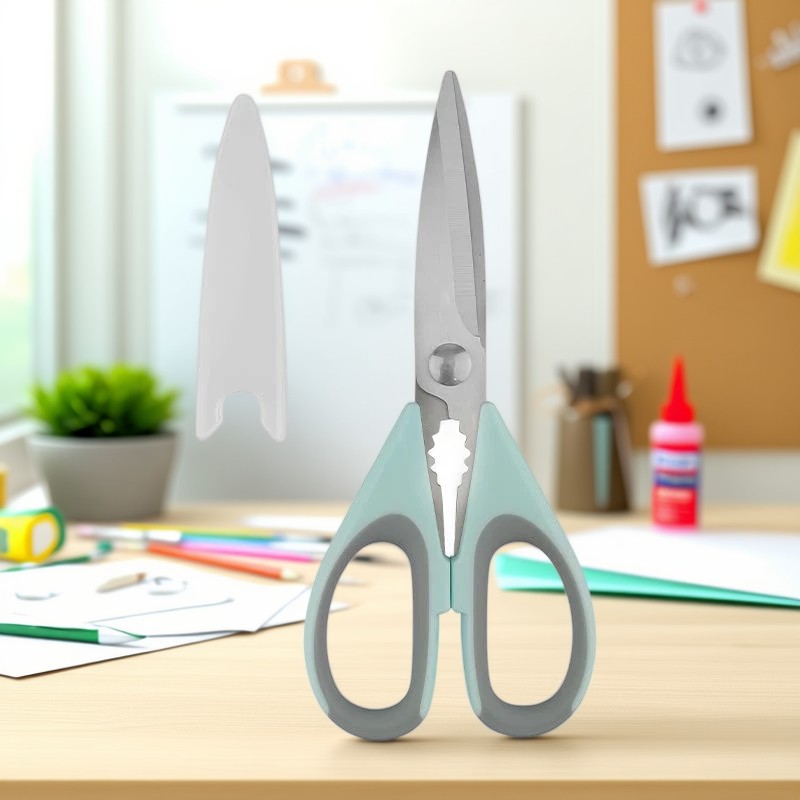
Kitchen scissors with cover are a small tool with a clear purpose: they help you cut common foods quickly while making storage safer and cleaner. Unlike general household scissors, kitchen scissors are designed for food preparation tasks such as trimming herbs, portioning meat, opening food packaging, and handling small cutting jobs that do not always require a knife and cutting board.
The model shown in the original article includes stainless steel blades, mint-green and charcoal-grey handles, an integrated serrated grip for tasks such as cracking nuts, and a translucent blade cover. Those details matter because scissors are frequently stored in busy drawers where uncovered blades can become dull, dirty, or unsafe to reach for. This guide explains how to choose, use, clean, and store covered kitchen scissors in a practical way.
Key Takeaways
- Kitchen scissors with a cover are useful for everyday food prep and safer drawer storage.
- Stainless steel blades are suitable for many kitchen cutting tasks, but they still need prompt cleaning and drying.
- A blade cover helps protect the cutting edge and reduces accidental contact during storage.
- Choose scissors based on grip comfort, cleaning access, blade strength, and the foods you cut most often.
- Do not use kitchen scissors for non-food tasks if you want to maintain hygiene and cutting performance.
What Kitchen Scissors with Cover Are Best Used For
Covered kitchen scissors are most helpful for repetitive, light-to-medium food preparation jobs. They can save time when a knife feels inconvenient, especially for small cuts or quick trimming. Common uses include cutting fresh herbs directly over a pan or bowl, trimming excess fat from meat, cutting poultry skin, opening sealed food bags, dividing flatbreads or cooked noodles, and cutting parchment or food-safe wrap.
The original product description notes that the scissors can handle cutting herbs, slicing meat, and cracking nuts with an integrated serrated grip. In practice, users should match the task to the tool. Soft herbs and packaging are low-stress jobs. Raw meat requires more careful cleaning afterward. Hard shells, bones, frozen foods, or very tough materials may strain scissors unless the supplier specifically states that the tool is intended for those uses.
Why the Protective Cover Matters
The translucent blade cover is more than an accessory. It helps separate the blades from other tools in a drawer, which can reduce accidental nicks when someone reaches inside. It can also help prevent the cutting edge from rubbing against metal utensils, which may contribute to dulling over time.
A cover also supports better hygiene habits, but it is not a substitute for washing. Scissors should be fully cleaned and dried before the cover is placed back on. Covering damp blades can trap moisture and food residue. If the cover becomes dirty, rinse and dry it as part of the same cleaning routine.
Feature Checklist Before You Buy
Not all kitchen scissors feel the same in daily use. Before selecting a pair, compare the features that affect safety, cleaning, and comfort.
| Feature | What to Check | Why It Matters |
|---|---|---|
| Blade material | Look for stainless steel if stated by the supplier | Supports sharp cutting and routine kitchen use |
| Blade cover | Confirm that the cover fits securely and is easy to remove | Improves safer storage and protects the blade edge |
| Handle comfort | Check handle size, grip shape, and whether it suits left or right hand use | Reduces hand fatigue during repeated cutting |
| Cleaning access | Ask whether the scissors separate for cleaning, if that feature is important | Food residue can collect near the hinge |
| Serrated grip | Review intended use for nuts or small gripping tasks | Helps with certain tasks but should not be overused on hard items |
| Storage size | Check total length and cover thickness before purchase | Ensures the scissors fit your drawer, rack, or utensil holder |
How to Use Kitchen Scissors Safely
Kitchen scissors are simple, but safe habits make them more reliable. Use them on a stable surface or hold the food securely away from your fingers. When cutting raw meat, keep a separate board or plate nearby so juices do not spread across the counter. Avoid twisting the blades sideways, as this can affect alignment and cutting feel.
- Wash the scissors before first use.
- Use them only for food-related tasks to reduce cross-contamination.
- Cut slowly when working with slippery foods such as raw meat.
- Keep the blade tips pointed away from your hand and body.
- Clean immediately after cutting raw meat, poultry, or seafood.
- Dry completely before replacing the blade cover.
If the scissors feel loose, misaligned, or difficult to close, stop using them until the issue is checked. A dull or unstable tool can be more dangerous than a sharp, controlled one.
Cleaning and Care Tips
Proper cleaning is essential because scissors have a pivot area where food particles can collect. Rinse away visible residue first, then wash with warm water and dish soap. Use a small brush around the hinge if needed. After washing, dry the blades, handles, and cover thoroughly with a clean towel.
If you cut raw meat, poultry, or seafood, treat the scissors like any other food-contact tool. Wash them promptly and avoid placing them directly back into a drawer without cleaning. If the product packaging or supplier instructions mention dishwasher suitability, follow that guidance. If no dishwasher guidance is provided, hand washing is the safer default for preserving handles, covers, and blade finish.
To maintain cutting performance, avoid cutting wire, cardboard, plastic strapping, plant stems from non-food use, or other household materials. Those tasks can dull the blades and introduce contaminants into a food-prep tool.
Who Benefits Most from Covered Kitchen Scissors?
These scissors are useful for home cooks, meal-prep users, small kitchens, and anyone who wants a compact tool for quick cutting. The mint-green and charcoal-grey handles described in the original article give the scissors a distinct appearance, but comfort and control should be the main decision factors. If possible, choose handles that feel steady when wet or lightly oily, because kitchen work is rarely perfectly dry.
Covered scissors are also practical for shared kitchens, where tools are frequently stored and moved by different people. The cover makes the blade easier to identify and less exposed in a drawer. However, households with children should still store scissors out of reach; a cover reduces exposure but does not make the tool child-safe.
Questions to Ask a Supplier or Seller
Because product listings often leave out important details, ask practical questions before buying in bulk or choosing a model for repeated use. Is the blade cover included with every unit? Are the blades detachable for cleaning? What are the recommended cleaning instructions? What tasks are the serrated grip designed to handle? Are replacement covers available if one is lost? What is the handle material, and does it have any heat or dishwasher limitations?
For retailers or hospitality buyers, also ask about packaging, barcode requirements, carton quantities, lead time, and whether product samples are available. Avoid assuming performance claims unless they are clearly documented by the supplier.
Practical FAQ
Can kitchen scissors with cover replace a chef’s knife?
No. They are best used alongside knives. Scissors are convenient for herbs, packaging, and small trimming jobs, while knives are better for chopping, slicing large produce, and precision cuts.
Should the cover be used immediately after washing?
Only after the scissors and cover are fully dry. Covering damp blades can trap moisture and residue.
Are stainless steel blades rust-proof?
Stainless steel is commonly used for kitchen tools, but it still benefits from proper washing and drying. Do not leave blades wet or dirty for long periods.
Can I use the serrated grip to crack any nut?
Use it only for tasks the supplier recommends. Very hard shells may require a dedicated nutcracker.
How often should kitchen scissors be replaced?
Replace them when the blades no longer cut cleanly, the hinge becomes unstable, the handles crack, or cleaning becomes difficult. Regular care can extend their useful life.
Kitchen scissors with cover are a practical addition to a well-organized kitchen. Focus on safe storage, easy cleaning, comfortable handling, and realistic use, and they can become one of the most frequently reached-for tools in everyday food preparation.
