





Kitchen Scissors with Cover: How to Choose and Use Them
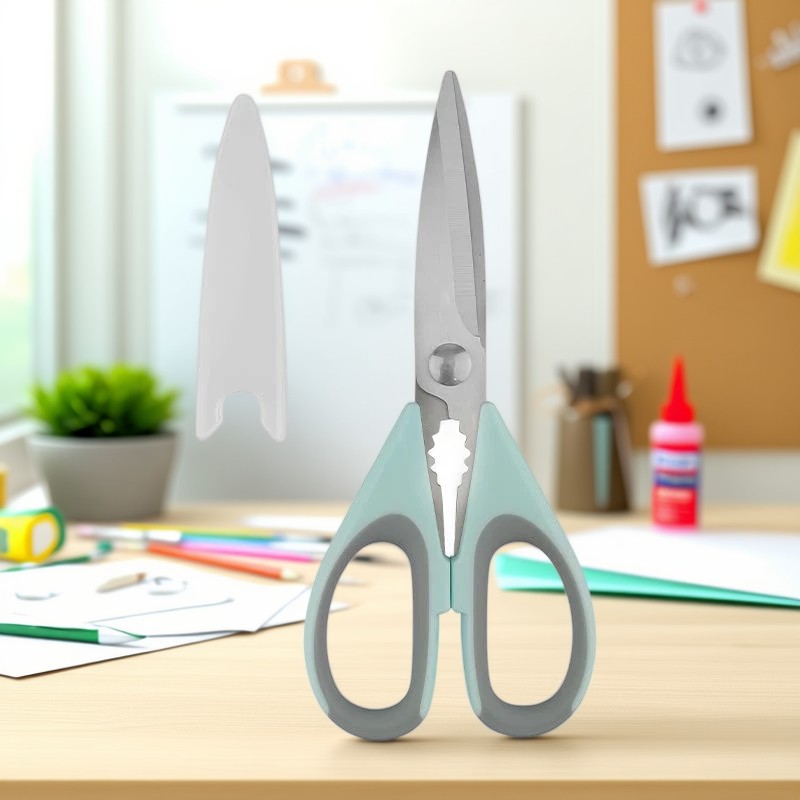
Kitchen scissors with cover are simple tools, but they can make daily food preparation safer and more efficient when selected and used correctly. Unlike general-purpose scissors, kitchen shears are intended for food-related tasks such as trimming herbs, cutting meat into smaller pieces, opening food packaging, and handling small prep jobs that do not always require a knife and cutting board. The added cover helps protect the blades during storage and reduces the chance of accidental contact in a crowded drawer.
The product shown in the original article includes stainless steel blades, mint-green and charcoal-grey handles, a translucent blade cover, and an integrated serrated grip described for tasks such as cracking nuts. Those are useful features, but buyers should still evaluate comfort, cleaning needs, storage habits, and the types of food they prepare most often before choosing any pair of covered kitchen scissors.
Key Takeaways
- A blade cover helps protect hands, drawers, and blade edges during storage.
- Stainless steel blades are a practical choice for kitchen use, but care is still needed to reduce staining and corrosion.
- Handle comfort matters, especially for repetitive cutting tasks.
- Kitchen scissors should be cleaned promptly after contact with raw meat, fish, or sticky foods.
- Choose features based on real cooking habits rather than appearance alone.
What Kitchen Scissors with Cover Are Best Used For
Covered kitchen scissors are most useful for quick cutting tasks where a knife may be slower or less controlled. They can snip scallions, parsley, cilantro, and chives directly over a bowl. They can trim fat from meat, portion bacon, cut cooked noodles, open sealed food bags, and remove kitchen twine from roasts. A sturdy pair can also help with poultry preparation, although heavy bone cutting should only be attempted if the scissors are designed for that level of work.
The serrated grip mentioned in the source article adds another practical function: it may help hold small hard items, such as nuts, when cracking or gripping. However, this should not be confused with a dedicated nutcracker or heavy-duty tool unless the supplier clearly states the intended use. For safety, avoid forcing the scissors beyond their designed task range.
Why the Cover Matters for Safety and Storage
The translucent blade cover is more than a visual detail. In a utensil drawer, uncovered blades can scrape against other tools, dull faster, or cause small cuts when someone reaches in quickly. A cover creates a barrier around the cutting edge, making the scissors easier to store alongside peelers, tongs, spatulas, and other utensils.
A cover is also useful when transporting kitchen tools for picnics, outdoor cooking, catering prep, or shared kitchens. Because it is translucent, users can see the blade position without fully removing the cover. That small detail helps reduce guesswork, especially when several tools are packed together. The cover should fit securely but still be easy to remove with dry hands.
Feature Checklist Before You Buy
Not every pair of kitchen scissors is suitable for every household. Before purchasing, compare the following practical points. This checklist focuses on selection rather than marketing claims.
| Feature to Check | Why It Matters | Question to Ask |
|---|---|---|
| Blade material | Stainless steel is commonly used for kitchen cutting because it is durable and easier to maintain than many basic metals. | What type of stainless steel is used, and what care does the supplier recommend? |
| Blade cover fit | A loose cover may fall off in storage; an overly tight cover may be inconvenient. | Does the cover stay in place when stored in a drawer or bag? |
| Handle comfort | Soft, steady handles reduce hand fatigue during repeated cutting. | Are the handle openings comfortable for different hand sizes? |
| Cleaning design | Food residue can collect near joints, grips, and serrated areas. | Can the scissors be cleaned thoroughly after raw-food use? |
| Task suitability | Light herb cutting and heavy poultry work require different strength levels. | What foods and cutting tasks are these scissors intended for? |
How to Use Kitchen Scissors Safely
Good cutting habits are as important as the tool itself. Use kitchen scissors on stable food items and avoid cutting toward your hand. For slippery foods, place the item on a cutting board or in a bowl before trimming. When cutting meat, work slowly and keep fingers away from the blade path. If the scissors begin to twist, slip, or require excessive force, stop and switch to a more suitable knife or cleaver.
- Remove the blade cover only when you are ready to cut.
- Check that the blades are clean and dry before use.
- Cut food into manageable sections rather than forcing thick pieces.
- Wash the scissors promptly after use, especially after raw proteins.
- Dry fully before replacing the cover and storing.
Children should not use kitchen scissors without supervision. Even with a protective cover, the blades are sharp and designed for food prep, not craft use or play.
Cleaning and Hygiene Tips
Kitchen scissors touch many types of food, so cleaning needs to be consistent. Rinse off visible residue immediately after cutting sticky, oily, or protein-rich foods. Use warm water and dish soap, paying attention to the hinge area, serrated grip, and inside edges of the handles. If food is trapped in small spaces, use a dish brush rather than your fingers.
After washing, dry the scissors carefully with a clean towel. Moisture left around the joint or under the cover can encourage spots or unpleasant odors. Do not put the cover back on while the blades are wet. If the supplier states that the scissors are dishwasher safe, follow those instructions; if no dishwasher guidance is provided, hand washing is the safer default for maintaining blade performance and handle condition.
Storage and Maintenance for Longer Use
The main purpose of the blade cover is safe storage, but it also helps reduce edge contact with other utensils. Store the scissors in a dry drawer, on a utensil rack, or in a food-prep kit with the cover attached. Avoid leaving them loose in a sink, where they can be hidden under dishes and become a cut hazard.
Over time, all cutting tools can become dull. If the scissors crush herbs instead of snipping cleanly, slide on packaging, or require more pressure than before, the blades may need sharpening or replacement. Also check the handle and cover for cracks, looseness, or trapped residue. A damaged cover should not be relied on for safe storage.
FAQ
Can kitchen scissors replace a chef’s knife?
No. They are a useful companion tool for trimming, snipping, and quick cutting, but a chef’s knife is still better for chopping large vegetables, slicing thick cuts, and precision board work.
Are stainless steel kitchen scissors rust-proof?
Stainless steel is resistant to staining and corrosion, but it is not maintenance-free. Wash, dry, and store the scissors properly, especially after contact with salt, acidic foods, or raw meat juices.
Should I keep the cover on all the time?
Keep the cover on during storage and transport. Remove it during use and cleaning, then replace it only after the blades are fully dry.
What should I ask before buying kitchen scissors online?
Ask about blade material, intended cutting tasks, cleaning instructions, cover fit, handle dimensions, and whether replacement or care guidance is available. Avoid assuming heavy-duty performance unless it is clearly specified.
Can the serrated grip be used for cracking nuts?
The original product description mentions an integrated serrated grip for cracking nuts. Use it gently and only for suitable small items. For hard shells or frequent nut cracking, a dedicated nutcracker may be more appropriate.
