




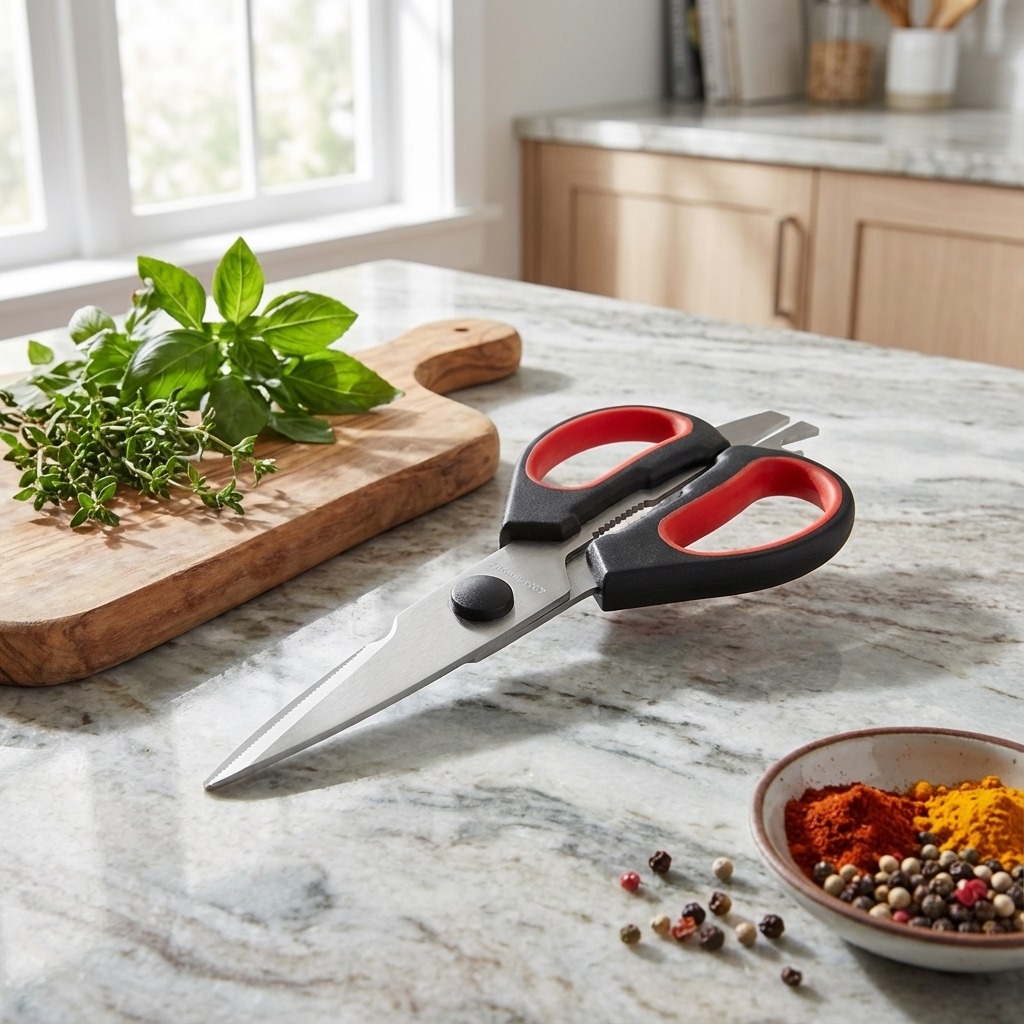
OEM Kitchen Shears: Practical Sourcing Guide for Custom Kitchen Scissors
OEM kitchen shears are often sourced by houseware brands, importers, distributors, promotional product companies, and retailers that need a kitchen cutting tool with their own branding or market-specific features. Unlike a standard off-the-shelf item, an OEM project may involve decisions about blade shape, handle color, packaging, surface finish, accessory functions, and quality control expectations.
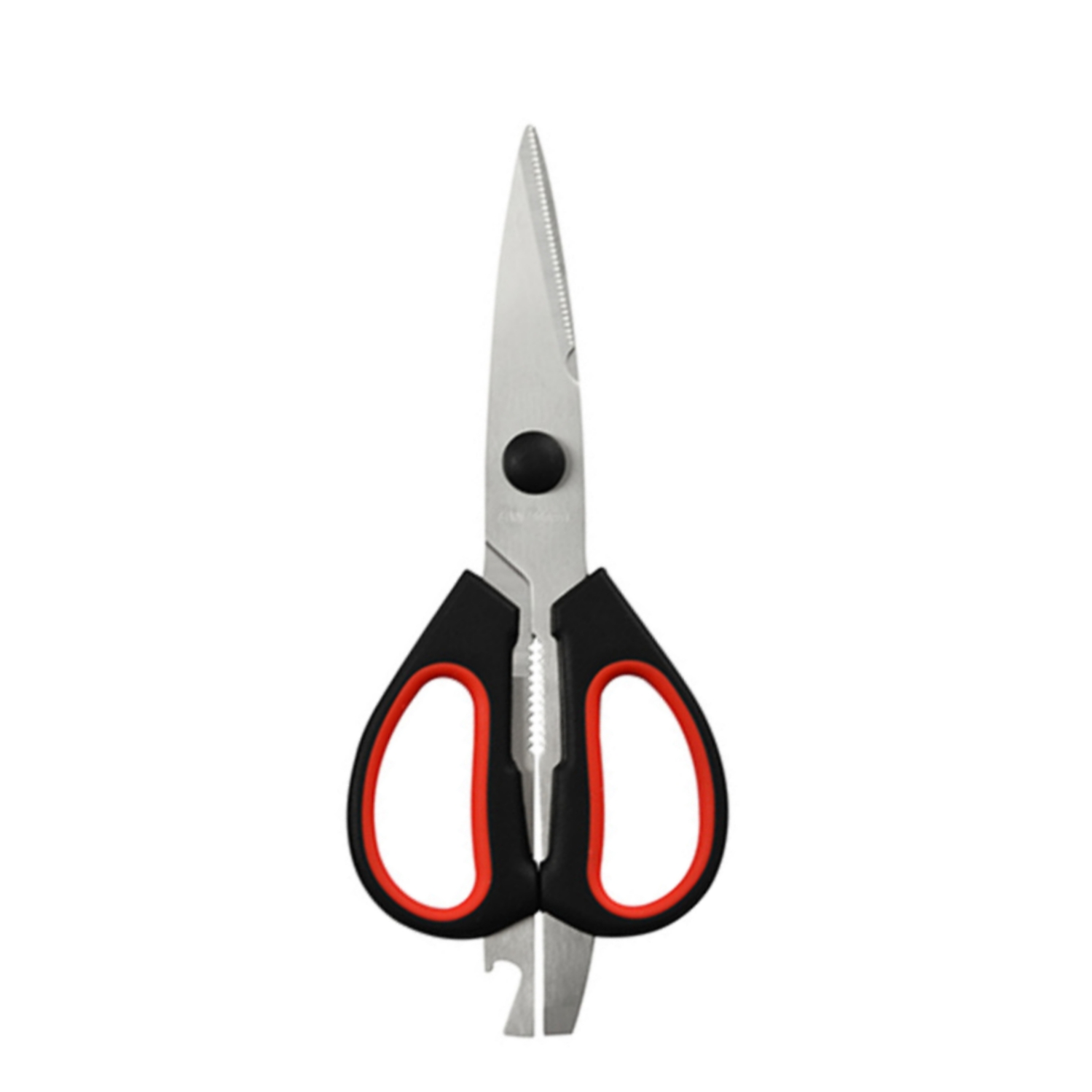
The original product discussion highlights several common features associated with multifunction kitchen scissors: serrated cutting edges, ergonomic handles, stainless steel construction, and added utilities such as a bottle opener, nutcracker, or fish scale scraper. Those features can be useful, but buyers should evaluate them carefully rather than treating every extra function as automatically valuable. A good sourcing decision starts with the end user, the sales channel, and the level of durability expected.
Key Takeaways
- OEM kitchen shears should be specified around target use: home cooking, retail gift sets, food prep, or promotional programs.
- Multifunction features are helpful only when they are durable, easy to clean, and relevant to the buyer’s market.
- Do not rely on general claims. Ask the kitchen scissors factory about materials, finish, packaging, inspection process, and sample approval.
- For custom kitchen shears manufacturing, provide drawings, reference samples, logo requirements, and packaging instructions as early as possible.
What OEM Kitchen Shears Usually Involve
OEM means the supplier manufactures according to a buyer’s requested design, branding, or specification. For kitchen shears, the project may be simple, such as adding a logo to an existing model, or more complex, such as changing handle colors, adjusting the blade profile, designing retail packaging, or combining several utility functions in one product.
Because scissors are everyday tools, small details matter. Handle comfort, blade alignment, cutting feel, opening resistance, surface edges, and cleaning access all affect customer satisfaction. If the shears will be used for cutting meat, herbs, vegetables, packaging, or fish, the buyer should confirm whether the selected model is suitable for those tasks and request samples before approving mass production.
Common Features to Compare
Many multifunction kitchen scissors are promoted as tools for several kitchen tasks. The original article mentions serrated edges, ergonomic handles, stainless steel blades, bottle openers, nutcrackers, fish scale scrapers, black and red tones, and dishwasher-safe maintenance. These can be practical features, but buyers should ask how each one is built and tested by the supplier, because the same feature can perform differently across designs.
| Feature or check | Why it matters | Questions to ask a supplier |
|---|---|---|
| Blade material | Affects corrosion resistance, sharpness, and cutting life. | What material is used, and can it be documented in the quotation or specification sheet? |
| Serrated edge | Helps grip slippery or tough ingredients. | Is the serration on one blade or both, and what foods is it designed to cut? |
| Handle design | Impacts comfort during repeated use. | Are different handle colors, shapes, or grip materials available for OEM orders? |
| Multifunction tools | Adds value but may complicate cleaning or durability. | Which extra functions are included, and are they part of the existing mold? |
| Cleaning method | Important for consumer instructions and product returns. | Is the product recommended for hand washing or dishwasher cleaning, and what care instructions should be printed? |
| Packaging | Affects retail presentation and shipping protection. | Can the factory support buyer artwork, barcode placement, and carton labeling requirements? |
How to Define Your Custom Kitchen Shears Project
Before contacting a kitchen scissors factory, prepare a clear sourcing brief. A vague request such as “quote kitchen shears” usually leads to inconsistent pricing and unsuitable samples. A useful brief should explain where the product will be sold, who will use it, and what level of customization is required.
- Choose the product type: basic kitchen scissors, heavy-duty shears, detachable shears, or multifunction scissors.
- Define expected tasks: cutting herbs, poultry, vegetables, seafood, food packaging, or general household use.
- List required features: serrated blade, soft-grip handle, bottle opener, nutcracker, fish scale scraper, or other functions.
- Provide branding details: logo position, logo method, handle color, packaging style, and label requirements.
- Ask for commercial terms: sample cost, lead time, MOQ, payment terms, production schedule, and shipping options.
- Confirm quality documents: inspection standard, approved sample process, and any market-specific compliance documents you require.
Evaluating a Kitchen Scissors Factory
A reliable supplier should be able to explain the product clearly and answer practical production questions. For OEM kitchen shears, buyers should not base selection only on appearance or the lowest unit price. A low-cost model may be suitable for a promotional campaign, while a retail houseware brand may need better finishing, stronger packaging, or tighter inspection.
Ask whether the supplier can share current product options, available molds, customization limitations, and packaging templates. If you need a new design, ask whether new tooling is required and who owns the mold after development. If the shears will be sold in a market with specific legal or safety requirements, state those requirements directly and ask what documentation the supplier can provide. Avoid assuming certifications or test results unless they are supplied and verified for the exact product.
Sampling and Quality Control Steps
Samples are essential for custom kitchen shears manufacturing. Review at least one physical sample before confirming production, and ideally compare it with a reference product. Check blade alignment, cutting smoothness, handle comfort, screw tightness, surface finish, and whether any multifunction parts feel sharp, loose, or difficult to use.
For production orders, define the inspection points in writing. Common checks include appearance, quantity, logo accuracy, color matching, packaging condition, carton marks, cutting performance, and general workmanship. If the product includes a bottle opener, nutcracker, or scraper, include those functions in the inspection checklist. When possible, approve a golden sample and use it as the comparison standard for bulk goods.
Use, Care, and End-User Instructions
Even though this is a B2B sourcing topic, care instructions still matter because they affect returns and reviews. Kitchen shears are exposed to moisture, salt, acidic foods, and repeated washing. Buyers should ask the supplier for recommended cleaning instructions and ensure those instructions match the selected product. If dishwasher cleaning is claimed, ask the supplier to confirm whether that recommendation applies to the exact model and finish.
End users should generally clean shears promptly after cutting food, dry them before storage, and avoid using kitchen scissors for non-food tasks that can damage the edge. If the design is detachable, instructions should explain how to separate and reassemble the blades safely. Clear care guidance on packaging or inserts can reduce misuse and improve customer satisfaction.
Practical FAQ for OEM Kitchen Shears Buyers
What information should I send to get an accurate quotation?
Send product photos or drawings, target quantity, logo requirements, packaging needs, destination market, and any testing or documentation requirements. If you have a reference sample, mention its size, weight, and key features.
Can I customize only the logo and packaging?
Often yes, if the supplier has an existing kitchen shears model suitable for your market. Ask which models support logo application and custom packaging without new tooling.
Are more functions always better?
No. Extra functions can be useful, but they should not make the shears uncomfortable, hard to clean, or weak at stress points. Choose functions that match real consumer use.
How should I compare samples from different suppliers?
Use the same checklist for each sample: cutting feel, blade fit, handle comfort, finish, logo quality, packaging, cleaning instructions, and performance of any added tools.
What should be confirmed before mass production?
Confirm the approved sample, specification sheet, packaging artwork, carton marks, quantity tolerance, inspection method, lead time, payment terms, and shipping arrangement.
Final Thoughts
OEM kitchen shears can be a strong product for houseware lines when the sourcing process is specific and disciplined. Focus on the intended user, necessary functions, verified materials, sample approval, and written quality expectations. A capable kitchen scissors factory should help clarify what can be customized, what should be tested, and which details must be confirmed before production begins.
