




OEM Kitchen Scissors Sourcing Guide for Practical Buyers
OEM kitchen scissors are a small product category, but they can influence how customers judge the quality of an entire kitchenware range. For importers, distributors, supermarkets, promotional buyers, and private-label brands, the goal is not simply to find a pair of scissors that looks attractive in photos. The real task is to select a design that cuts reliably, feels comfortable, supports everyday kitchen tasks, and can be supplied with consistent presentation for the intended market.
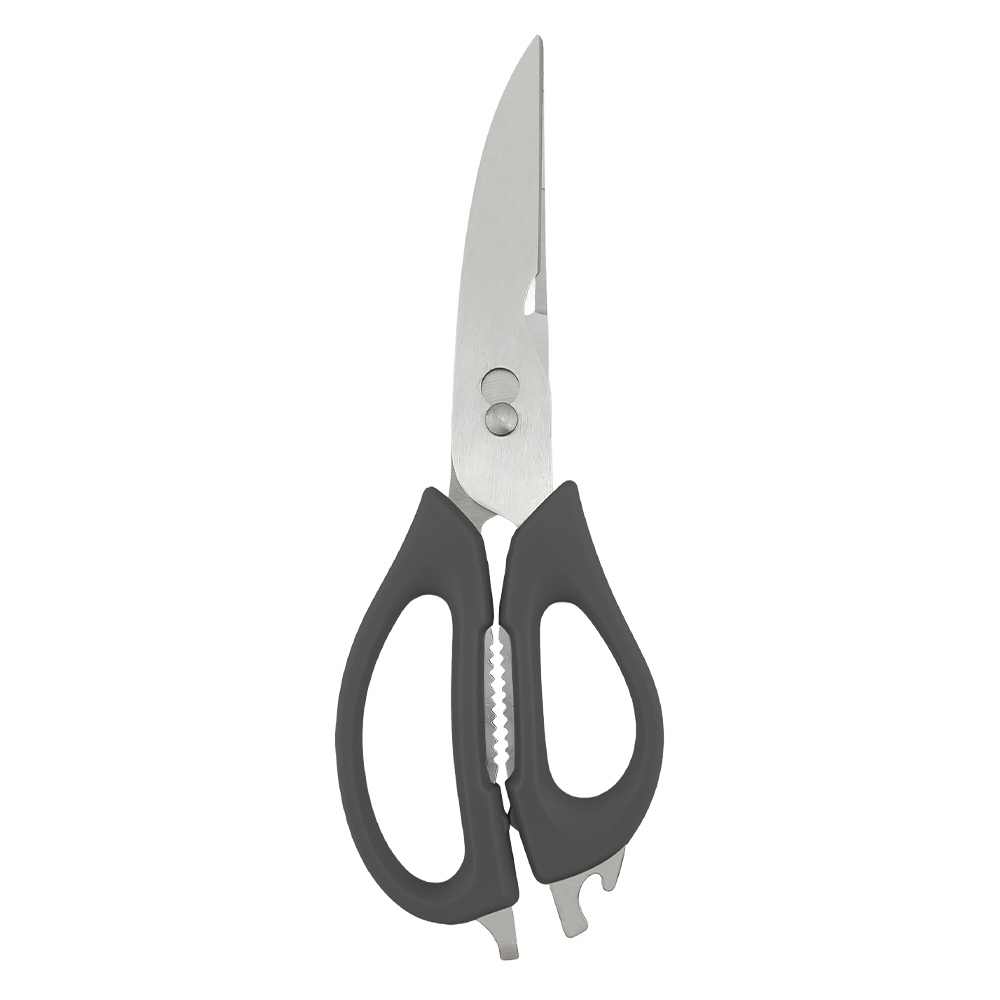
The original product introduction highlights a pair of multi-functional kitchen scissors associated with Yangjiang kitchenware manufacturing, with stainless steel blades, ergonomic handles, and integrated functions such as a bottle opener and nutcracker. Those are useful starting points. A stronger sourcing decision, however, should also consider buyer questions around material details, finish, packaging, inspection, branding options, and target user expectations.
Key Takeaways
- OEM kitchen scissors should be evaluated by cutting performance, comfort, durability, and ease of cleaning, not by appearance alone.
- Multi-function handles can add value, but buyers should confirm whether each added function is useful for the target retail channel.
- Stainless steel is stated in the source, but buyers should ask the supplier for the exact grade, hardness target, and corrosion-resistance expectations.
- For private label or wholesale orders, packaging, logo placement, inspection standards, and spare samples should be discussed before quotation approval.
What Buyers Should Look For First
A good pair of kitchen scissors must perform basic cutting tasks cleanly before any extra function matters. Typical consumer uses include snipping herbs, trimming food packaging, cutting cooked foods, preparing vegetables, and handling poultry or seafood. If the blades twist, drag, or lose alignment quickly, the product will create complaints even if the handle color and packaging are attractive.
For B2B sourcing, request samples and test them against realistic tasks. Do not rely only on catalog descriptions. Ask the supplier whether the scissors are intended for light household use, general kitchen use, or heavier food-preparation tasks. This helps avoid mismatching a product with a retail promise that the item cannot support.
Materials and Blade Questions
The source article states that the scissors use stainless steel blades. That is a useful fact, but stainless steel can vary widely in grade, hardness, edge retention, and corrosion resistance. A buyer should not assume a specific grade unless the supplier confirms it in writing.
Useful questions include: What stainless steel grade is used for the blades? Is there a target hardness range? How is the blade edge finished? Are the blades polished, brushed, coated, or otherwise treated? Can the supplier provide care instructions for end users? If the scissors will be sold in humid markets or through channels where dishwasher use is common, ask how the supplier recommends preventing rust spots and maintaining the edge.
Handle Comfort and Control
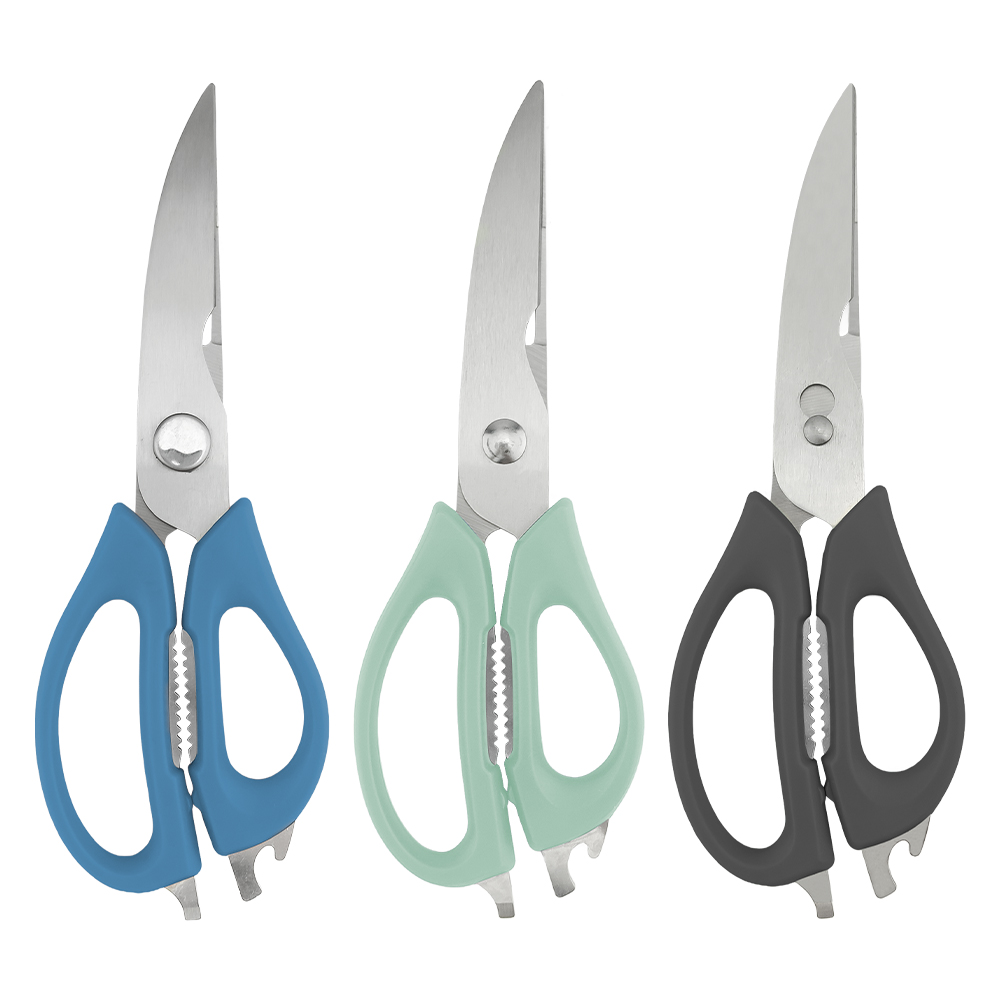
The original article mentions ergonomic handles and color options such as ocean blue, mint green, and charcoal gray. Handle design matters because kitchen scissors are often used with wet hands, repetitive motions, or firm pressure. A handle that looks appealing may still cause discomfort if the finger openings are too small, the edges are sharp, or the grip material feels slippery.
When checking samples, test the scissors with different hand sizes. Open and close them repeatedly. Check whether the handle flexes under pressure and whether the inner edges feel smooth. If the product is planned for a family kitchen, comfort may matter more than an aggressive professional look. If it is planned for food-service or heavy preparation use, grip security and strength become more important.
Multi-Function Features: Useful or Unnecessary?
The highlighted product includes integrated functions such as a bottle opener and nutcracker. These features can be valuable for retail storytelling because they give buyers a simple reason to choose one model over a basic pair. However, extra functions should be practical, safe, and easy to understand.
For example, a bottle opener built into the handle should not create a sharp or uncomfortable pressure point. A nutcracker area should be positioned so users can apply force without damaging the hinge or losing control. If the product is sold as a multi-functional kitchen tool, the packaging and instructions should explain safe use clearly. Buyers should also consider whether the target market values multi-function tools or prefers a simple, easy-clean design.
Comparison Checklist for OEM Kitchen Scissors
| Selection Point | What to Check | Questions for the Supplier |
|---|---|---|
| Blade material | Stainless steel type, edge finish, alignment | What grade is used and how is it verified? |
| Cutting performance | Herbs, packaging, poultry, cooked food | What sample tests do you recommend before order approval? |
| Handle design | Grip comfort, finger space, surface texture | Can handle colors or materials be customized? |
| Added functions | Bottle opener, nutcracker, other handle features | Are these functions tested during inspection? |
| Cleaning and care | Food residue gaps, hinge area, user instructions | What cleaning guidance should be printed on packaging? |
| OEM presentation | Logo, color, packaging, barcode, manual | What artwork files and approval steps are required? |
OEM, Wholesale, and Private-Label Planning
For OEM kitchen scissors, the product is only one part of the sourcing project. Buyers should prepare a short specification sheet before requesting a quotation. This can include target retail price range, expected packaging format, color preference, logo placement, carton requirements, and inspection points. A clear brief reduces misunderstandings and makes supplier comparison easier.
If branding is required, ask whether the logo can be printed, laser marked, labeled, or added to packaging only. Do not assume customization is available for every order size. Instead, ask the supplier about minimum order quantity, tooling or printing fees, sample lead time, production lead time, and artwork approval process. These details should be confirmed case by case rather than guessed from a product description.
Quality Control Before Shipment
Kitchen scissors are mechanical products, so small quality variations can affect the user experience. Before mass production, approve a reference sample and keep it for comparison. During inspection, check blade alignment, screw or rivet tightness, opening and closing smoothness, handle finish, visible scratches, packaging accuracy, and carton labeling.
Buyers should also test a practical number of pieces by cutting common kitchen materials. If the scissors include a bottle opener or nutcracker, those features should be checked as well. For markets with specific safety, labeling, or food-contact requirements, buyers should ask the supplier what documents are available and confirm with their own compliance advisor before import.
Practical FAQ
Are OEM kitchen scissors only for professional kitchens?
No. OEM kitchen scissors can be developed for household retail, promotional programs, supermarkets, online stores, or professional kitchenware ranges. The intended channel should guide the blade strength, handle comfort, packaging, and price positioning.
What should I confirm before placing a wholesale order?
Confirm the blade material details, sample performance, handle color, logo method, packaging design, inspection standard, carton information, lead time, and after-sales handling process. Ask for written confirmation rather than relying on verbal descriptions.
Do multi-functional scissors always sell better?
Not always. Bottle openers and nutcrackers can make a product more attractive, but only if they are comfortable and relevant to the customer. Some buyers may prefer a simpler design that is easier to clean and explain.
Can I claim stainless steel quality in my marketing?
You can state stainless steel if the supplier confirms it, but avoid claiming a specific grade, test result, or performance level unless you have documentation. Accurate wording helps reduce compliance and customer-service risk.
How should end users care for kitchen scissors?
General care guidance usually includes washing after use, drying promptly, avoiding long soaking, and storing safely away from children. Final instructions should match the supplier's confirmed product design and material recommendations.
Final Buying Advice
OEM kitchen scissors are a practical category when buyers treat them as functional tools rather than simple accessories. The best sourcing process starts with clear use cases, sample testing, and detailed supplier questions. Stainless steel blades, ergonomic handles, color choices, and built-in functions such as a bottle opener or nutcracker can all support a strong product, but only when they are matched to real customer needs and backed by consistent production control.
For a private-label or wholesale program, prepare specifications early, compare samples carefully, and ask the supplier to clarify any missing commercial or technical details before confirming the order. This approach helps create kitchen scissors that are easier to sell, easier to use, and less likely to create avoidable quality issues.
