




OEM School Scissors: Practical Sourcing Guide for Buyers
Choosing school scissors for a classroom, stationery range, student art kit, or private-label program is not only about color and price. Young users need a tool that is easy to control, identifiable, and appropriate for everyday paper crafts. For buyers sourcing OEM school scissors, the main challenge is balancing child-friendly handling with reliable cutting performance and consistent factory execution.
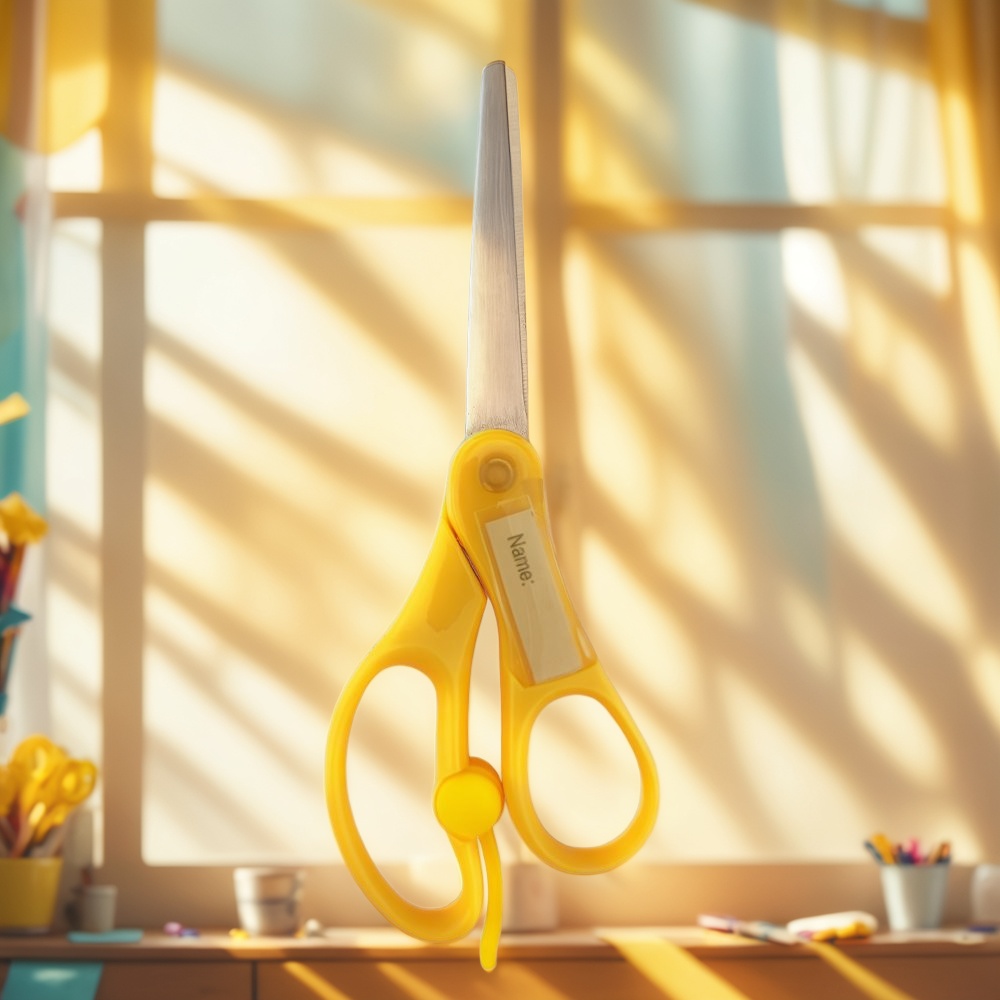
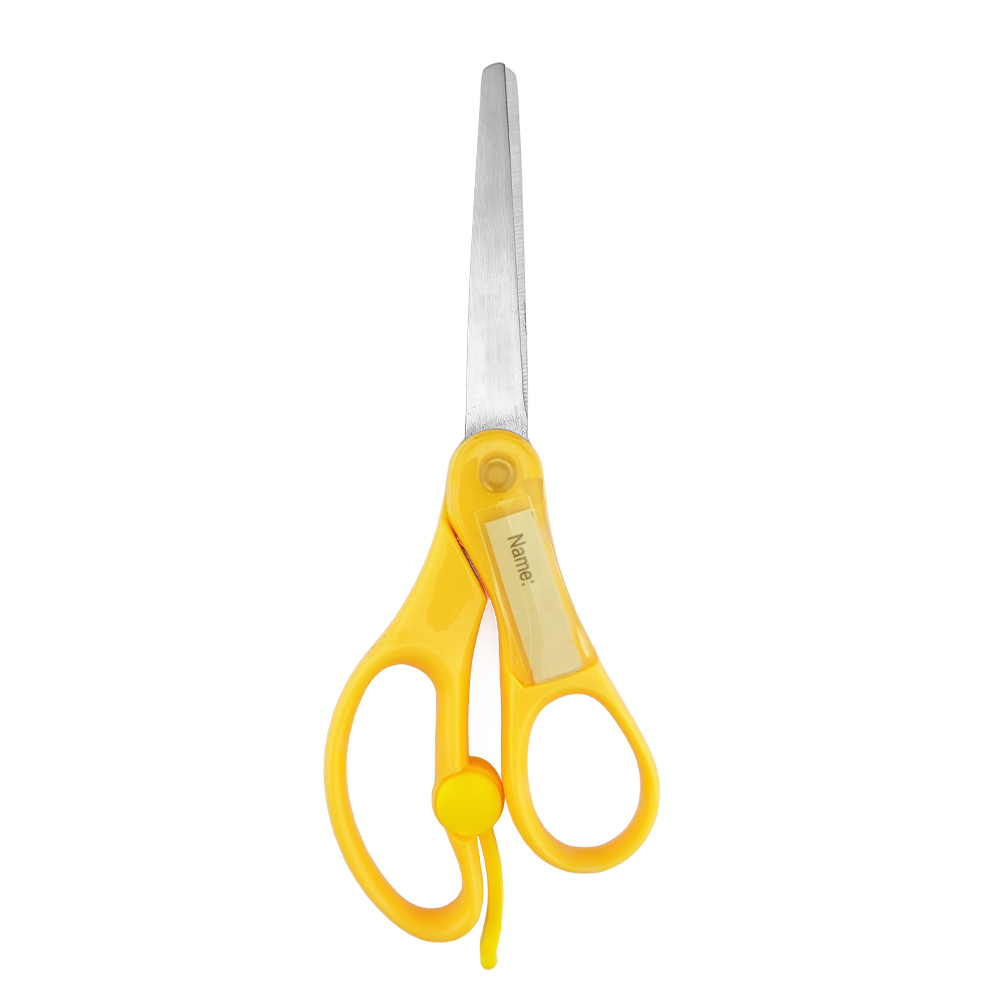
The product shown in the original article is a pair of Kid's Safety Scissors with a Luminous Grip. Explicit visible and described details include a bright yellow dual-loop handle, a built-in labeling insert for personalization, lightweight polymer construction, and rounded stainless steel blades intended to cut paper, cardstock, and craft materials. This guide explains how to evaluate those features from a sourcing perspective without assuming unverified specifications such as certification status, production capacity, minimum order quantity, or test results.
Key Takeaways
- For schools and retail kits, comfort, visibility, and name labeling can reduce classroom confusion and improve daily usability.
- Rounded blades are important for child-focused scissors, but buyers should still request safety test information from the supplier.
- OEM programs should confirm handle material, blade material, packaging, logo method, labeling area, and sample approval process.
- Do not rely on product photos alone; inspect samples for cutting consistency, blade alignment, burrs, handle comfort, and durability.
What Makes OEM School Scissors Different?
OEM school scissors are typically sourced for a specific sales channel or institutional use case. A buyer may need them for back-to-school packs, classroom supply tenders, craft kits, bookstore assortments, promotional education sets, or private-label stationery lines. Compared with generic household scissors, school scissors must be easier for small hands to manage and simple for teachers or parents to identify.
The original product description highlights several features that match this intent. The bright yellow handle makes the scissors easier to spot in a busy classroom. The dual-loop handle is designed for smaller hands, and the lightweight polymer construction helps reduce hand fatigue during long craft sessions. The labeling insert is especially useful in group environments because children can add a name card, reducing mix-ups and encouraging responsibility for personal supplies.
Design and Comfort: What Buyers Should Check
Comfort affects how confidently a child can cut along lines, complete craft tasks, and use the tool without frustration. When reviewing a sample, do not evaluate the handle only by appearance. Check whether the finger loops suit the intended age group, whether the inner edges feel smooth, and whether the handle remains comfortable after repeated open-close movements.
The yellow dual-loop handle described in the original article is a practical design choice because it combines visibility with simple hand placement. If you are sourcing a similar OEM design, ask the supplier whether handle colors can be customized, whether the grip shape can be adjusted, and whether the polymer material used in production will match the approved sample. Avoid assuming that a bright handle is automatically safer; visibility helps, but fit, smoothness, and blade control are equally important.
Safety Features and Classroom Identification
For school scissors, safety is a primary purchasing consideration. The original product includes rounded stainless steel blades. Rounded tips can help reduce accidental puncture risk compared with pointed tips, while still allowing children to cut paper, cardstock, and common craft materials. Buyers should check that the rounded ends are consistently finished and free from sharp burrs.
The built-in labeling insert is also relevant to safety and classroom management. Personalized name card scissors help teachers identify ownership quickly, which can reduce disputes and lost supplies. For institutional buyers, this feature may be more useful than a decorative element because it supports daily organization. If ordering OEM versions, ask whether the name-card window size, insert material, or label placement can be adapted to your packaging or school-kit format.
Comparison Checklist for Sourcing Decisions
| Evaluation Area | What to Confirm | Why It Matters |
|---|---|---|
| Handle design | Loop size, edge smoothness, grip comfort, color options | Supports small-hand control and repeat use |
| Blade design | Rounded tips, alignment, cutting edge consistency, burr-free finish | Helps balance safer handling with clean cutting |
| Materials | Declared handle polymer and stainless steel blade information | Prevents mismatch between approved sample and bulk order |
| Personalization | Name card insert size, durability, print or label options | Reduces classroom mix-ups and supports private-label kits |
| Packaging | Bulk pack, retail card, school kit pack, barcode requirements | Affects distribution, shelf display, and tender compliance |
| Quality control | Sample approval, inspection points, defect criteria | Improves consistency across production batches |
Performance: How to Test Samples Before Ordering
A school scissor should cut cleanly without requiring excessive force. During sample review, test the scissors on the materials that match your end use. For a classroom or art-kit program, that may include copy paper, construction paper, cardstock, and simple craft sheets. The original article states that the scissors can cut paper, cardstock, and other craft materials, so these are reasonable materials to include in a buyer-side evaluation.
Use a simple test routine. First, cut straight lines and curves to see whether the blades track smoothly. Second, open and close the scissors repeatedly to check pivot feel and handle comfort. Third, inspect the blade tips and edges after cutting. Fourth, ask several users with smaller hands, if appropriate and safely supervised, to comment on comfort and control. Finally, compare multiple samples from the same batch to see whether performance is consistent.
OEM and Wholesale Questions to Ask a Supplier
When a product is positioned as OEM school scissors, buyers should clarify commercial and technical details before placing a bulk order. The source article does not state manufacturing capacity, MOQ, certifications, compliance testing, or pricing, so these should be treated as supplier questions rather than assumptions.
- What customization options are available for handle color, logo placement, name-card insert, and packaging?
- Can the supplier provide material declarations for the polymer handle and stainless steel blades?
- What safety or quality testing can be provided for the target market?
- What is the sample lead time, and will mass production match the approved sample?
- What are the MOQ, price tiers, carton details, and production lead time?
- How are blade alignment, tip rounding, handle defects, and packaging errors inspected?
- Can the supplier support retail packaging, school-kit packing, or bulk classroom packing?
Best Fit Use Cases
These Kid's Safety Scissors with a Luminous Grip are most relevant where young learners use scissors frequently and where supply ownership matters. Good-fit use cases include classroom art supplies, elementary school stationery lists, educational craft kits, back-to-school retail assortments, library maker programs, and children’s activity packs. The bright handle supports quick visual identification, while the name-card insert is useful in shared environments.
For buyers targeting older students or general office users, confirm whether the size and handle geometry still match the expected hand size and cutting workload. A design optimized for young learners may not be ideal for heavier materials or adult use. Matching the product to the real user is the best way to avoid complaints after distribution.
FAQ
Are these scissors suitable for private-label school supply kits?
They may be suitable if the supplier can support your required branding, packaging, labeling, and quality documentation. Confirm customization options and approve physical samples before bulk production.
What should buyers verify about the rounded blades?
Check that the tips are consistently rounded, smooth, and free of burrs. Also test whether the blades still cut the intended paper and craft materials cleanly.
Is the name-card insert useful for schools?
Yes. A built-in labeling area can help reduce lost or mixed-up supplies in classrooms, group art programs, and student kits.
Can I assume the product has specific certifications?
No. The original information does not list certifications or test results. Ask the supplier for documents relevant to your market and purchasing requirements.
What is the most important step before ordering OEM school scissors?
Request and test samples. Confirm comfort, cutting performance, blade finish, labeling function, packaging, and whether mass production will match the approved sample.
